

The Paint Shades That Turn Your Kitchen From Basic To Bougie
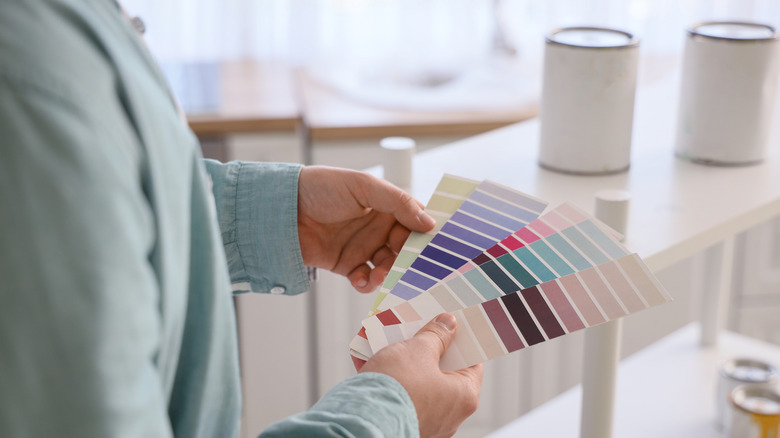
One of the easiest ways to spruce up your kitchen (and complete the entire task within a weekend) is to add a new coat of paint. What was once a drab wall becomes the new focal point of your kitchen, and you can shift the vibe of your space entirely depending on the color you choose.
But as any trip to Home Depot will illustrate, there are not only so many colors to pick from, but also hues (who knew there were that many greens?). How do you decide which one is worth choosing — and which one won't give you buyer's remorse within two months? You talk to the experts, of course (or let us do it for you).
We asked Sue Wadden, director of color marketing at Sherwin-Williams, what colors can work together to create a welcoming space that looks more expensive than it is, and she offered an absolutely immaculate pairing: white and warm beige. "A crisp or creamy white reflects light and keeps the kitchen feeling fresh and open, while a warm beige introduces depth and softness that makes the space feel inviting. When layered together, the contrast is subtle yet sophisticated," she says. The concept of layering here is especially important, as an all-white kitchen can feel clinical (not to mention, it's a design trend that's on its way out). By finding opportunities to blend the sharpness of the white and the complementary, inviting warm beige, you'll create a space that feels both expensive and lived-in.
How to layer colors for a more inviting space
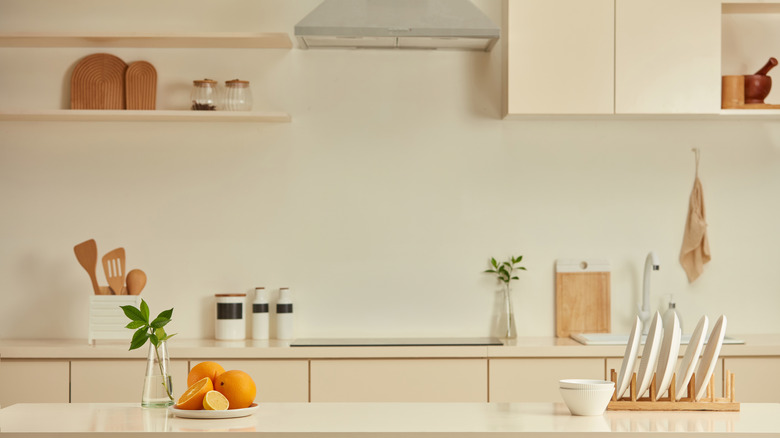
There are many ways to combine these neutral paint colors to create a kitchen that feels both on-trend and timeless. Sue Wadden from Sherwin-Williams has some suggestions. "White cabinetry paired with warm beige walls, or the reverse, creates contrast while still feeling cohesive," she says. Of course, you're going to want to follow this through with other design components. Rather than opting for dark colors that draw attention and suck the light out of your space, Wadden suggests adorning your kitchen with complementary items — like wood tones, stone counters, and metallic hardware — that add visual interest and enhance your space.
You don't even have to use this color combo on your walls. Wadden also recommends considering your countertops and island, too. "Painting cabinets instead of walls is one of the most transformative upgrades, and using a slightly deeper neutral on a kitchen island can create a focal point that adds depth and visual interest," she says. Be sure to avoid some of the biggest mistakes that people make with painting cabinets if you go this route, though, and per Wadden's recommendation, don't skimp on the finish quality via a professional-grade coating. "That polished, furniture-quality look can instantly elevate even the most basic kitchen," she says.