

It's Easier Than You Might Think To Roast Your Own Coffee. But Is It Worth It?
We may receive a commission on purchases made from links.
The first thing that many of us do each day is brew up a pot of coffee. It is an important ritual not only to help us shake off the last bits of fatigue, but also as a quiet moment to set the tone for the day. As such, it's no surprise that coffee is one of the areas in the kitchen that many home cooks really embrace personalization. Everyone has their preferred method of brewing coffee, but really leaning into the process often means wanting to exercise control on everything from the grind and origin of the coffee to the roast itself. For advice on roasting coffee at home, as well as whether or not it is worth it for dedicated coffee aficionados, we reached out to Matt Woodburn-Simmonds, a former barista and founder of Home Coffee Expert.
"You can definitely roast your own coffee much cheaper at home than buying from a roaster," Woodburn-Simmonds says. "The machines are inexpensive to buy and run, and green coffee is a lot less expensive than roasted coffee, for obvious reasons." However, the motives for roasting your own coffee extend well beyond the low price. As he explains it, the home roasting of coffee is better looked at as a hobby than a money- or time-saving exercise. Green coffee is considerably less expensive, and you can pick up a DIYAREA 800 gram-capacity Home Coffee Roaster for under $100, but the biggest reason to roast your own beans is control.
Why you may want to roast your own coffee beans
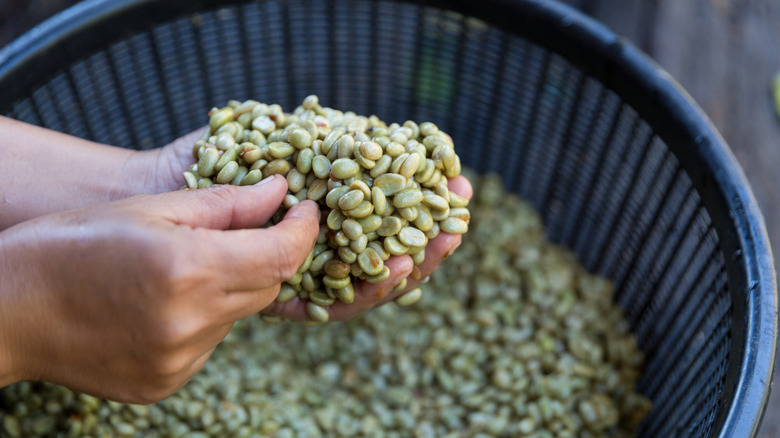
With your own home roasting setup, you are one step closer to finally having control over every aspect of your morning cup. There is no longer a need to hunt for a bag of beans that matches your desired roast level and comes from a good source, nor is there the need to shell out for expensive coffee from a local roaster. The freshness of locally-roasted coffee is much better than what you find at the grocery store, but what is fresher (or more local) than coffee roasted in your own kitchen? Plus, if you want to get creative, Woodburn-Simmonds notes, "You can play around with blending your beans to create a very personal style too."
To both roast and blend those beans, however, first you need to find a good supplier. "Sourcing good-quality green coffee beans is the most important aspect of roasting at home," Woodburn-Simmonds says. "If you don't start with good-quality coffee beans, then you'll never get delicious coffee at the end of it." Finding the right source can be a challenge, but there are few things that cannot be accomplished on the internet these days.
Start by selecting the type of coffee bean you want and then research different sources for that type. Factors like soil, humidity, climate, elevation, and processing methods have a huge impact on the characteristics of coffee, so knowing your preferences and where in the world to find them is immensely helpful. After that, your best bet is an online retailer specializing in green coffee for home roasters. They sell smaller packages in many varieties, allowing you to explore your tastes without investing too much in any one product.
Things to look out for when roasting coffee at home
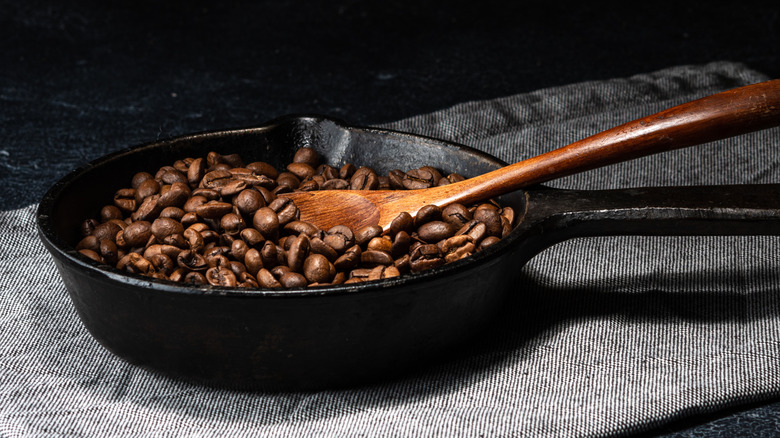
Depending on how you choose to home-roast your coffee, there is some risk involved, and even with the lower price of green beans, you don't want to make any significant mistakes. "You can't make terrible green coffee amazing by roasting yourself," Woodburn-Simmonds says, "but you can definitely ruin some really good coffee beans by getting it wrong." At its simplest, coffee can be roasted on the stovetop in a cast-iron skillet or wok, though the stovetop method is likely to result in uneven roasting and scorching of the beans.
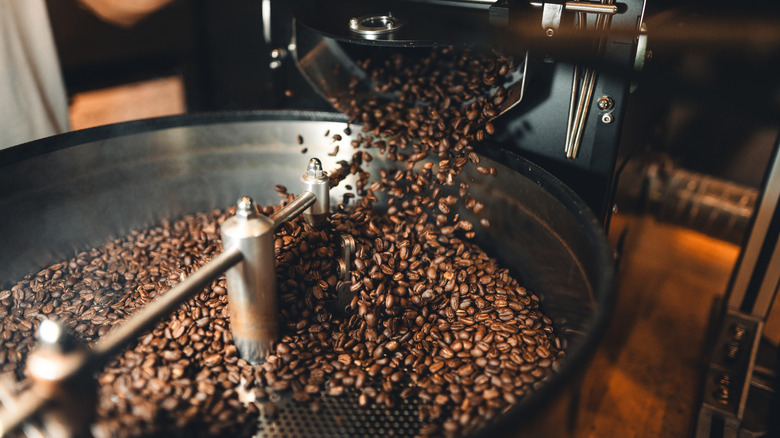
There are also some who use unconventional coffee roasting methods like electric popcorn poppers to accomplish the task. According to Woodburn-Simmonds, though, your best bet is a machine made specifically for the task. He does warn, however, that even with a specialized machine, the learning curve is likely to involve some imperfect roasts. Another factor when planning your home roasting journey is where to do it. "You'll get quite a lot of smoke and chaff from the beans," Woodburn-Simmonds adds. "Make sure you have very good ventilation when roasting." If you have a good range hood in your kitchen, that should work. If not, you may be better off roasting your coffee outdoors.
Finally, the last piece of advice the expert leaves us with is to make sure that you are keeping track of what you are doing. "Take notes of everything: temperature, time, weight, aromas, etc.," he says. This way, when you dial in your perfect roast, you know exactly what to do in order to repeat it. Once you're there, it's no longer a question of whether or not home-roasting coffee is worth it — you'll simply be drinking excellent coffee at a much lower cost.