

This Common Household Cleaner Can Help Deal With Kitchen Pests In A Pinch
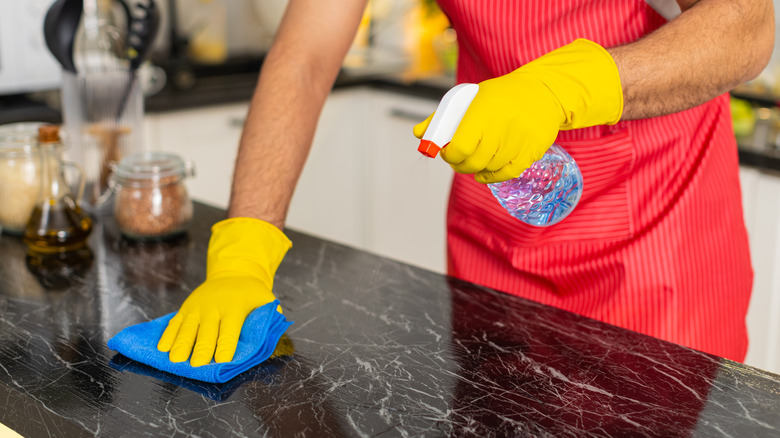
If you've ever spotted an ant marching across your kitchen counter while holding a spray bottle of glass cleaner, you might have wondered if that same cleaner could double as a quick pest control solution. In a very narrow sense, the answer is yes. Spraying Windex directly onto a small insect may kill it, but not because the product's chemical composition makes it a dupe for bug spray. It is more to do with the more simple, observable cause-and-effect physics and physiology of blasting a small creature with liquid.
Insects breathe very differently than humans. Instead of lungs, they have tiny openings along their bodies, called spiracles, that allow oxygen to enter a network of internal tubes. When a liquid coats those openings, airflow can be disrupted or blocked entirely. Ergo, spraying a little bug with almost any liquid be it a mild dish soap solution, vinegar, glass cleaner, or even water, can immobilize it long enough for it to suffocate. The force of the spray can also knock the insect off balance, rendering it unable to move or escape the droplet.
Windex, and other glass cleaners, contain ingredients designed for cleaning glass. Most formulas include a blend of ammonia compounds, solvents and surfactants that break up grease and loosen dirt so it can be wiped away without streakiness — which is also why they can be used to clean the stove. Surfactants reduce the surface tension of the liquids, which helps them spread evenly across glossy surfaces like windows. That surfactant-spreading action can encase and coat the bug's body, which may slightly increase the bug-neutralizing efficacy of Windex over using just plain water.
Bug, be gone!
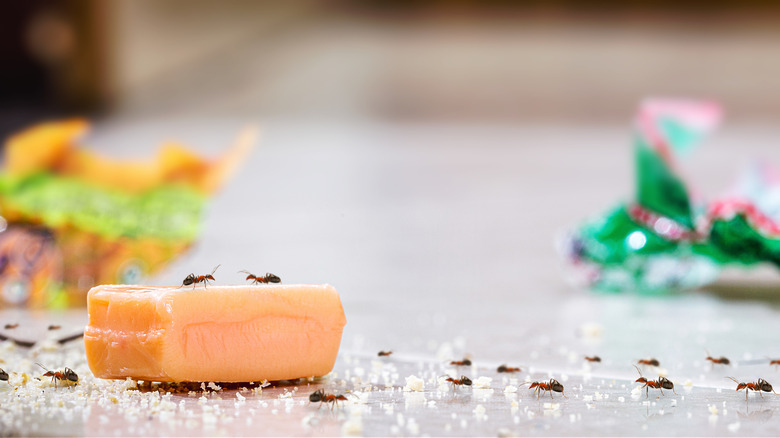
However, a wide spray of ammonia-based chemicals over a food prep area also brings with it contamination concerns, and could get toxic, so it is definitely not something to do if you are in the middle of chopping up ingredients for dinner.
The other catch is that spraying Windex will only deal with the one insect you see. It can kill one, but it won't repel the rest of them. It also doesn't address how the bug got into your kitchen in the first place. Ants, for example, communicate through chemical scent trails that guide the rest of the colony to food sources. Killing a single scout ant does not erase their invisible scent trails that guide the ant's friends and family back to the buffet in those overlooked places. Similarly, spot spraying Windex on the one visible one won't stop the fruit flies breeding in your sink drain, or the cockroaches that are slipping in and out of the hairline crooks and crannies. It's a just OK method to remove a nuisance in the moment, but it won't solve an underlying infestation, which needs to be addressed at the root cause.
For longer-term pest control, focus on a strategy of preventions and non-toxic deterrents. There are plenty of hacks to keep bugs out of your kitchen. Strong scents from certain ingredients can discourage insects from settling in from the get go. Wiping crumbs, sealing pantry ingredients in airtight containers, cleaning drains, and taking out the trash regularly all make the kitchen a far less inviting opportunity for invaders. Things like growing fragrant herbs, a lemon studded with cloves, or simple vinegar cleaning solutions can make kitchens less appealing to pests. Windex is a last-second fix if you are already holding the spray bottle, but it is not a real pest management plan.