

You're Using The Wrong Oil To Fry Egg Rolls — Here's The Best Type
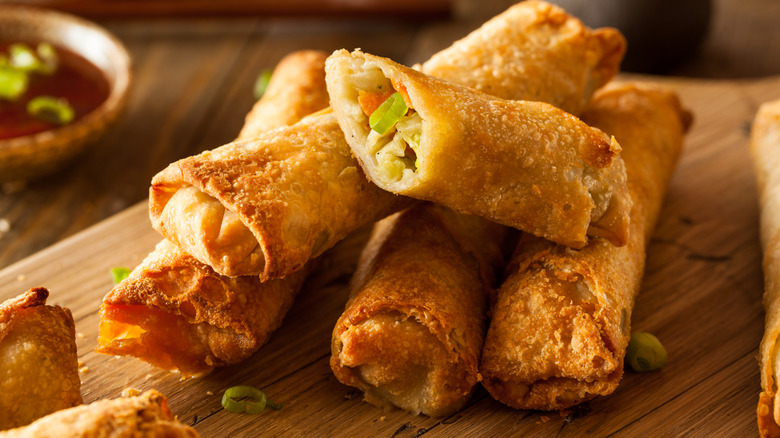
A benchmark of Chinese American cuisine, egg rolls are on the menu at every Chinese takeout restaurant and occupy a large part of the frozen section at the grocery store. What we love most about them is that crackly, deep-fried wrapper that cedes to a chewy, melt-in-your-mouth filling. So, if you're making them at home, deep-frying them is non-negotiable. We consulted Shirley Chun, Chinese-American chef and owner of Ms Chi Cafe, about the worst (and the best) oils for frying egg rolls.
"We should always use high-quality and [high] smoking point oil to deep fry," Chung tells us. "It's especially important for frying egg rolls, because the thin layers of egg roll wrapper will trap any impurities in the oil and affect the taste of the egg rolls." Smoke point refers to the temperature at which the fat molecules transform into smoke. When oil smokes, it transfers unpleasant flavors to the eggroll wrappers. To avoid this, you need an oil with a smoke point far above the temperature that you're frying at. This means utilizing high smoke point oils above 400 degrees Fahrenheit, including canola, peanut, and vegetable oils.
Again, using low smoke point oil for frying would be a huge mistake. "A lower smoking point oil will burn the egg rolls before they are cooked through," Chung adds. "You will then get burnt outer layers of wrapper, chewy towards the center and mushy, and an under cooked filling egg roll."
More tips for frying eggrolls
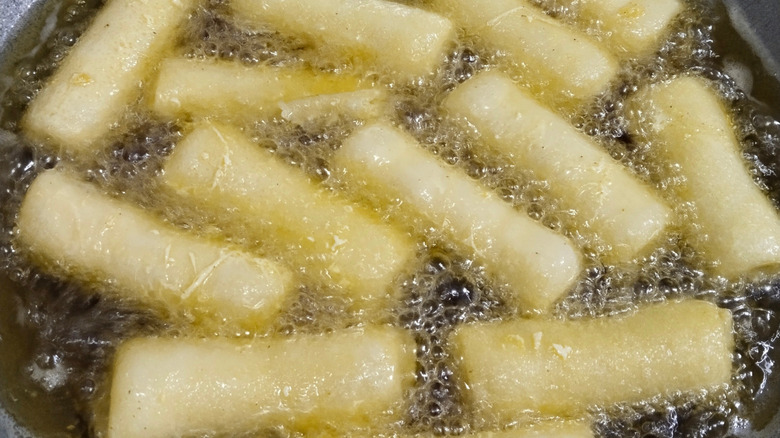
Deep frying comes with a long set of tips and tricks of its own that you should explore before whipping up your next batch of egg rolls. But one tip Chung can't stress enough is using fresh oil. While you may be tempted to reuse frying oil, that would be to the detriment of that perfectly crispy texture that we love about egg rolls. Oil that has been used to fry other foods is left with tons of small food particles which, as the chef explains, "stick to the egg rolls when you fry them and slow down the cooking process." Leaving them in oil for too long sabotages their light and crispy exterior and will result in what Chung describes as "gummy and greasy" egg rolls.
Using the best and freshest possible oil for frying isn't the only tip for restaurant-worthy egg rolls. The wrapper you use also plays a big role; we suggest ditching store-bought wrapper and using this easy homemade egg roll wrapper recipe instead. Another mistake that could lead to soggy, greasy wrappers comes from inside of the egg roll. For example, the expert-approved method for succulent, not soggy pork egg rolls is draining all the fat and juice from the ground pork before stuffing the wrappers. If you're making vegetarian egg rolls, veggies generate a lot of water. So be sure to drain them as much as possible to ensure a tender filling that won't saturate the wrapper.