

Why You're Less Likely To Enjoy Rhubarb In Southern States
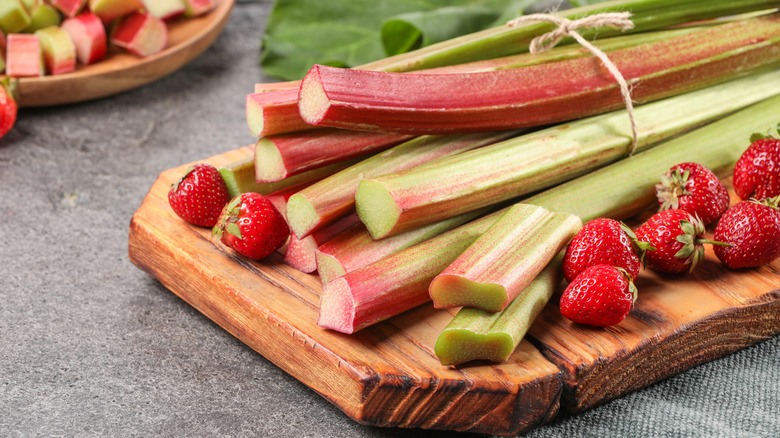
If you lived most of your life below the Mason-Dixon line, you probably spent years shooing away the occasional rhubarb treat akin to how you would mosquitoes on a humid day. The acrid red vegetable masqueraded as a fruit and snuck its way into one too many pies and crumbles. While it's understandable that you would try and avoid it, we bet you don't actually hate rhubarb — you hate the ones grown improperly in the South.
Eating rhubarb treats that are simultaneously plain and astringent before experiencing a sweet and tart version of the same plant hundreds of miles away can make you question if your taste buds change as you travel; it's not you, it's the rhubarb. Originally from northern Asia, the stalky vegetable was taken to England in the 17th century and later introduced to America, resulting in hybrids that we eat today. Given its roots, the plant is accustomed to freezing winters and cool, crisp springs. This is also why rhubarb is so popular in Seattle — the PNW's milder temps beget a better harvest than the South's intensely hot summers.
When grown properly, rhubarb is sour and a little earthy. Often described as a marriage of green apples and celery, a little sugar and heat reveal the tart, sweet plant within. If grown in a hot environment, however, the plant won't taste as pleasant. Rhubarb wilts and turns frail when temperatures climb above 75 degrees Fahrenheit, preventing its flavors from truly developing.
Growing rhubarb in the South isn't impossible
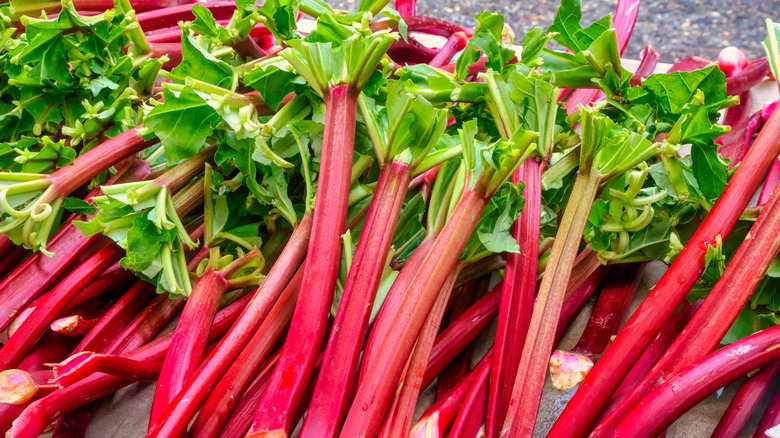
Rhubarb is a perennial, so it'll spring back up year after year in your garden. If you want it to survive down south, you'll need to treat the veggie like an annual. As the summer winds down, around August, plant rhubarb seeds or roots in a pot indoors. Within a few weeks, the plant should spring up enough to sit by a window for some sunlight. Once there are a few leaves on the stalks, you can plant it in your fall garden.
Of course, late September and early October in the South can still be blazing hot, so if that's the case, ignore the plant's penchant for full sun and give it partial shade instead. When the weather dips below 75 degrees, remove the coverings. Fertilize them monthly and give the plants about an inch of water every week, ensuring the soil is damp and well-drained to avoid excess moisture. In the event of the occasional freeze, protect the rhubarb with a few inches of mulch and frost cloth or plastic jugs.
Come March, the veggies will be ready to harvest through May — just in time for planning out all your summer rhubarb baked goods. The warmer weather may not produce the intense red you're accustomed to, but green rhubarb is still safe to eat. Plus, there's no difference in taste between red and green varieties, so you can use either in a strawberry rhubarb crisp or pie.