

Why Your Stainless Steel Kitchen Sink Is Stinky (And How To Fix It)

We may receive a commission on purchases made from links.
Despite the name, stainless steel sinks are still vulnerable to stains and discoloration due to a buildup of residue from grease, food, and liquids. Those same remnants can accumulate in your pipes, and if you've started to notice a funky odor coming from your sink, it could be due to bacteria growing in that residue. Luckily, a deep clean followed by consistent weekly cleaning can keep the odors at bay for good.
If the smell is coming from your drain, cleaning your sink strainer by soaking it in a bowl with warm water and baking soda, then scrubbing it with dish soap. If the odor persists, try cleaning your kitchen sink drain. Sprinkle ½ cup of baking soda down the drain and let it sit for five minutes, then rinse it with boiling water, followed by 1 cup of white vinegar. You can also use a drain cleaning product like Clorox Liquid Plumr or Bioda Multi-Purpose Enzyme Cleaner, for an eco-friendly alternative.
If the issue isn't your drain, you'll want to deep clean the sink itself. The best tools for this are a soft sponge and a non-bleach cream cleanser like Bar Keepers Friend Soft Cleanser. Remove everything from in and around the sink, rinse with hot water, and squirt it into the sink or sponge and scrub away. When you're done, use more hot water to rinse everything away, and dry the sink with a microfiber cloth or soft rag. If your sink still smells like a sewer even after you've cleaned it, call a plumber.
Consistent daily cleaning can prevent foul kitchen sink odors
Ideally, you should clean your kitchen sink each day to remove debris, odor-causing residue, and bacteria. All you need is a soft sponge and a mild, degreasing dish soap like Dawn. After doing the dishes, simply rinse out the sink and then squirt some dish soap on the sponge and wipe down the sink thoroughly. Then, rinse it again with hot water to remove all traces of the soap, then dry it with a soft cloth. Remember to discard of any food debris caught in your sink strainer in the trash, and give it a rinse too.
If you used the sink to rinse or wash dishes or utensils that were exposed to raw meat or eggs, you should disinfect it immediately afterwards. You can use a bleach-free disinfectant like Clorox Scentiva, which is safe to use on stainless steel, Start by rinsing out the sink and then using a clean rag and dish soap to remove any debris, Rinse again, and then spray the disinfectant on all sink surfaces. Let it sit for 10 minutes before rinsing it off with hot water. Always dry your sink after cleaning to prevent water spots.
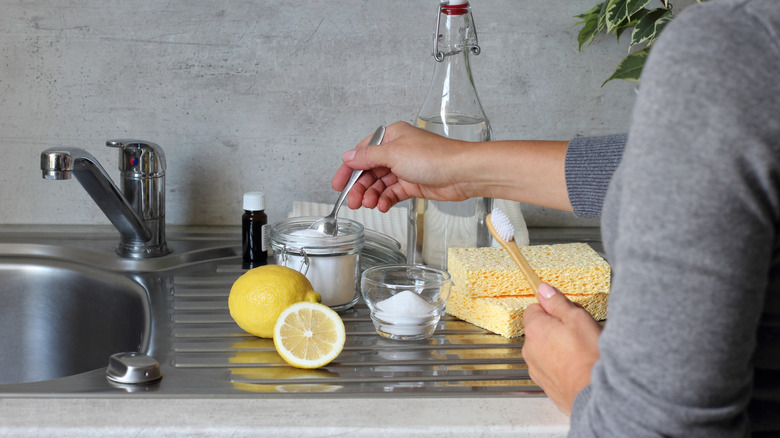
For an all-natural deep cleaning and deodorizing solution, there are a few pantry staples that will clean and shine your stainless steel kitchen sink: salt, lemon, baking soda, and vinegar. Sprinkle the wet sink with salt or baking soda and scrub it using the cut half of a lemon. Then use a soft sponge and dish soap to remove any remaining debris. Rinse the sink out with hot water, then spray it with diluted white vinegar to deodorize it. Pour some vinegar down the drain as well. Finally, rinse everything out again with boiling water, and dry the sink with a clean, soft cloth.