

10 Award-Winning Scotches That Should Be On Your Radar
We may receive a commission on purchases made from links.
Whisky awards can be a tricky thing when it comes to how credible they are. There are dozens of competitions handing out medals, and I'd describe some of them as glorified marketing tools. Others are taken more seriously and are respected by distillers and drinkers alike. Two such competitions are the San Francisco World Spirits Competition (SFWSC) and the International Wine & Spirit Competition (IWSC).
For this article I've only included Scotches that won the highest gold medal honor in each of these. For the SFWSC, that is Double Gold. For the IWSC, that is Gold. The way these competitions work is that many different whiskies can get awards in the same category. With that in mind, I've picked 10 Scotches across various categories that are still relatively easy to get hold of.
I've spent nearly two decades studying, tasting, and writing about whisky. Along the way, I've learned that awards are the most useful when combined with experience and context. Just because a whisky has won an award, it still may not be perfectly suited to you. That's why, along with stating which awards they've won, I'll also be looking at their tasting notes along with any interesting tidbits of information. The result should be at least a few whiskies that you'll eagerly add to your wish list.
Glen Scotia 15-year
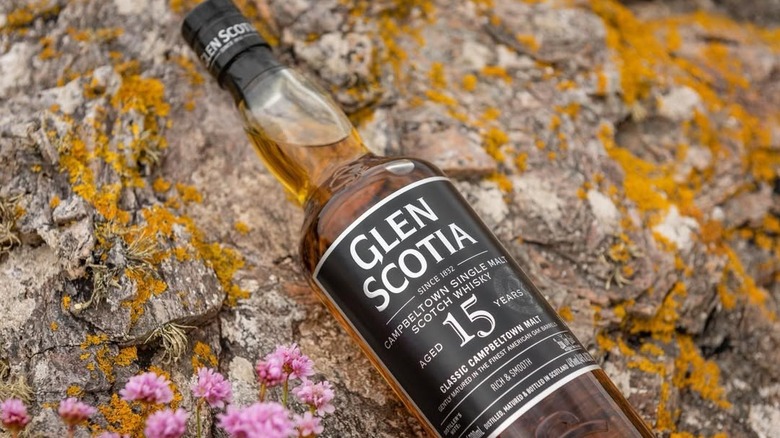
The whisky region of Campbeltown has a curious history as it once played a dominant role in Scotch distilling but is now the country's smallest whisky region. It now only features three distilleries, with Glen Scotia being one of them. This 15-year-old shows how this small slice of Scotland is still able to produce elite single malts. Matured in American oak barrels, it won both Double Gold at the SFWSC and Gold at the IWSC. It's bottled at 46% ABV, and it captures the coastal character that defines much of Campbeltown whisky but without being aggressive. Instead, it remains highly approachable and celebrates its simplicity rather than being ashamed of it.
That's because what you get are classical flavors that are both clean and deep, allowing you to truly savor the tasting experience. That starts with a bright nose that includes citrus and ginger before you get to enjoy deep layers of fruits on the palate. You get orchard fruits in the form of apple, pear, and orange peel along with a lovely sweetness that develops into a taste of brown sugar. These flavors are underpinned by the foundation of oak and a slight salinity you get from the sea air. It's the type of whisky that allows you to find new notes with every sip, giving you an elegant tasting experience.
Talisker 10-year
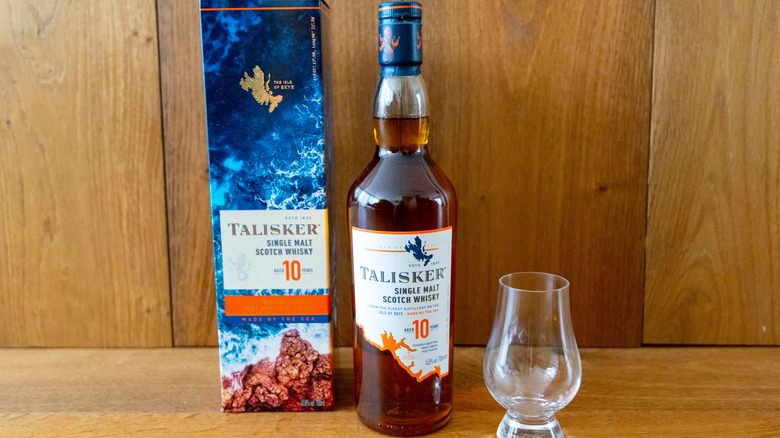
While some distilleries put new expressions up to be judged, sometimes they will also release a classic for a fresh assessment. The Talisker 10-year was first released in 1988 as a part of a marketing campaign with five other bottles promoted as Classic Malts of Scotland. The bottles showcase different areas of Scotland, with Talisker representing the Isle of Skye. While I mainly wanted to highlight some more niche expressions in this article, I thought it was a good idea to throw in a few Scotch icons. With it being such a storied whisky, it's no surprise it won Double Gold at the SFWSC and Gold at the IWSC. As someone who has tasted this Scotch many times over the years, it's as good as ever.
It's aged in American oak casks and bottled at 45.8% ABV. What you get is a bold and unapologetic character. As with the Glen Scotia expression, this is also made by the sea, but it's a lot more rugged. You notice this instantly on the nose with the peat smoke and sea salt being particularly powerful. On the palate, these notes carry over with a rich and full-bodied mouthfeel. You get sweetness from dried fruit before you get a burst of pepper kick that adds to the boldness of this Scotch. Another winner of the top gold medals at the IWSC and the SFWSC, this iconic coastal whisky has received many awards before 2025, and will no doubt win many more in the future.
Loch Lomond 18-year
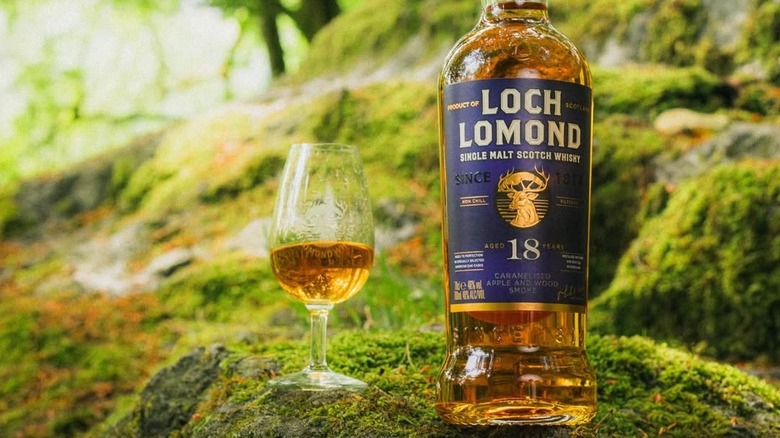
The Loch Lomond distillery doesn't promote the region in which its whisky is made, as it sits on the border of the Highlands and Lowlands in the west of Scotland, but it proudly represents the loch that bears its name. As with the top two, and a few more to come, here we have another double winner of the two awards mentions. This 18-year whisky is not only exceptional but comes at a reasonable price for such a well-matured Scotch — it usually sells for around $120. Bottled at 46% ABV and not chill filtered, it has rich layers of complexity that impressively balance both fruit sweetness with smoky and oak influences.
On the nose, you get a nice hit of green apples along with faint hints of other orchard fruits. You get honeyed sweetness that is underpinned by more earthy notes. As soon as you start tasting, you can notice the aging as you get that rounded mouthfeel that only ever seems to come from many years in a barrel. Much of the palate is replicated from the nose, but the oak influence becomes more prominent without being overbearing. The depth of this whisky is extended by further notes of tobacco and gentle spice. It has the quality you'd hope for from an 18-year-old whisky while having its unique charm to help it stand out from its rivals. I think that Loch Lomond releases underrated Scotches as it consistently punches above its weight.
Benriach The Twelve
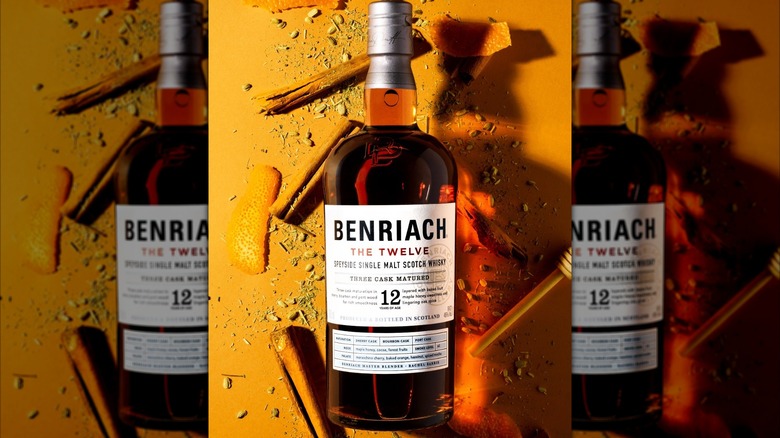
The Twelve comes from the Benriach's core line-up and is matured in three separate casks and, as you may have suspected, for a minimum of 12 years. The distillery uses former bourbon, sherry, and port casks to give it a unique blend of flavors. It's yet another Scotch that got the highest gold awards at the IWSC and SFWSC. Bottled at 46%, the whisky has a dessert-like richness without feeling too heavy. The unique maturation gives it a fruit-forward nose as you can pick out orchard fruits such as apples and pears, along with a few darker fruits, such as cherry.
The fruity profile continues on to the palate where it is joined by delicious oranges and honey. The taste is a little nutty in character with earthy flavors coming from baking spices and oak. Most Speyside whiskies are marked by their cleanliness and clarity, but Benriach's offerings are a little more indulgent. The round character supports many interesting tasting notes and gives you a long and warming finish. It all adds to an interesting whisky, and, as the awards show, one that has gained much respect in the industry.
Ardbeg 10-year
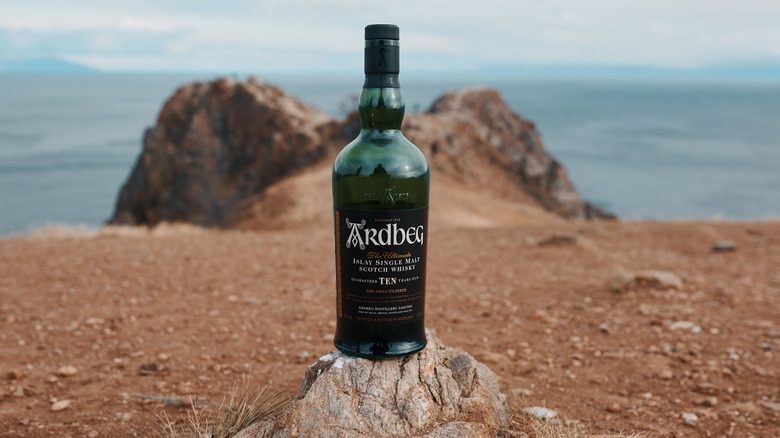
Another double winner at the IWSC and SFWSC, the Ardbeg 10-year is a dominantly peated whisky. It's produced on the island of Islay, a whisky region notorious for producing intensely smoky Scotch. It's not an expression for whisky casuals, but if you enjoy peated malts and haven't sampled an Ardbeg label, you're seriously missing out. I think the 10-year is the best place to start. The uncompromising style comes with an ABV of 46% and without chill filtration. As you may expect, you're hit with a huge wave of peat smoke on the nose, almost as if you can smell the peat fire that was used to dry the barley. However, as with all great peated Scotch, there is a nuance beneath the boldest notes. Citrus, vanilla, and medicinal iodine can all be found here.
The mouthfeel is rich and oily; it nicely carries sweet malt and vanilla, immediately delighting your tastebuds. Once you've gotten used to the peat smoke, you can enjoy the intense flavors that come from a well-crafted peat whisky. That includes dark chocolate, black pepper, and roasted coffee. The finish seemingly goes on forever as you'll enjoy lingering tastes of sea salt and spice. If you've never had peated Scotch before and are questioning some of these tasting notes, it's truly a case of trying it before you judge. Those that do judge it, give it awards.
Laphroaig 18-year
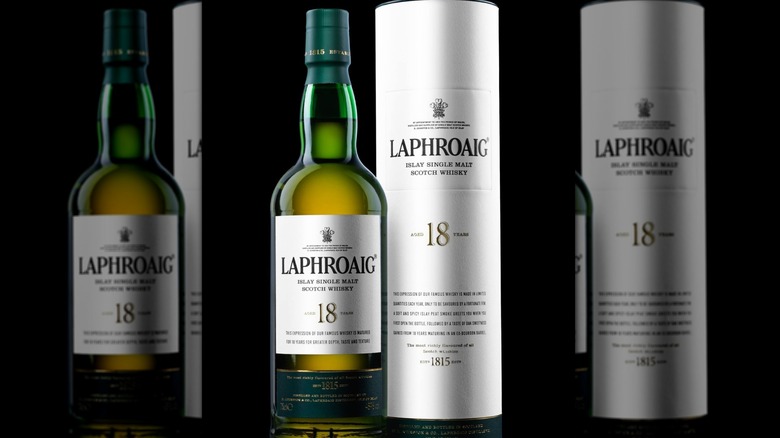
If there is any whisky that could beat Ardbeg as the most peated Scotch, it's the Laphroaig 10-year. However, it was its 18-year-old brother that picked up the awards in 2025, winning Gold at the IWSC. Laphroaig is a distillery that is unapologetically bold and intense. However, the extended maturation here softens that signature style and deepens those intense flavors. Bottled at 48% and matured in ex-bourbon barrels, the coastal peat smoke you expect on the nose is still there, but it's little more refined and layered. It's complemented by beautiful toffee and vanilla, along with hints of orchard fruits.
The palate is where extended maturation really shines. The fruity notes are still present, especially in the form of roasted apple. The sweet malty notes of caramel and vanilla marry with the earthy pear and salinity to strike an incredible balance. Further complexity is added with an herbal quality along with cinnamon and dark chocolate. It has all the elegance that you want from an 18-year-old expression while not straying away from all the qualities that make any Laphroaig whisky unique.
Oban 14-year
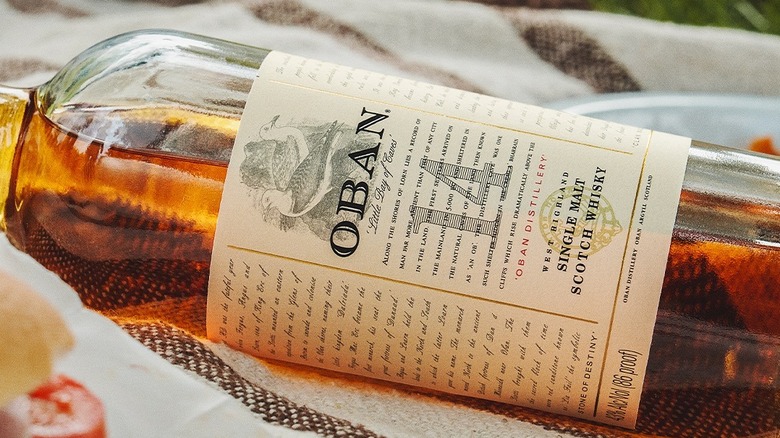
Oban 14-year is another Scotch featured in the collection of Classic Malts of Scotland. I've always thought Oban 14-year is a little underrated as I rarely see it featured in recommendation lists, but this is one of the popular Scotch whiskies that rank high on our list. The distillery is curiously placed as it sits on the west coast. That makes it a Highland whisky but with many qualities you'd associated with island expressions. The Highland softness comes with gentle sweetness and a warming spice that are contrasted with the salinity and smoke you'd expect from its coastal setting. This combination helps to give it a unique edge, resulting in a whisky that manages to give you both complexity and approachability.
Due to this, it's no surprise it was a Double Gold winner at the SFWSC. Bottled at 43% ABV, the whisky opens on the nose with bright citrus, honey, and orchard fruits such as apple and pear. The palate is a little more robust than you may expect from the aromas. There is a warming spice throughout, especially in the form of cloves and black pepper. There are only hints of smoke here as you're more likely to notice orange and toffee sweetness, along with floral heather. It is an impressively balanced whisky and one that has an enjoyable oily mouthfeel. For those looking for a gentler introduction to coastal whisky, Oban 14-year is the perfect option.
Aberfeldy 12-year
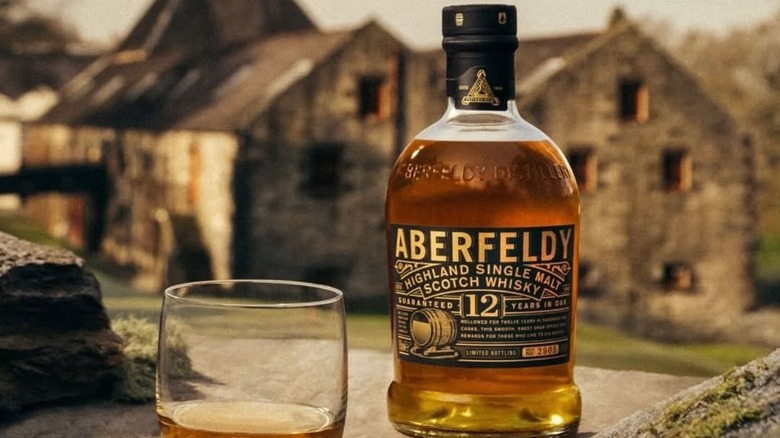
A true Highland malt, the 12-year Aberfeldy more than holds its own in an industry that is stacked with whiskies that have been matured for a dozen years. As a Double Gold winner at the SFWSC, this is a highly approachable single malt that is very easy to drink. Bottled at 40%, it's one of those whiskies that is almost impossible to dislike. On the nose you get a lovely, honeyed aroma along with herbal notes of heather. With additional sweetness coming from vanilla and brightness coming from orchard fruits, it shows its inviting character before you've even had the chance to try it.
When you do, the high expectations you most probably had from the aromas are resoundingly met. The honey continues to be the most prominent sweet note but is ably joined by caramel and vanilla. There are whispers of smoke and spice, but this is a clear and clean Scotch. It manages to do that without being overly sweet. It doesn't quite have the depth and rich mouthfeel of some of the older whiskies, but what you do get is a smooth and rounded drink. If you're looking to start with the more affordable whiskies in this list, the Aberfeldy 12-year is a good starting point — you can get it for under $50.
Glenfiddich Gran Reserva 21-year
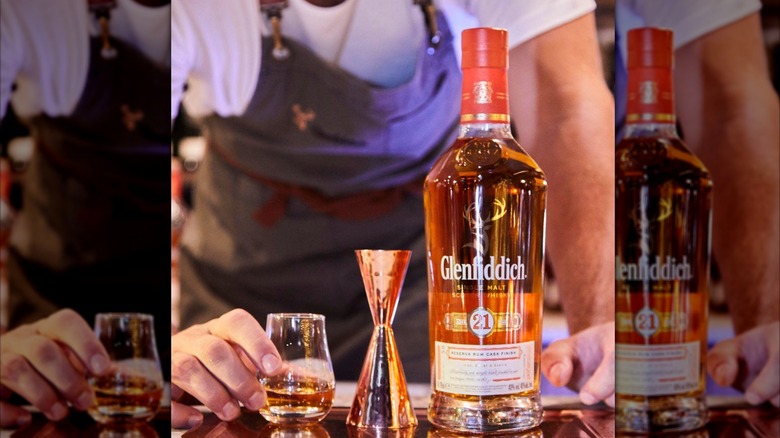
This whisky comes as part of Glenfiddich's Grand Series line-up that aims to marry its classic whisky with another traditional liquor. While others in the series mix the likes of cognac and wine, this Gran Reserva is finished in Caribbean rum casks. As someone who enjoys rum, I've always felt this type of finishing perfectly suits Scotch. It feels as though the general idea is to enhance the sweetness while bringing in some tropical flavors. That's exactly what happens with this 21-year-old whisky, which won Gold at the IWSC.
On the nose you get vanilla and orchard fruits, a general feature in Glenfiddich single malts such as the impressive 15-year-old expression. The rum influence is immediately seen as the fruity aroma expands with banana and pineapple nuances. That influence becomes even more apparent on the palate as brown sugar, apricot, and gentle spice come to the fore. It allows the natural sweetness of a single malt to be complemented by a delicious array of flavors. It adds to a Scotch that feels a little unconventional while still being elegant and delivering exceptional clarity. Experimenting with such maturely aged whisky feels like a risk. Yet, it's a risk that has wonderfully paid off here.
Chivas Regal 18-year Pauillac Wine Finish

The list is finished with this luxurious expression from Chivas Regal which was a Gold winner at the IWSC. Pauillac is a Bordeaux region known for its rich and intense wines that are revered for their quality. Because of this, it's no surprise that Chivas Regal thought it was a good idea to add its whisky to one of these casks. This finish helps to add a layer of complexity and depth, complementing the blend's natural character. If you're already a fan of the Chivas Regal 12-year, you'll probably love this expression. As you expect from a whisky that used sherry or wine casks during maturation, the additional notes are particularly fruity.
This is immediately noticeable on the nose as you're hit with a burst of dark berries, while the sweetness comes from a mix of salted caramel and toffee. On the palate, the unique cask finish perfectly marries with the classic Chivas Regal profile. Along with the fruity flavors, you'll also get more exotic notes such as mango and coconut. The tasting experience ends with a deep, sweet molasses finish. All those notes come together with a rich and velvety texture in which the earthy tannins sit nicely in the background and allow the other notes to shine. Wine cask finishes can be hit-and-miss, but Chivas Regal has hit a home run with this elegant whisky.