

12 Of The Biggest Scandals In Chick-Fil-A History
Chick-fil-A is one of the most popular fast food chains in the U.S. Every year, millions visit its nearly 3,400 locations across the country in search of the best chicken sandwich money can buy, waffle fries, nuggets, and more (Fun fact: Only two states don't have any Chick-fil-A restaurants). And, usually, they leave happy. In 2025, for example, Chick-fil-A was ranked by the American Customer Satisfaction Index as the top fast food chain for customer satisfaction for the 11th year in a row.
But, not everyone has had a positive experience with Chick-fil-A. In fact, this fast food chain appears to have a much less satisfying side, and has far more than one skeleton in the closet. From its donations to anti-LGBTQ organizations to accusations of racism and animal abuse, keep reading to find out some of the biggest scandals in Chick-fil-A history. But, just a warning before you start: There's a chance it might put you off your next chicken sandwich.
Its repeated stance against gay rights
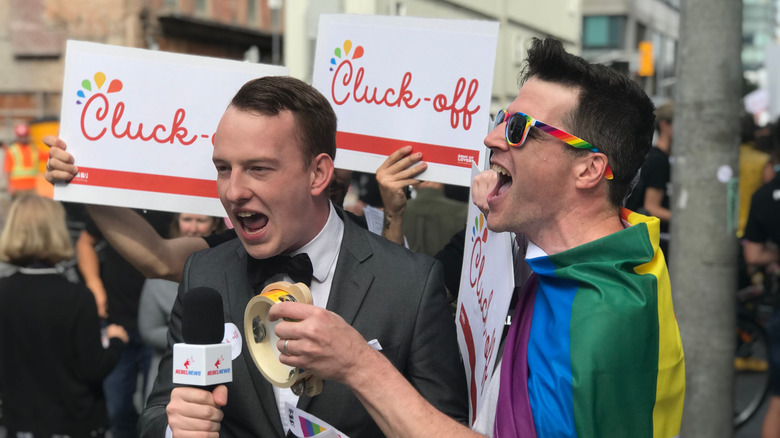
The biggest scandal that has surrounded Chick-Fil-A over the last decade and a half has, without a doubt, been its repeated position against the rights of LGBTQ people. In 2012, things had been rumbling for awhile due to the fast food chain's donations to anti-LGBTQ charities, but the scandal really came to a head in July of that year, when president Dan Cathy told the Baptist Press that Chick-fil-A was supportive of "the biblical definition of the family unit." The statement caused immediate backlash from the LGBTQ community and its allies. CNN correspondent Joe Brown called the comments "backward and ignorant."
In a bid to distance itself from the anti-LGBTQ rhetoric, The Jim Henson Company severed its business partnership with Chick-Fil-A (it had been working with the fast food chain on toys for its kids meals) in August 2012. In the same month, gay employees working at the chain's restaurants spoke out about their experiences dealing with homophobia in the workplace, which included listening to homophobic jokes and the fear of being fired because of their sexuality.
But, instead of issuing a hasty apology, Chick-Fil-A seemed to double down. Five years later, in 2017, it donated nearly $2 million to anti-LGBTQ organizations, like the Fellowship of Christian Athletes and The Salvation Army. Seven years later, in 2019, Chick-Fil-A finally stopped donating to the controversial charities.
Chick-fil-A had to close in the UK over LGBTQ backlash
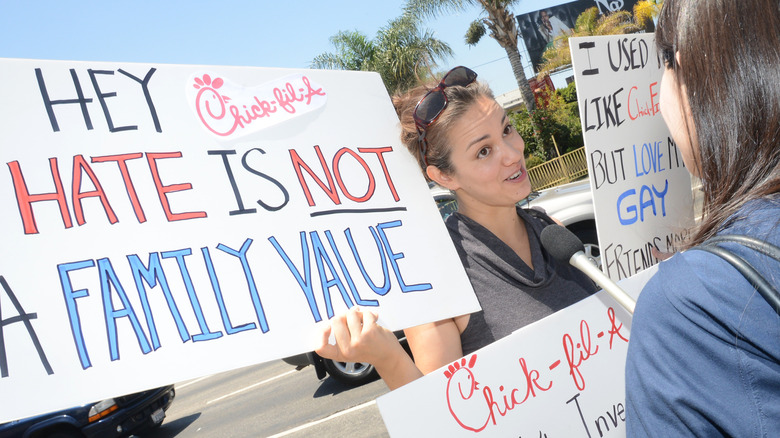
Chick-fil-A's past rhetoric and funding of anti-LGBTQ organizations has had some serious consequences for the chain. In 2019, for example, it attempted to open its first restaurant in the U.K. market, but Brits were not happy. The restaurant, located in Reading, was met with a series of protests and boycotts. As a result, it closed after just six months. It turns out that, due to the backlash, the shopping mall it was operating in had decided not to renew the fast food chain's lease.
Chick-fil-A didn't give up, though. In 2025, it tried again, opening three restaurants in Belfast and Leeds. In March 2026, it opened its first London location. But, many people are choosing not to forgive and forget. Several activists protested the opening of Chick-fil-A's first restaurant in the capital, holding signs that drew attention to the chain's previous funding of anti-LGBTQ groups.
Human rights campaigner Peter Tatchell of the Peter Tatchell Foundation said that the organization had been unable to receive confirmation from Chick-fil-A that it would not donate to similar organizations in the future. He also said in a statement that the fast food chain's "funding of bigotry is out of step with British values."
It was sued for sending someone into anaphylaxis
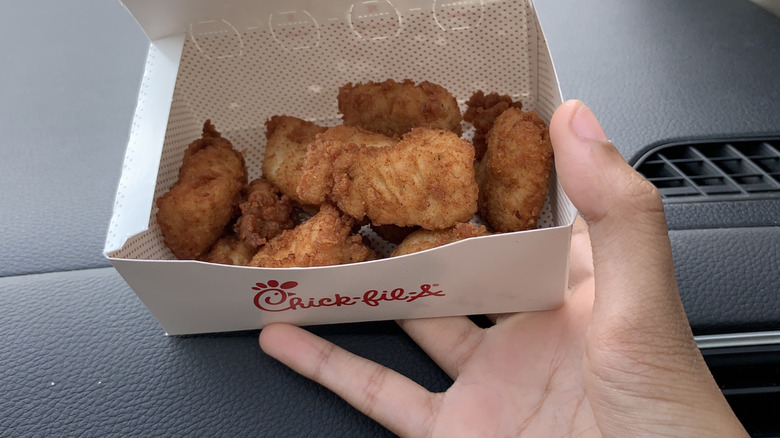
Chick-fil-A's problems don't begin and end with upsetting the LGBTQ+ community. The chain has been involved in multiple health scandals, including putting someone in the hospital with anaphylaxis.
For the uninitiated, anaphylaxis is the most severe allergic reaction a person can experience, and it can be life-threatening. That's why a woman named Francine Powers filed a lawsuit against Chick-fil-A in 2023. Powers' son had eaten chicken nuggets from the fast food chain in 2022, before he had to be rushed to hospital with an allergic reaction. It turns out, the nuggets contained dairy, which the boy was allergic to, but the ingredient was not disclosed within the menu item's nutritional information. A Chick-fil-A employee also verbally confirmed to Powers that the nuggets were free of dairy before she ordered them for her son.
Fortunately, the boy, whose mouth started foaming as his throat started to close up, recovered from the allergic reaction. However, Powers' still chose to sue Chick-fil-A on multiple counts, including emotional distress and deceptive business practices.
It was caught up in a major outbreak of E.coli
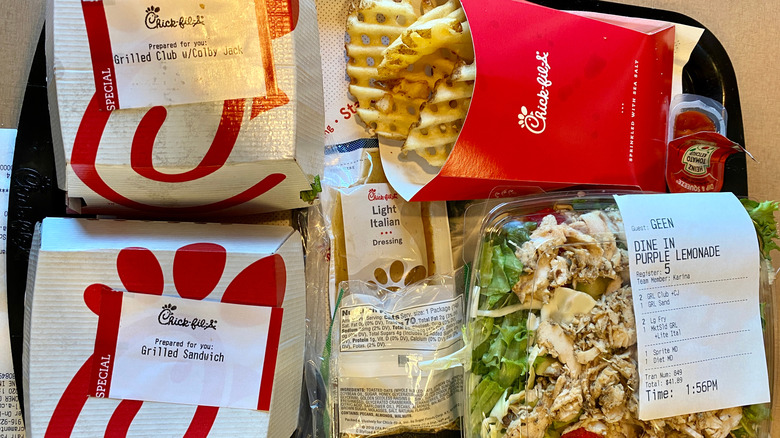
In the spring and summer of 2018, more than 200 people in 36 states were diagnosed with E.coli infections after consuming contaminated romaine lettuce. Some purchased the lettuce from local grocery stores, while others were served it in restaurants, including Chick-fil-A. For example, one woman, named Eunice Cintron, contracted the infection after eating a Spicy Southwest Salad from the chain.
Cintron's symptoms were so severe, she had to be hospitalized for a week. E.coli can cause a whole host of unpleasant and painful symptoms, including bloody diarrhea, stomach cramps, and fever. In rare cases, E.coli can be fatal. During the spring outbreak, five people died as a result of the infection, which was traced back to Arizona's Yuma growing region. E.coli lives in the digestive system of animals, but it can be transferred to crops like lettuce through polluted irrigation water.
While this particular outbreak was declared over in June 2018, E.coli struck again in the fall of the same year. And, once again, Chick-fil-A was impacted. In response, it decided to stop selling any salad with romaine lettuce until the outbreak was under control. This recall affected millions. But, five years later, Chick-fil-A still had a reputation for making people sick. In a 2023 study conducted by the food safety platform Iwaspoisoned, it was named as the most likely fast food chain to make people ill in Georgia and South Carolina.
It was sued for sexual harassment
Undeclared allergens is far from the only issue that has landed Chick-fil-A in legal trouble. In 2022, the chain was sued by a former worker in Georgia, who claimed that she had been sexually harassed and discriminated against for being transgender.
The woman, named Erin Taylor, started working at Chick-fil-A in 2021 and was training to be the director of operations. However, she claims that as soon as she started working there, she was subject to unwelcome and rude comments, purposefully misgendered, threatened with violence, and sexually harassed. Taylor was fired, allegedly for leaving part way through a shift, but she claims she was given permission to leave.
The lawsuit, which was settled in 2024, wasn't the first time that Chick-fil-A has been called out for sexual harassment. In 2012, four women filed a lawsuit against the chain after claiming they had experienced sexual harassment at the hands of a supervisor in its Chula Vista restaurant for two years. Another lawsuit was filed in 2013, after an ex-worker claimed he, too, had experienced sexual harassment in one of the chain's Florida restaurants.
It had to pay $4.4 million after it was accused of inflating prices during the pandemic
During the pandemic, there wasn't much to do other than bake banana bread, binge watch every series available, and order takeout. In fact, during the COVID-19 pandemic, McKinsey research confirms that the restaurant delivery market doubled in size. Many major chains experienced unprecedented success because of this — Chick-fil-A included. But, according to a group of Georgia customers, Chick-fil-A also did not play fair during this period.
In 2023, the group filed a lawsuit against Chick-fil-A, accusing it of advertising low delivery fees during the COVID-19 pandemic, but then proceeding to increase the cost of its delivery-only menu items. They claimed that this was deceptive, and they wouldn't have made the purchases from the chain if they had known. Chick-fil-A did not admit fault, however, it did agree to settle the lawsuit for $4.4 million. The money was paid out to affected Georgia customers in either $29 cash or gift cards of a similar value.
It was sued over alleged racial abuse
As well as sexual harassment, discrimination, and homophobia, Chick-fil-A has also been accused of racial abuse. In 2026, Tiffany Lynch, who used to work as an operations manager at Chick-fil-A, filed a lawsuit against the chain over racial abuse. According to Lynch, who worked in a restaurant in Philadelphia, the white owner of the restaurant, named Joshua Grimm, repeatedly used racist and bigoted slurs against her.
In fact, the lawsuit claims that Grimm used the N-word consistently in Lynch's presence, implied that Black people smell and are "cheap," and asked if someone was "Ghetto Black" when discussing who to hire. The lawsuit also alleges that Grimm was racist against Hispanic people, claiming that he could fire them at any time because they are "illegal." On top of all of this (and that's not even the full extent of the racism-related complaints, by the way), Lynch, who is gay, also claims that Grimm was homophobic towards her on a number of occasions.
This is not the first time Chick-fil-A's staff have been accused of racism. In 2025, a restaurant in Georgia was also accused of racial discrimination when employees offered several white police officers free meals, but did not offer them to their Black co-worker. The Black officer, named Tracy Reed, said the incident was humiliating.
It was sued for discrimination against Muslim people
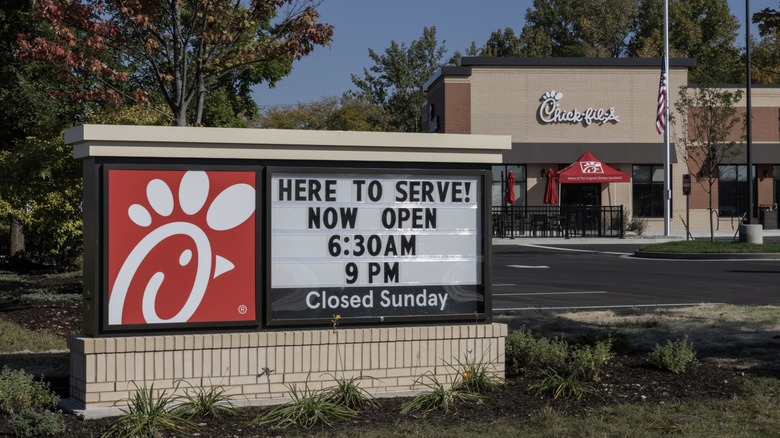
Chick-fil-A is a fast food restaurant with deep Christian roots. It was founded back in the 1940s by S. Truett Cathy, a devout Christian, who baked his religious values into the company's business model (this is why the chain is always closed on Sundays, for example). The Cathy family still runs Chick-fil-A, and, to this day, the fast food chain's purpose statement reads: "To glorify God by being a faithful steward of all that is entrusted to us."
However, some employees have claimed that the Chick-fil-A's Christian emphasis has enabled discrimination against people of different religious backgrounds. Back in 2002, Aziz Latif, who is Muslim, claimed that he had been fired the day after he refused to pray to Jesus during a training session.
In a subsequent lawsuit, Latif added that he knew the dismissal was likely related to his refusal to pray, as he had been praised for his managerial skills just one week earlier. He sued the company for emotional distress and backpay, and also demanded that he was given his job back.
It was called out for using gestation crates and falling behind on animal welfare
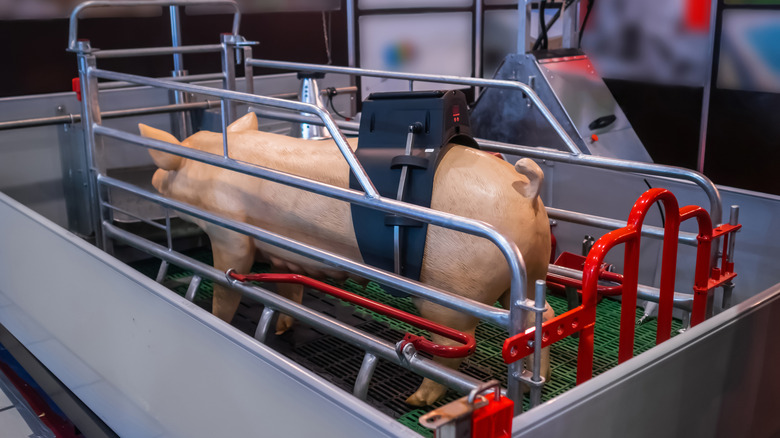
Chick-fil-A has also been accused of failing to prioritize the welfare of animals. In 2024, for example, it was called out by Animal Equality for its continued use of gestation crates, which are small metal cages used to contain pregnant pigs in the meat industry. If you're thinking: "Isn't Chick-fil-A a chicken chain?" Yes, that's true. But it also offers the occasional product with pork, like its limited-edition Smokehouse BBQ Bacon Sandwiches, for example.
According to animal welfare advocates, gestation crates, which are used to separate pregnant pigs from the rest of the herd, are cruel. They stop pigs from being able to turn around for months at a time, and this can have a negative impact on the animal's physical and mental health. Many states in the U.S. agree. In fact, gestation crates are banned in 10 states in the country, including Florida, Ohio, Arizona, California, and Massachusetts.
But, according to Animal Equality, many fast food chains, including Chick-fil-A, are falling behind on animal welfare by continuing to use the crates. At the time of writing, the animal welfare group is encouraging consumers to sign a petition urging Chick-fil-A to ban the use of gestation crates in its supply chain.
It was sued for allegedly not hiring individuals with disabilities
So far, we've covered accusations of religious, racial, gender, and sexuality discrimination in Chick-fil-A's restaurants, but we're not finished yet. The fast food chain has also been sued for allegedly not hiring individuals with disabilities.
In 2016, James Kwon filed a lawsuit against Chick-fil-A over claims that a restaurant in Illinois did not hire him because he has autism. According to the lawsuit, Kwon's job coach was actually told by a restaurant manager that people with disabilities would not be able to have a successful career with Chick-fil-A. The job coach had been working with Kwon to help prepare him for the workplace, and that training involved a stint of work experience at the Chick-fil-A in Baker's Square.
Chick-fil-A denied the claims, and there is no record of the case being settled publicly. Just two years earlier, Chick-fil-A did settle a different discrimination lawsuit, though. That one was filed by Heather Morrison, who claimed that Chick-fil-A did not hire her on the basis that she was pregnant.
It has been accused of discriminating against people who are gluten-free
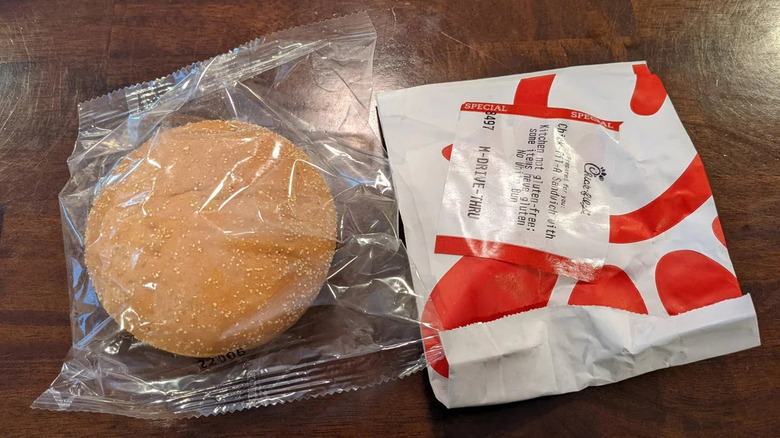
In 2017, to the delight of many people with celiac disease or gluten intolerances, Chick-fil-A started offering gluten-free burger buns nationwide. But, there was a catch, the buns, which are made with gluten-free grains like quinoa and amaranth, came at an extra charge.
A few years later, people started to question whether it was actually fair of Chick-fil-A to charge extra for the gluten-free buns. After all, people don't usually choose gluten-free options out of preference, but because they have to. Celiac disease is serious — if someone with the condition eats gluten, it can severely damage their internal organs.
In 2024, attorneys started gathering information to figure out whether the surcharge for the gluten-free buns counts as discrimination. The main issue, according to ClassAction, is whether or not Chick-fil-A is profiting from charging gluten-free customers extra for the buns. At the time of writing, the result of the investigation had not been made public.
It was accused of sourcing chicken from suppliers that torture animals
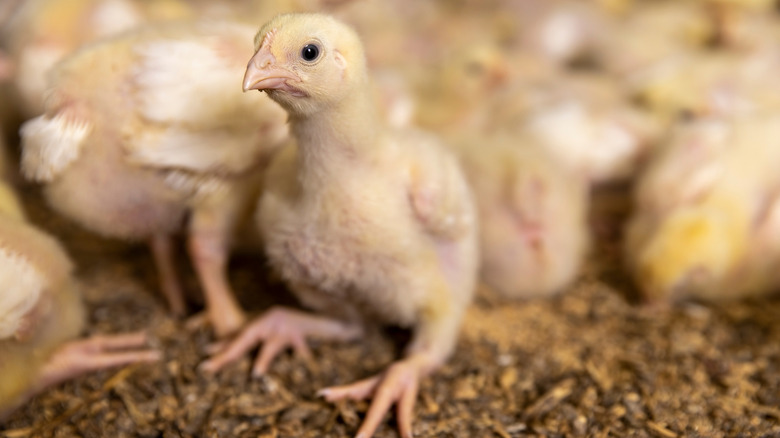
Chick-fil-A hasn't just come under fire for the treatment of pigs in its supply chains, but also for the welfare of its chickens. The animal is crucial to Chick-fil-A's business model, of course. In 2022 alone, it sold 527 million chicken sandwiches.
But in 2014, Mercy For Animals released a video taken undercover at Koch Foods, one of Chick-fil-A's suppliers, showing workers kicking and throwing chickens. The videos also showed workers throwing the chickens into vats of hot water while they were still alive. According to Chick-fil-A, it stopped working with Koch Foods the year before the video was released. However, the allegations of chicken abuse in Chick-fil-A's supply chain didn't end there.
In 2019, another video was released by the Farm Transparency Project, allegedly showing chicks being electrocuted and scalded alive at Chick-fil-A suppliers. In fact, Mercy For Animals has a whole website dedicated to raising awareness of alleged cruelty in Chick-fil-A's supply chain. The animal rights organization also claims that, like many chickens used in the food industry, Chick-fil-A's birds are bred to grow so fast that they are unable to walk.