

Why Restaurant To-Go Cocktails Implemented During COVID Are Here To Stay
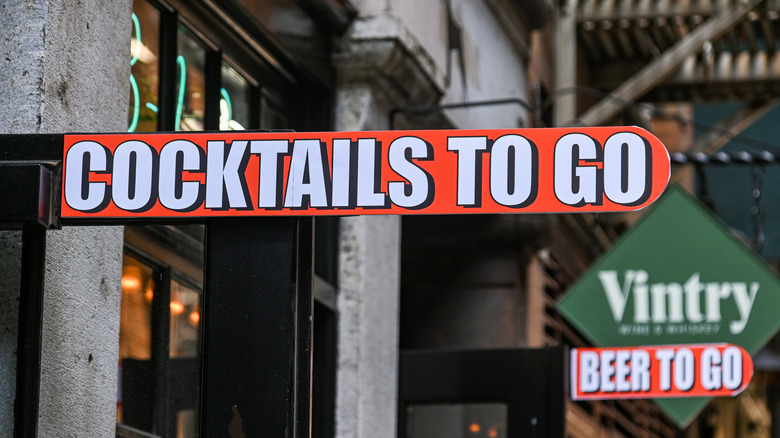
The lockdown triggered by the COVID-19 pandemic changed many things. It changed how we work, as a decade ago, phrases like "work from home" or "digital nomad" would've made no sense, but both are typical for many people today. The pandemic also changed how we eat, teaching us all about foods that could give our immune system a boost. There's one thing we did not see coming though — the pandemic, which saw over 100,000 restaurants shut down in six months (via National Restaurant Association), would also change how we consumed our cocktails. As it turns out, the short-term fix of "to-go cocktails" implemented during COVID is here to stay.
There was a time not so long ago when we generally had cocktails during a night out at a nice bar or a restaurant — that is, other than the rare occasions when an enthusiast decided to serve sub-par cocktails at home (there's a reason homemade tipples never taste as good as they do at the bar; it's all about dilution). When lawmakers allowed bars and restaurants to sell to-go cocktails during the lockdown, it was only to help these struggling businesses survive. But the move was an immediate hit, both with customers and restaurant owners. A restaurant owner in Baltimore told The New York Times that patrons went from ordering a couple of margaritas to buying gallon jugs of the stuff, while another bar owner in Iowa shared with NPR that he was canning Bloody Marys for 14 hours a day to save his business.
Over the last few years, more than 30 states have relaxed these rules on a more permanent basis. This shift is being dubbed by many as the biggest change in alcohol laws since Prohibition was repealed nearly a century ago, which is a big deal.
How COVID broke the three-tier gridlock
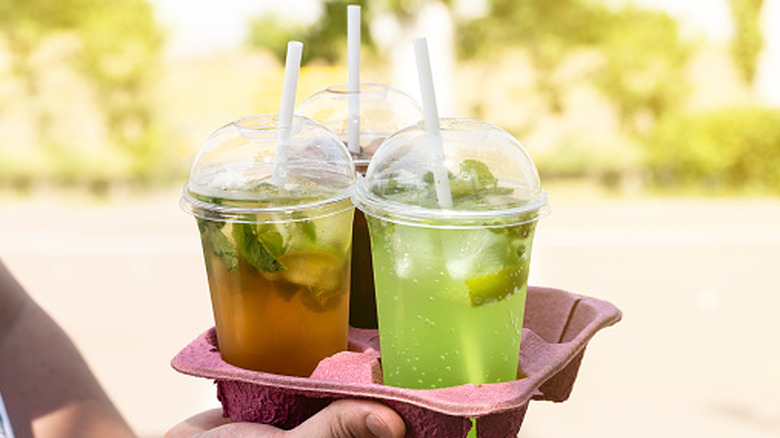
Alcohol laws have traditionally been hard to change, largely because of the three-tier system in which they operate. To get from the manufacturers to the customers, alcohol largely needs to go through distributors as well as retailers. Under this system, manufacturers can't directly sell to customers. Any change in policy usually faces pushback from one of the three tiers (ironically, this is the same rule that prevents aspiring New York breweries from getting licensed).
However, what happened during COVID was that the entire industry came together to lobby for a relaxation of regulations that threatened to hurt all of them equally. New York was the first to allow bars and restaurants to sell beers, wines, and cocktails "to go" as well as for delivery or curbside pick-up. Big Alcohol lobbied hard with other states, and by the time the lockdown was in full swing, as many as 39 states had followed in New York's footsteps, completely normalizing the idea of takeaway cocktails. In the summer of 2020, Iowa became the first state to make the change permanent.
The trend has had an impact beyond bars and restaurants. Delivery services like DoorDash made big changes to the way it delivered alcohol in 2022. In fact, Pluribus News reports that the number of outlets selling alcohol on the platform went up by 37% in 2023, with over a million drivers shuttling booze from retailer to consumer for the first time that same year. Mike Whatley, a lobbyist for the National Restaurant Association, told NPR that pre-pandemic "it would have taken five to 10 years or more to have this many states pass laws that change alcohol policy so significantly."
A fair share of criticism for to-go cocktails
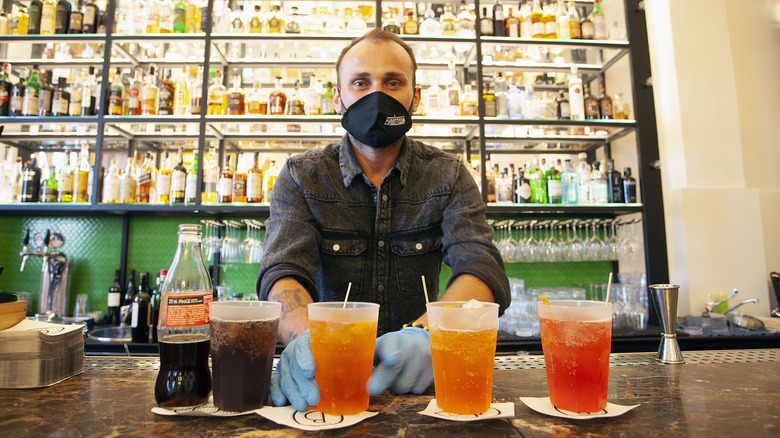
While most states require that people placing cocktail orders to go must also spend a minimum amount on food, the swift deregulation has had its fair share of criticism. For example, it's become practically impossible for alcohol enforcement agents to counter underage drinking. Additionally, Movendi International, an organization that fights alcohol and drug abuse, claimed that Big Alcohol was allowed to use the pandemic as an excuse to push through rules that were harmful to the public at large, especially at a time when addictions were on the rise.
Even as resolutions started easing across the board, cracks have begun appearing in the marriage of convenience within the alcohol industry, as well. NPR reports that wholesalers and liquor store owners are worried that their businesses will start taking a bigger hit if customers could buy alcohol to go directly from restaurants and bars. Meanwhile, bar owners in Arizona — home of the world-famous Tequila Sunrise — filed a lawsuit saying only they should be allowed to sell to-go cocktails, not restaurant owners. Their argument was based on the fact that bar owners paid a significantly higher license fee than restaurants, which meant only they should profit from the new regulations, not restaurants. The judge ruled in their favor.
As of now, there seems to be no indication that the relaxed regulations will be reversed anytime soon, meaning that to-go cocktails are likely here to stay.