

10 Foods Ancient Romans Loved That We Still Eat Today
The ancient Romans were different from us modern humans in many ways. They would watch gladiators fight to the death as entertainment, for example, and they used powdered mouse brains as toothpaste. But we have more in common with them than you might think. We still use Roman numerals, for example, and they even invented underfloor heating and aqueducts. It turns out, our diets were pretty similar in many ways, too.
The Romans ate plenty of eggs, fruits, vegetables, minced meats, honey, and seafood. In fact, they used these ingredients to create dishes that are probably the ancestors of many of the foods we enjoy today. If you've ever eaten a burger, a cheesecake, a sausage, or French toast, you are more like an ancient Roman than you may have realized. Keep reading to find out some of the foods that ancient Romans loved that many of us still eat today.
Deviled eggs
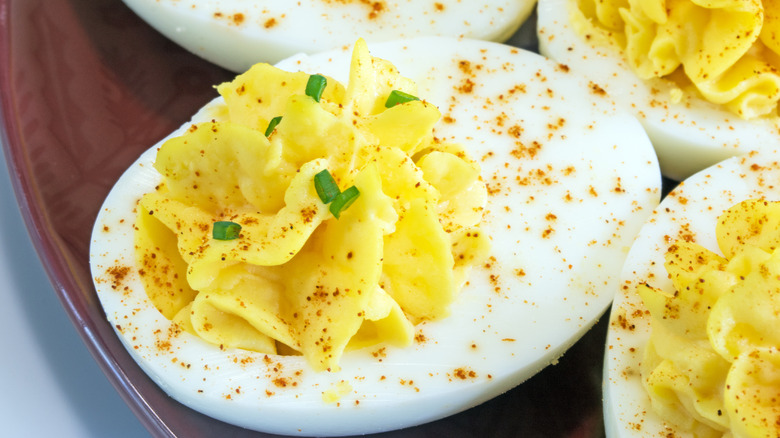
Deviled eggs are one of those dishes that feel like it has always been there. It was particularly popular in the 1950s, but people still regularly eat it today. In fact, the internet is full of tips on how to make deviled eggs — which are basically hard-boiled eggs stuffed with ingredients like mustard, mayonnaise, and spices — taste better, like adding goat's cheese, for example, or grating the yolks. Deviled eggs haven't actually been around forever, of course, but they have been eaten for a very, very long time. Centuries, in fact.
The ancient Romans loved a banquet. The elite members of society would often sit down for hours eating, drinking, and vomiting (yep, they actually did this to make room for more food). And often, those feasts would start with deviled eggs. Well, something similar anyway. The Romans would mash up boiled eggs with ingredients like honey, a pungent Indian spice called asafoetida, and a fermented fish sauce called garum. It was kind of like a deconstructed deviled egg, so to speak.
People ate very similar egg concoctions for centuries after that, but they wouldn't actually be called "deviled" until around the 18th century. This was when the term started to be used to describe hot and spicy dishes — not just eggs, but everything from seafood to organ meats. In the 19th century, deviled eggs became more mainstream, with many recipes printed in Victorian cookbooks.
French toast
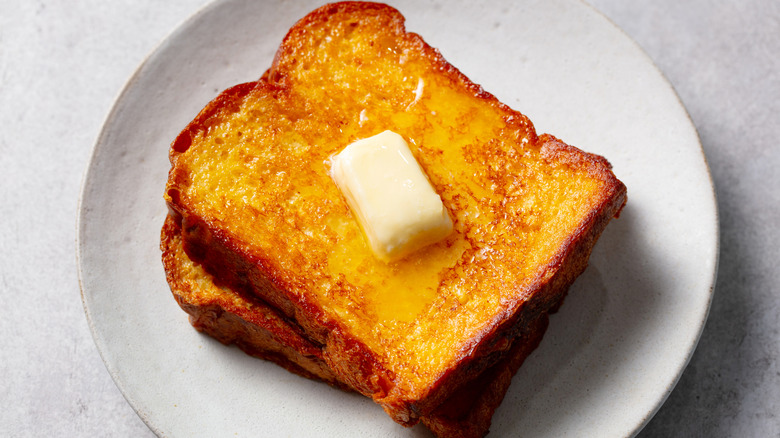
You might assume that French toast comes from Europe, but actually, this popular breakfast dish — made by dipping bread in eggs and milk, often alongside sugar and cinnamon and then frying it — has roots in ancient Rome. Back then, people enjoyed a very similar dish, called aliter dulcia. In Latin, that basically translates to "another sweet dish."
To make aliter dulcia, Romans would soak bread in a simple mixture of eggs and milk before frying it over heat. This makes it quite similar to the British dish "eggy bread," which is like French toast but without the sugar or cinnamon. However, unlike the Brits, who often top their eggy bread with savory ingredients like salt and pepper, cheese, bacon, or mushrooms, the ancient Romans would top the bread with honey for the sweetness (hence the name, "another sweet dish").
We know the Romans enjoyed French toast-esque dishes because there is a recipe for aliter dulcia in "De Re Coquinaria." The ancient cookbook was inspired by a merchant and gastronome called Apicius, who likely lived in the 1st century. However, the book, also known simply as "Apicius," was probably published quite a while later, in the 4th century. If you're wondering, why do we call it French toast and not aliter dulcia? Well, one common theory is that it was prepared by a chef called Joseph French in the 17th century, and the name stuck. Yep, it turns out, French toast has nothing to do with France at all.
Cheesecake
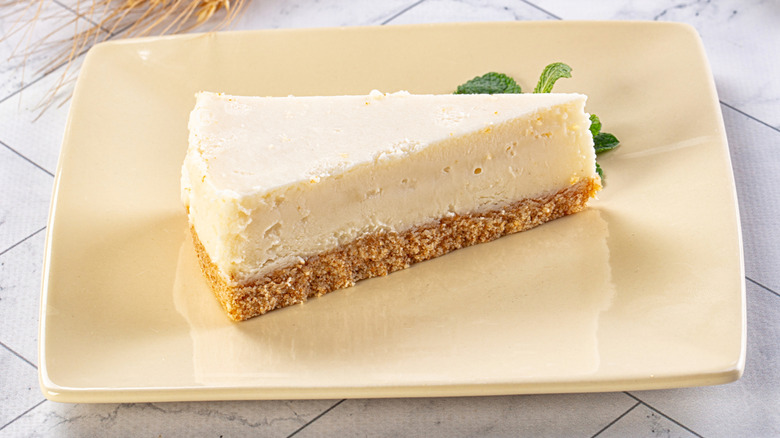
There is no way of knowing for sure, but we'll hazard a guess that the ancient Romans would have loved The Cheesecake Factory — although they probably would have been overwhelmed at the sheer amount of choice. They didn't have Oreos or Reese's Peanut Butter Cups back then, but they did have the age-old sweetener: honey. They would use the sticky-sweet syrup to make savillum, which was often served at banquets and was very similar to modern cheesecake.
The first recipe for savillum was published in the recipe book "De Agri Cultura," which was written by Cato the Elder, a Roman politician in the 2nd century. According to that recipe, savillum is made by combining flour with cheese, honey, eggs, and oil. Everything is mixed together, baked, and then topped with more honey and some poppyseeds. The key difference, of course, is that most modern cheesecakes have some sort of cracker crust. But other than that, it's pretty similar. Perhaps it could pass for a new menu item at The Cheesecake Factory? Just a thought.
Stuffed dates

Today, dates are having a bit of a moment, mostly for their health benefits (they're a good source of fiber, carbohydrates, and antioxidants, for example), but also because of their sweet, caramelly taste. They're a good addition to dessert recipes, like cookies and chocolate bars, but they're also tasty on their own, or stuffed with ingredients like pecans and cream cheese. In fact, stuffed is exactly how the Romans used to enjoy their dates.
Date palms didn't grow in the Mediterranean originally. They are actually native to the Middle East, but by the ancient Roman era, they were cultivated widely by Jewish populations. The Romans loved dates and exported them throughout their empire.
According to a recipe from "De Re Coquinaria," Romans would often stuff the sweet, chewy stone fruits with ingredients like walnuts and pine nuts, before drizzling them with plenty of honey. They would also add a sprinkle of salt, too. That's still a trick we use today — salt helps to enhance the flavors that already exist in a dish. When it's added to stuffed dates, it'll help to bring out the natural sweetness.
Flatbread/pizza
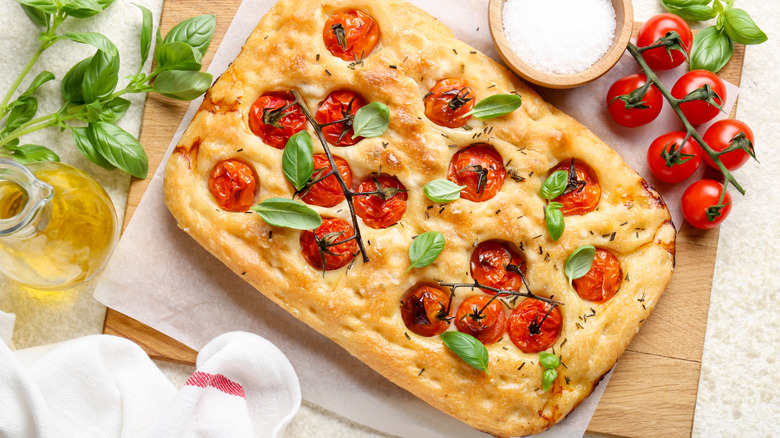
Listen, we've never met an ancient Roman, but as well as The Cheesecake Factory, we can hazard a guess that they would have loved modern pizza. It's not a total stab in the dark — most people love pizza. According to a survey by OnePoll and Amazon Fresh in 2023, the average American eats pizza three times in any given month.
But we also know that the Romans probably would have liked modern pizza because they ate something very similar. They often ate oven-baked flatbreads, which they would top with herbs, sauces, and even cheese. However, that cheese wouldn't have been mozzarella, as the first record of the buffalo milk cheese isn't dated until the 12th century. Tomatoes weren't around yet, either. In fact, the red fruit didn't find its way to Europe until the 16th century. The ancient Romans did put fruit on their flatbreads, though. In fact, they would likely top them with peaches and apples alongside the cheese. We'll use this as evidence that the ancient Romans would have been in the pineapple-on-pizza fan club.
The flatbread that the ancient Romans enjoyed (known in Italian as focaccia) was arguably an ancestor of the modern pizza. But to this day, it also remains a beloved food in its own right. Top it with roasted garlic and plenty of olive oil, and you've got yourself the perfect accompaniment to your favorite pasta.
Lentil soup
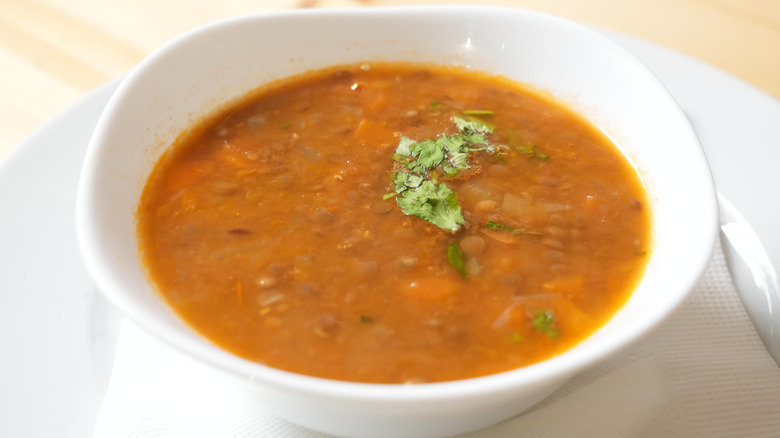
Rich ancient Romans were known for extravagance. As we've established, they loved hours-long feasts and banquets, and tables would usually be filled with not just deviled egg appetizers and cheesecake-like desserts, but also dishes like roast flamingo and parrots. But this isn't how most Romans lived. In fact, research suggests that around 80% of the population lived in poverty, and to them, broths and basic bread were far more familiar foods than exotic birds.
To the average peasant Roman, a meal of lentil soup would have been quite standard. But it wasn't devoid of flavor. One recipe from "De Re Coquinaria," for example, combines boiled lentils with ingredients like leeks, cilantro, vinegar, mint, honey, and garum.
Lentil soup is simple yet nourishing, and it has stood the test of time. Modern recipes aren't all that different from the one published in "De Re Coquinaria." This recipe for red lentil soup, for example, combines red lentils with garlic, cumin, paprika, onions, and lemon for a little tang.
Burgers
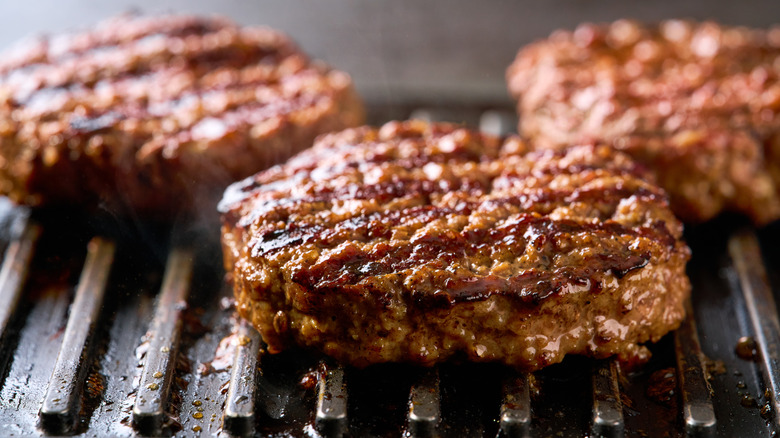
Hands up if you've eaten a burger recently. If your fingers are waving in the air, join the club. Americans love burgers so much that they even have their own national day (May 28). But while they were popularized in the U.S., burgers weren't actually an American invention. In fact, research suggests that, you guessed it, the ancient Romans enjoyed a burger or two. Although they didn't actually call them burgers, of course.
Once again, the reason we know this is all thanks to "De Re Coquinaria." The ancient cookbook includes a recipe for a patty made with a mix of minced meat, pepper, wine, pine nuts, and garum. Unlike most of the burgers today, these Roman patties probably wouldn't have been made with beef. Instead, they would have been made with various minced meats (including, potentially, pig's brains), which would be held together with caul fat.
For the uninitiated, caul fat is basically the thin lining of an animal's stomach, and some butchers still use it to hold together cuts of meat and sausages. While today, most of us enjoy our burgers in a bun, the Romans would have served their patties plain, or with a dash of grape syrup called caroenum.
Sausages
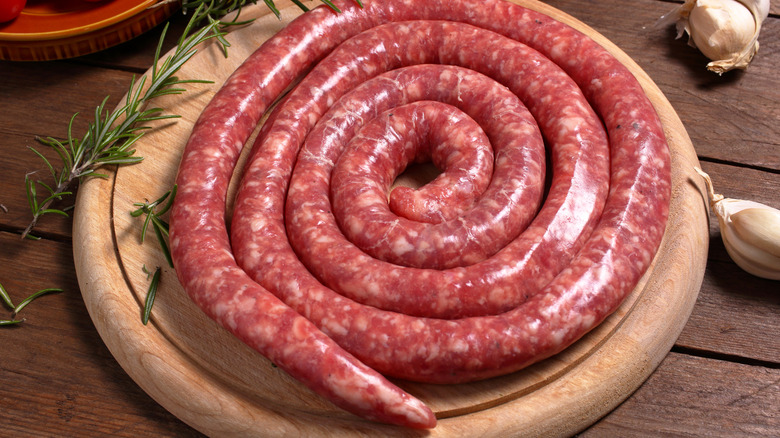
Sausages are another popular food in modern society. They're versatile and can be made with everything from pork to soy to turkey, and can be paired with everything from a hot dog bun to a rich herby gravy. But sausages are a very, very old food. In ancient Rome, people often ate lucanica, which was basically a smoked sausage made with pork, fat, pepper, cumin, herbs, and fish sauce.
There is a recipe for lucanica in "De Re Coquinaria," but it was probably eaten even before the cookbook was published. It was likely first created in the region of Lucania (hence the name) and then brought to Rome by soldiers who fought there amid uprisings in the third century. Lucanica sausages are still eaten in Italy, although they're now known as luganega.
In fact, today, smoked sausages are eaten in many different cultures. In Spain, for example, chorizo is popular, and in Portugal, many eat a type of poultry smoked sausage called alheira.
Mushrooms in sauce
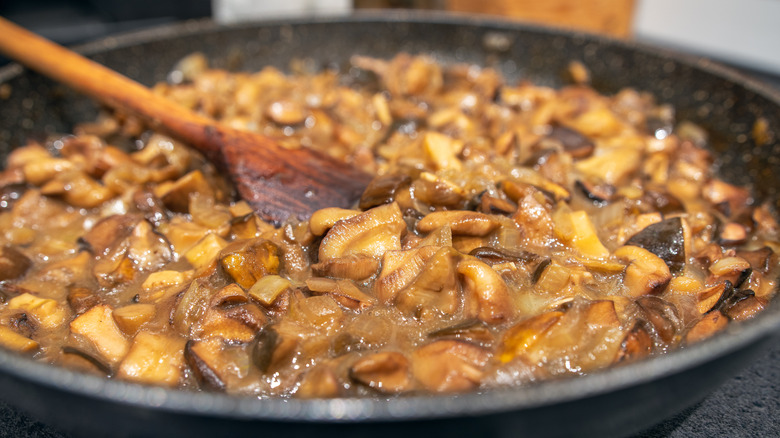
The Romans really, really loved mushrooms. In fact, they loved them so much, they referred to them as the "food of the Gods." It might seem strange now, given that mushrooms are usually a pretty affordable staple ingredient, but in ancient Roman society, the fungi would usually only be eaten by the richest in society.
Mostly, they would be cooked in a sauce. One record of an ancient recipe explains that the mushroom stems would be cooked alongside olive oil, honey, and garum. The stems would come from meadow mushrooms, which were eaten in ancient Rome alongside other mushroom varieties like morel and oyster mushrooms. According to some who have tried the dish today, it's a pretty good flavor combination of sweet and earthy. If long pepper is added, too, it brings a nice spicy component.
The Romans loved mushrooms, but they also had a healthy respect for the fungi, and they knew they had the potential to be dangerous (although they weren't sure exactly why). Some would even use poisonous mushrooms as a weapon in ancient Roman times, and rumor has it that the Roman emperor Claudius was deliberately murdered by death cap mushrooms.
Frittata
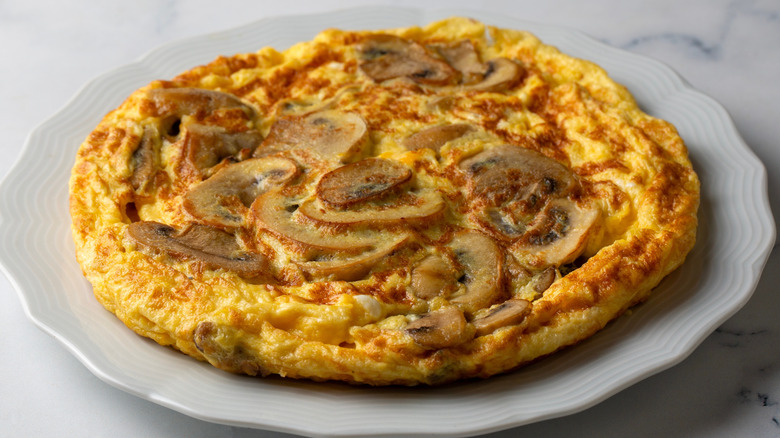
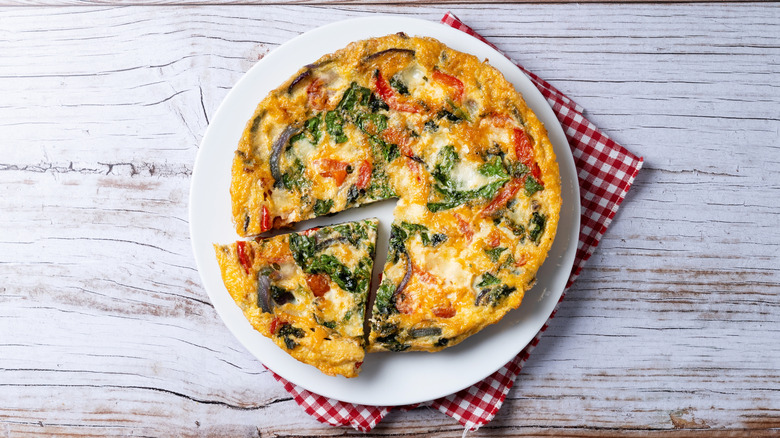
If you're hosting brunch, a frittata is a great choice. The Italian dish, which is kind of a cross between an omelet and a quiche, is, again, incredibly versatile, and can be topped with everything from spinach to cheese to bacon and goat cheese. The ancient Romans ate a very similar dish to frittata, only they called it "patina."
According to "De Re Coquinaria," patinas were often made with ingredients such as eggs, caroenum, garum, olive oil, pepper, and lettuce cores. The cores and pepper would be minced and pounded, and then combined with all of the other ingredients to be cooked in a hot pan. Due to the eggs, the taste and texture would have been very similar to a modern-day frittata.
If you didn't like lettuce, though, you had other options. Another patina recipe in the ancient cookbook calls for asparagus, for example, while another suggests combining the eggs with wild herbs.