

Citrusy White Wine Sangria Recipe
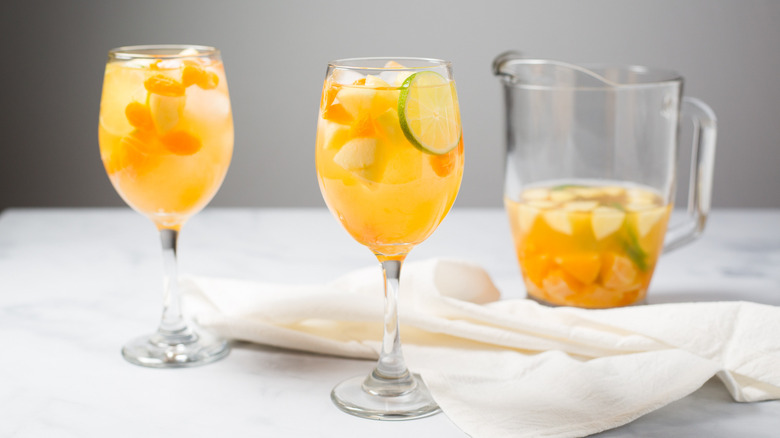
We may receive a commission on purchases made from links.
White wine sangria is traditional red sangria's delicious, refreshing cousin. White sangria can be made with traditional apples and oranges or include summer fruits or tropical fruits, which pair well with bright and zesty citrus. If you're not a fan of sangria, it could be that you just haven't had a good batch. Restaurants often serve overly-sweet versions of the beloved beverage, which is why a homemade version is the way to go, since you can either add no sugar at all or control the sweetness level to taste.
Recipe developer Michelle Bottalico has created a recipe for a citrus-forward white wine sangria that is light, refreshing, and full of fresh fruit flavor. The fruits selected are oranges, mandarin oranges, apple, and lime for an extra-citrusy and bright take on the classic. Brandy and orange liqueur turn the wine into a true pitcher cocktail, and freshly-squeezed orange juice rounds out the sweetness and citrusy notes. Sangria is meant to be lightly sweet, and the fruit, liquor, and fruit juice give it an enjoyable sweetness without going overboard. However, this recipe includes simple syrup as an optional ingredient for those who like it sweeter.
Gather your citrusy white wine sangria ingredients
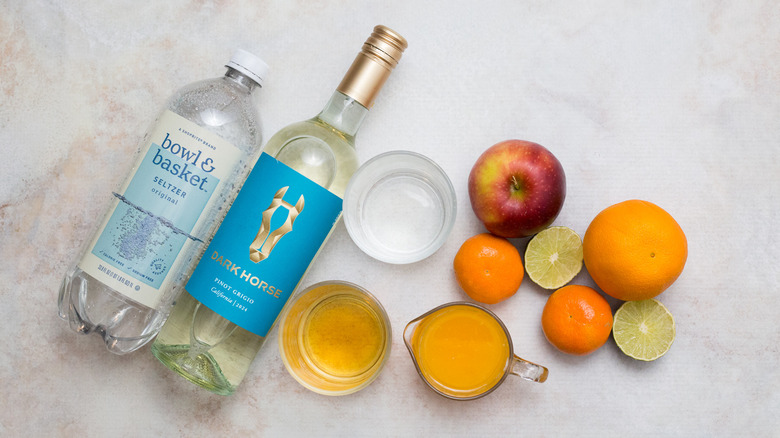
For this recipe, you will need an orange, an apple, two mandarin oranges, and a lime. You'll also need a bottle of dry white wine, brandy, and orange liqueur. The recipe calls for freshly squeezed orange juice, so grab an extra couple of oranges. Finally, you'll need seltzer for a fizzy topping. Simple syrup is an optional ingredient for added sweetness if desired.
Step 1: Prepare the fruit
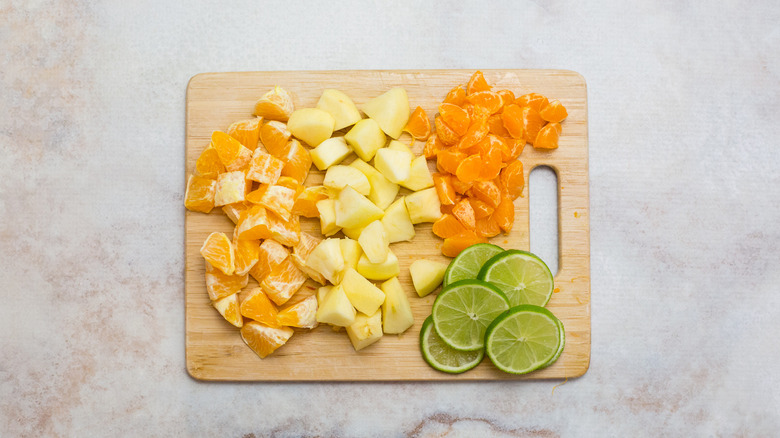
Peel and chop the orange and apple, peel the mandarin orange and slice the segments in half, and thinly slice the lime.
Step 2: Stir the liquids
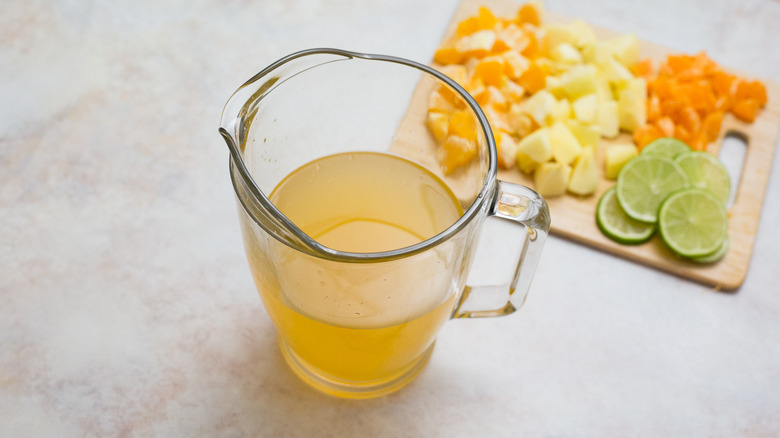
Pour the wine, brandy, orange liqueur, and orange juice into a large pitcher and stir to mix.
Step 3: Add the fruit
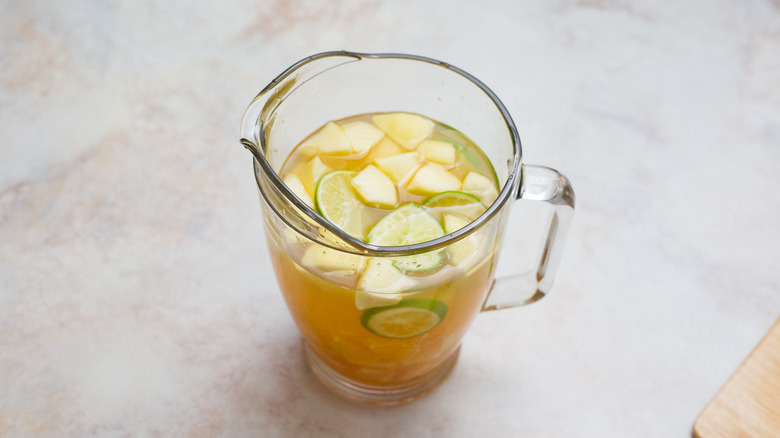
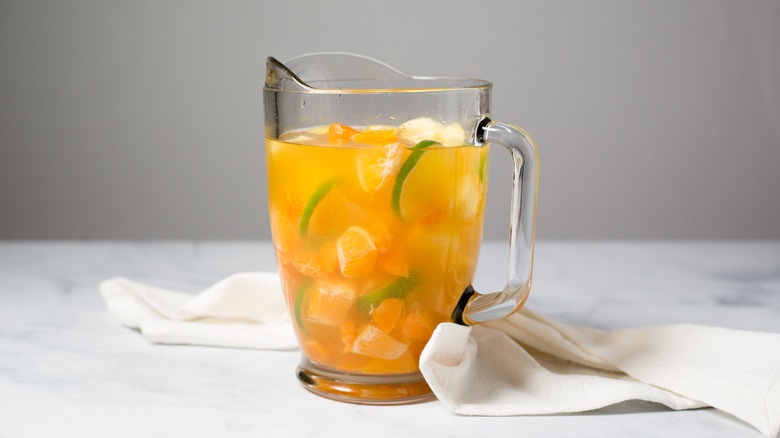
Add the fruit pieces and the lime slices and stir to evenly disperse the fruit.
Step 4: Refrigerate the sangria
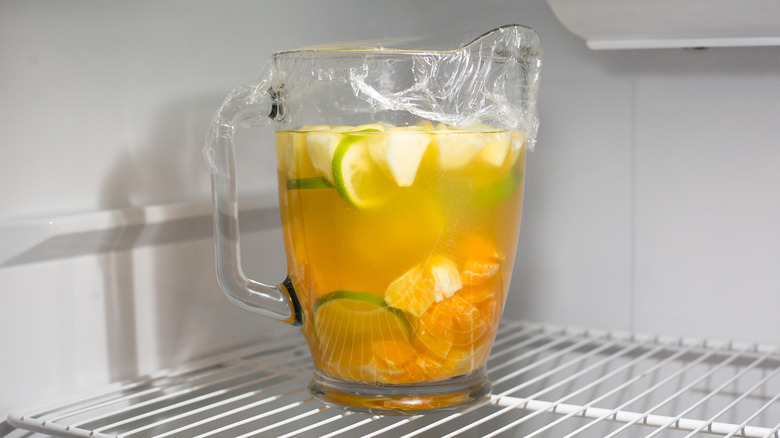
Refrigerate the pitcher for at least 4 hours, or overnight for more flavor. After that time has passed, taste the sangria and stir in the optional simple sugar if you like it sweeter.
Step 5: Add ice to glasses
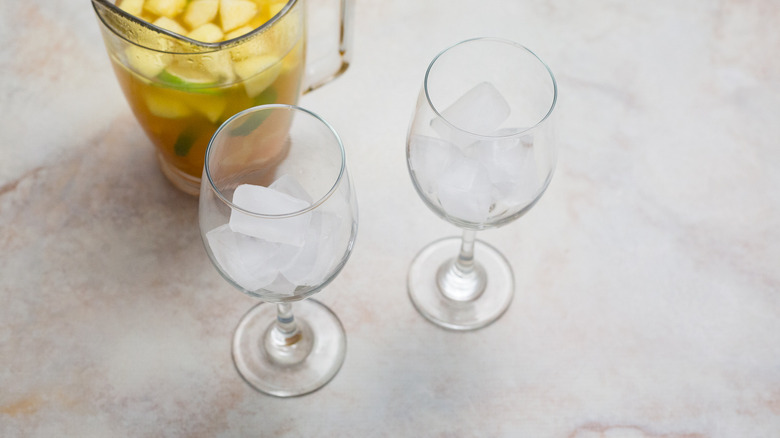
Add ice to 5 wine glasses.
Step 6: Pour the sangria
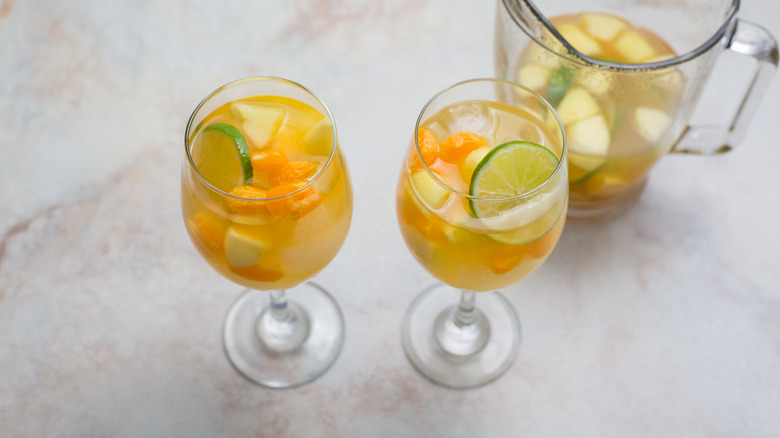
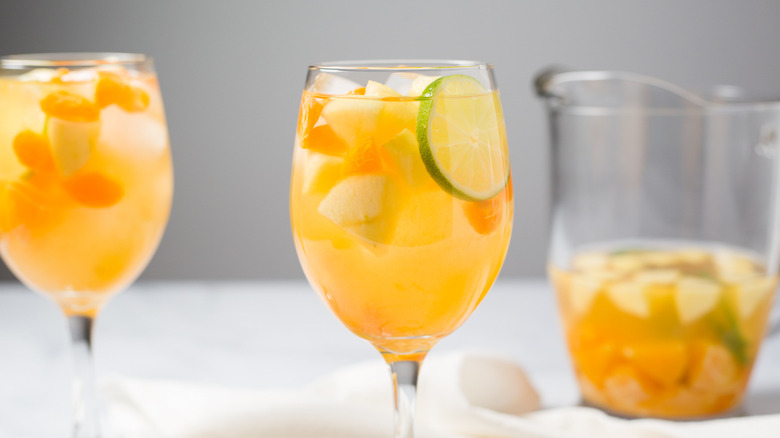
Pour sangria into the glasses, leaving some space at the top. Include several pieces of fruit in each glass.
Step 7: Serve the citrusy white wine sangria
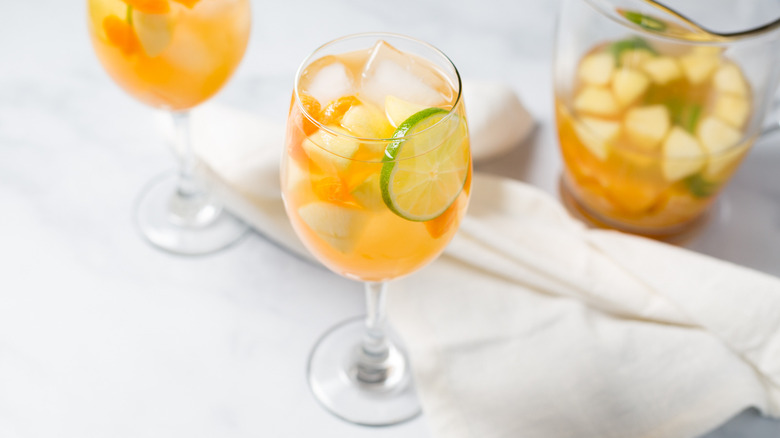
Top the glasses with seltzer and serve immediately.
What to serve with citrusy white wine sangria
Citrusy White Wine Sangria Recipe
This citrusy white wine sangria features apple, orange, and lime along with dry white wine, brandy, and orange liqueur for a positively refreshing sip.
Ingredients
- 1 orange
- 1 apple
- 2 mandarin oranges
- 1 lime
- 1 (750-milliliter) bottle of dry white wine
- ¼ cup brandy
- ¼ cup orange liqueur
- ½ cup freshly squeezed orange juice
- Seltzer for topping
Optional Ingredients
- Simple syrup to taste
Directions
- Peel and chop the orange and apple, peel the mandarin orange and slice the segments in half, and thinly slice the lime.
- Pour the wine, brandy, orange liqueur, and orange juice into a large pitcher and stir to mix.
- Add the fruit pieces and the lime slices and stir to evenly disperse the fruit.
- Refrigerate the pitcher for at least 4 hours, or overnight for more flavor. After that time has passed, taste the sangria and stir in the optional simple sugar if you like it sweeter.
- Add ice to 5 wine glasses.
- Pour sangria into the glasses, leaving some space at the top. Include several pieces of fruit in each glass.
- Top the glasses with seltzer and serve immediately.
Nutrition
| Calories per Serving | 243 |
| Total Fat | 0.2 g |
| Saturated Fat | 0.0 g |
| Trans Fat | 0.0 g |
| Cholesterol | 0.0 mg |
| Total Carbohydrates | 22.0 g |
| Dietary Fiber | 2.1 g |
| Total Sugars | 15.7 g |
| Sodium | 9.8 mg |
| Protein | 0.8 g |

How can I customize sangria?
The first way to customize sangria is to switch up the wine, which can be red, white, or rosé. To make sangria a proper cocktail (and not just flavored wine), brandy, orange liqueur, or both are added. You can decide to use one or the other, but keep the ratio of ½ cup total per bottle of wine. This recipe also includes orange juice, but you can leave that out and add extra fruit or simple sugar or switch up the juice (we like white grape or pineapple juice for white recipes and orange, apple, or cranberry juice for red ones).
The next step is to change the fruit. Sangria is often made with apples and oranges, but you can switch it up depending on the season and the intended flavor profile. Apple and cinnamon for the fall, cranberry and warm spices during the holidays, or strawberry, peach, plum, lemon, and lime for a summer party pitcher all work. The mix should have something acidic, which is why recipes usually include at least one citrus fruit.
Sangria should be a bit sweet, but not overly so. If you like things on the sweeter side, you can stir in simple syrup after the pitcher rests in the refrigerator or even a sweet wine or Prosecco. You can leave out the seltzer if you don't want it fizzy or substitute lemon-lime soda for bubbles plus an extra citrus kick.
What wine is best for sangria?
If you're wondering which are the best wines for sangria, you're not alone. Sangria is traditionally made with red wine. Spanish wines like Garnacha and Rioja are good choices, but any medium-bodied red you'd enjoy drinking by itself is fair game. Overly rich or tannic wines are best avoided, as sangria is a lighter drink.
For sangria made with white wine, choose a dry wine like albariño, Pinot Grigio, or Sauvignon Blanc. While you can top your glasses with a fizzy sweet white wine, using a sweet wine for the main event is a mistake. Sangria is best with an understated sweetness coming from the fruit and brandy. The same rule applies for white wine – if you like the taste of it alone, you can use it in sangria.
Using super expensive wine is another one of the sangria-making mistakes to avoid. Since the wine will be mixed with so many other things, the nuances in more complex wines will be lost, so save your pricier bottles for sipping alone. Price doesn't necessarily equal quality. Some pricier bottles aren't anything to write home about, while there are affordable gems out there. Still, don't reach for the cheapest bottle, thinking it doesn't matter. If it's not good enough to drink alone, the fruit and other ingredients added to sangria won't be enough to magically transform it.