

Cleaning Vs Disinfecting: The Key Difference That Can Make Or Break Your Kitchen
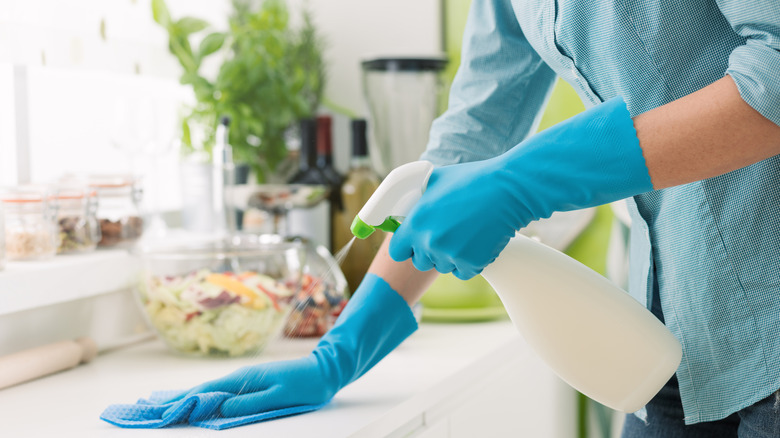
Most people know that certain high-use areas of the kitchen should be cleaned every day. However, many people simply do not have the time to take care of the deep cleaning and disinfecting tasks necessary to make sure the kitchen is a safe, hygienic environment for preparing food. Unfortunately, one common kitchen cleaning mistake that could get toxic is misunderstanding the differences between routine cleaning, disinfecting, and sanitizing — and knowing what each of these tasks involve is key to maintaining the health and hygiene of your home.
Cleaning your kitchen really only means removing dirt, grease, spills, and food particles from surfaces using soap and water. This should be a daily task in order to prevent odors and kitchen pests, and generally maintain a functional meal prep environment. The main areas you want to clean are countertops, stovetops, floors, and appliance exteriors and interiors. The tools you'll use when cleaning your kitchen are a cloth or sponge, brush, soap, water, and detergents. While cleaning can lower the risk of spreading germs, it does not actually kill the potentially dangerous pathogens that may be present.
Disinfecting your kitchen is an entirely different undertaking. To disinfect properly, you need to clean first, then use EPA-registered products that state they kill 99.9% of bacteria and viruses on surfaces. This may include bleach sprays or non-bleach disinfecting solutions. You should clean all high-touch, high-risk, and heavily used areas, including sinks, counters, handles and knobs, floors, light switches, and stovetops. Disinfecting is not necessarily a daily task, but it should be done if someone is ill, before food prep to prevent the spread of germs from packaging and raw foods to prepared foods, or if there is any chance a surface came into contact with raw poultry, meat, or eggs.
There are also differences between disinfecting, cleaning, and sanitizing a kitchen
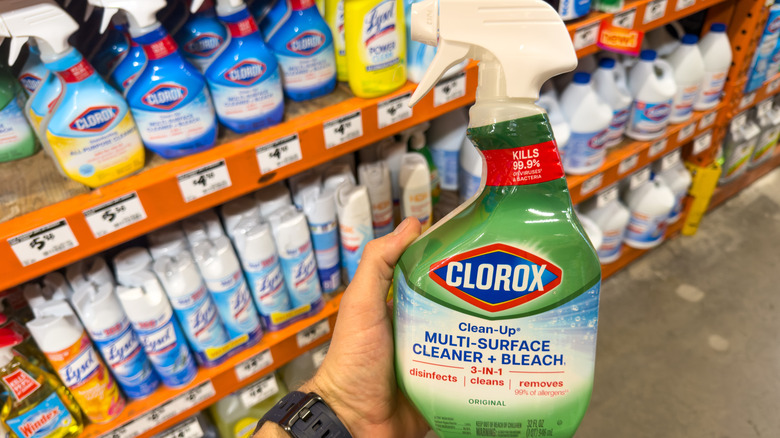
It is also important to be aware of the food safety differences between disinfecting, cleaning, and sanitizing your kitchen. While cleaning your kitchen removes debris, makes your kitchen more aesthetic, and lowers the risk of pest problems and odors, it is more of a surface-level clean. Whereas disinfecting your kitchen actually makes it safer to use, killing almost all of the dangerous germs and pathogens on surfaces. This can significantly reduce the risk of disease and foodborne illness.
However, there is a key middle step in between these two tasks: sanitizing. Sanitizing cutting boards and other surfaces is a daily or every-other-day task that can be completed after cleaning in order to address potential contamination quickly. To sanitize a surface, first clean it to remove debris, and then use a specialized sanitizing spray or highly diluted bleach solution. You should sanitize any surfaces that may have come into contact with raw food, raw meat or poultry or their juices, and food packaging like bags, baskets, and Styrofoam or cardboard containers. These items can transfer germs from surface to surface, eventually ending up on kitchen items like cutting boards, knives, towels, and then food.
Sanitizing doesn't necessarily kill viruses, however, so if someone in your household is sick, you should consider disinfecting surfaces to be safe. You should also carefully read all product labels before you begin to make sure you are using them properly. For instance, many sanitizing and disinfecting products must remain on the surface of the item for up to 10 minutes in order to actually kill germs, bacteria, and viruses, and the product needs to stay wet that entire time.