

9 Things You Should Never Say To Your Butcher
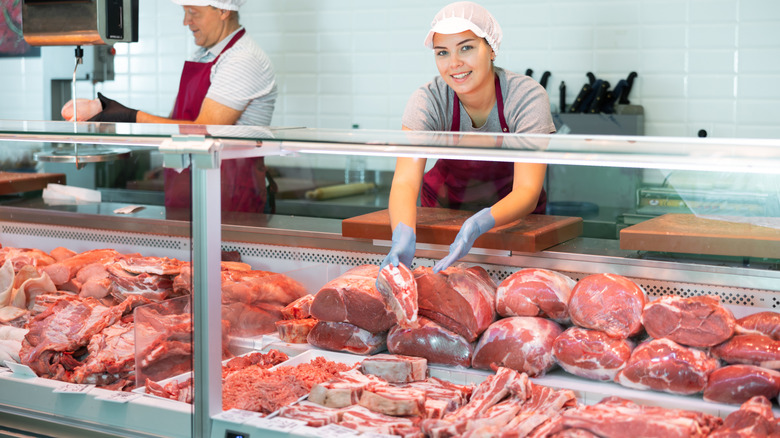
Many butchers welcome lots of questions. They enjoy speaking with their customers and encourage you to ask for what you want, especially if you aren't sure of the exact piece of meat you're looking for. It's better to learn about what's in the display case rather than taking wild guesses and walking away disappointed with your purchase. But there are things butchers would rather not hear — not because it's a stupid question or because they don't have time to serve you — but because it isn't in your own best interest. A little research before you enter a butcher shop can help you and the person behind the counter navigate your order more efficiently.
We spoke with Gabriel Llaurado, co-founder of Meat N' Bone, and Marc Jonna, co-founder and president of Plum Market — along with his team of butchers — to find out what butchers want you to know in order to make your shopping experience better. Jonna tells us that a quality butcher provides transparency. "A butcher is more than a purveyor; we call them culinary consultants," he says. Butchers are there to help you elevate your dishes and select the right cut for your recipe, giving you the best chance at a great meal.
1. What's your best steak?
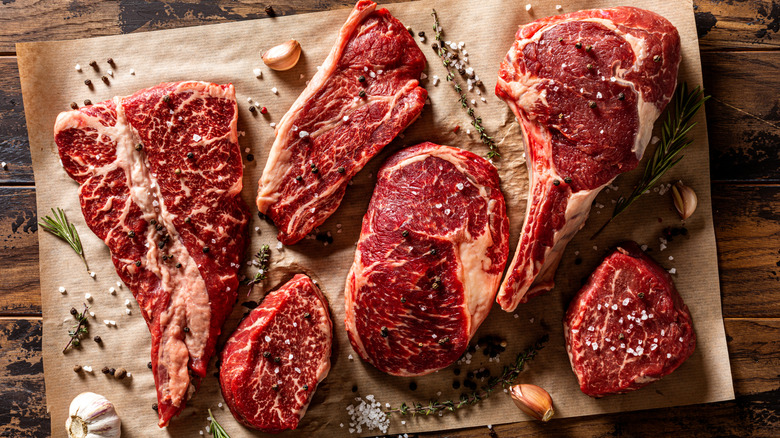
It seems like an innocent question: What's your best steak? After all, we want the best piece of steak. But "best" is somewhat subjective when it comes to picking out a specific cut of meat. From chicken to lamb, there are a number of options that can be considered steak — whether it's beef ribeye, pork blade steak, or bone-in lamb steak. Trying to determine the "best" means comparing two entirely different cuts. And even among the different cuts of beef steak, it's not fair to compare a fatty ribeye with a lean piece of sirloin. Beyond narrowing down your protein of choice, Gabriel Llaurado, co-founder of Meat N' Bone, says, "'Best' depends on budget, cooking method, and preference — without context, it's impossible to answer accurately."
While it seems like a worthy ask on the surface, your butcher will just have to keep prodding you with more questions to help you find the right cut. Having some idea of what you're looking for is ideal. It's better to ask the butcher which cut would be best for your spending limit and to share how you plan on cooking the meat, like whether you're in the mood for something grilled or slow-cooked. Butchers might recommend lesser-known — and often more affordable — cuts you may not be aware of that can give you the same kind of experience as a pricier cut.
2. What is the cheapest cut you have?
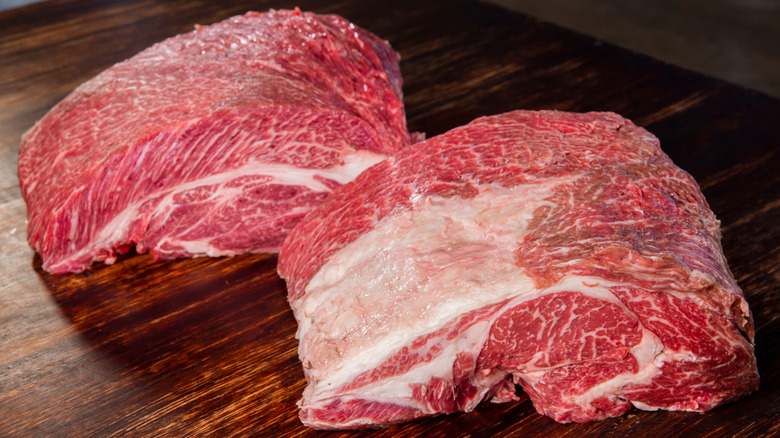
This might appear like a reasonable question, especially when your budget is tight and you prefer to know the bottom line, but "cheap cut" is still a big playing field. Cheaper, more affordable cuts of meat you shouldn't overlook, such as chuck steak, pork shoulder, beef shank, or lamb neck, can shine when cooked the right way, so you'll need to find what the best-value cut is for your preferred cooking method. "Instead of cheapest, ask for the 'best value for [your] cooking method,'" says the Plum Market butcher team. This can, at least, get you headed in the right direction.
Talking to your butcher will get you insight into budget-friendly meats and help you score the perfect cut. "Our butchers might steer you toward a bavette or coulotte — under-the-radar cuts that offer the richness of a premium steak at a fraction of the cost," the Plum Market team says. Instead of asking for the cheapest option, let your butcher know if you prefer a quick stir-fry, grilled steak, or a braise, as this can inform their recommendation on an affordable cut.
3. Nothing frozen, fresh only
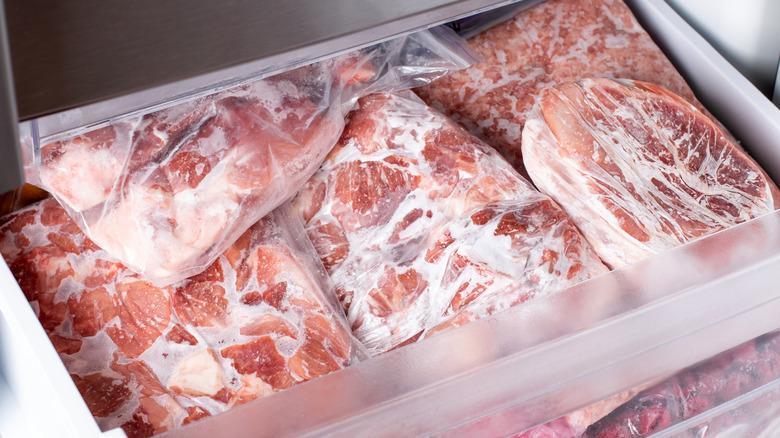
Fresh, instead of frozen, meat instinctively sounds like a better option, but that's not always the case. The concept of "fresh" is not necessarily the opposite of frozen — both can be true: Frozen meat can be fresh as well. And many types of proteins and cuts are actually better off being frozen after processing. Meat is cut and sealed fresh at processing and can be frozen to maintain that freshness. Then it's transported to its desired destination — usually your local butcher or supermarket.
"Frozen doesn't mean low quality — flash-frozen can lock in peak freshness," Gabriel Llaurado explains. But the definition of "fresh" can also depend on the supply chain, Llaurado says. Though the meat may be frozen at its peak, it can still technically be an older cut. That's why freezing is helpful — the process of raising meat to it landing on your plate is an investment, and no butcher wants to sell you bad meat.
4. I'll just take what's already wrapped in the case
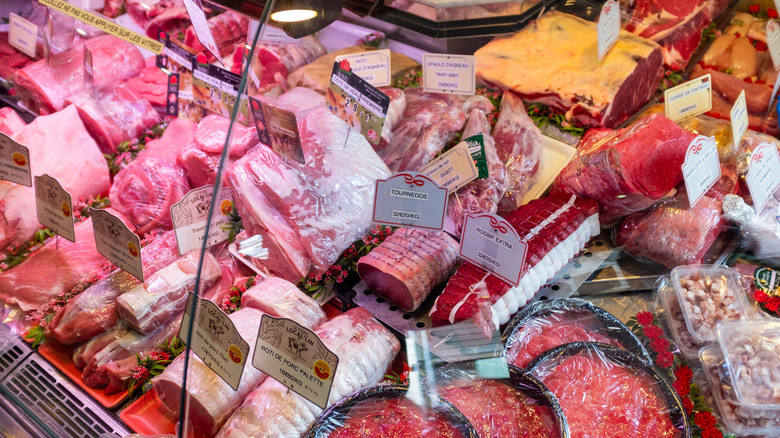
Maybe you're in a rush and want to grab something quick. You finally get to the butcher counter and blurt out, "I'll just take whatever's ready." Pause for a moment and take a beat because you're doing yourself a disservice. "The magic happens when you ask for a custom preparation," the Plum Market butcher team says. You could be shortchanging yourself if you don't take a few minutes to customize your order. "Whether it's double-cutting a pork chop for a better crust-to-interior ratio or frenching a rack of lamb for a stunning presentation, you should utilize the skill behind the counter," they say. Besides, it's possible that what you're looking for isn't displayed in the case. The butcher may be able to get you the cut you want, specifically prepared for your recipe.
Since there are safety regulations dictating how meat has to be stored in the display case, your butcher may have some cuts in the back that they can sell you that didn't fit in the display. If you default to what's already wrapped in the case, you may be missing out on something better suited for you. This is not to be confused with asking what they have out back as if they're purposefully hiding meat in a freezer to keep it from the public; they may be keeping some tucked away to preserve its freshness.
5. I don't really care where it's sourced
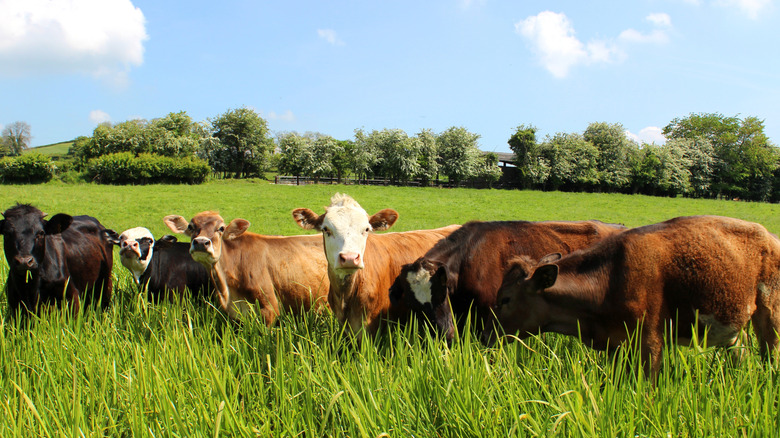
Supporting local ranchers is important. If considering the source of your food is not at the forefront of your mind, that's okay, but doing so could have a big impact. More than that, understanding where your meat comes from helps you know the quality of the product you're getting. "Traceability is the hallmark of a great meat department," the Plum Market butcher team says. So though you may tell your butcher you don't care to know where it comes from, that information is directly in line with the cut of meat you take home. For instance, Plum Market suggests asking about the diet and environment in which the animal was raised in. Why? "The answer tells you exactly how that meat will behave in your pan," the team explains.
Sourcing matters for reasons more than just supporting local ranchers. Knowing whether your beef came from grass-fed or grain-fed cattle matters when it comes to preparation and cooking time. Grass-fed beef is leaner, meaning its low fat content causes it to cook quicker. Likewise, heritage pork can handle more robust cooking methods due to its higher fat content, whereas conventional pork is a bit leaner.
6. I want Wagyu, but I don't want it fatty
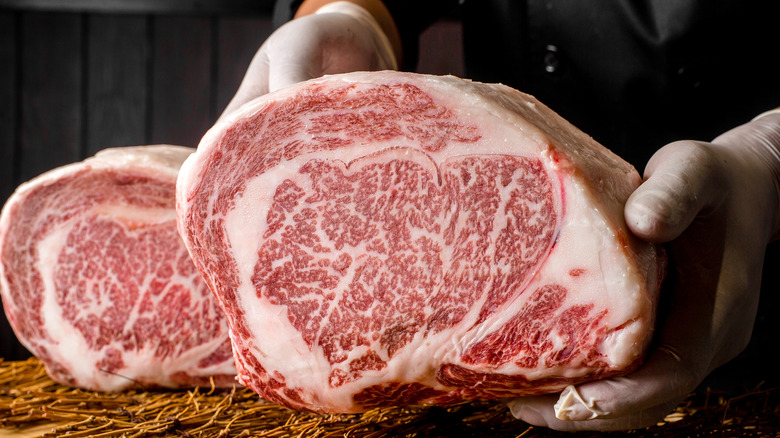
Certain cuts of meat are inherently fattier or leaner, so it's helpful to understand what you're looking for when shopping at the butcher counter. It's better to let your butcher know you're in the mood for a lean cut of meat, rather than ask for something like Wagyu or ribeye, especially when you're not familiar with the differences between cuts. But maybe you've heard people wax poetic about Wagyu beef and you're intrigued enough to want to try it, though you're unsure what it is exactly.
The main thing you should know about Wagyu beef is that it's a fatty piece of meat. So if you're hoping to score some lean Wagyu from your butcher, that's not going to happen. "Wagyu's signature is marbling and richness," Gabriel Llaurado says. "If you don't like that, you'll be happier with a different premium cut." Wagyu beef comes from various Japanese cattle; the word "Wagyu" literally means "Japanese cow." These breeds feature more intramuscular fat, which results in the heavy marbling the meat is known for. Due to its unique taste and incredibly tender bite, Wagyu typically comes with a higher price tag and is frequently found in fine-dining restaurants. If you're looking for a succulent, tender premium cut that's fairly lean, we suggest asking for filet mignon instead.
7. I want to cook it well-done but have it remain juicy
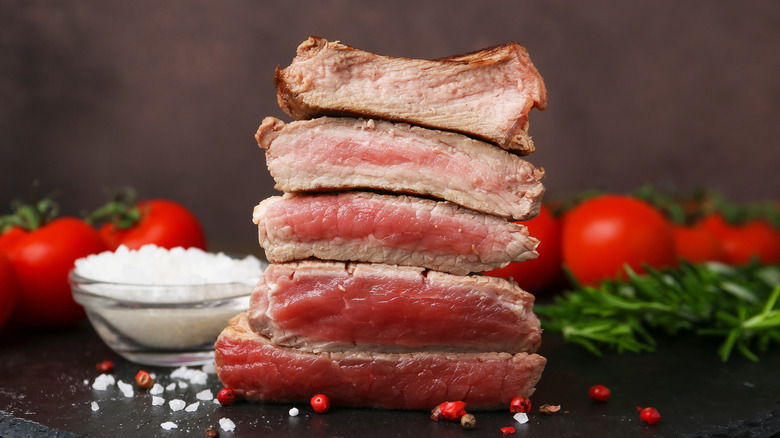
Keeping your meat juicy after you've cooked it well-done is no small feat. In fact, Gabriel Llaurado says, "That's fighting physics — higher doneness dries meat. Because the longer you cook steak, the more moisture it loses." Additionally, while many chefs don't care if you order steak well-done at their restaurant, there are certain cuts of meat that are better options for enjoying in that range of doneness, like chuck or round.
Believe it or not, discussing doneness with your butcher can help them determine exactly what cut would be best. First, ask yourself why you want it well-done. Is it texture? Is it taste? As Llaurado says, "Well-done can be tender, but 'juicy steakhouse bite' is hard unless you use the right cut and method." If your butcher knows that you prefer a well-done cook, they can recommend a cut that can remain as juicy as possible and potentially offer tips on how to maintain that moisture.
However, there's only so much you can do. Most juicy steaks are cooked medium-rare for a reason. "You can improve tenderness," he says, "but it won't eat like medium-rare." Consider asking your butcher for a piece of meat that stays tender when well-done. Although it may not be juicy, you'll still end up with a texture that's pleasing to your palate.
8. Can you trim every bit of the fat off?
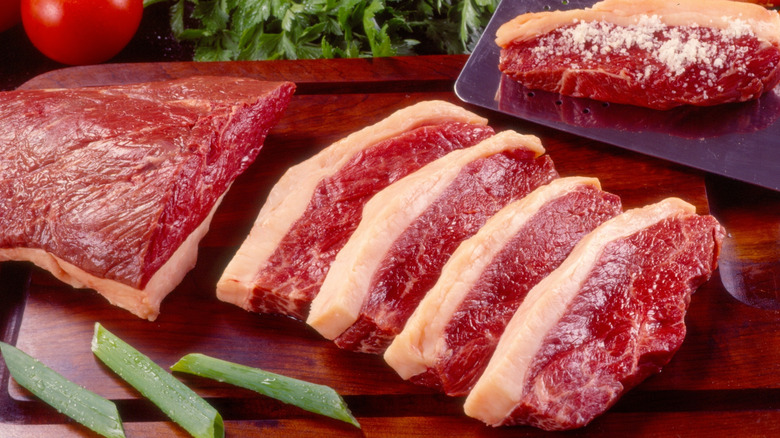
Asking to trim the fat off isn't necessary at a butcher shop. They've already butchered the cuts to optimal specifications to ensure you get what the cut calls for. Each piece of meat — whether it's leg of lamb, pork shoulder, or rack of ribs — is defined by the area of the animal it was sourced from. When you ask to trim all the fat off, you aren't receiving the best that particular cut, and part of the animal, has to offer. "Fat isn't just extra weight, it's the insulation that keeps your meat succulent. Trimming it into lean-only territory often results in a dry, disappointing meal," says the Plum Market butcher team.
Specific cuts are known for their prominent amount of fat, like pork belly and picanha. Cutting the fat off changes the product entirely. Instead, trust the butcher's expertise behind the counter. If there's visible fat on a cut of steak, it's part of the cut. "Our butchers leave just enough of the fat cap to render down during the cook, naturally basting the meat from the outside in," says the Plum Market butchers.
9. Can you hook me up with a discount?
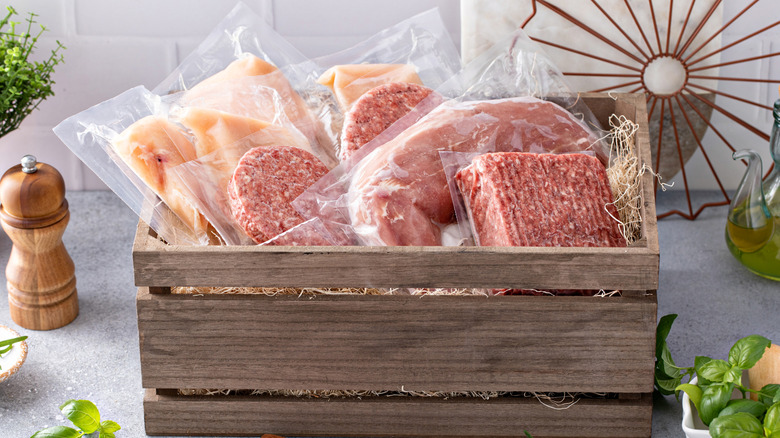
Regardless of whether it's your go-to butcher or you promise increased customer traffic, don't ask for discounted prices. Your butcher is not in the negotiations business. "It puts the butcher in an awkward spot and undervalues the product and craftsmanship — quality sourcing, labor, and yield are real costs, and loyalty works best through planned catering and volume pricing," says Gabriel Llaurado.
Instead of asking for a discount, ask your butcher if they ever run specials (maybe around the holidays) or if they offer bulk pricing (buying pounds of meat at a time). Then you can be prepared to take advantage of potential offers, rather than hope for something that can't be delivered on a whim.
Consider other ways to save money at a butcher shop. Buying in bulk is a good plan for a more affordable way to stock your freezer. You'll often find volume pricing is a little lower. Another way to save money is to join your local community supported agriculture (CSA) program; you can pay for a monthly or yearly subscription to share in the rancher's haul. You can also budget at the butcher by learning more about the cuts you're buying — where they come from, what their characteristics are, and how to cook them. Once you can navigate the butcher's display case and have familiarized yourself with various cuts, you'll get the best bang for your buck.