

The US State With An Unusual 'Food-Beverage Ratio' Restaurants Must Follow
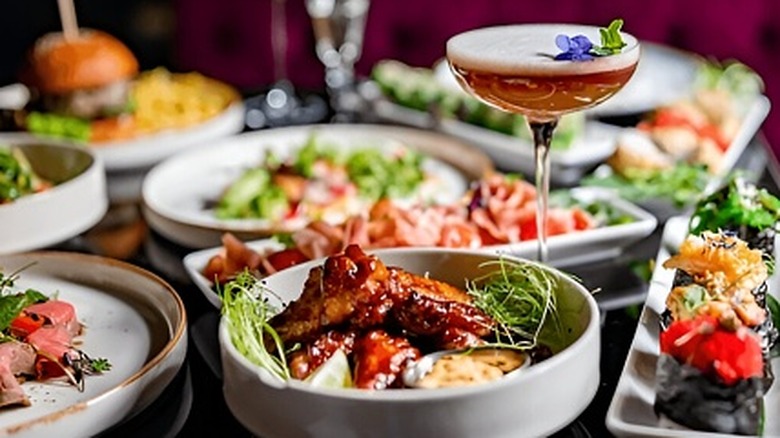
Some food and beverage laws are outright bizarre. For example, in Alabama you can't carry an ice-cream cone in your back pocket while walking down the street, a legacy of a time when horse thieves used this trick to lure equines away. Until 2014, it was illegal to have two drinks in front of you at a bar in Hawaii — lest you drink too fast. Happy hours are banned in several states because it promotes overconsumption. One of the more unusual ones is this hard-to-enforce regulation in Virginia, where alcohol sales can't be over 55% of the total revenue for restaurants.
According to the Virginia Alcohol and Beverage Control Authority (ABC) website, regulations for mixed beverage licensees "stipulate that a minimum 45 percent of the total gross sales must be from food and nonalcoholic beverages. Conversely, alcohol sales should comprise no more than 55 percent of these sales." The Mixed Beverage License covers restaurants, clubs and caterers, and this regulation falls under the Mixed Beverage Annual Review, or MBAR, which all licensees must submit annually.
While that's not as strict as Utah, where every pour is monitored, it isn't too far off, especially when combined with other regulations: Minimum monthly food sales, substantial entrees, and a requirement to prove how much food was consumed at a buffet. Some of it is so complex that the ABC even deploys special agents to help restaurants comply with the food-beverage ratio regulation. Which really begs the question: Why on earth does this regulation exist?
Here's why the food-beverage ratio exists in Virginia
As with many obscure laws, this is a remnant of the past. There's a law in New York, for example, that prevents anyone with even a small stake in a bar or restaurant from obtaining a brewer's license. While it was introduced to discourage monopolistic practices, today this New York rule ends up keeping some aspiring breweries from getting licensed.
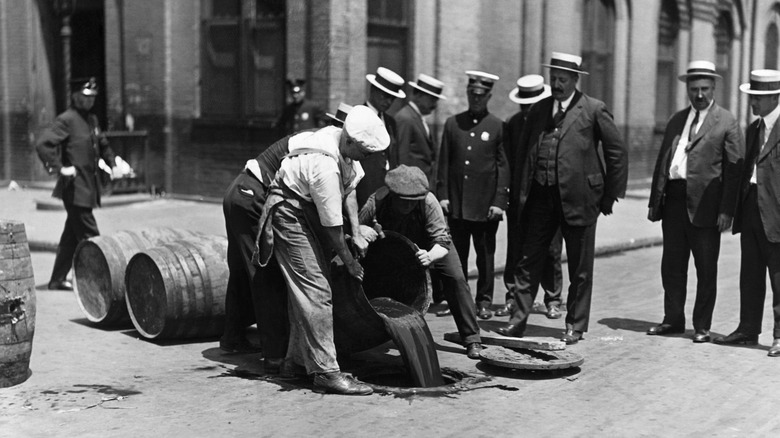
Virginia's food-beverage ratio rule is a relic of the early 20th century prohibition era, which hurt the U.S. in more ways than one. Sale of hard liquor was completely banned in Virginia between 1916 and 1968, when the state passed the Mixed Beverage Act (sales of beer and wine were legalized in 1934). While the Act finally legalized the sale of hard liquor, it came with a host of fairly ridiculous riders. According to RVA Mag, drinks could only be served at the table, not across the bar, while only restaurants with over 50 seats could sell booze. Advertising alcohol on hoardings was restricted as well. While a lot of the other restrictions have been done away with over time, the food-beverage ratio regulation has stayed in place despite consistent pressure from different quarters — from lawmakers to bar owners — to do away with it.
"It has been a conversation for at least over a decade now," Tommy Herbert, the Virginia Restaurant Travel and Lodging Association, said in 2024, adding: "I know folks are very motivated for a change to that policy." While efforts to repeal the bill did not make it through the House in 2024, there's currently a bill in the Senate that puts this regulation under the microscope again (HB975), seeking to dilute how the state regulates restaurant alcohol-to-food sales ratios.