

The Boomer Kitchen Keepsake That's Quietly Disappearing
We may receive a commission on purchases made from links.
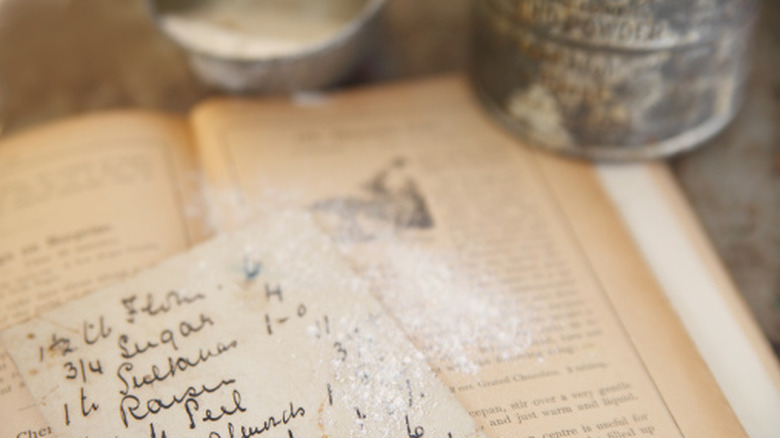
From aesthetic retro kitchen designs to our favorite vintage kitchenware, it's easy for foodies to romanticize the past. Nowadays, more and more home cooks are deciding that there really is no school like the old school, and from ceramic sponge-holding frog statues, to box televisions, to copies of the Farmer's Almanac, many kitchens are taking a page out of the old-school book. However, ironically, "old-school books" are quietly disappearing. Paper recipe cards and church cookbooks, once a fixture of working-class boomer kitchens, are increasingly seldom-spied in the modern kitchenscapes – and there are several reasons why.
One factor is the push toward minimalism in contemporary kitchen interior design trends. Keeping a drawer filled with loose recipe cards is pretty antithetical to "decluttering," which promotes dogma like "hide your stand mixer in an appliance garage." The disappearance of handwritten recipe stashes isn't evidence that home cooks aren't as sentimental as they used to be. It's a byproduct of the advent of culinary websites (*tucks hair behind our ears*) and social media. With broadened online recipe access, it isn't absolutely necessary to hand-write a recipe if you want to remember it or share it with a friend. Physical media has been largely expelled by the digital age; it's the same reason why many households don't hold a single CD, DVD, or LP. Although, another byproduct of digital recipe acquisition and collection is that physical recipe cards have unintentionally become considered as "content" more than something to be treated like an heirloom.
Handwritten recipe cards can be heirlooms, not clutter
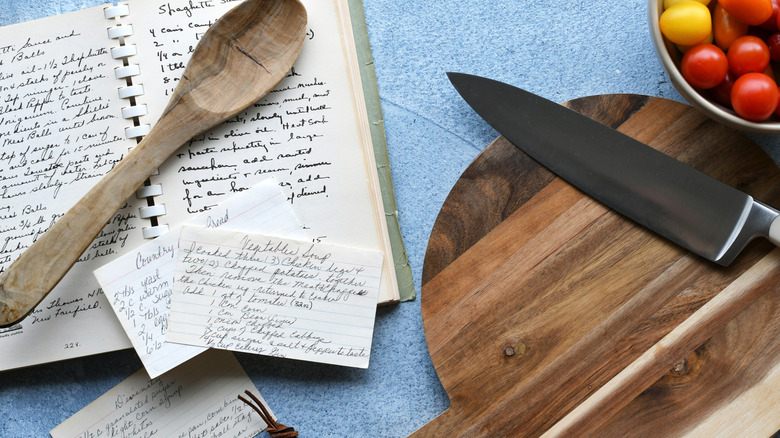
It could be argued that community cookbooks still exist — they've just metamorphosed into sending your loved one a short-form video recipe for a knockout bean soup on TikTok or Instagram Reels. But, if your grandpa made the best beef jerky or caramel corn, you'll thank yourself later on for keeping the recipe card. Not only can you recreate the elusive taste of a familiar, treasured favorite, but you'll be able to read the instructions in your loved one's handwriting (the written version of the way their voice sounds).
At the end of the day, some Boomer cooking habits simply don't translate to younger generations. Many Millennial and Gen Z foodies are more likely to live in a smaller space than the multi-bedroom houses that characterized their parents' and grandparents' generations — meaning less storage space to comfortably accommodate a library of paper cookbooks and recipe cards. Excess clutter can wreak a negative impact on mental health, too. Our advice? Hold onto a few prized recipe cards and invest in a hard plastic recipe card box or index card box (like this one by Offilicious). The hard outer shell makes for easy wipe-downs, while neatly storing your cards for quick access and protection, sans-clutter. Or, alternatively, those prized recipe cards can be organized in a scrapbook-style binder with plastic sleeves for neatly tucking into a bookshelf; this one by Samsill currently runs for $10.24 on Amazon.