

Wendy's Fries Used To Be Made In A More Flavorful Way
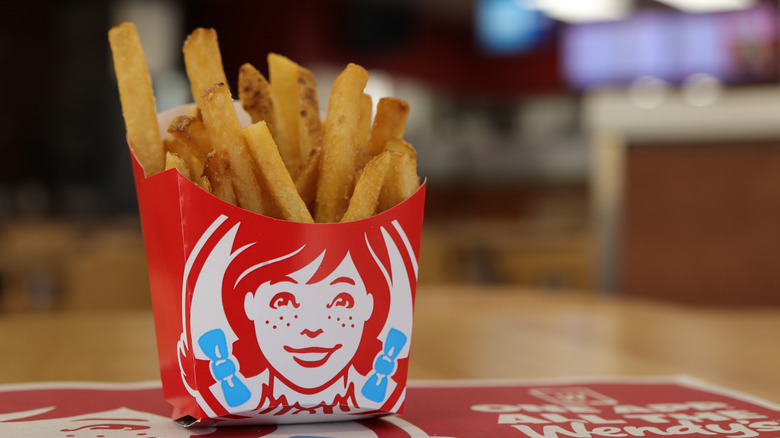
The heart of nostalgia is usually some version of an idealized, but nonexistent past. But if you remember that Wendy's fries used to taste better, it's not merely sentimental embellishment. For a long stretch of fast food history, restaurants filled their fryer oils with beef tallow, a rich, delicious animal byproduct that gave their fries that certain something. When Wendy's first opened in 1969, the fryers were filled with 100% vegetable oil. However, the brand pivoted to a signature beef tallow and vegetable oil blend in the mid '70s — for many, these are the fries they remember.
By 1990, as a response to consumer health concerns, Wendy's and other chains like McDonald's and Burger King announced that they would stop using beef tallow, instead returning to 100% vegetable oil. The shift reflected a broader moment when fast food chains aimed to appear more nutrition-conscious, with advocates and health officials praising changes that reduced saturated fat (despite fries being, inherently, potatoes, oil, and salt). Health was the "optics" explanation, but vegetable oils were also abundant, scalable, and competitively priced. Public health advocates applauding the cost-effective oil replacement was just PR gravy.
So, Wendy's pivoted to 100% corn oil, although a company spokesperson at the time described the difficulties in replicating the qualities customers associate with a good fry — golden, hot, crispy — since beef tallow, in addition to tasting good, absorbs so well into the potato. In other words, the industry knew it was trading something away, and it spent time trying to approximate the taste of tallow.
The science of that certain something
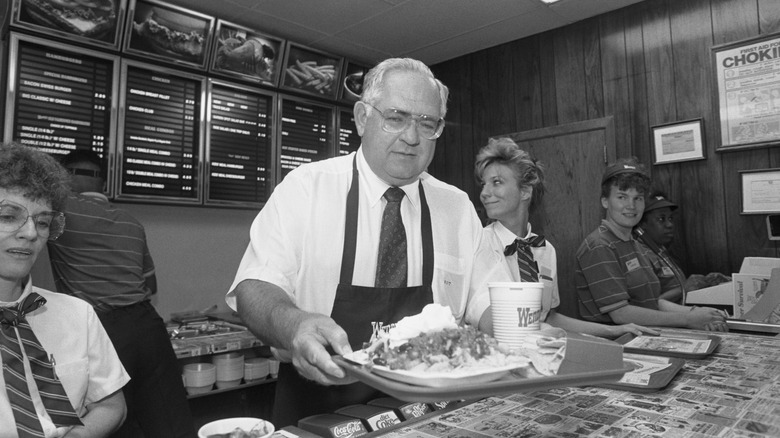
These days, beef tallow has a reputation as, at worst, a politicized and polarizing wellness symbol. At best, it's a niche-specialty-selling point that adds value and probably cost. But in old-school fryer terms, it was simply a classic medium. It's a fat that can handle high heat and makes hot potatoes (and even fried oysters) taste optimal. For a chain built around selling burgers, using rendered beef fat had a certain nose-to-tail efficiency; at the time, 100% vegetable oil cost 30% more than a tallow blend.
Beef tallow has a smoke point of about 400 degrees Fahrenheit and contains a higher proportion of saturated and monounsaturated fats than common vegetable oils. The composition makes it relatively stable under sustained high heat, like in a deep fryer. In practical terms, stability affects how oil breaks down over time and how consistently it crisps the exterior of a fry while keeping the inside fluffy. As tallow cooks, the lipids oxidize and create new volatile aroma compounds, and the potato subsequently absorbs that indelible beefy flavor. That absorption enhances texture and taste and creates the crisp-lacquered shell that the fans of the '70s and '80s Wendy's fries remember so vividly.
When chains switched to vegetable oils, the upside was clear on paper: less saturated fat, no cholesterol. This cashed in on the "low-fat, heart-healthy" craze of the time. But the sensory experience wasn't as cogent. So, folks still wax poetic about the sweet (or, salty?) memory of junk food that they ate over 30 years ago. Some pining for the "golden age" of "yellow Wendy's" note that the fries tasted "like they were cooked in butter," as one Redditor put it.
Nothing stays the same forever in the fast food business
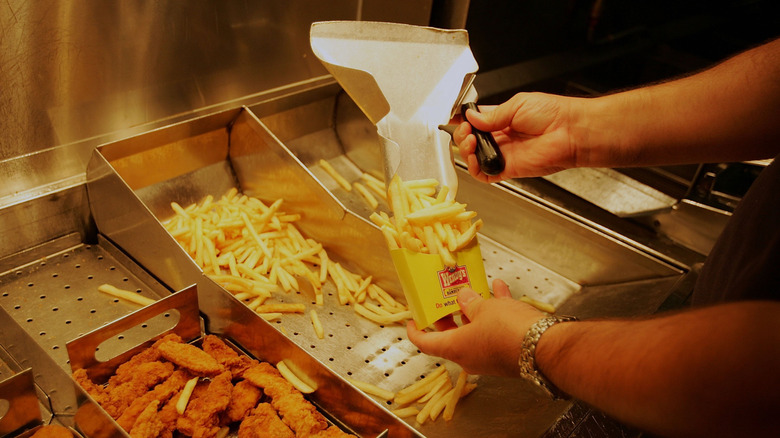
It also bears noting that Wendy's fries have not stayed frozen (as it were) since the last fryer oil change in 1990. The chain has revised its french fry method multiple times for a better bite, tweaking the taste and texture to keep up with (or get an edge on) the competition. In 2010, Wendy's rolled out "Natural Cut Fries" served skin-on with sea salt, positioning the change as an upgrade for fry guys who desired more identifiable potato character. In 2021, the chain launched its "Hot & Crispy" fries, explicitly chasing a different modern problem — fries that go limp too quickly.
Back in the day, eating-in-the-car culture wasn't quite as widespread, and the older fries (including the tallow-blend ones) were likely designed to deliver the best version of themselves soon after being pulled from the fryer. As their time spent in drive-thru bags and delivery packaging has risen — and we've collectively moved on from the aspiration of making "healthy" fast food french fries (though Wendy's are arguably the healthiest) — steam, time, and foods that are identifiable as highly processed at a glance have become the bigger enemies than fat composition.
So, when folks say they miss the "old Wendy's fries," they may be transposing a few different eras with their rose-colored glasses. It's hard to say for certain if the fries were really that good when made with beef tallow, or if, in this case, it's not hunger, but memory that is the best spice.