

The Unexpected Ingredient That Makes Super-Crispy Fried Oysters
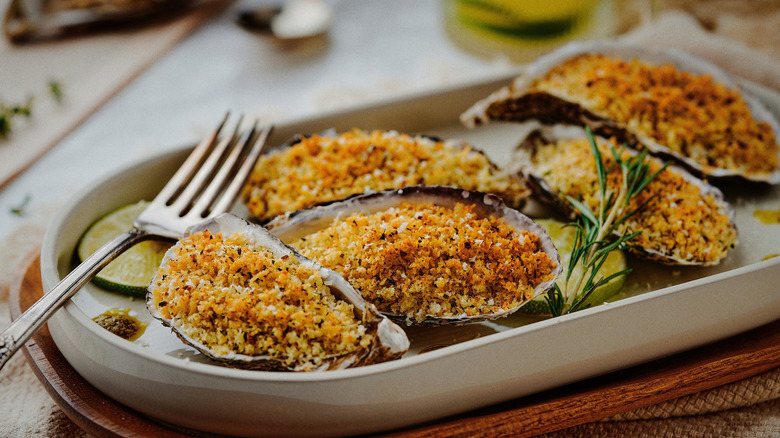
When chef David Standridge started frying oysters in beef tallow, he expected some pushback. "We use all beef tallow, which is somewhat controversial to some people — the pescatarians don't like it, but it does make it way crispier. And it's a better flavor, I think," he told Tasting Table during an event at the New York City Wine & Food Festival. Beef tallow, a rendered animal fat traditionally used for frying before ultra-processed seed oils became standardized, has been making a return to home and restaurant kitchens. In 2025, it's been an especially present ingredient for fast food chains that have claimed to "RFK" their fries.
Using beef tallow in a fish recipe might raise questions for diners who avoid red meat for ethical or religious reasons, or even for those with alpha-gal, a rare allergy to mammalian products. At Standridge's Mystic, Connecticut restaurant, Mystic Fish Camp, they make sure to post copious, clear signage so that everyone knows what they're eating, "We plaster it everywhere because we don't want to get anybody eating things that they don't want." Most people with dietary restrictions are used to reading menus closely, asking questions, and advocating for themselves, so the collaborative transparency is welcome.
Compared to seed oils, which are largely polyunsaturated and more prone to oxidation, beef tallow stays stable and consistent under heat. That's largely due to its unique composition of mainly saturated fat, which is more resistant to oxidation to unsaturated fats. This means that the oysters can fry hot and fast, forming a thinner, crispier crust without any off-flavors or potentially harmful compounds coming off from the oil, while the slightly higher temperature locks in the oyster's briny sweet flavor. As Standridge explains, "You can go a little higher in temperature with beef tallow than you can with seed oils."
Pearls before beef tallow
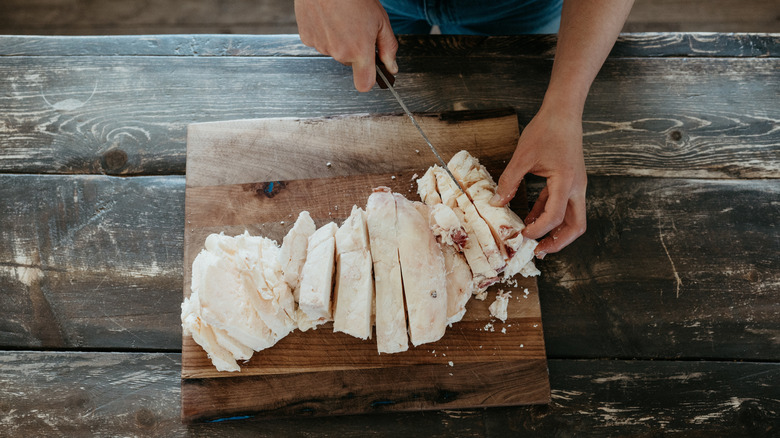
You don't need to run a restaurant to try beef tallow. It can be purchased from butcher counters, online, or from small-batch producers at your local farmer's market. You can even make high-quality beef tallow at home with the help of your local grocery store. If you buy a roast or steak with a thick fat cap, you can render your own by slowly melting and straining the fat into a clean jar (just make sure it doesn't look, smell or taste scorched). It will keep for months, and because it's solid at room temperature, you can scoop it like butter.
Once you have your hands on your own beef tallow, treat it the same as any all-purpose cooking fat. It performs excellently in any instance you'd usually use oil, butter, or bacon grease. So, if you want to start small, try a dollop in the pan of your scrambled eggs, on a veggie sheet pan roast, in your cornbread, or sauteéd with your greens. If you want to build on chef David Standridge's line of thinking, it could also be used in place of the butter in Michelle McGlinn's ritzy Oysters Rockefeller recipe, because in addition to tolerating high heat, tallow adds richness without being meaty, which marries the marine-mollusk profile perfectly.
The reason it tastes so good to cook with beef tallow is its very nature — its chemical composition. Tallow is chock full of fat-soluble vitamins like A, D, E, and K. Those same vitamins help emulsify and distribute flavor compounds across the palate, helping to create a buttery, balanced finish. Unlike seed oils — which are inherently processed and refined, stripping them of some of their nutrients and antioxidants – beef tallow keeps the minerals, lipids, and residual aromatics that make fried foods taste so good satisfyingly integrated.