

10 Prohibition-Era Speakeasies You Can Still Visit
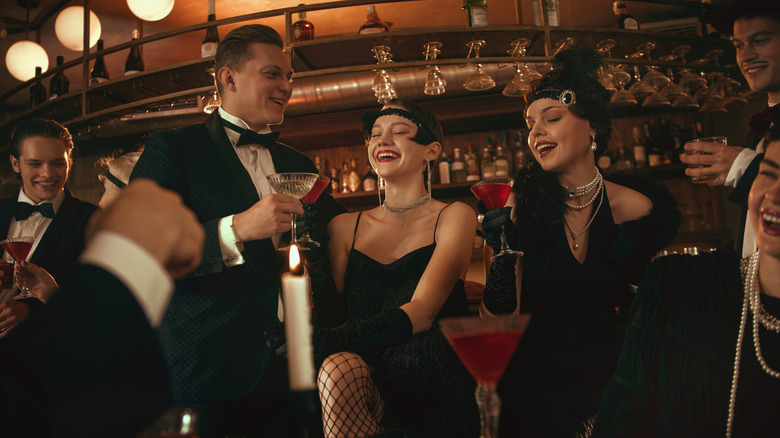
Whether you're craving an immersive experience, a good date-night spot, or even social media virality, speakeasies are sure to hit every checkmark. With hidden entrances, secret passcodes, and high-quality mixology, they make getting a cocktail a full-on event. Unfortunately, most of today's speakeasies have no ties to the illegal, Prohibition-era bars frequented by celebrities, mobsters, politicians, and anyone willing to risk arrest for an alcoholic drink. Luckily, if you are looking for the real deal, there are still some establishments that have stood the test of time.
Prohibition was the nationwide ban on the sale, manufacturing, and transportation of alcohol in the United States from 1920 to 1933. During this period, gangsters and bootleggers produced illegal booze, smuggled it across state lines, and ran secret bars throughout the country. While some bars were raided by the authorities, others thrived as a result of deals with the police or extensive protective measures. Whether they had to navigate trapdoors and hidden tunnels or sip from teacups instead of cocktail glasses, people still found a way to drink. Although many of these illegal bars have since disappeared, a few are still serving up cocktails as they did in secret a century ago.
The Green Mill in Chicago, Illinois
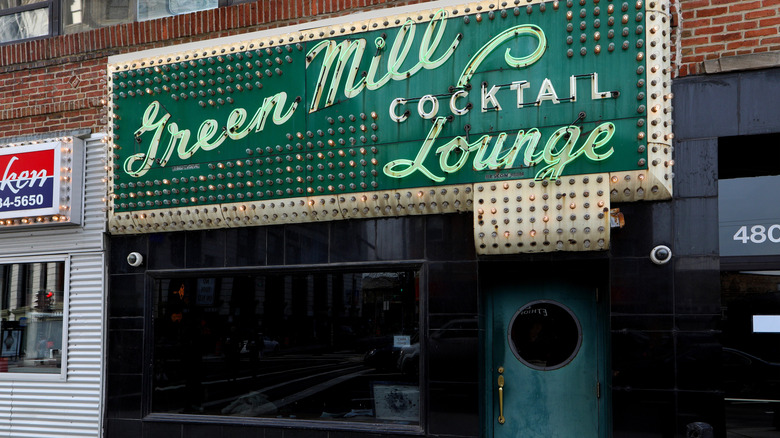
Chicago's Uptown neighborhood is a historic cultural hub with century-old venues and architectural charm. The city's oldest continuously running jazz club, Green Mill Cocktail Lounge, has been open since 1907, and it served up drinks and entertainment throughout Prohibition to mobsters and music lovers alike.
Walking into the Green Mill is like taking a step back in time. The interior, which remains relatively unchanged since its opening, features intimate lighting, vintage murals, and a long wooden bar. Behind that wooden bar is a trapdoor, used throughout Prohibition as both an escape route for guests and an access point to secret storage tunnels filled with alcohol. During Prohibition, the Green Mill was leased out to the mob, who paid off the police, meaning alcohol flowed and live music blared openly at the go-to gangster hangout. The infamous Al Capone was a regular guest at the legendary Chicago bar, and whenever the mob boss entered — taking his regular booth with a perfect view of the entrance and exit — the band would start playing his favorite song, "Rhapsody in Blue."
In classic fashion, the Green Mill Cocktail Lounge remains a cash-only institution, with no dedicated cocktail menu and frequent live jazz performances. For an authentic experience, you can order a beverage at the vintage bar, and even sit in the booth favored by Capone himself.
(773) 878-5552
4802 N. Broadway, Chicago, IL 60640
Bourbon & Branch in San Francisco, California
Modern speakeasies have popped up all across the U.S. in the decades since alcohol was unbanned, many with hidden entrances, dim lighting, and themed decor. However, only a few have historic roots that trace back to real Prohibition-era venues. Bourbon & Branch, a San Francisco cocktail bar, provides an immersive, themed experience within the walls of an authentic California speakeasy.
The building was formerly owned by a man named John J. Russell, who ran a secret bar in the 1920s under the guise of a cigar shop. Russell had ties to bootleggers from Vancouver, Canada, and stocked the basement of his shop with high-quality, illicit booze. Legend has it that patrons would provide a password to enter the cigar shop and request a specific brand of cigar. They could then descend through a trapdoor into a room where they could imbibe to their hearts' content. The secret escape tunnels that remain beneath the building and the brass alarm system behind the front counter are testaments to the high level of precaution taken to keep the operation running. And it worked, since the speakeasy was never raided during its multi-year run.
Nowadays, Bourbon & Branch taps into the building's history with interior design and craft cocktails inspired by the period. The cocktail bar also has a list of rules to maintain the ambiance, including no photography and no cell phone use. For an extra intimate vibe, Bourbon & Branch even has a speakeasy within the speakeasy — a detective agency-themed bar called Wilson & Wilson.
(415) 346-1735
501 Jones St, San Francisco, CA 94102
Neumann's Bar in North St. Paul, Minnesota
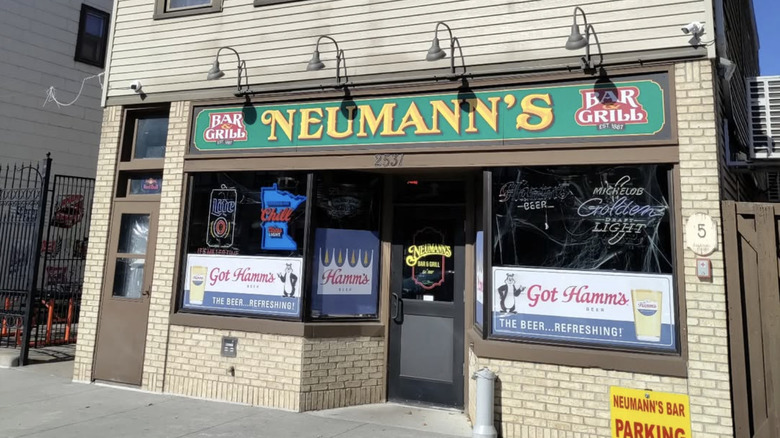
The oldest continuously running bar in Minnesota, Neumann's is a historic community landmark that has been serving customers uninterrupted for nearly 140 years. The bar opened back in 1887, shortly after the railway first arrived in what is now North St. Paul, selling a local beer called Hamm's, which it still serves today.
When Prohibition hit, the bar survived by selling bait to local fishermen from the basement and serving "near beer" from the main bar. Near beer was essentially the first non-alcoholic beer in the U.S., gaining popularity at a time when the real stuff was banned. However, Neumann's also opened a secret speakeasy upstairs, which still exists. Visitors can head up the stairwell to see the old phone that communicated with the main bar on the ground floor, along with the peephole door that let the proprietor vet patrons before allowing them inside.
Aside from the speakeasy, Neumann's is famous for keeping live bullfrogs in a pond at the front window of the bar. In a practice that has continued since the 1930s, local children regularly visit Neumann's to feed worms to the frogs.
(651) 770-6020
2531 East 7th Ave., North St. Paul, MN 55109
The Owl Bar in Baltimore, Maryland
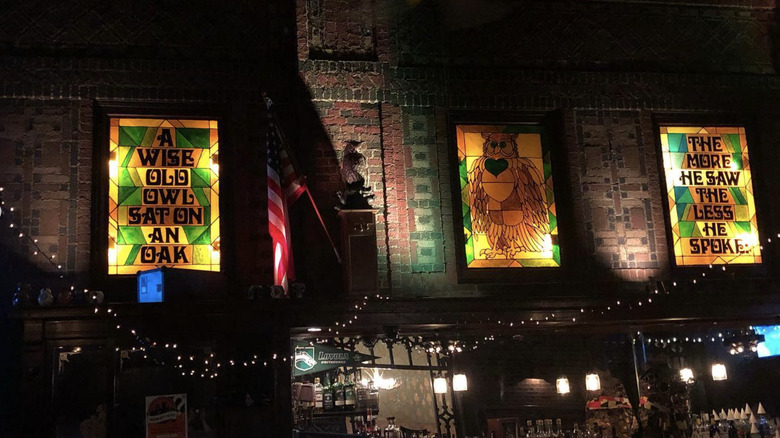
Baltimore's first luxury hotel, The Belvedere, was an opulent oasis visited by royalty, presidents, and the like. Inside the famous landmark was a dimly lit bar adorned with dark wood features, decorative murals, and ornamental owls. The owls were the key to accessing the illegal booze that many customers came searching for during Prohibition.
Originally referred to as "the bar room," the bar opened in 1903, the same year the hotel opened. The bar room was initially a men-only affair and was popular among all social classes, setting the scene for celebratory drinks, after-work pints, and a fair share of brawls over the years. Once Prohibition came around, the bar developed a novel way for patrons to drink in secrecy. The bar featured two ornamental owls – if a customer wanted a drink, they would have to look at the eyes of an owl for the unspoken signal. If the bird had one blinking eye, that meant there was alcohol in stock and the customer could drink safely.
At one point, the owls disappeared, and it was believed they were gone forever. However, in 1976, they were found again and are now back on display in their rightful place at the Owl Bar. Nowadays, the Owl Bar is adorned with glass mosaics featuring owls and an owl-themed nursery rhyme to honor its historic legacy.
(410) 347-0888
One East Chase Street, Baltimore, MD 21202
The Mint Bar in Sheridan, Wyoming
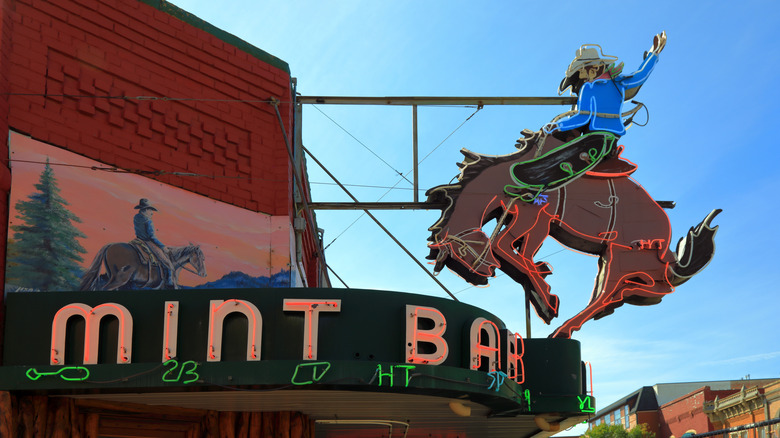
On Main Street in the city of Sheridan, Wyoming, among the stretch of shops and restaurants, stands a local watering hole with a big history. With its huge neon sign of a cowboy on a bucking horse, The Mint Bar has been beckoning customers for nearly 120 years. Opened in 1907, the bar became a regular haunt for cowboys and miners alike to grab a cool drink, served up when ice was still delivered via horse-drawn wagons.
The venue was popular with both locals and travelers, and when Prohibition began, the national alcohol ban couldn't stop The Mint Bar from doing what it did best. Publicly, the building operated as a pharmacy, as well as a cigar and soda shop. However, in the back, it functioned as a speakeasy for those in the know. Cowboys were known to ride their horses right into the building, past the pharmacy, and into the speakeasy.
Aside from selling illicit booze, high-stakes poker games occurred at The Mint Bar, drawing in American legends like Ernest Hemingway. Once Prohibition ended, The Mint Bar swiftly reopened for business. After featuring in old Hollywood Westerns and the 1985 Kenny Rogers film, "Wild Horses," the Mint Bar has solidified its legacy as one of Wyoming's most iconic bars.
(307) 674-9696
151 N. Main St., Sheridan, WY 82801
The Cave in Bretton Woods, New Hampshire
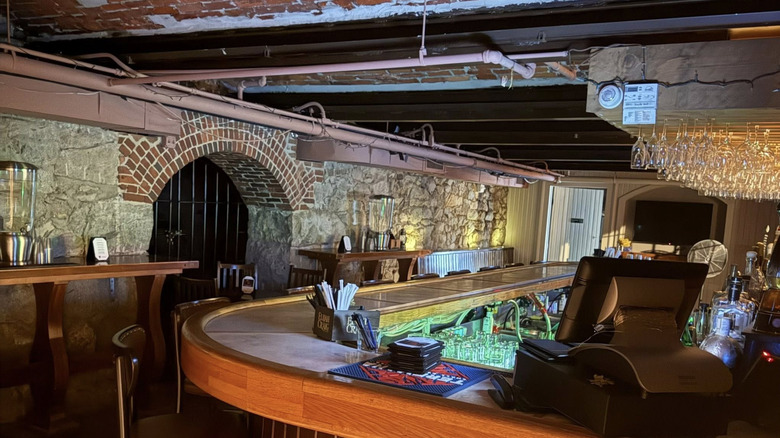
Thousands of speakeasies operated throughout New England during the 1920s, but one of the most famous was located within the walls of New Hampshire's famed Omni Mount Washington Resort, which opened in 1902. Known as The Cave, likely due to its stone walls, brick ceiling, and dim lighting, the bar was a popular hangout during the Prohibition era.
The Cave was a favored choice among the hotel's guests, who were often city-goers from Boston looking for a break from the hustle and bustle. The room itself, which was originally a squash court, was equipped with a trapdoor and a removable brick that allowed views of the hotel's front driveway. The bar was equipped with teacups, which acted as a cover in case it was raided, though raids were reportedly infrequent. The Cave likely had its alcohol stocked by rum runners or smuggled in from Canada.
Nowadays, the hotel bar leans into its legacy, serving up themed cocktails in teacups and hosting ragtime parties. If you find yourself at the iconic Omni Mount Washington Resort, make sure to check out this historic bar.
(603) 278-1000
310 Mount Washington Hotel Road, Bretton Woods, NH 03575
Pete's Tavern in New York City, New York
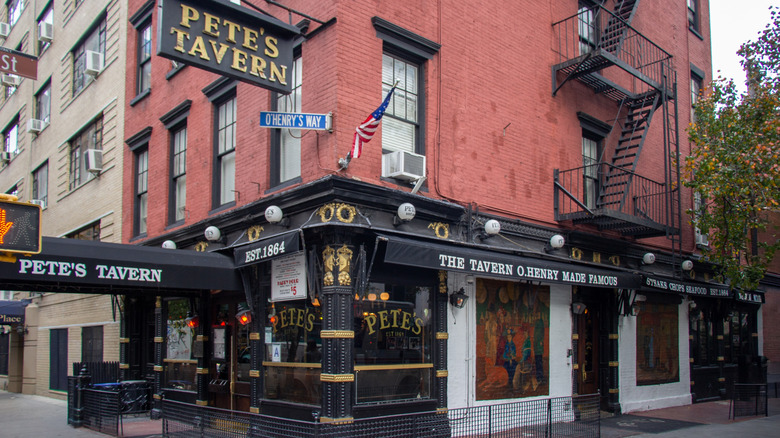
New York's oldest continuously operating restaurant and bar, Pete's Tavern, has remained a Gramercy Park staple while New York City has evolved around it. Founded in 1864, Pete's originally sold groceries and booze. When it was sold to Peter D'Belles in 1922, it was renamed Pete's Tavern.
When Prohibition set in, the location of Pete's Tavern allowed it to continue operating. The bar was situated near Tammany Hall, home to the political machine that dominated New York City at the time. Since the politicians wanted a place to make deals over drinks, they flocked to Pete's. However, the bar still needed a cover story, so it temporarily became a flower shop.
Some of the classic immersive themes that modern speakeasies use today were implemented at Pete's. Customers would enter through a side door, provide a password, and go through a fake refrigerator door to access the bar. The bar still has its historic interior, and you can order classic cocktails such as the Manhattan, or more contemporary drinks like the Spicy Palomita.
(212) 473-7676
129 E. 18th St., New York, NY 10003
The Drifter in Chicago, Illinois
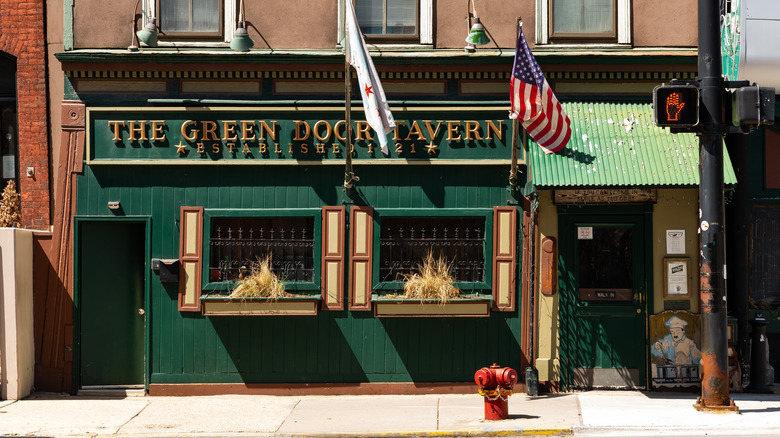
Hidden in the basement of The Green Door Tavern, The Drifter sits in the spot that once hosted a real Prohibition-era speakeasy. During Prohibition, speakeasies in Chicago often featured a green door — a sign that the police had been paid to look the other way.
The building itself was built in 1872, just one year after the Great Chicago Fire. As a result of the blaze, new wooden buildings were soon banned, making The Green Door Tavern one of the oldest remaining wood-framed buildings in the city. Initially, the building housed a grocery store, but in 1921, it was converted into a restaurant. In its basement, a speakeasy operated, fueled by alcohol supplied by Chicago's North Side Gang.
Nowadays, the main building is home to the popular Green Door Tavern, Chicago's oldest tavern. In the basement, The Drifter speakeasy features a rotating list of more than 100 cocktails. Every night, the list changes as the employees choose from a custom tarot deck to select which drinks will be served.
(312) 631-3887
676-8 N. Orleans St., Chicago, IL 60654
Ye Olde Tap Room in Detroit, Michigan
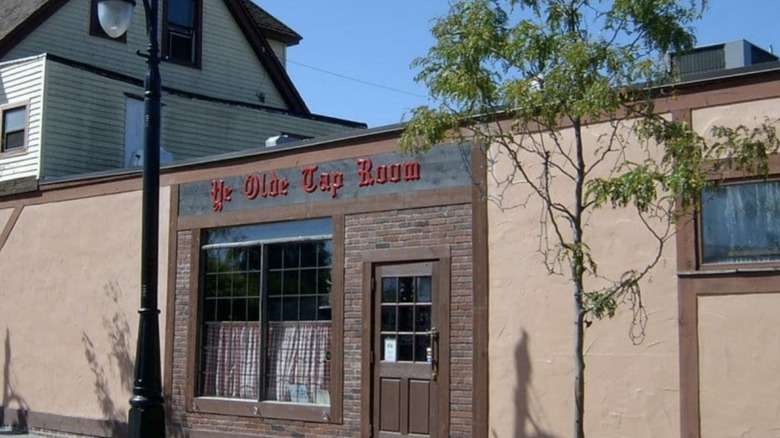
When it comes to booze, Ye Olde Tap Room knows what it's doing. It's been serving customers since 1915, and managed to keep running throughout Prohibition. Detroit had easy access to illicit alcohol from Canada, smuggled by rum-runners via the Detroit River, so the city was filled with speakeasies. The infamous Purple Gang, a Detroit-based organized crime group, supplied much of the city with bootleg alcohol.
Ye Olde Tap Room was a multi-floor operation — the building had a bar, brothel, gaming room, and even a pigeon club. To the general public, it served as a comfort station to the trolley line, but to those in the know, it offered any vice they needed.
If you are a beer lover from Detroit, you may already know about Ye Olde Tap Room. The bar boasts a list of up to 250 different beers from around the world. Whether you want a classic American lager, a Japanese beer you've never heard of, or that one beer you had on vacation and haven't been able to find since, chances are Ye Olde Tap Room has it.
(313) 824-1030
14915 Charlevoix St., Detroit, MI 48215
The Back Room in New York City, New York
The people of New York City have always been rebellious, and Prohibition wasn't going to stop New Yorkers from enjoying themselves. By 1930, there were over 32,000 speakeasies in New York, but today, only a handful still survive: The Back Room is one of them.
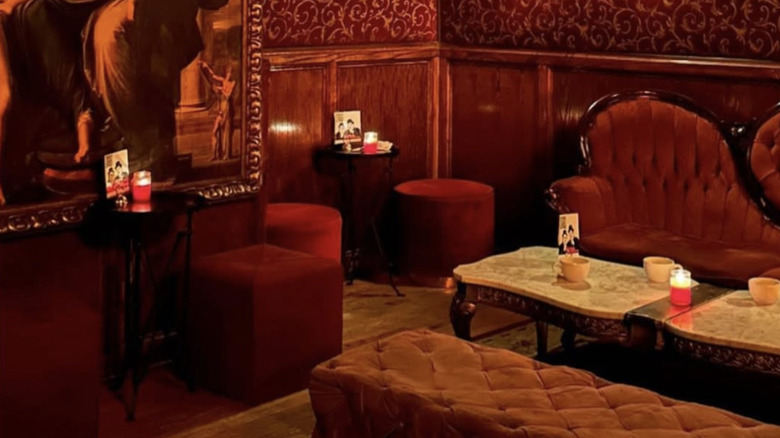
Accessed by the same hidden alleyway used over a century ago, the speakeasy transports you back in time the moment you step inside. The interior is decorated with authentic 1920s detailing, with glimmering chandeliers, hardwood accents, and paintings adorning the walls.
The original Back Room, known as "The Back of Ratner's," was frequented by movie stars of the era, along with renowned mobsters like Bugsy Siegel and Lucky Luciano. The modern speakeasy, which opened in 2004 in the same building as the original, has been featured in shows like HBO's "Boardwalk Empire" and visited by celebrities including Paul McCartney, Adele, and Martha Stewart. Nowadays, the bar still serves drinks in teacups with saucers, and on Mondays, it hosts live jazz performances. Friday and Saturday are a bit more exclusive, as the bar only lets in those aged 25 and above.
(212) 228-5098
102 Norfolk St., New York City, NY 10002