

Why Proper Ventilation Matters More Than Stove Placement In Modern Kitchens
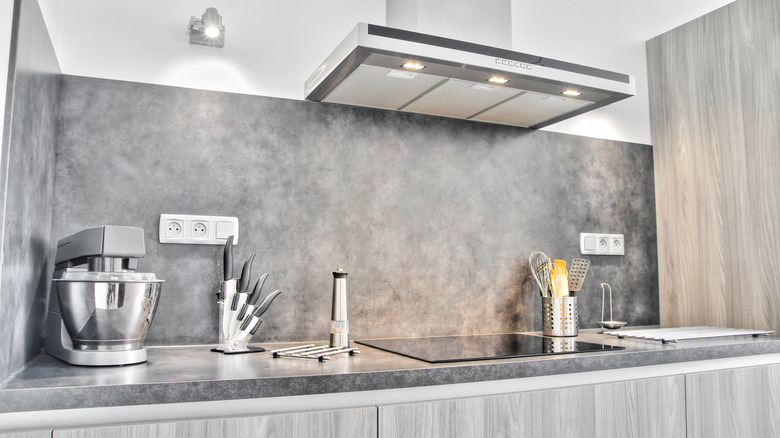
A kitchen renovation gives you the opportunity to rethink the placement of major appliances, cabinets, and fixtures. However, the most important mistakes to avoid when renovating a kitchen are ignoring relevant electrical and plumbing codes, ventilation requirements, and appliance clearance recommendations. Before relocating your stove, for instance, you should consider how it will be vented.
Stove ventilation is the kitchen remodel aspect you can't overlook for safety reasons. Proper ventilation ensures that smoke is safely exhausted outside your home. A ventilation system includes a fan that moves smoke, gases, and particulate matter up through a duct system so that it can escape outside. Improper ventilation can lead to the buildup of smoke, grease, and harmful pollutants like carbon dioxide and nitrogen oxide that can contribute to poor indoor air quality. Over time, this buildup can affect your health as well as the safety of your home, as these contaminants may increase the risk of a grease fire.
It was long believed that stoves and ovens could only be installed against exterior walls so that they could be properly vented. However, modern ventilation systems now make it possible to install cooking appliances against interior walls or even in the center of the kitchen. For stoves installed on an interior wall, a recirculating hood can be installed over the stove where it will either filter smoke before returning it to the kitchen or use a series of ductwork to exhaust air outside. Installing a cooktop in a kitchen island is a more popular choice; be sure to weigh the pros and cons because doing so may require a more complex or expensive venting process.
Exploring two ventilation options for a kitchen island cooktop
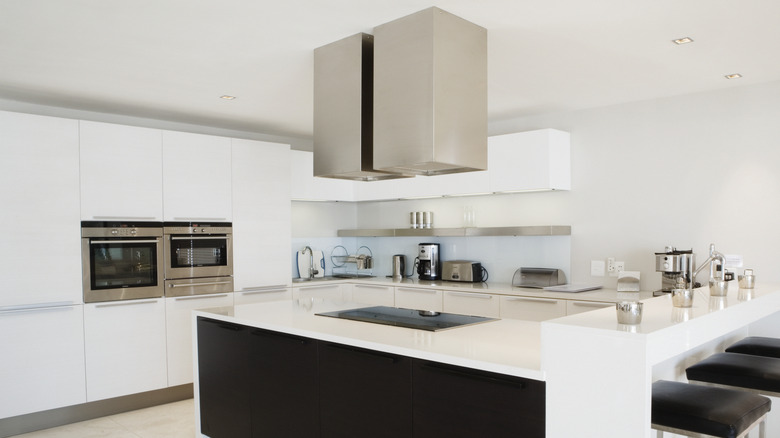
Installing a stove, oven, or range top on an island in the center of the kitchen allows you to get more out of your kitchen island than just extra counterspace. If you have an open floor plan, cooking at the kitchen island allows you to carry on conversations with family or guests, or even just watch something on TV while you prepare a meal. As long as you consider your ventilation options, an island cooktop is a modern solution that can also be seamless and safe.
First, you must understand the two most common ventilation options — either a recirculating or ducted ventilation system. However, a ducted system is safer and more efficient as it doesn't recirculate filtered air back into your home. A ducted hood will need to be installed on the ceiling above the cooking area, where it will use a fan to extract smoke, grease, and toxins from cooking and exhaust them through connected ductwork. The hood should be sized according to the dimensions of the cooktop and mounted according to the height recommendations of the range's manufacturer.
If you feel like a range hood could be crowding space because it is so bulky and obtrusive, consider a built-in extraction system. This system utilizes a fan that is built directly into the cooktop. It pulls cooking smoke, steam, and grease downward, either filtering it and releasing air from the bottom of the unit or exhausting it outside through small ducts that are installed in cabinets.