

I Asked 5 Chefs For The Best Seasonings For Prime Rib
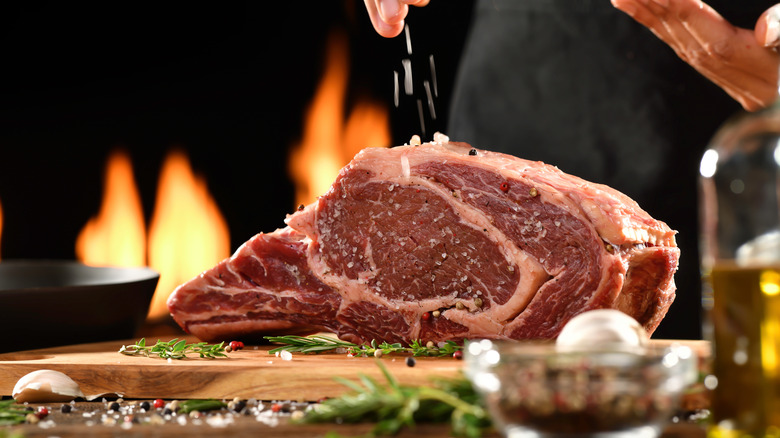
Prime rib is one of the most luxurious pieces of meat you can buy. Tender, rich, and full of flavor; it's a cut that's usually reserved for special occasions. While you may choose to make a night of it and head out to some of the best restaurants that serve prime rib with all the extra sauces and sides, every now and then it's nice to stay in and prepare the cut yourself. Now, the question is what do you need to cook it, and how do you get a perfectly tender, flavorful prime rib?
Selecting the cut and the cooking method is crucial but deciding how you want to season the meat might be just as important. You might be a minimalist who prefers a simple combination of salt and cracked black pepper, or maybe you prefer a lot of depth and flavor that comes from a complicated rub with several different herbs and spices. Turns out both work well. It just depends on what you're in the mood for. Several chefs were nice enough to share their opinions about which seasonings work best with prime rib's tender and juicy qualities. Now you no longer need to wonder if the intense flavor of berbere spice is better than a hearty pastrami rub.
Diamond Crystal kosher salt
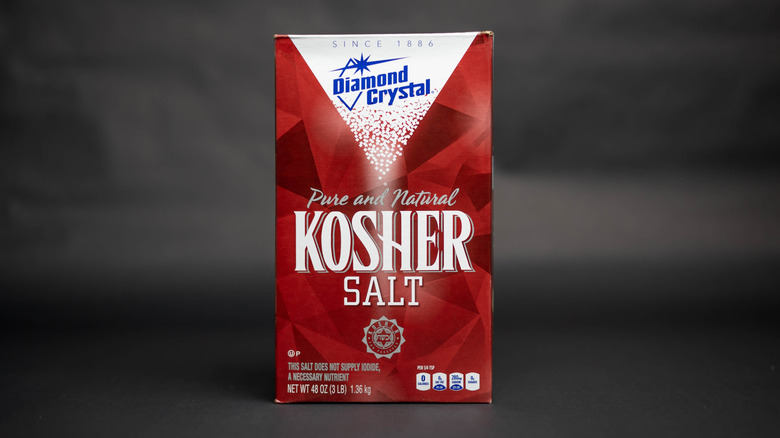
"When it comes to prime rib, I don't believe in overcomplicating things," says Andrew Cooper, an executive chef at La Quinta Resort & Club. "The meat already has incredible natural flavor — the goal is to enhance it, not cover it up," he explains. Most chefs we spoke to agree with Cooper, which is why several of them recommended a simple salt and cracked black pepper crust for their prime rib. But not any salt will do — chefs generally agree it has to be kosher salt.
Sure, there are many types of salt, and in most cases, you want to use them for a specific purpose since each salt variety has a unique flavor and texture. But when it comes to most cooking, kosher almost always takes center stage. Though there are many kosher salt brands that are available nowadays, chefs tend to have a favorite they constantly reach for, and for Walter Nunez, the executive chef at The Rex Seaside Steakhouse, that brand is Diamond Crystal. "I recommend Diamond Crystal kosher salt. It has a great grain size — salt that's too fine penetrates too quickly and can alter the flavor profile, while salt that's too coarse doesn't penetrate enough," he elaborates.
Montreal seasoning
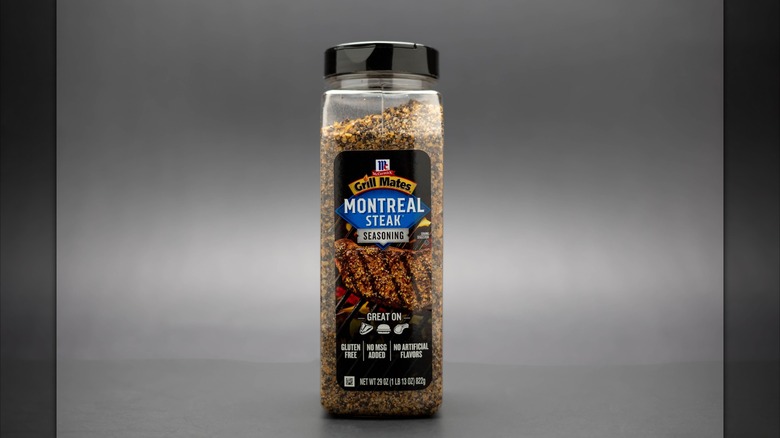
Several chefs recommended Montreal steak seasoning – which usually combines salt, black pepper, paprika, garlic, onion, ground coriander and dill – as a great option for prime rib. They agree that it's the flavor that keeps them coming back. "The presence of salt and umami in the spice blend is what really draws out and complements the flavor of a cut such as prime rib," explains Chris Thompson, the executive chef and owner of The National in Telluride.
Thompson likes to add the seasoning early in the cooking process to "allow as much time as reasonably possible to facilitate the absorption of the salt into the meat and the spices to absorb and permeate the fat," he explains — ideally 24 to 48 hours before cooking. However, Alex Moriyama, the executive chef of The Mayfair Supper Club at the Bellagio in Las Vegas disagrees, telling us that he seasons the meat "just before roasting to preserve its natural flavor and texture."
Unlike Thompson, Moriyama says he uses a generous amount of the seasoning twice in the cooking process. A simple blend of salt and Montreal goes on before the meat goes into the CVap oven, then once it's out, he adds a layer of Dijon mustard, garlic puree, and Montreal seasoning. "Heavy seasoning is essential ensure maximum flavor throughout the meat," he explains. The prime rib is then finished in a very hot oven for just a few minutes, so it can get a flavor-packed crust.
Berbere seasoning
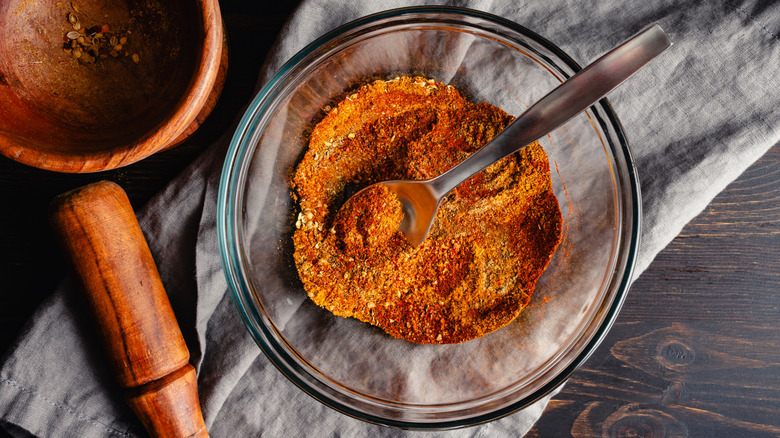
If you're looking for something a little spicier, Chris Thompson recommends African berbere — a spice blend that dates back to the 5th century. What separates berbere from other seasonings on this list is the spiciness, mostly due to long pepper and chili peppers that are included in the mixture. Though the recipes for this spice blend vary, you can always expect it to impart a warming quality due to the addition of spices such as cinnamon, nutmeg, and cloves. Besides these, the addition of chili peppers will dictate the intensity and the level of spiciness
Regardless of how spicy it is, the addition of chili peppers guarantees a nice bite that will transfer to the meat. A bite that The National's executive chef believes is perfect for prime rib thanks to the large amount of fat often found in this cut. "The berbere spice has some heat to it, so the fat handles the spice well and doesn't come across too spicy while still giving it a unique character," Thomson explains. But keep in mind, the longer the spice rests on the meat, it has a better chance to be absorbed. That way, the berbere's distinct flavor is guaranteed to come through in every bite of the final dish.
Pastrami seasoning
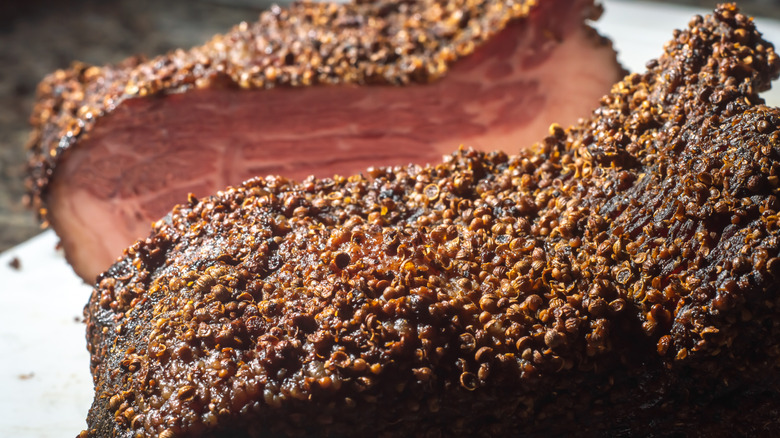
Prime rib is a permanent fixture on a lot of steakhouse menus. But at Jack & Charlie's 118 in New York, chef Ed Cotton only serves the cut on Fridays and Saturdays. As he wants to serve something special, he opts for a pastrami seasoning. It's his way how to honor Lower East Side, traditional Jewish delicatessens, and classic New York.
Cotton admits he's not inventing something revolutionary with his mixture of black peppercorns, toasted whole coriander seeds, Spanish paprika, mustard seeds, dry English mustard, cloves, allspice, granulated garlic, onion powder, and brown sugar. But for the chef it's not about creating something new and unusual — it's about that spice combination that reminds him of New York flavors.
It's not just the spice combination that evokes the flavors of those classic deli meats of yesteryear, it's also the time and care Cotton takes in preparing the roast. The chef says it's a four or five day process from start to finish. Once he blankets the prime rib with the pastrami rub, he lets it sit uncovered in the refrigerator until he's ready to roast it on Friday. "So that seasoning gets really locked on there, inside the refrigerator from the aeration from the fan and all that good stuff," he explains. That guarantees a nice thick crust that's full of flavor.
Barbecue rub
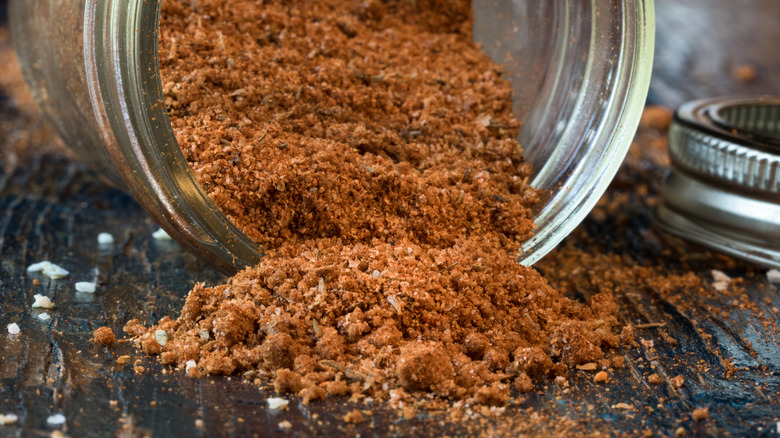
One of the most common ways chefs cook prime rib is slow roasting it in an oven at low temperature. But that's not the only way. Chef Alex Moriyama says when he makes prime rib at home, he uses his smoker. He preps the meat the same way as he does at Bellagio's The Mayfair Supper Club, but the cooking method is different. "I season it generously with a BBQ rub made from brown sugar, salt, black pepper, cayenne, smoked paprika, garlic powder, onion powder, and chipotle powder," he explains. Sure, you could easily buy a premade BBQ seasoning on Amazon, but the chef prefers this blend because it "adds deep aromatics along with rich smokiness that pairs perfectly with the beef."
He then smokes the prime rib until it hits 125 degrees Fahrenheit, at which point he removes the roast and lets it rest for 90 minutes. This may seem like a long time, but Moriyama clarifies that the "resting period helps the meat retain its juices and ensures an even color throughout." The chef admits that using a BBQ rub and smoking the prime rib is a somewhat modern approach to cooking this classic cut, but he believes the smoke adds enough depth to create what he thinks is the best prime rib you can make.
Chimichurri-inspired rub
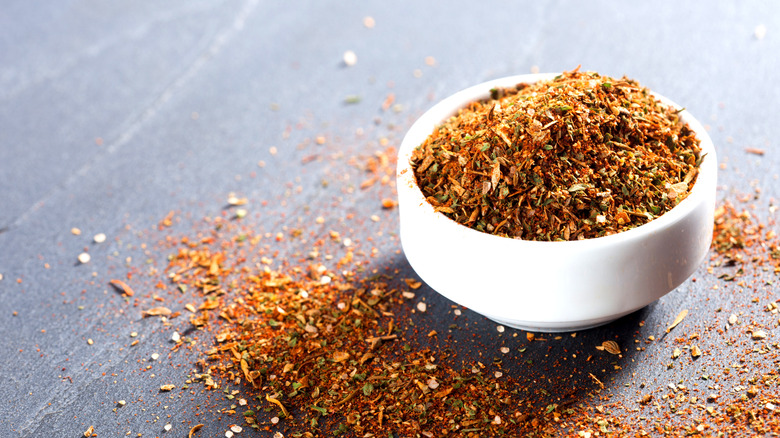
Prime rib is often served with a sauce on the side which is either drizzled over the thick slice of meat or used as a dip. Some of the classic choices include a horseradish sauce or a rich au jus made from pan drippings. Another popular choice is the bright and herbal chimichurri sauce. Even though Andrew Cooper frequently serves his prime rib with a side of this bright green sauce, that's not the only way he uses these flavors. He also starts the whole cooking process by applying a chimichurri-inspired rub consisting of those same flavors and herbs.
Cooper uses a simple combination of parsley, garlic, oregano, chili, and citrus zest, and as he explains "this rub is bright and fresh and works especially well with the richness of prime rib." Beginning the same way he always does when preparing a prime rib, Cooper pats the roast completely dry and then adds the seasoning at least four hours before cooking so that the spices really have a chance to penetrate through the fibers. He starts with salt and pepper, then adds roughly 1 tablespoon each herb and citrus zest that make the rub. Essentially, the meat is marinated in chimichurri so it can really absorb those bright flavors.
La Boîte Pierre Poivre
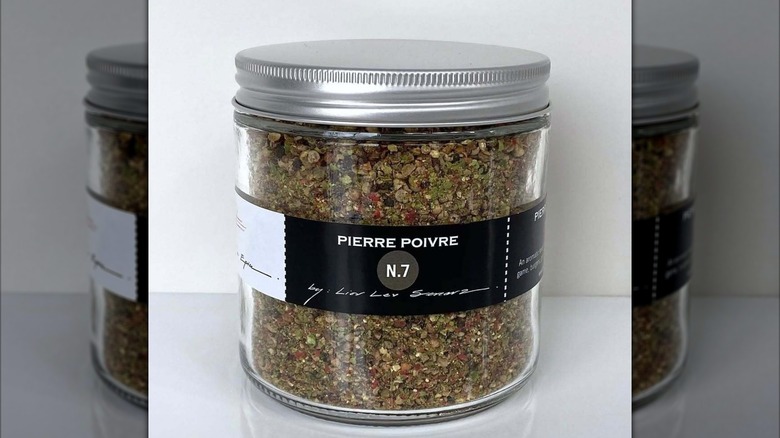
For those special occasions, when you really want to pull out all the stops, chef Ed Cotton recommends Pierre Poivre, a peppercorn blend from La Boîte, a spice company run by Israeli Chef Lior Lev Sercarz. Stating that Sercarz is a master with flavor combos and spice blends, Cotton uses a few of his labels at Jack & Charlie's, but he makes sure that a tablespoon or two of the Pierre Poivre is always part of his steak seasoning.
A complex mix of eight different peppercorns, Cotton says the Pierre Poivre is unlike anything else out there. "It's not like McCormick spices that you get at the supermarket. There's a noticeable difference between [Lev Sercarz's] spices and your basic run-of-the-mill type of stuff."
Even though he's asked on numerous occasions, Cotton admits he still has no idea which peppercorns are part of the Pierre Poivre blend, but he proclaims it's a super aromatic pepper combination that will take your prime rib to new heights. "It lends itself super, super well," Cotton adds, telling us that the blend's unique flavor will definitely make your prime rib stand out.
Lawry's Seasoned Salt
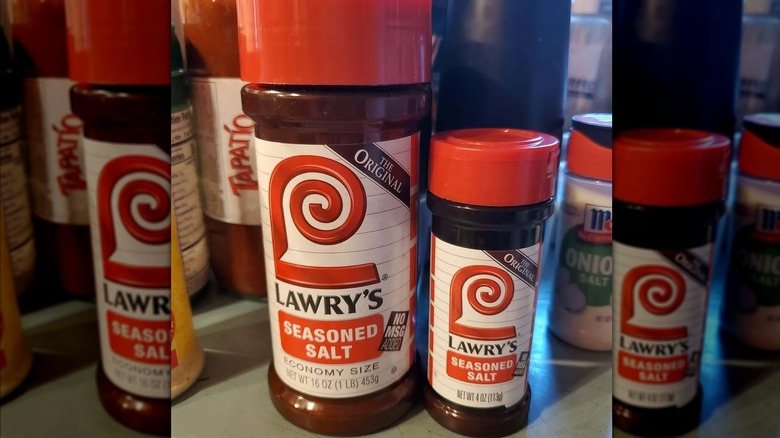
Lawry's Seasoned Salt is an iconic seasoning that takes the guess work out of creating your own seasoning blend and packs a punch of flavor thanks to its 17 herbs and spices. A blend that restaurant owner Lawrence Frank created in 1938 was designed exclusively to be paired with prime rib, which was the main dish served at Frank's restaurant.
Since it was created for this specific cut, it makes sense that plenty of restaurants and chefs like Chris Thompson still use it today. Those 17 herbs and spices produce a unique combination of umami flavors that the chef believes really complements this particular cut of meat.
Because this seasoned salt already has a healthy dose of salt in the mix, The National's executive clarified he thinks it's best to skip kosher of finishing salt if you're using this seasoning. He also recommends covering the meat with the blend before and after cooking. If you want to follow his advice, prep the meat with Lawry's seasoning at least a day before you cook it if you want those flavors to really make an impact.
Kona Coffee & Brown Sugar Rub
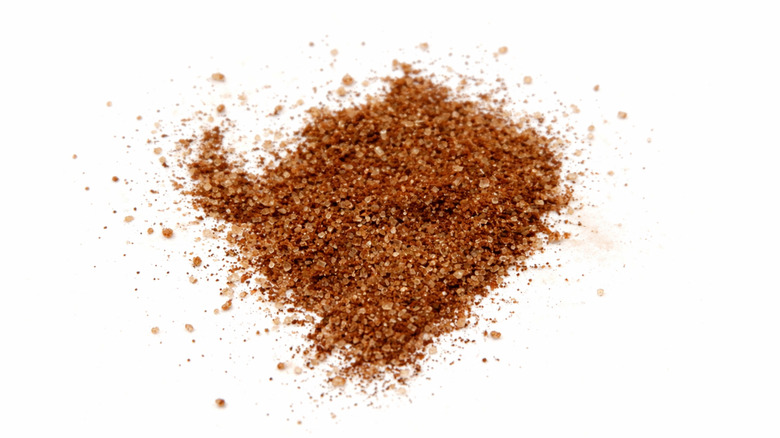
A teaspoon or two of sugar is a common way to sweeten your morning cup of coffee. But chef Andrew Cooper likes to use the popular mixture another way: As a rub for his prime rib. This seasoning, which also includes plenty of salt and pepper, may seem like an odd choice, but the chef admits that it's one of his favorites from his years living in Hawaii.
As you may have guessed, since this flavor profile comes from his time on the islands, not just any coffee will do — he prefers Hawaii's Kona coffee. Cooper has a few different ways he likes to season his prime rib, but no matter which recipe he uses, he always starts with the same salt and pepper base. For this coffee combination the chef reveals that he adds 2½ teaspoons of finely ground Kona coffee and 2 teaspoons of brown sugar for every pound of meat. "The Kona coffee adds rich depth, while brown sugar balances it with a subtle sweetness," he clarifies.