

Stomach Trouble From Cabbage? These Cooking Methods May Help
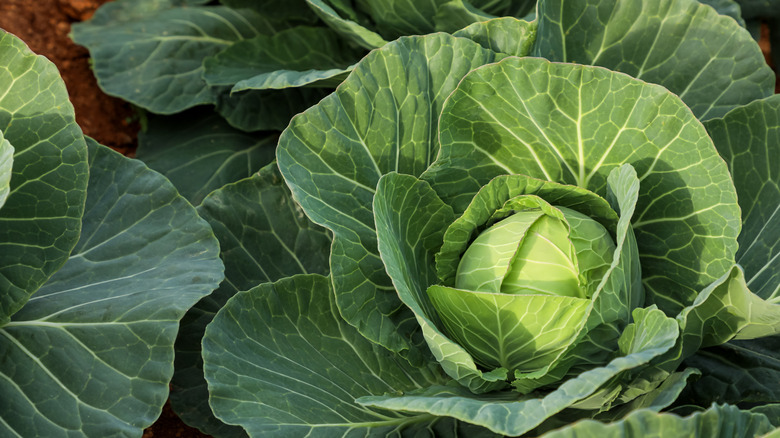
A part of the cruciferous family, cabbage comes in many colorful varieties and is among the most budget-friendly veggies at the grocery store. It's a winter-hearty vegetabe with a long shelf life that's amenable to raw and cooked recipes that you're sure to enjoy. So, what's not to love? Well, for some, cabbage is a stomach irritant that causes gas and bloating. But, cooking it might help.
The reason cabbage (and beans, for that matter) is a "musical fruit" is due to a complex sugar known as raffinose. Raffinose is especially hard for the human gut to digest because the small intestine cannot process it. So, by the time it reaches the colon, the bacteria used to break it down release gas that leads to bloating and flatulence. Furthermore, as a cruciferous veggie, cabbage also contains high amounts of sulfuric compounds, which also cause flatulence — and fragrant flatulence at that! Raw cabbage has the purest concentration of raffinose and sulfur, but there are various cooking methods that will rid cabbage of these gas-causing compounds.
The best method for ridding cabbage of both raffinose and sulfuric compounds is fermentation. Whether you're making kimchi or sauerkraut, fermenting cabbage is an easy, hands-off cooking method with delicious and beneficial results. During the fermentation process, bacteria feed on the complex sugars and other complex compounds, breaking them down into simpler carbohydrates for easier digestion and, in turn, gas prevention. Moreover, fermented goods have a longstanding reputation as being the healthiest types of food for gut health and even reproductive health.
More cooking methods and recipes for gas-free cabbage
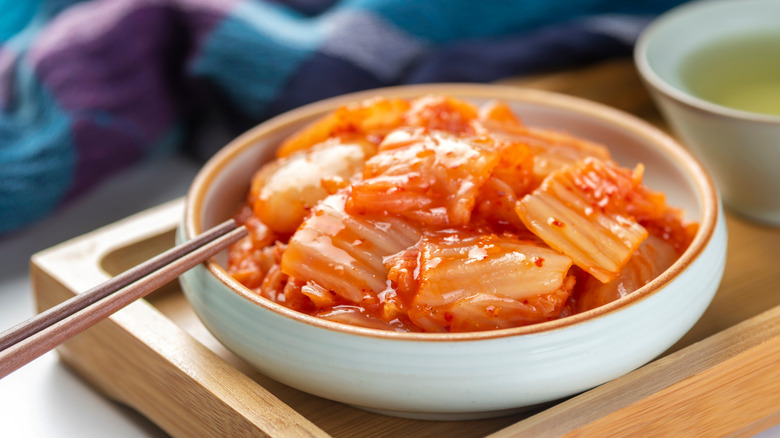
While raw cabbage may be out of the question for sensitive, gas-prone tummies, cooked or fermented cabbage is arguably tastier, too. Check out our guide to making kimchi and this list of the best sauerkraut recipes to all but eliminate raffinose from the cabbage equation. If you're not into the tangy delight of fermented cabbage, there are many other simple ways to cook cabbage that have the same raffinose-reducing effects. Cooking even softens the fibrous texture of raw cabbage, which also makes it easier to digest.
Boiling and steaming cabbage are pretty straightforward, albeit with the blandest results. Dry cooking methods like roasting, grilling, and stir-frying bring depth of flavor and added texture to cabbage all while reducing gas-causing agents. Roasting cabbage brings out an especially sweet, caramelized flavor with a slightly bitter finish. The right types of cabbage for roasting are generally the heartiest varieties like red and green cabbage. Luckily, those types are the most widely available and often the cheapest. Prepping the cabbage for cooking couldn't be easier; cut them into wedges or thick rounds to make cabbage steaks. Whether you're grilling or roasting cabbage, be sure to use plenty of oil and seasonings. Cabbage stir-fries are another great way to make the most of this massive veggie. Just shred the vegetable to saute with aromatics and ham like in our Southern fried cabbage recipe.