

6 Boomer Cooking Tricks That Don't Actually Work
We may receive a commission on purchases made from links.
Cooking and eating together have been bonding experiences across cultures since the dawn of humanity. When we share food, it shows us how much we share as people. But sometimes, when we occupy the kitchen alongside the older generation, we can't help but notice the things we don't have in common.
Born after the Great Depression and World War II, the baby boomer generation emerged into a new world of culinary innovation — one in which they continued to be pioneers. They watched TV shows that taught them about food from around the world. They learned how to cook in the age of canned pantry staples and the microwave. Today, their desire to cook at home far outpaces that of younger generations, and they've certainly got the experience, with the youngest boomers now in their 60s.
Many of the cooking tips that boomers learned over the years are tried and true, but others they swear by are actually some of the biggest food myths. Some of these culinary techniques are downright unappetizing and just as hard for boomers to let go of as those with genuine value. Here are just a few outdated cooking tricks that still get too much use in boomer kitchens.
Searing meat seals in the juices
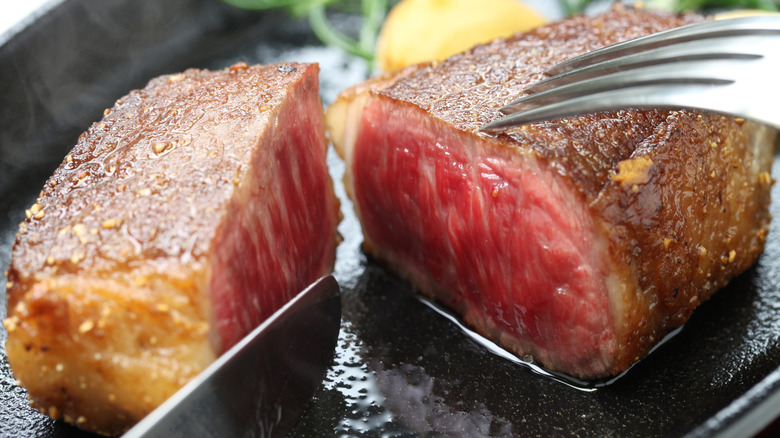
The myth that searing meat locks in its juices dates all the way back to Ancient Greece, but scientific attempts to back the theory didn't emerge until the 19th century. In his 1847 food science treatise, "Researches on the Chemistry of Food," German chemist Justus von Liebig proposed that the fluids found within meat were more nutritionally significant than the flesh itself, and thus vital to retain. Von Liebig recommended adding meat to pre-boiled water to create a protective shell that would preserve the precious juices.
Over time, people forgot von Liebig's nutritional claims — and the weird boiled-shell part — but the idea that a crust retains the meat's juiciness persisted and evolved. Eventually, all the clever TV chefs and cookbook authors of the midcentury were insisting that any chef worth their salt knew to sear their meat to ensure a juicy final product. However, by the mid-2000s, taking a scientific approach to food had become trendy in the culinary world. Chefs like Heston Blumenthal and Alton Brown emerged as food myth-busters with their science-based approaches to cooking, and websites began publishing recipes that involved full-on experiments.
Major food figures now conclude resoundingly that von Liebig lied big — or he was at least strongly mistaken. Searing meat creates a delicious and flavorful exterior, and juiciness is imperative for superior taste and texture, but the two have nothing to do with each other. Unfortunately, by the time this became widespread knowledge, boomers had been commanding kitchens for decades, hence why the meat-searing myth persists.
You should wash chicken to sanitize it
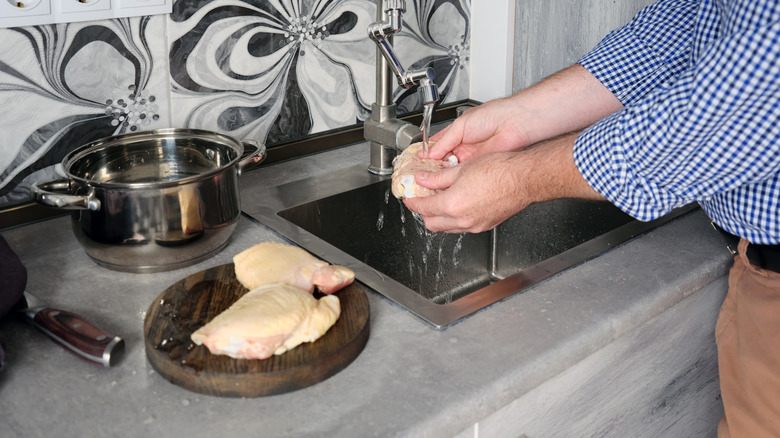
It's no mystery why many baby boomers still believe that they should wash raw chicken before cooking it. They were told to by Julia Child, James Beard, "Joy of Cooking," and countless other authoritative culinary voices of the era.
Not only does washing raw chicken actually fail to sanitize it, but splashing contaminated water around can help spread foodborne pathogens from the chicken to other surfaces far beyond your sink. Despite several studies and health organizations telling consumers why they shouldn't wash raw chicken, countless chefs and cookbooks continued to recommend it.
As our basic understanding of food safety principles has grown, the facts have finally started to get through to some home cooks, despite the pervasiveness of this food safety myth. However, older cooks, like boomers, are unlikely to ever fully abandon this ill-advised practice after decades of being told it was for the best by the best.
You can check the doneness of steak with the palm of your hand
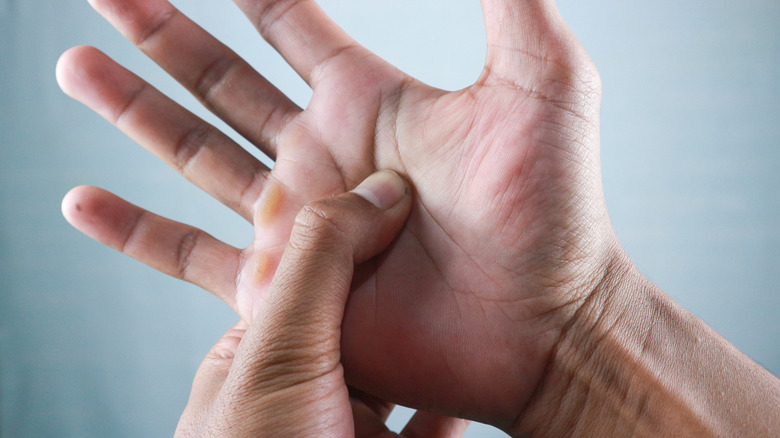
The trick goes like this: Press the fleshy part of your palm near your thumb. If that's what your steak feels like, it's raw. Touch your index finger to your thumb and poke again; if your steak feels like that, it's rare. As you move along each finger, the doneness increases, and just like that, you've conducted a bit of palm-reading for your steak. Incredible!
Except, this technique is entirely subjective. Hands are not all the same squishiness, steaks are not all the same squishiness, and a palm can't read the internal temperature of a steak. It's understandable that the older generation likes to rely on the hand trick. You'll see one version of the technique or another in popular cooking magazines and on TV shows, and even Gordon Ramsay swears by his face-based steak test. It definitely has an air of savviness, and until relatively recently, it was extremely convenient.
While digital thermometers have been around since the '80s, the super-cheap, reliable, and durable models we have today only emerged a few decades ago. A gadget-free solution, quite literally in the palm of your hand, had a lot of appeal before then. Today, anyone can pick up an excellent meat thermometer — like this Alpha Grillers Digital Instant Read Thermometer — for less than $20, so the younger generation is less familiar with this archaic act of palmistry.
Adding oil to pasta water stops the noodles from sticking together
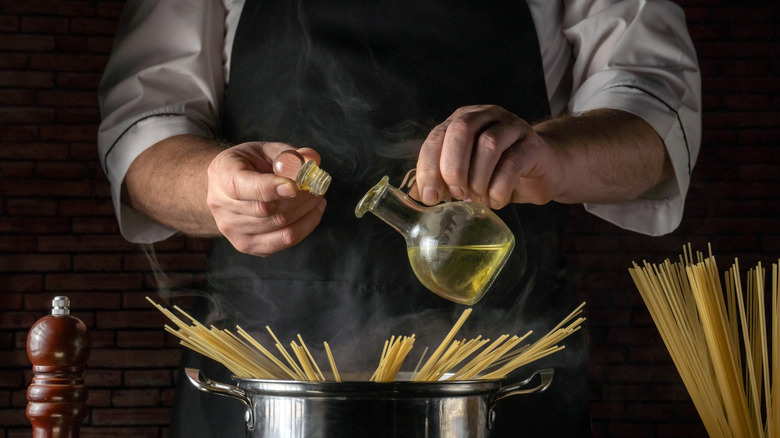
At some point during the 20th century, people got very attached to the idea that adding oil to boiling pasta water would prevent the noodles from sticking to each other. But science — and the Italians — disagree.
Not only is this technique ineffective, since the oil just floats uselessly on the surface of the water, but it also has a negative effect on the final dish. Once the water is drained, the oil clings to the individual pasta pieces, preventing the sauce from adhering properly. The one actual benefit of adding oil is that it helps prevent the boiling water from bubbling over, but using the correct amount of water and keeping an eye on your pot will achieve the same result.
The fact that this trick should be avoided has become increasingly common knowledge, and younger cooks are heeding the advice to keep oil away from their pasta water. However, boomers are stubborn, and the majority still add oil to their pot. Barilla, the famed Italian pasta producer, actually conducted a study to determine just how well different generations know their pasta, and 65% of boomers still add oil to their pasta water, compared to around half of Zoomers.
Overcooking food guarantees safety
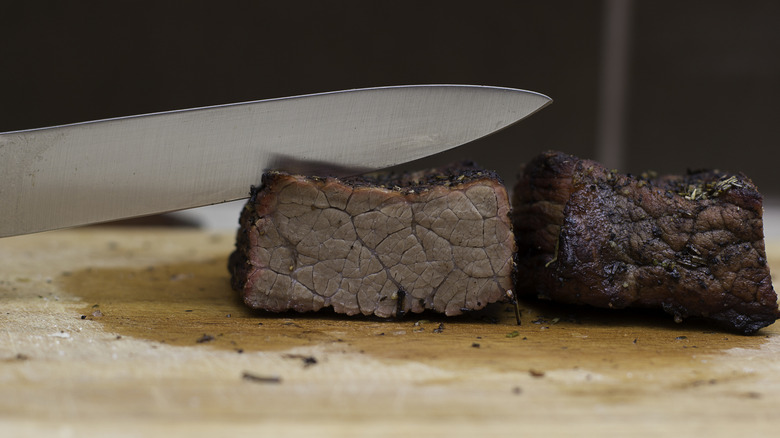
Baby boomers seem to be very attached to the idea that cooking things to oblivion makes them safe to eat. That goes for almost everything, from potentially contaminated meat to week-old leftovers to long-expired cans of veggies. Of course, it's extremely important to monitor food temperature for safety reasons, but that doesn't mean heating everything to a high temperature is safe, as it does not fix spoiled food or kill heat-stable toxins.
Besides a general lack of proper food safety knowledge or an understanding of how foodborne illnesses work, history may also play a factor in this boomer practice. For one, their Great Depression- and World War-hardened parents instilled a strong dislike of waste. Additionally, contamination outbreaks were far more common in the mid-20th century, which led to some food products, like pork, being habitually overcooked. It makes sense that the correlation between "overcooked" and "safe-to-eat" stuck.
Nowadays, contamination is far less pervasive in food production. Plus, millennials are more likely to be up to date on food safety information, as the most-employed generation in the hotel and restaurant industry.
Boiling food adds moisture
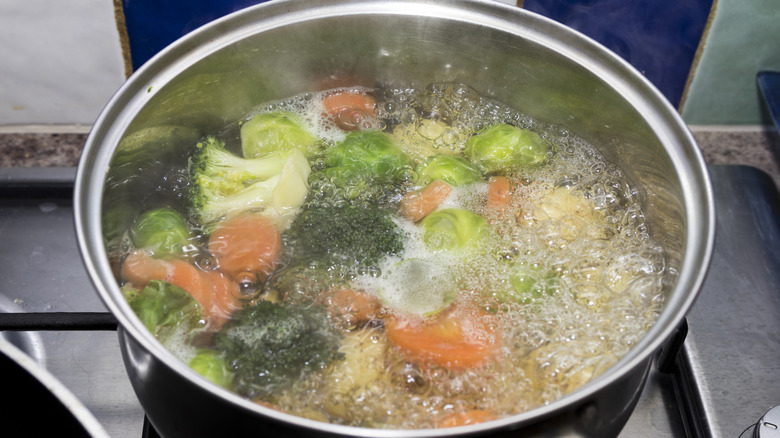
Many among us can recount with horror the boiled-to-death vegetables — perhaps even steak or pork chops — that their boomer relatives have served them. This habit was partly borne out of misguided ideas about nutritional value and the sheer ease of the cooking method, but there is another reason many boomers opt to prepare food this way. There is a pervasive myth that cooking food in a liquid, whether through boiling or steaming, preserves — or even adds — moisture.
This idea may seem reasonable upon first hearing, but it is immediately disproven by a single bite of steamed top round steak. Wet methods of cooking do not inherently preserve moisture; they just make things wet. But as we've covered above, boomers have a habit of overcooking food to the point they taste like shoe leather, and they latched onto this would-be solution. Fortunately, the younger generations can taste the fallacy, and they prefer roasting to such a degree that there is an ever-growing demand for sheet pan dinner recipes.