

10 International Sauces Home Cooks Will See Everywhere In 2026
We may receive a commission on purchases made from links.
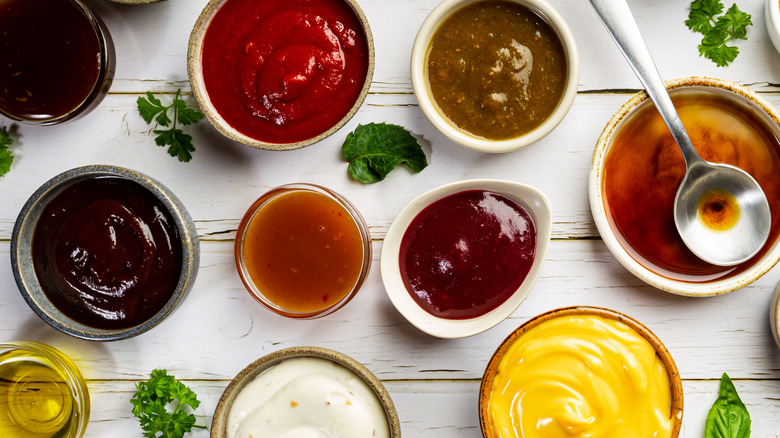
Social media brings the world to our doorstep, beckoning us to try flavor combinations and ingredients in our sauces that we've never considered before. Of course, this means adventurous foodies don't necessarily need a passport to experience the flavors of the world, including the many international sauces likely to pop up everywhere in 2026.
Now, a large proportion of the sauces, and sauce ingredients, you can expect to trend in 2026 have origins in Japan. But you'll also find some coming from Mexico, South America, Italy, the Middle East, and Africa, as well. Additionally, many of these sauces date back centuries, standing the test of time while waiting for you to discover (or rediscover) them. However, other sauces you're likely to encounter this year are fusion sauces, taking ingredients from one culture and mixing them into something completely new.
While there was a time when soy sauce, salsa, and spaghetti sauce was as international as it got in U.S. fridges, our tastebuds have evolved over time. With that in mind, whether you encounter these 10 sauces or sauce components as store-bought sauces, on restaurant menus, or try your hand making them at home in 2026, we think you're going to enjoy them all.
Mole
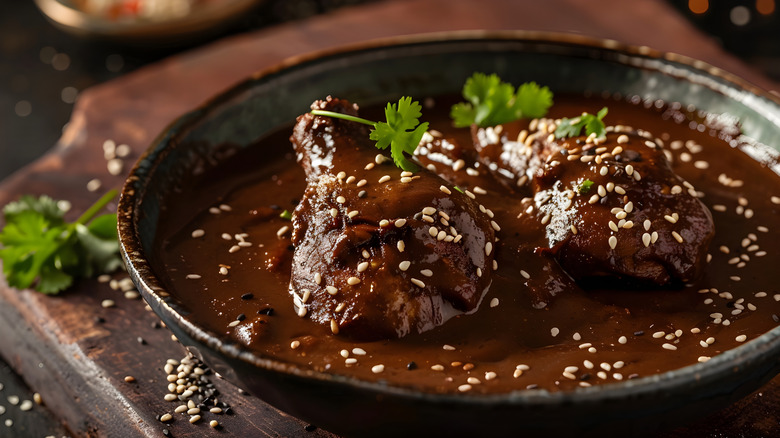
You might have encountered mole sauce on a Mexican restaurant menu served over meat or chicken enchiladas, and this complex sauce seems to be growing in popularity, with online chatter about this sauce increasing in recent years. Of course, among the food trends you'll be seeing in 2026 is more "swavory" dishes — that is, more dishes that combine sweet and savory flavors together, which is true of mole.
Mole is certainly not a new sauce. It's been around for centuries, with several conflicting stories surrounding its origins. Accounts from the 1700s talk about the Aztecs making a "molli" (or sauce) from ingredients like chocolate, pumpkin seeds, hot peppers, and tomatoes. But some stories say that nuns at the convent of Santa Rosa first created modern mole in 1885 with over 100 ingredients, which they served over a turkey to impress a visiting bishop or marquess.
Fast forward to the present day, and mole is still a complex sauce that can take up to three days to make. While most modern versions of the sauce don't have 100 ingredients, it's not uncommon for them to have anywhere from 20 to 40 total components. Plus, there are many varieties of the sauce, including red, green, and black. The good news for modern home cooks is that there is also a shortcut mole sauce recipe that takes less than 30 minutes to make and only uses 14 ingredients.
Amba
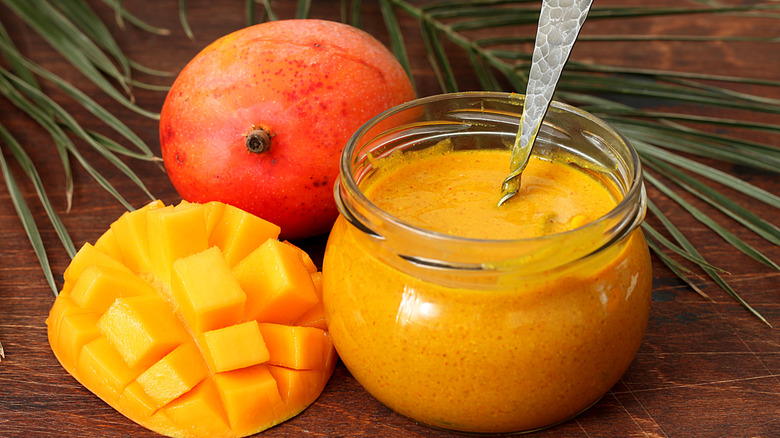
One sauce you might be hearing about more in 2026 that's also likely to be new to many readers is amba. A Middle Eastern sauce made with pickled mango, amba is tangy, sweet, and spicy, and becoming more popular on restaurant menus around the country. It also combine's last year's "swicy" (sweet and spicy) trend with this year's up-and-coming "swangy" (sweet and tangy) flavor trend. Perhaps we should call this flavor combo "swangicy" or "swicangy."
Regardless, this sauce was supposedly created in India in the 1800s by the Sassoons, an extremely wealthy Jewish philanthropic family who had moved to Bombay from Baghdad, Iraq to escape persecution. India's mango chutneys inspired the sauce, and they sent it back to Baghdad for the Iraqi Jewish community to try, where it became popular. It eventually moved from India throughout the Middle East via the Indian Ocean Trade network and into Israel and Palestine.
You're likely to encounter amba on falafel, schwarma, or sabich in a Middle Eastern restaurant in the 21st century, though it's also good on mild fish and vegetables. It gets its tartness from green mangos that ferment in salt for one to three days, as well as the vinegar it simmers in, sumac, and sometimes lemon juice. It's also heavily spiced with ingredients like cumin, mustard seeds, fenugreek seeds, pepper flakes, garlic, and turmeric. Some of its sweetness comes from the mango, but it might also include brown sugar. The sauce is usually well-blended, and can also be combined with tahini sauce.
Sauces made with miso
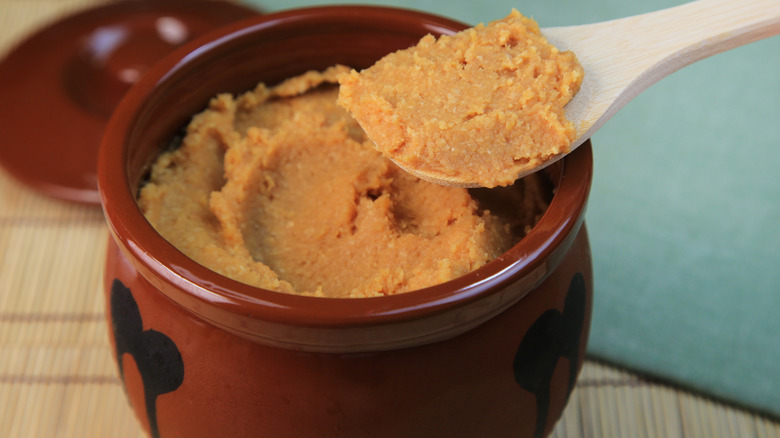
Miso is something else that's been around for a while, but it's slated to become a bigger component in sauces in 2026. If you're only familiar with miso from the soup that comes as a starter at Japanese restaurants, it's time you expand your horizons. Once you learn just how versatile miso paste is for adding extra umami flavor and depth to sauces, you'll want to keep some on hand at all times.
While many of us are just starting to stock miso in our fridges, the Japanese have been using this fermented soybean seasoning for over 1,300 years. It started out as a luxury food item before becoming more accessible as a paste for common people. Today, it comes in a variety of styles, with different concentration and sweetness levels and different flavor profiles.
Miso is extremely versatile when it comes to sauces, and doesn't have to go solely in Asian-style recipes. It's ready to cross international lines to create fusion sauces like miso tahini sauce, umami-rich miso pesto, and even makes homemade spaghetti sauce taste gourmet. We've found that if we taste our sauce and it's lacking in depth, we've started reaching for the miso to enrich it instead of bullion, soy sauce, or Worcestershire sauce. While most miso-infused sauces tend toward the savory side, it can go sweet as well, like with swavory miso caramel sauce drizzled over desserts.
Sauces created with yuzu kosho
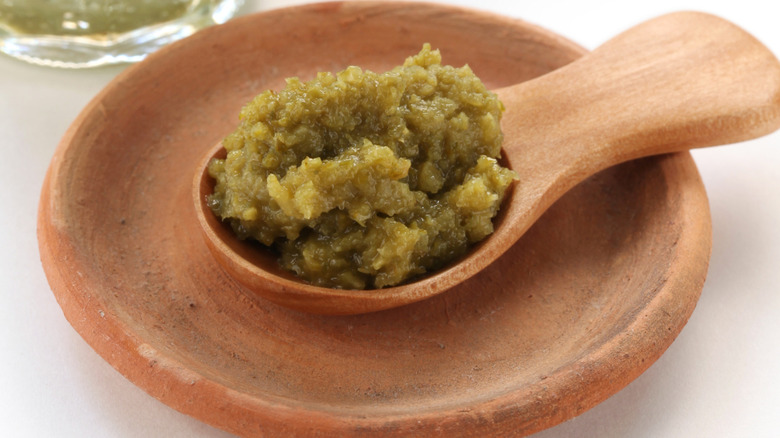
We foresee yuzu kosho becoming a popular sauce ingredient this year, as the Japanese citrus fruit yuzu had a marked jump in social media mentions last year. This citrus fruit adds a special touch to sauces; you might pick out citrus flavor notes you recognize like lemon and grapefruit, but you'll also detect floral and spice notes, as well as pine. Those who have already loved yuzu in store bought sauces like yuzu ponzu are likely to seek out yuzu kosho paste to make sauces at home.
Yuzu kosho paste elevates almost any dish, as the flavorful ingredient adds savory, spicy, and tangy flavors to sauces alongside umami depth. It's a fermented paste made from yuzu zest, chili peppers, and sea salt. The sharper green variety is made with green chilies and unripe yuzu, while the fruitier red version is made with red chilies and ripe yuzu. Either version is strong, so only a little is necessary to enhance sauces.
It's especially good in Asian-forward sauces that already include ingredients like soy sauce or sesame. Plus, it pairs well with the miso-infused sauces we've mentioned as becoming ever more popular. However, this paste is a great crossover sauce ingredient for fusion flavors. You can make it creamy by adding it to aioli, yogurt, or make a Middle Eastern fusion sauce with tahini. We've even seen it added to ranch dressing.
Amatriciana
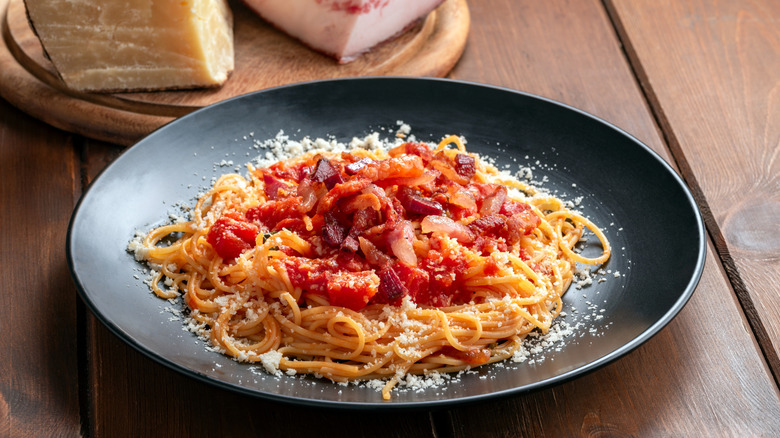
Amatriciana is an Italian pasta sauce that's becoming ever more popular. A hearty meat- and cheese-infused tomato sauce that provides plenty of umami satisfaction, you'll likely see a lot of this sauce in 2026.
It's believed to have started life as gricia, a pasta prepared with a sauce made of a hard sheep's milk cheese (like pecorino) and guanciale (a cured meat made from pork jowls). When tomatoes came to Italy, Amatriciana eventually started to include tomato sauce, as well. The first written mention of Amatriciana sauce with tomatoes is in the early 1800s when it was served to the pope in Amatrice, Italy. Italian cooks from the region sometimes add their own twist with a little olive oil, garlic, or white wine. When Giada de Laurentiis is in Rome, she likes to visit Trattoria al Moro for authentic pasta all'Amatriciana.
As an inspiration to home cooks, Italian restaurants from New York to California have started adding this dish to the menu. Chili peppers and red onions sometimes end up in the sauce, though, thus turning it into a fusion dish. We've also found cooking classes in Boston for March learning to make Amatriciana (which are already sold out). Additionally, if you're preparing Amatriciana at home and try substituting pancetta for the guanciale, know that you'll end up with a completely different flavor profile — though it'll be delicious either way.
Japanese barbecue sauce
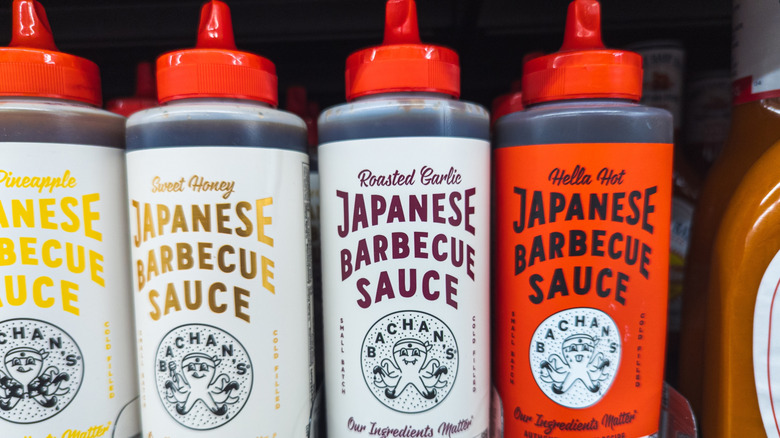
Sales of Japanese barbecue sauces have been on the rise in recent years, so if you haven't encountered any yet? You're probably going to soon enough. At its heart, it's a sweet and savory sauce, but it also often adds a tangy and/or spicy component, as well.
Japanese barbecue sauce has been around since right after World War II, created as a sauce for a Japanese grilled meat called yakiniku. What started as a soy-sauce-based marinade developed over time into a variety of sauces with regional variations; however, it usually contains mirin, sake, and sugar, yielding a sauce with both umami depth and sweetness. Garlic, ginger, sesame seeds, vinegar, and citrus are also common additions. To build on another sauce theme for 2026 that we've mentioned, you're likely to find yuzu-infused Japanese barbecue sauce, as well.
Japanese barbecue sauce is excellent as a meat glaze, just like traditional American barbecue sauces are, and you can also use it as a dipping sauce. However, there are plenty of creative uses for the sauce, whether you get a store bought sauce (like Bachan's Japanese barbecue sauce) or buy your own. For example, you could use it as the sauce for chicken and waffles, for kimbap, or as a topping for a bowl of chili.
Teriyaki sauce
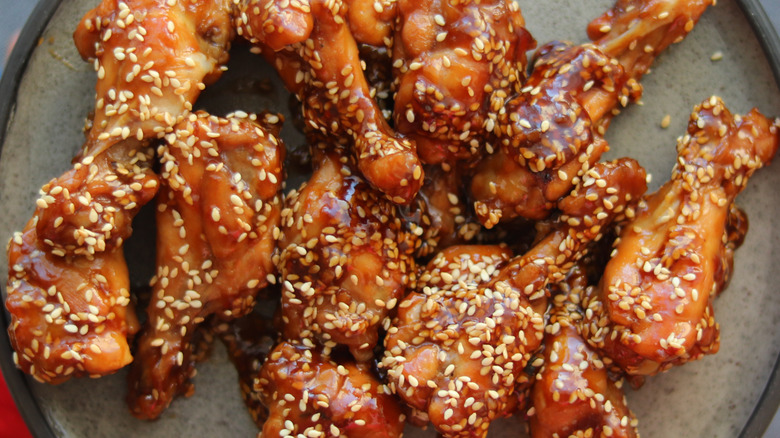
Teriyaki sauce has been in the U.S. for decades. After Kikkoman soy sauce hit the shelves in the U.S. in the late 1950s, a Japanese immigrant promoted teriyaki sauce by giving out food samples of his family's version in grocery stores, and it eventually caught on. Still, it's seeing a surge in popularity of late, and with sweet and savory foods coming into fashion in a big way in 2026, teriyaki appears ready to shine.
The teriyaki cooking method for grilling or broiling meat with a glaze came about sometime between the 1600s and 1800s in Japan. The earliest teriyaki glazes were used for cooking fish; they later became more complex, and were used for glazing other meats, as well. The sauce has always contained soy sauce and sugar, but swapped mirin for sake later, and added in ginger and garlic.
Furthermore, recipes for teriyaki sauce are easier to make at home than you might think. A simple version starts with soy sauce and uses brown sugar and honey for sweetness. Garlic and ginger add flavor, while a little cornstarch thickens it up so that it's ready to use wherever you want it. While it's tried and true as a meat glaze, it also works nicely as a stir fry sauce and even as a fusion sauce for tacos.
Piri piri
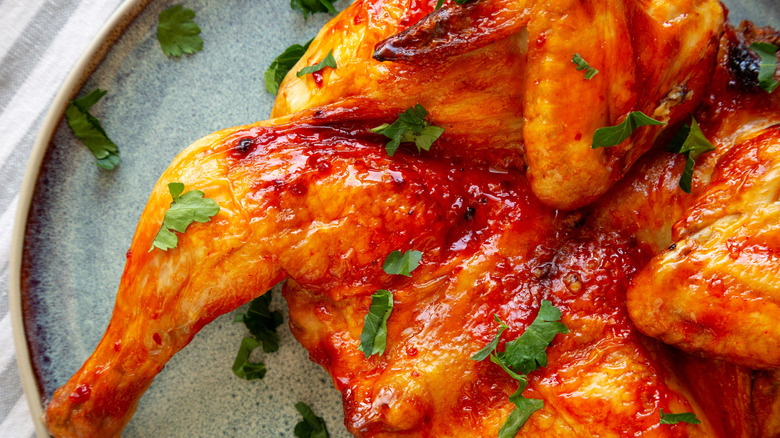
If you're a lover of hot and tangy sauces but haven't tried piri piri yet, you might in 2026; after all, you're apt to see it around more this year. The name of the dish comes from a Swahili and literally means "pepper pepper," just in case there was any question about the main ingredient. Plus, once you try this tangy and spicy sauce, you're probably going to think of a variety of ways to use it.
Piri piri sauce appears to date back centuries, to Portuguese traders who turned bird's eye chili peppers growing in Africa (possibly Mozambique) into a hot sauce. Red wine and vinegar helped to preserve the chilies, while paprika and other ingredients enhanced its flavor. With bird's eye chilis hitting around 175,000 on the Scoville scale, the heat level is somewhere between habaneros and jalapeños.
Peri peri seems to be an especially popular sauce for marinating or flavoring chicken. But you can put it on practically anything where you want a little heat, whether it's on meat, or as a mix-in for dishes like macaroni and cheese. With its similarity in texture to salsa, some people even substitute it for salsa in Mexican-inspired dishes. Home cooks can easily make the sauce at home with ingredients like bird's eye peppers (or other red peppers), smoked paprika, garlic, olive oil, lemon juice, red wine or apple cider vinegar, fresh herbs like oregano, and maybe even red onion and/or tomatoes.
Chili pepper sauces of all sorts
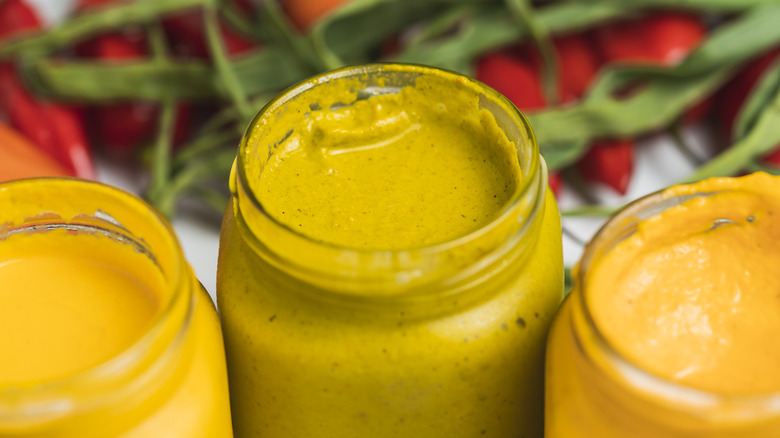
Piri piri is just the tip of the iceberg when it comes to international chili-pepper-based sauces becoming more popular. We think you're going to start seeing more of these in 2026 in general as people ask themselves about chili pepper sauces they haven't discovered yet. Not only are there different ingredients holding up each sauce, but each chili pepper has a distinctive flavor, as well.
Hot sauce lovers tend to stay in exploration mode when it comes to new thrills to delight their tastebuds. While many spice-loving foodies can already tell the difference in a sauce made from jalapeños versus chipotles, habaneros, or Thai chilis, they're ready to experiment with new ones. Some of the up-and-comers include pasilla, guajillo, and chile de ȧrbol — all from different regions of Mexico. Although, some better-known chilies like jalapeños are gaining new life with sauces like jalapeño chili crisp.
A Peruvian pepper called aji amarillo is also starting to make waves. It was McCormick's flavor of the year in 2025, which brought it into the spotlight. The mild pepper with a fruity undertone was made it into a hot sauce by McCormick. If you've been to a Peruvian restaurant, though, you might have had it in huancaína sauce, often served with potatoes or chicken. If you want to try using these peppers at home, you can get Inca's Food aji amarillo paste for huancaina sauce or sauce experimentation.
Chimichurri
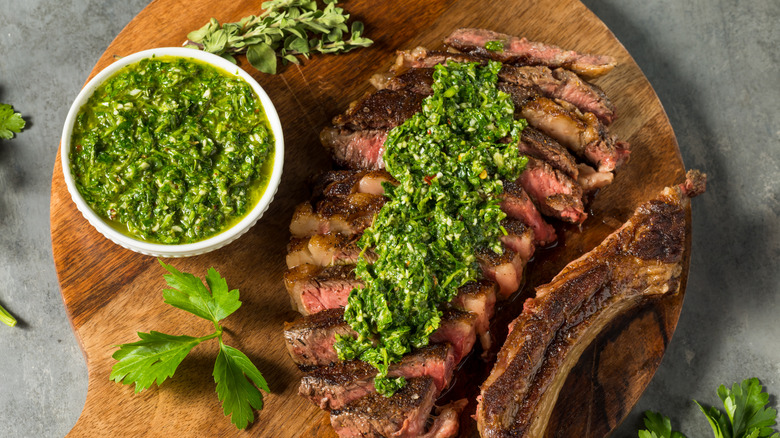
We think chimichurri will come into its own in 2026 for two different reasons. First, it's a sauce that's often used as a steak topping, and we expect red meat to trend in 2026 with the change to a protein-centric food pyramid in the U.S. It also satisfies the herbaceous, green sauce trend that is upon us.
Chimichurri sauce originated in Argentina, which is the country that eats the most beef per capita in the world. There are several stories about how this sauce came about. One says the creator was named Jimmy McCurry, and that name eventually transformed to "chimichurri" because of the locals' pronunciation. Others say it was a riff on an herb-based sauce Basque immigrants brought with them to Argentina called tximitxurri.
Either way, the star of chimichurri is the parsley, which is propped up with ingredients that make it lip-smacking and craveworthy. Red wine vinegar and/or lemon juice provide tangy brightness, while garlic, oregano, salt, and black pepper give it character. Olive oil makes it more saucy and spreadable. Plus, you can make it as spicy as you'd like with red chilis or chili pepper flakes. If you're cooking your steak indoors, you can add a little smokiness by adding smoked paprika to the sauce.