

The Sushi Bar Menu Red Flag That Should Send You Running
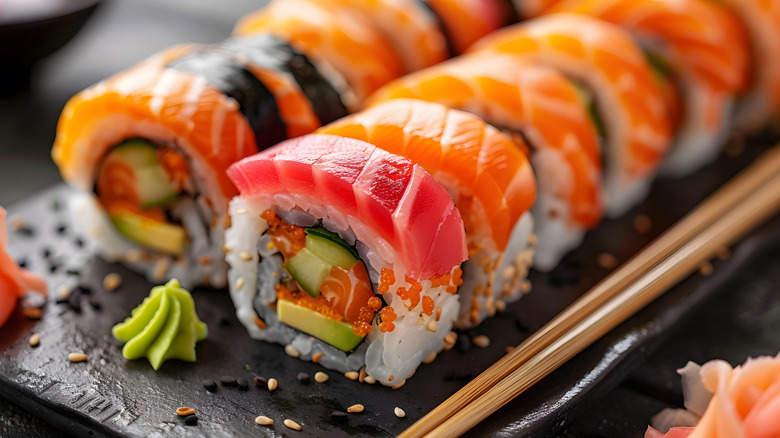
When going out for sushi, there are things to keep in mind in order to avoid not only a bad dining experience, but the potential for food poisoning. From the freshness of the fish to the actual kinds of fish they serve, there are a few major red flags to look for when eating sushi at a restaurant. Akar Win, head sushi chef at the West Hollywood location of the Uchi group, told Tasting Table that one of the most important things to note is if the menu lacks sourcing information. "A green light is if a menu contains the origin of the fish or where they were sourced, which shows that the chefs care about quality," Win said.
Since the first Uchi opened in Austin in 2003, this award-winning purveyor of modern Japanese cuisine has carefully sourced all fish and shellfish it serves, whether they are flown from Japan or fresh from the Gulf of Mexico (renamed the Gulf of America in 2025 by U.S. President Donald Trump) or the Pacific Ocean. Win says that a sushi restaurant menu should include sourcing information, whether it's in the description of each nigiri or sushi roll, or at the bottom of the page. You should see details like Alaskan snow crab as an ingredient or the origin of any wild-caught fish, so you can be better informed about the seafood you're about to order.
Why is seafood sourcing information important
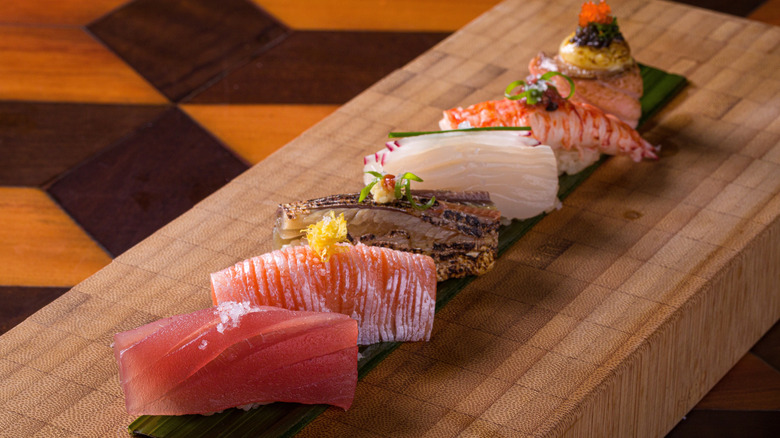
The importance of seafood sourcing cannot be understated. There are plenty of economic, ethical, and environmental reasons to choose seafood for which we know the origin. Knowing where seafood comes from helps us avoid fish fraud, a practice that is sadly becoming more common these days in which fish of lesser quality are sold or served as something different. For instance, avoid ordering sushi presented as white tuna unless you have certainty of what you're being served. We should also know whether the fish or shellfish comes from a sustainable source, such as a regulated, certified fishery or farm that raises seafood with good practices.
There are very few restaurants that serve sustainable sushi, but if we all start asking the right questions, we might help steer more of them toward that goal. If sourcing information is not on the menu, you should ask your server. "Confidence when answering questions from a waitstaff or chef is a definite green light," says Win. "Even if they do not have the answers on the spot, if they come back with the answers after asking the other staff, this means they truly care." If you ask the staff these important questions and you don't get an answer, take it as a sign that you should eat your sushi elsewhere.