

I Tried Tim Hortons' Protein Lattes: Here's What Worked And What Didn't
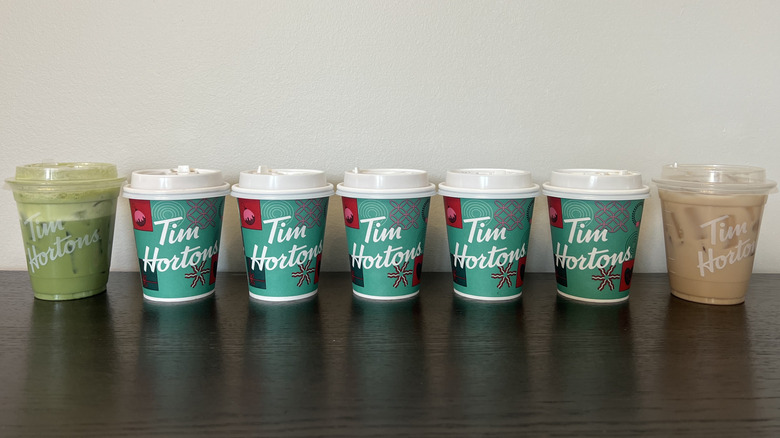
We're all stuck in this constant fight of trying to add more protein to our diets. And more often than not, it's a losing battle. We stuff chicken breasts and cups of Greek yogurt galore into our meals, only to come up short on our goal once again. So what do we do? We resort to getting creative with our protein intake. We experiment with cottage cheese recipes. Some have switched to protein pasta. And others have discovered that a higher daily dose of protein can even come from an unlikely source: your coffee cup.
You may have noticed that Starbucks was early to this trend, introducing its first-ever protein lattes and protein cold foam in September 2025. At the very start of 2026, Dunkin' Donuts joined the fun with its own protein lattes and refreshers. Not to be left out, Canada-based Tim Hortons has jumped on the protein train as well, with the introduction of protein lattes to the U.S. market on January 28, 2026.
Now, instead of a signature Double Double (Canada's staple coffee order, complete with two creams and two sugars), customers can enjoy morning beverages with added benefits that go beyond just a much-needed dose of caffeine. With multiple flavors to pick from, it's a major upgrade to Tim Hortons' menu, and today we're taking a closer look at what the lattes are made of, where you can find them, and most importantly, how they taste.
Methodology
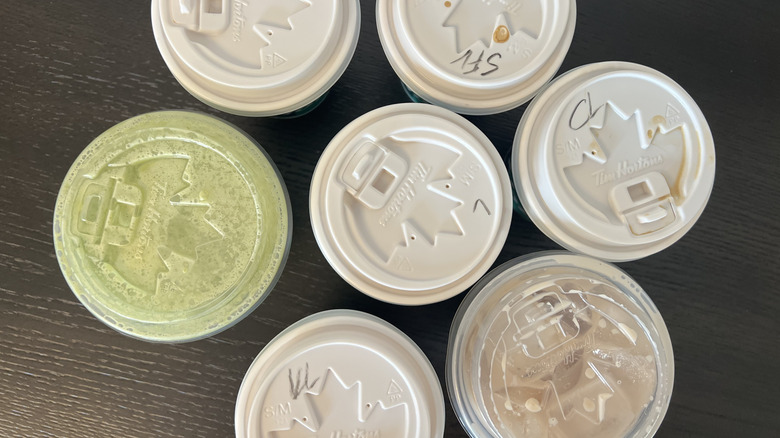
I woke up bright and early on January 28 to get my hands on the new Tim Hortons protein lattes as soon as they were released. I worried at first when I saw only five of the seven variations available online, but I was able to order the entire lot at my nearest location in Columbus, Ohio. All the lattes come in both hot and iced variations. I grabbed the hot version of most, with the exception of two that I noticed are promoted and featured more often as iced beverages.
After I got them home (somehow managing to avoid any sort of spills), I reviewed each one in more detail. I took note of their ingredients, nutritional value, price, and availability before jumping in to taste them. The general worry when it comes to any kind of protein beverage is that it will contain a chalkiness or strong whey flavor. So I was on the lookout for that, as well as a general balance of tastes in each coffee. Essentially, I wanted to see how well the coffee, protein, and other flavor add-ins worked together, and if they created something worth starting your morning with and spending your money on.
What are the protein lattes?
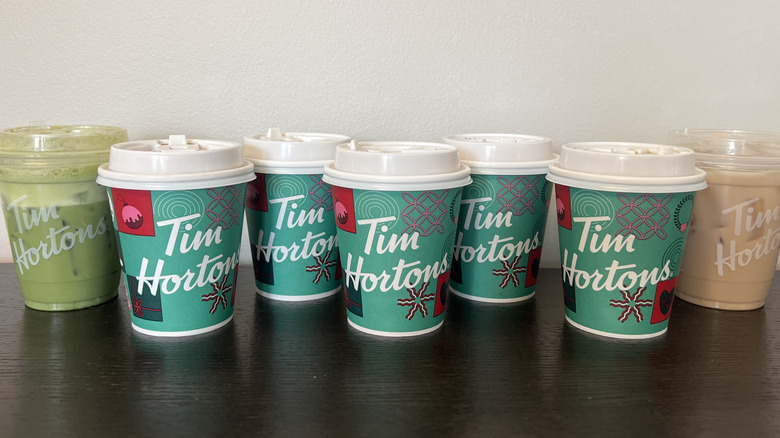
Tim Hortons' protein lattes follow a similar makeup as the ones found at a place like Starbucks or Dunkin' Donuts. They're not that far off from a standard latte either. Each one combines espresso with milk and sometimes other flavors or syrups. The only difference is that this milk is actually blended with whey, creating a high-protein beverage.
The protein lattes can be ordered either hot or iced and come in a total of seven different flavor varieties, including classic, vanilla, sugar-free vanilla, caramel, mocha, and two more specialty offerings of matcha and chai. Classic sizes of small, medium, and large are available, with larger sizes understandably delivering a bigger protein boost. Small sizes of the lattes offer anywhere from 11 to 14 grams of protein. Medium sizes offer anywhere from 17 to 21 grams of protein. And large sizes offer anywhere from 23 to 28 grams. The matcha latte (both the hot and iced versions) contains the most protein of the bunch, followed closely by the chai latte.
Price and availability
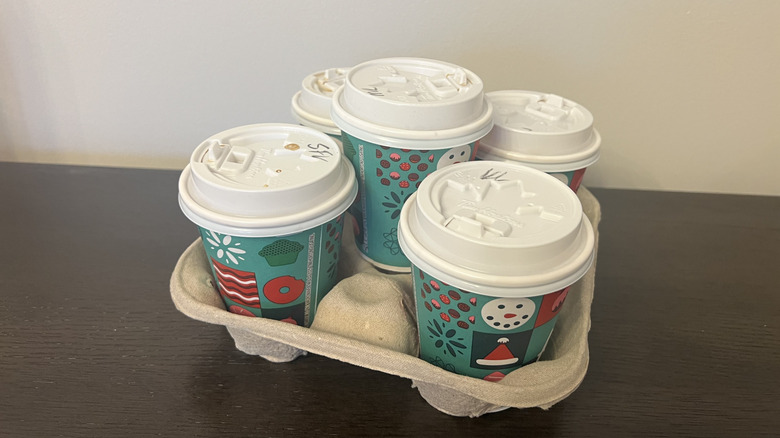
The protein lattes were officially launched at U.S. Tim Hortons locations on January 28 nationwide. However, the chain's official press release states that they are available at "participating Tim Hortons restaurants," so it may be a good idea to check with your nearest location first to see if they are taking part in the new promotion.
It's also important to note that Canada — Tim Hortons' birthplace — saw the protein lattes first. They were introduced in the country in August 2025, meaning Canadians have been filling up on extra protein for months now. Canada's protein lattes looked a little different, though. Tim Hortons specifies that these were made with a "lactose-free, high-protein dairy beverage." It additionally notes that flavor shots can be added to the lattes, and this same dairy beverage can also be added to other drinks like hot and iced coffees, teas, Cold Brews, and its blended Iced Capps.
In terms of price, the iced protein lattes range from $5.09 to $5.79 for a small size, with flavors like vanilla, caramel, and mocha costing more. The hot versions are a bit less, ranging from $4.89 to $5.49 for a small size. Medium-sized protein lattes range anywhere from $5.59 to $6.50, and large-sized protein lattes range anywhere from $6.19 up to $6.79. These are based on prices in my area of Columbus, Ohio.
Taste test: Classic Protein Latte
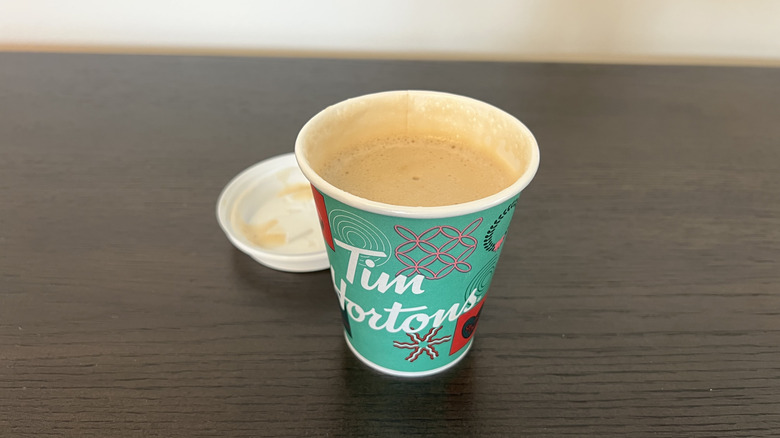
The protein latte in its most natural, unadulterated state is not bogged down by syrups or sweeteners (though you can add sugar, Stevia, or Splenda if you so choose). Instead, it combines one espresso shot with that blend of milk and whey for a small morning coffee that boasts 11 grams of protein and only 110 calories. Typically, I'm a champion of simplicity when it comes to Java-based beverages, but I can't say I'm particularly fond of this Tim Hortons' protein-packed elixir.
It came in a standard light tan color, and there was hardly any foam at all on the top of the cup — any kind of latte art would have been out of the question. My first sip put to bed my initial concern of graininess or protein clumps throughout the drink. Consistency-wise, it was smooth. But taste-wise? Not so much. The coffee portion was extremely strong, to the point that it was almost undrinkably bitter. Meanwhile, the whey flavor was faint. It didn't taste as though someone mixed in a giant scoop of protein powder; it was much more masked than that, really only detectable in the aftertaste. It boils down to a thicker, less balanced version of a classic latte. At least the intense coffee notes signaled that I was getting a hefty dose of caffeine.
Taste test: Vanilla Protein Latte
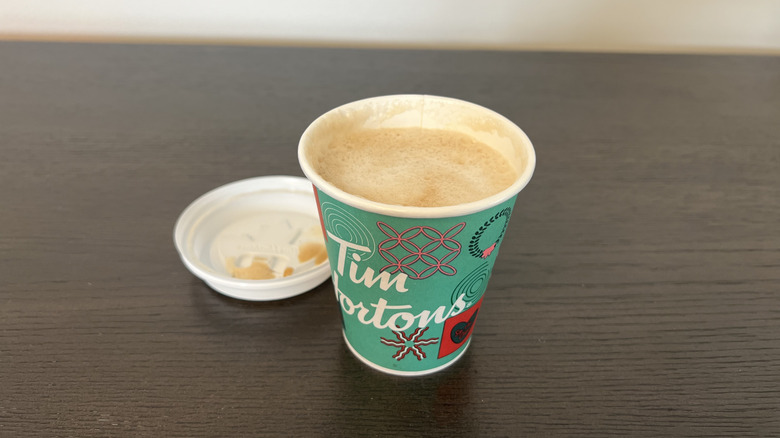
The formula for the vanilla latte is the same as the classic — espresso plus a blend of milk and whey – just with an added pump of vanilla syrup. However, this one turned out significantly more frothy. I was met with over half an inch of foam on top of the liquid, and understandably, this is also where you get the most prominent whey flavors. It's distinct, but I actually didn't mind it because it confirms that there really is extra protein in the cup.
Once you get past the foam, vanilla is what hits your taste buds first. Then the espresso notes begin to crash in around it. The hot coffee still has that same strength and richness to it that the classic latte does (it certainly leans far into the robust dark roast territory). But, with the vanilla notes and what seems like a larger pour of whey-infused milk, it's not nearly as overwhelming on the palate.
Vanilla lattes are typically my go-to coffee order, no matter what cafe I choose to stop at. But I don't necessarily see this taking over as a new favorite. The vanilla flavoring helped the latte's case, yet it more so masked imperfections than helped to create an all-around tasty beverage.
Taste test: Sugar-Free Vanilla Protein Latte
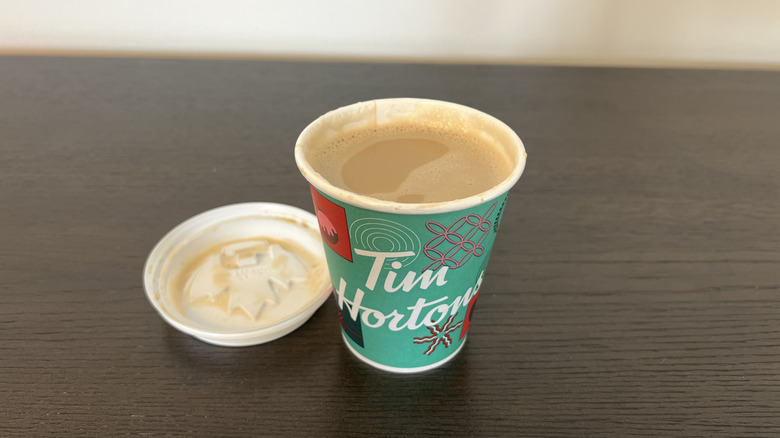
I immediately thought to myself "no, no, no" as I tried this latte. I do appreciate the inclusion of a sugar-free option on the lineup. It seems to be a growing trend among coffee shops – Starbucks, for example, recently extended its own sugar-free offerings with the introduction of a sugar-free caramel syrup that's here to stay. However, I was left hoping that this particular drink wouldn't become a permanent fixture at Tim Hortons.
I don't know if it's the sugar-free syrup, the whey protein, or the espresso itself, but this latte simply doesn't work. Perhaps all three are contributing to its distastefulness. It smelled extra sweet — far sweeter than the standard vanilla protein latte — yet that didn't translate into the taste hardly at all. I got a very faint glimmer of vanilla before being bombarded with a mix of both sour and bitter coffee flavors. It didn't taste like an espresso-based drink at all, but rather a K-Cup coffee that was made from stale, low-quality grounds. You're then left with an aftertaste that's like a mix of vanilla protein and Stevia. If you couldn't tell, this was my least favorite of the Tim Hortons protein lattes. It made the classic latte that I originally didn't care for seem like a barista-crafted dream.
Taste test: Caramel Protein Latte
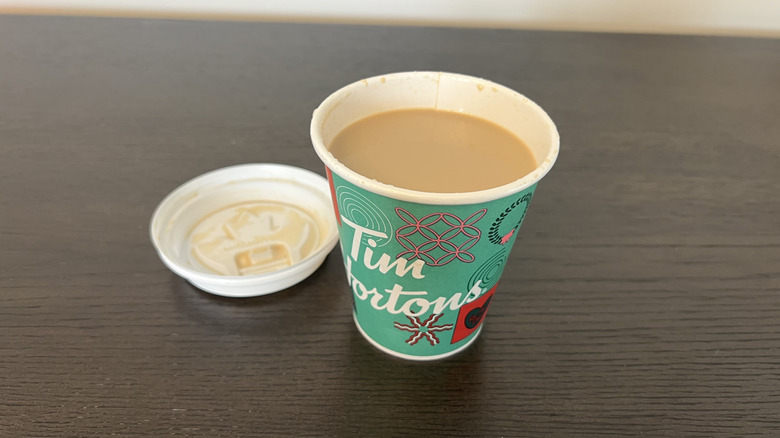
It's not often that I choose to indulge in a caramel-flavored coffee beverage. Not just because I have a more natural inclination towards vanilla, but also because caramel coffees tend to overdo it on the syrupy sweetness. I figured it would be the same story with this Tim Horton's protein latte. However, it surprised me in a good way. This was the best flavor yet (though the bar wasn't set particularly high).
Even though foam was nearly non-existent on top of this drink, I didn't hold that against it. It still satisfied in all the other ways a latte should. It was fairly creamy, no doubt aided by the addition of the protein powder. Each sip was laced with those warm, buttery notes of caramel, yet it managed not to be cloying. I think sweet tooths would still be on board with the flavor, and I think more serious, straight-up coffee drinkers could stomach it as well. The espresso wasn't nearly as intense as it was in previous lattes, making for much easier, more enjoyable sips. The flavor of whey wasn't overly evident either (likely masked by the syrup), so it drinks just like any other caramel latte. It's a good one, and it has my stamp of approval.
Taste test: Mocha Protein Latte
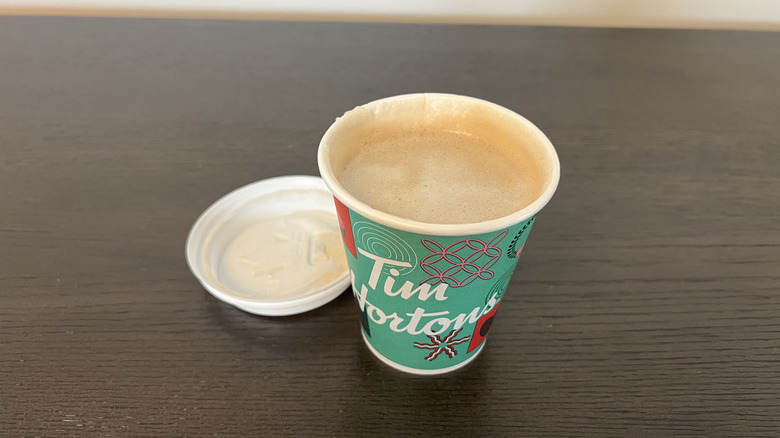
The mocha protein latte looks just like a cup of hot cocoa and smells like it, too. Diving into the taste is where it begins to deviate from the chocolatey beverage. The flavor was more equal parts chocolate milk, equal parts coffee — closer to a dark roast drip coffee than a bold espresso. The inclusion of protein also gave it an added layer of complexity.
Even though I think you could get a similar result from blending a chocolate whey protein into your coffee at home (at a much cheaper cost), I didn't dislike this one. It's probably on the same level as the caramel protein latte in terms of its drinkability. It was smooth rather than powdery, and there was enough cocoa-based sweetness that the bitterness of the coffee was more subdued. Instead of being front and center, there were undertones of coffee.
To me, this felt more like a midday treat than a coffee you would wake up to in the AM. But in that case, I think it would be acceptable to go all out by asking your Tim Hortons barista for a dollop of whipped cream and a drizzle of chocolate syrup to top it off. That way, you're still getting your protein, but just hidden inside a dessert-like drink. It's called balance.
Taste test: Iced Matcha Protein Latte
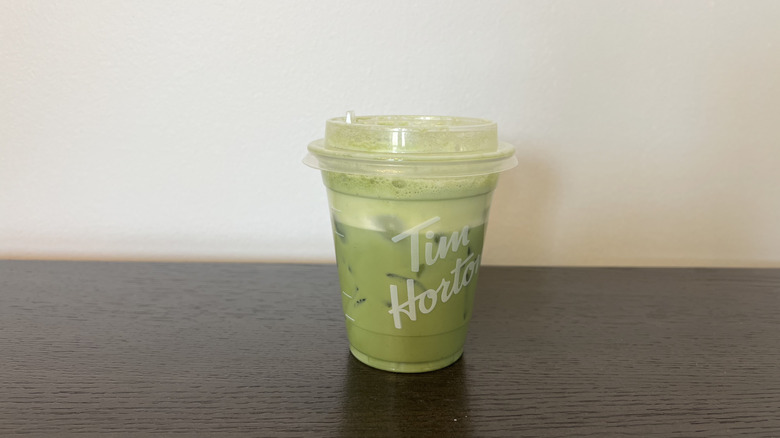
Matcha and whey protein are the perfect match. The two meet inside this bright green cup and make for the most palatable protein latte on the Tim Hortons menu. Ultimately, the pairing really just makes for a foamier version of a standard matcha latte. Everything you love about the beverage is still present. You have that same level of creaminess and a grassy earthiness in the taste, but it's mixed with the vanilla milkiness of the whey.
It does air on the side of sweetness. It's certainly a matcha latte and not pure iced matcha — the 23 grams of sugar packed into even just the small size make that clear (the large version boasts 58 grams!) However, because the flavor is just that good, I'm willing to let this slide.
My only other small qualm with the drink is that the cup was filled with far too much ice. The ratio stood at about 70% ice, 30% drink. So, if you're looking to get more bang for your buck, I would opt for the hot version, or perhaps ask your barista for light ice.
Taste test: Iced Chai Protein Latte
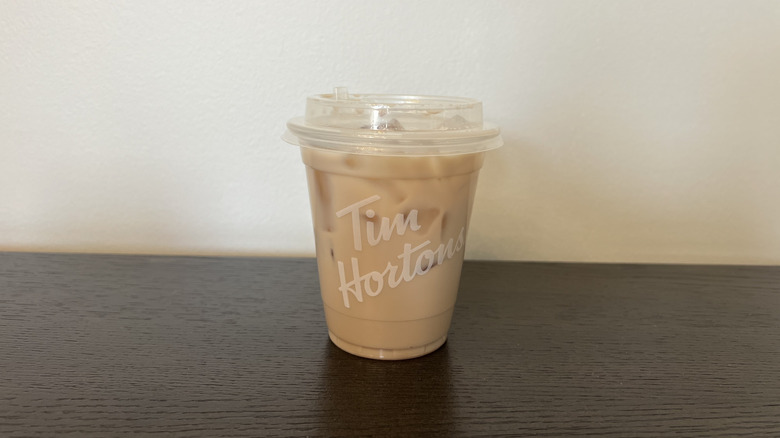
Heavy ice was a problem yet again in the chai protein latte, but no need to rehash that. We can jump right into the taste of the scant amount of liquid that was there. In summary, it wasn't quite as enticing and cohesive as the matcha latte, yet it still had some high points.
It tasted like a light, milkier version of a classic chai latte. It wasn't as thick and frothy as the matcha was, and those cozy spices like cinnamon, ginger, and cardamom were more muted than I would have liked. I did notice there was a layer of brownish syrup on the bottom, and giving the entire cup a good stir did seem to dredge up some extra sweet flavors and even more hints of whey as well. I could blame some of the dilutedness on the overload of ice (though it didn't appear to be melting fast). But I think the better assumption is that this is just a more toned-down chai latte.
It's still something I would order again, and I'd also be willing to pick up the hot version to see if warming up those spices ups the ante. Overall, I can't be mad about a latte that has a pleasant taste and still packs in 13 to 26 grams of protein, depending on what size you order.
Final verdict
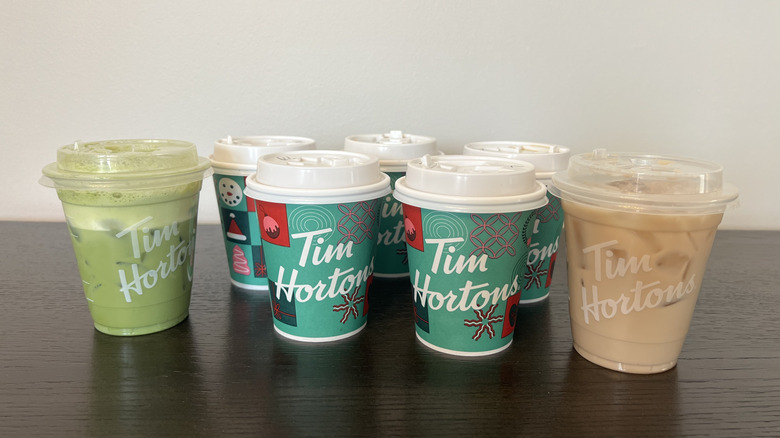
If asked the question, "Are the Tim Horton's protein lattes worth it?", I think I would struggle to answer yes. It's a bit more complicated than that. I would say they certainly serve their purpose. Each one offers a nice extra dose of protein alongside a latte's standard dose of caffeine, and all of them manage to avoid the chalky texture that so often plagues protein drinks. However, that doesn't necessarily mean they're rich, smooth, and undeniably tasty.
My biggest piece of advice would be to sidestep the sugar-free vanilla protein latte and perhaps even the classic, unless you're looking to down them quickly just to hit your macros. The low-sugar or no-sugar promises may tempt you, but they come at a steep cost. The vanilla and chai lattes, on the other hand, make for decent alternatives to your morning brew — and some of their issues revolved more around the strong taste of low-quality coffee rather than the presence of protein. Additionally, I found the mocha and caramel lattes to be worthy of a repeat purchase, but the true star of this new lineup is the matcha protein latte. Creamy and fresh to the point where it's hard to tell that whey was even involved in the making. All the benefits with none of the drawbacks.