

12 Mistakes Everyone Makes With 7-Layer Bean Dip
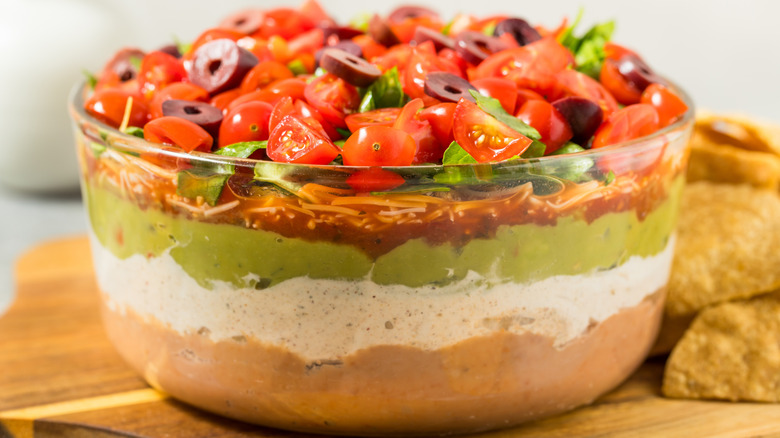
Whether you're hosting a party or just experiencing a super severe snack attack, a seven-layer bean dip is sure to impress guests and satisfy a craving. You basically get to eat seven dips in one, with a delightful mix of flavors and textures. From guac to sour cream to cheese to, of course, refried beans, this popular party dish offers multiple tiers of flavor you can never achieve with even the most elaborate of dip spreads.
Although this seems like a relatively straightforward dish to make, there are a few places where you can go wrong, especially if you're new to making it. We've outlined some of the most common mistakes people make with seven-layer bean dip so you can ensure that every layer comes out exactly how you envisioned it. Once you learn to avoid those mishaps and construct the ideal dish for the snack table, all of your parties and get-togethers will be a little more delicious.
Using hard refried beans straight from the can
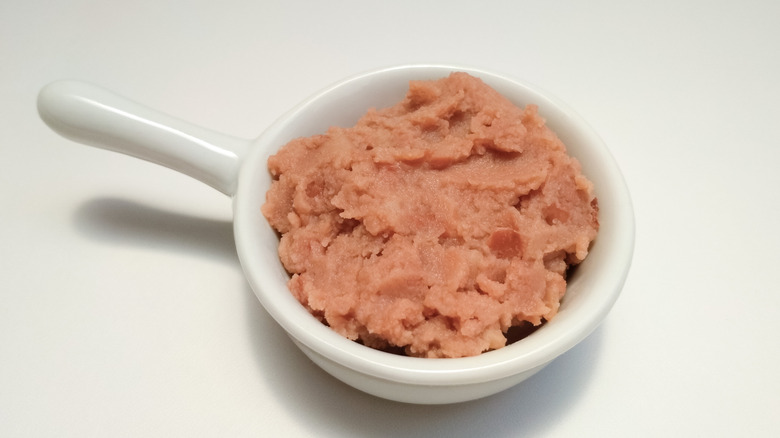
Ideally, when you make a seven-layer bean dip, you'll make every component from scratch, from homemade refried beans to fresh guacamole. This will result in the tastiest dish possible. But since you're already spending time constructing the dip, you may not have the patience to make every single component from scratch. That may lead you to turn to refried beans in a can. As long as you choose the right brand of refried beans, this is an acceptable shortcut. However, it's not a good idea to use cold, hard refried beans straight from the can without doctoring them up a bit first. Right out of the can, they won't have the best texture, and the solid part might have separated from some of the liquid in the can.
So, how do you fix the texture of canned beans? Your best bet is to thin them out with some water or broth. To make sure that the beans absorb that extra moisture, mix them with the broth or water and let them sit well before layering them into your dip.
Choosing not to make your guacamole from scratch
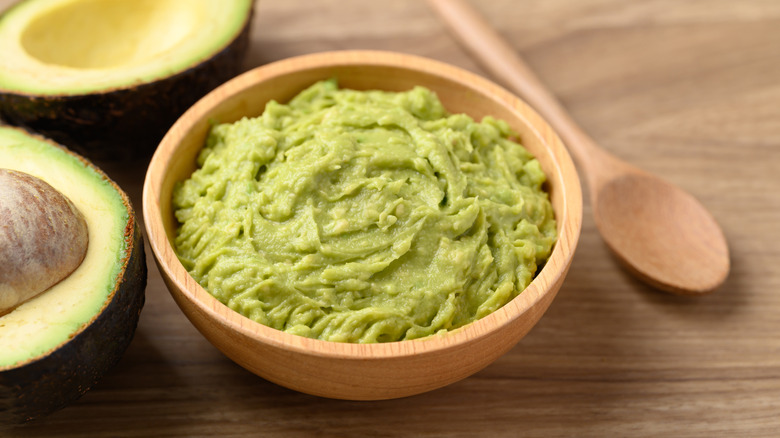
There are some shortcuts you can make when it comes to seven-layer bean dip, but there are others you should avoid if you truly want the dish to taste as good as it can be. One of the shortcuts you should absolutely avoid is using store-bought guacamole. Not only does it not taste as fresh as the homemade stuff, but it's also way, way more expensive than just buying the ingredients and making it from scratch. Making your own guacamole for the dish is the best way to create an elevated seven-layer dip.
Our favorite guacamole recipe calls for avocados, of course, along with tomatoes, white onion, garlic, and lime juice. Cilantro, paprika, and salt provide just the right amount of freshness, depth, and flavor to bring the dish together. Since it only takes around 10 minutes to make a delicious batch of guac, you don't have to worry about it cutting too much into your party prep time.
Not using enough seasoning in each layer
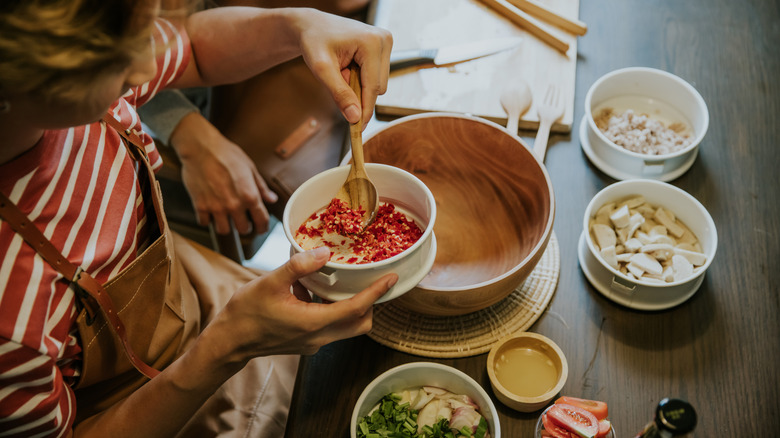
Another major mistake people make when they're constructing a seven-layer bean dip is assuming that all of the base ingredients on their own will have enough flavor to make a delicious recipe. Because you're working with refried beans, guacamole, salsa, and other flavorful elements, you may not think about adding much seasoning in each of the layers. But even though you're working with a lot of different ingredients, you still need to ensure that you're seasoning each respective layer separately — the goal is for every component to be tasty enough to eat all on its own.
Of course, you'll want to season your guacamole as if you were going to enjoy it all on its own, and the same is true for the refried beans. If you're using refried beans from a can, you'll want to mix in some seasonings or lime juice to make things more interesting. Even the sour cream layer can be infused with more flavor by adding some taco seasoning. Make sure to taste each element on its own before layering everything together in one dish to make sure they're seasoned properly.
Using the incorrect ratio of different ingredients
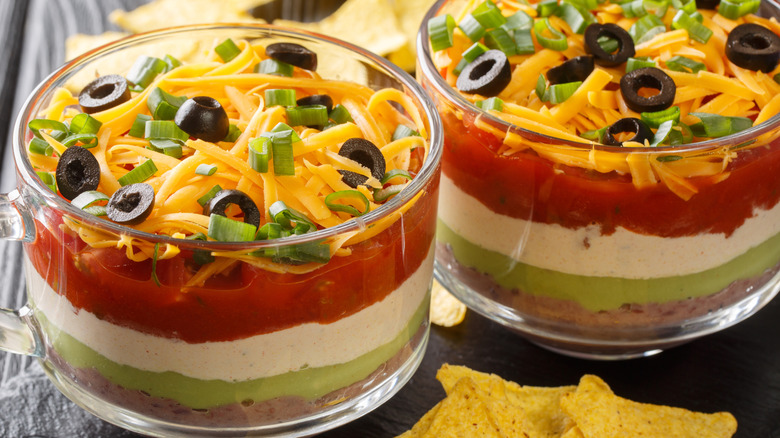
When you're working with so many different flavors, the ratio of each element is an important factor in determining how the final dish will ultimately taste. That's why paying attention to your ratios is so important when building this kind of dip. A lot of recipes call for a one-to-one ratio of everything in the dish — that means you add equal parts beans, cheese, guacamole, salsa, and so on. But that's not necessarily the way to make the most delicious dip.
For a heartier, tastier dip, we recommend starting with a thick layer of refried beans in your dish. You'll want to make this base layer around a third of the entire dip. Similarly, you should be pretty liberal with your application of cheese, which is responsible for a lot of the creaminess and richness. Shredded lettuce — while an important addition for adding freshness and crispness — doesn't need to take up a whole seventh of the dish. Instead, just a thin layer of it should be more than enough. If you're the kind of person who likes to add canned black olives to their seven-layer dip, make sure to use them quite sparingly, just for a touch of boldness.
Forgetting to drain your salsa before layering it into the dish
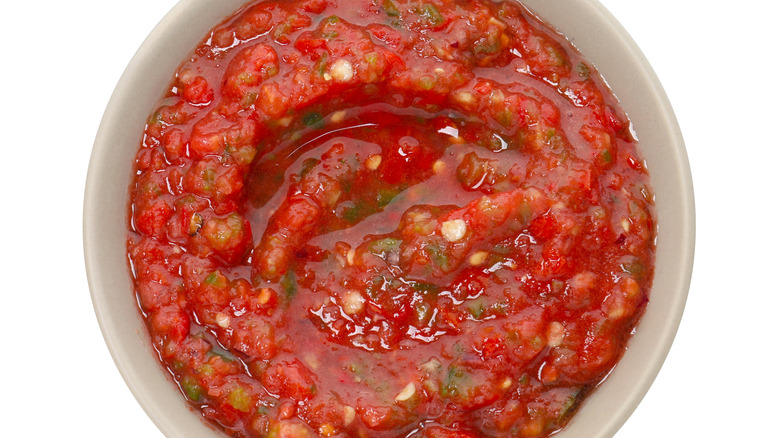
Have you ever made a seven-layer dip only to discover that it quickly turned wet and soggy, with moisture seeping through the rich and crispy layers of the dish? You're not alone. There's a good chance it's because you were using an ingredient that was too wet. Often, salsa is the culprit. Whether you're making homemade salsa or opting for a store-bought version, it tends to be a rather wet, runny dip. That extra moisture can easily bleed into the other layers, so it's in your best interest to dry out the salsa a bit before layering it in.
The best way to do this is to simply drain your salsa before adding it to your seven-layer dip. Just put the salsa in a strainer and let it sit for a few minutes while that extra liquid drips out. Sure, it may not look particularly appetizing after you do this, but it will make for a much better, less-soggy finished product.
Not using the best type of beans
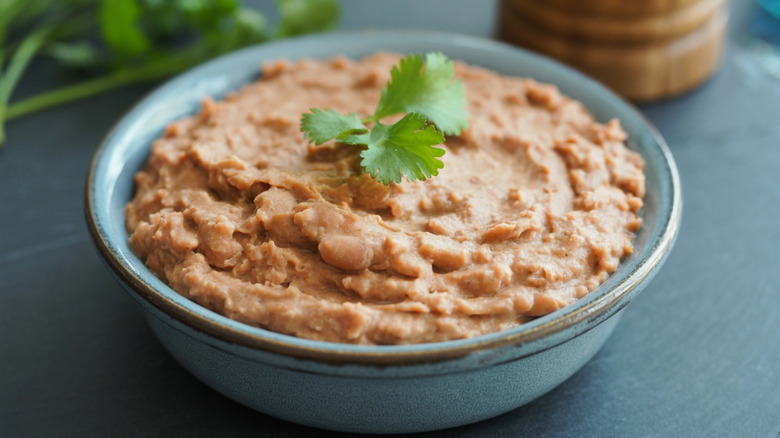
Listen, we appreciate creativity in the kitchen. With a lot of recipes, you can swap in alternative ingredients to make for a more interesting take on an established dish. But in some cases, it makes more sense to stick to the classic version of the dish in question, and that's certainly true when it comes to the bean selection in your seven-layer dip. You'll specifically want to use refried beans for this recipe — more specifically, you should select refried beans made from pinto beans. Whether you want to opt for a classic, fatty version or one that's catered to vegetarians is up to you, but stay away from other types of refried beans, like varieties made with black beans, to keep the dish true to its roots.
Getting out of refried bean territory entirely is definitely a mistake. Since this is a dip, you don't want to be using whole beans of any variety. They're significantly less scoopable and don't lend themselves to the rich, creamy texture you want to achieve when making this dish.
Assuming it's impossible to make seven-layer dip vegan
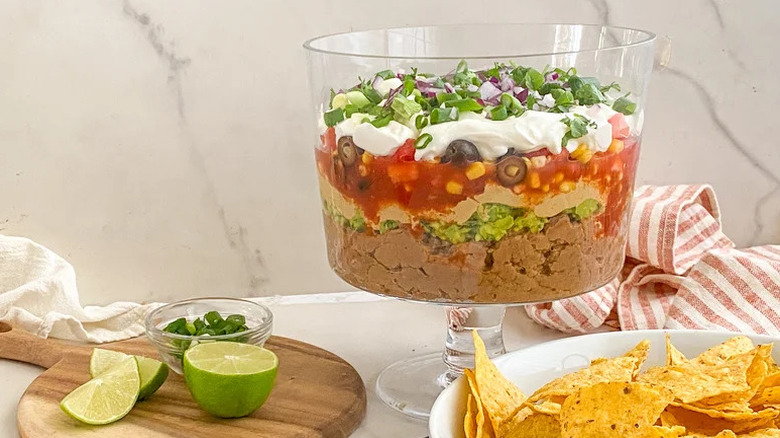
Those who choose not to eat animal products of any kind often find it difficult to find veggie-based versions of their favorite foods. Those new to a plant-based lifestyle may assume that it's impossible to make a seven-layer dip sans animal products. Not only do you have to worry about the lard generally found in refried beans, but the sour cream and cheese are also off-limits. But experienced vegans know that there's a way to veganize almost any dish, including seven-layer bean dip.
Our recipe for a vegan seven-layer dip calls for plant-based versions of both sour cream and cheese. You can either try to find these products at your local grocery store or make them from scratch as detailed in the recipe. It's possible to make vegan sour cream from tofu, and the dairy-free cheese in our recipe is made with a cashew base. Whether you're vegan yourself, making a veggie version of the dish for guests with dietary restrictions, or just want to focus on more plant-based foods in your diet, this twist on the classic recipe is just as delicious as the original.
Layering the different elements in the wrong order
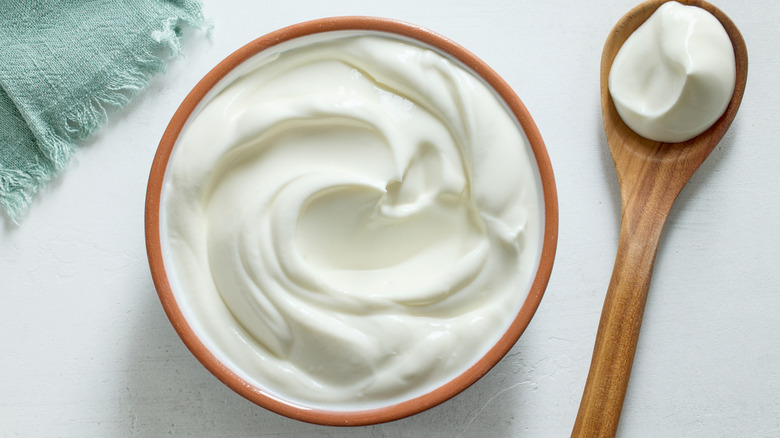
How each individual layer of your seven-layer dip tastes is important, but assembly is arguably the most important part of this recipe. Therefore, it's a mistake to layer on your different dip elements in the incorrect order. Putting the cheese on the bottom of the dish, for example, would make it difficult to get a creamy texture in every bite. You don't want the top layer of the dish to be sour cream, since that layer of white doesn't look as appetizing as a more colorful topping.
So, what's the right way to arrange your seven-layer bean dip? Most importantly, you should start with refried beans as your base. They're not super easy to spread, so it's not a good idea to place them on top of any other element, as you'll have to mash them to get them to spread out to the entire width of the dish. Then comes the guacamole — another relatively thick ingredient — followed by the salsa. Top that with sour cream, cheese, and your fresh veggies, including lettuce and olives. This will make for the colorful, texturally rich dip you're going for.
Making it too far in advance
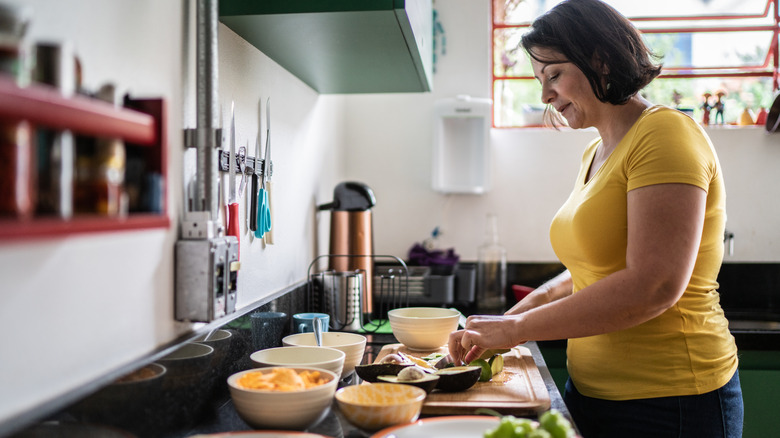
If you're making your seven-layer bean dip for a party or other event, it'll be tempting to make it well ahead of time. That way, you can focus on the other dishes you're whipping up for your get-together. While it's okay to make it an hour or so in advance of when you expect your guests to start digging in, you won't want to make it too early. That's because, after some time, your guacamole will start to brown, which makes for a significantly less attractive dish. Other elements of the dish may also taste less fresh. This is why we don't recommend letting your seven-layer dip sit around after assembly for more than about an hour.
Of course, there are elements of the dish you can prepare ahead of time. For example, if you're making your refried beans from scratch, you can make those a day ahead so it's easier to prep the finished dip on the day of your event. But fresh veggie-based elements, like guacamole, should be prepped as late as possible.
Serving it with thin, brittle chips
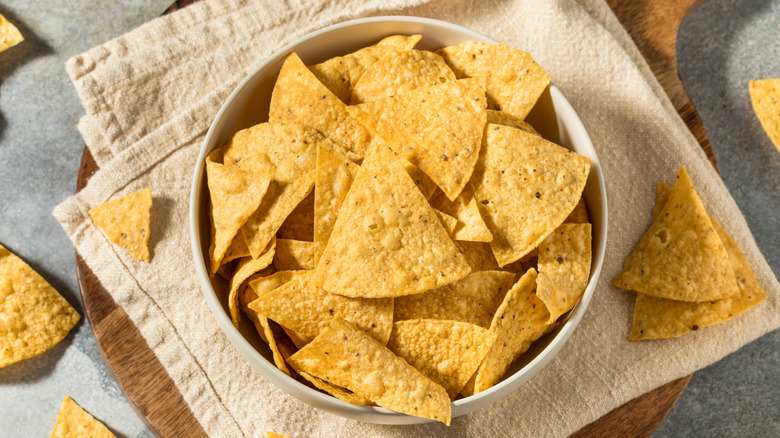
Seven-layer bean dip is so delicious, you could easily eat it with a spoon. But considering this dish is, in fact, a dip, you'll want something to scoop it up with. Tortilla chips are generally the most obvious option. They pair well with so many of the elements in this recipe; their saltiness and crunch provides a nice flavor and textural balance, and they're appropriate for the recipe's Mexican-American theme.
That being said, not every type of tortilla chip is going to work with this kind of party snack. Several of the elements in seven-layer dip, including the refried beans and, in many cases, the guacamole, are quite thick. This means that thin, brittle chips are sure to break when you're trying to scoop up servings of the dip. Therefore, you should look for sturdy, thick, durable chips that will hold up well to the weight of the dip — even if you're a generous scooper.
Forgetting to add chili powder to your homemade refried beans
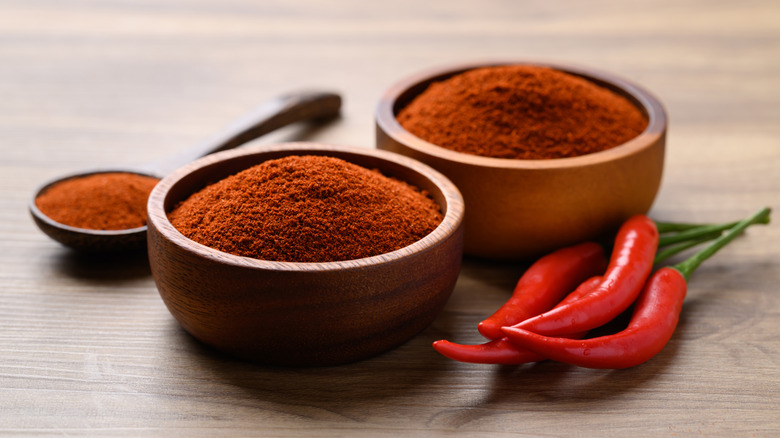
There are some people who may consider refried beans an afterthought — a sad, flavorless base that's basically only there to support the other ingredients in a seven-layer dip. But we don't see them that way at all. In fact, refried beans form the very backbone of this dish, and if they're playing such an important role in your dip, you want them to be as flavorful as possible. There are tons of different spices you can add to make them more flavorful, but one of our favorite spices to bring out the flavor of refried beans is chili powder.
Chili powder is generally made of both ground-up chilies and a variety of other flavorful seasonings, making it a perfect way to infuse those refried beans with a ton of flavor in one go. Plus, it can add a reddish hue to the beans if you use enough of it, which will make them look more visually appealing as a base layer, adding a starker contrast against the other colors in the dip.
Freezing your seven-layer bean dip
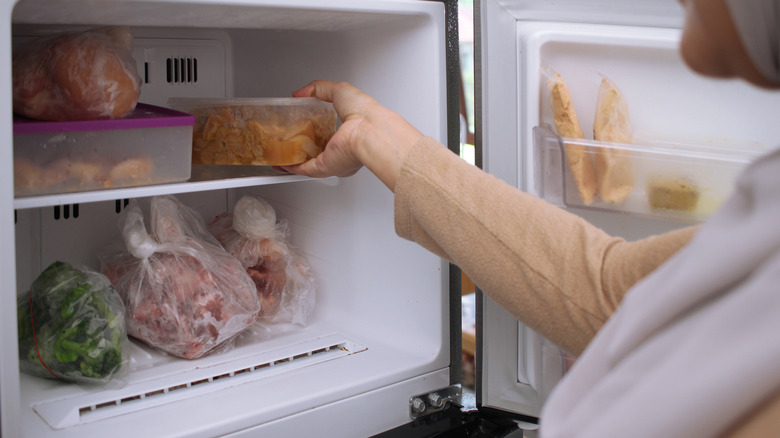
Whether you simply don't use all of your seven-layer dip at one time or you want to make it ahead of time to enjoy later, you may be wondering if you can freeze this recipe. Technically, it's safe to freeze seven-layer dip, but it's not recommended if you're trying to serve the best, freshest-tasting dip possible. Since you're working with so many different types of ingredients, they're all going to freeze and thaw at different rates, potentially affecting their texture. Sour cream, for example, doesn't freeze very well — the liquid and fat tend to separate.
If you do decide that you want to freeze your seven-layer dip, it's a good idea to freeze the different elements separately and assemble the dip when you're ready to eat it. That way, you can allow each component to thaw at its own rate while you assemble the elements that need to be served fresh, like the lettuce, salsa, and guacamole.