

8 Facts About Mozzarella Every Cheese Lover Should Know
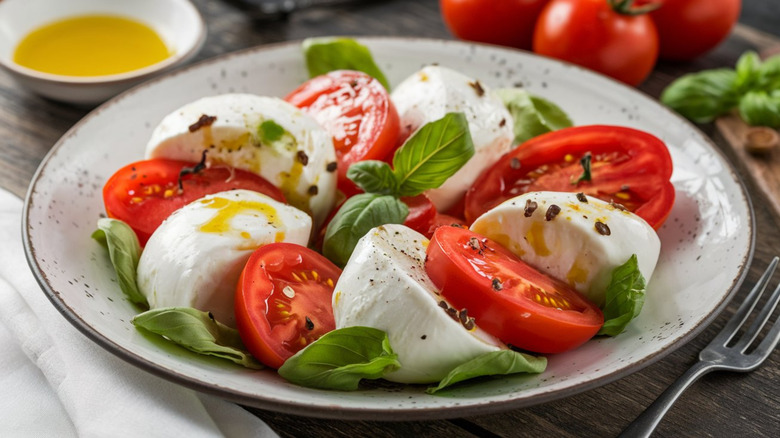
There is nothing controversial about mozzarella cheese. Whether you're someone who loves digging into a frozen pizza at home or the type who enjoys a fresh caprese salad at an upscale wine bar, this fresh Italian cheese is one of the great equalizers in the culinary world, and it has been a staple in Italian cuisine for centuries. While monks in the southern part of the country were doling out a cheese they called mozza to visiting worshippers during the Middle Ages, the Italian mozzarella that we know today — the one made with the milk of water buffalo rather than sheep — began cropping up in the 1500s.
Mozzarella has earned a special place in the hearts of many cheese lovers because of its unique stretchiness and mild flavor. It is also highly versatile. Sure, a good mozzarella stick or caprese salad is tough to beat, but don't miss out on all the other great ways to use fresh mozzarella, including in sandwiches and bubbly, cheesy mostaccioli.
If all that doesn't have you running to the fridge or the cheese shop already, we spoke with two experts to learn a little more about what makes mozzarella special. Kristine Jannuzzi is a six-time World Cheese Awards judge, and Gaetano Mina di Sospiro is a certified Italian Master Cheese Taster who goes by the name Cheese Maestro. Keep reading to discover their insights into America's favorite cheese.
The name is a clue to how it's made
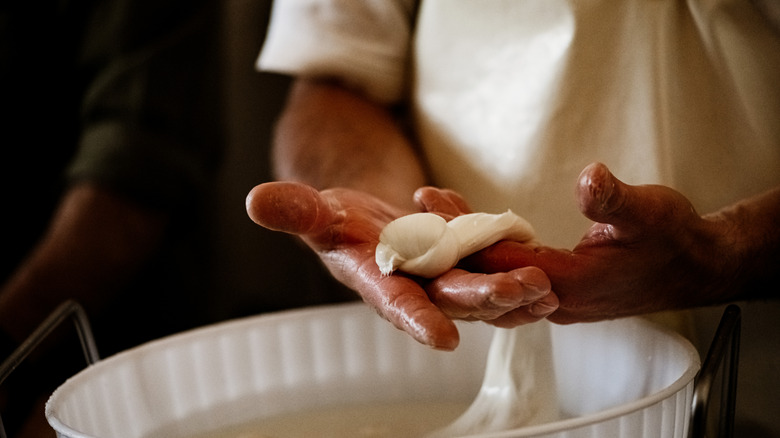
You might have heard that ciabatta is named after a slipper due to its flat, oblong shape, or that tiramisu means "pick me up" due to its effect on those lucky enough to eat it. Mozzarella also has a deeper meaning, but unlike those two examples, its name is pretty informative about how it's made. According to Kristine Jannuzzi, the name comes from the word "mozzare," which means "to cut off."
While most cheeses are made by putting the curd into molds and letting them age, mozzarella is only left to ferment for a few hours and then stretched by hand like bread dough. Those long, stretchy strands are then cut to the desired size and shaped into balls or knots, hence the name.
This method doesn't make mozzarella unique. It belongs to the pasta filata (or "spun paste" in Italian) family of cheeses, along with provolone, scamorza, and burrata, all of which undergo a similar process. Some of the cheeses in this category go on to be aged, such as provolone, while others, like burrata, are eaten fresh. Thanks to their preparation, they all have a characteristic stretch, which requires very specific conditions to develop.
Its distinctive stretchiness requires precise methodology
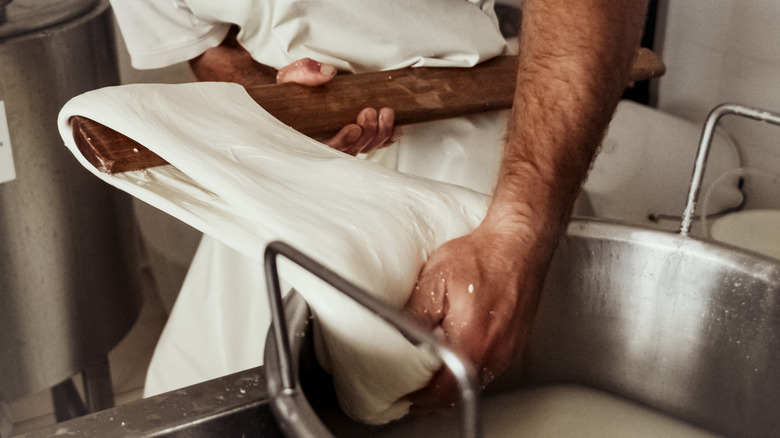
We've all (hopefully) had the joy of lifting a piece of cheese pizza and watching the mozzarella stretch to seemingly impossible lengths without tearing. It's a seemingly miraculous feature of this beloved cheese, but miracles have nothing to do with it. After all, as Gaetano Mina di Sospiro told Tasting Table, it all comes down to a process called provatura. During this process, the cheese is passed under water heated to 80 degrees Celsius, at which point it is pulled by the cheese maker. The curd then begins to stretch, which allows it to be shaped into a ball or a braid.
Additionally, this stretching process also ensures that the cheese will have a signature stretchiness when melted. "Having been put through almost boiling water and pulled," Sospiro explained, "means that the texture and structure of the cheese becomes filamentous or stringy and allows it to not stretch again when reheated."
American mozzarella generally differs from Italian mozzarella

Mozzarella in Italy is usually made with buffalo milk, and has been ever since cheesemakers transitioned away from sheep's milk. But in the U.S., you're more likely to find mozzarella made with cow's milk, also called fior di latte in Italy. It's the result of practicalities rather than tastes. Mozzarella is among the most popular cheeses in the U.S., and in order to keep up with the demand, producers have turned to readily available cow's milk rather than more scarce milk of the Italian water buffalo.
Now, there's nothing inherently worse about mozzarella made with cow's milk, but it does have a few key differences. For one thing, it's known for being milder in flavor than buffalo milk mozzarella. If you're just planning to melt it over a pizza, this distinction might not matter to you very much, but if you're want to make something that hinges on simplicity, like this fresh tomato and mozzarella salad recipe, you might want to seek out buffalo mozzarella and pay the extra cash for the tangier flavor and richer texture.
You can also use mozzarella water in recipes
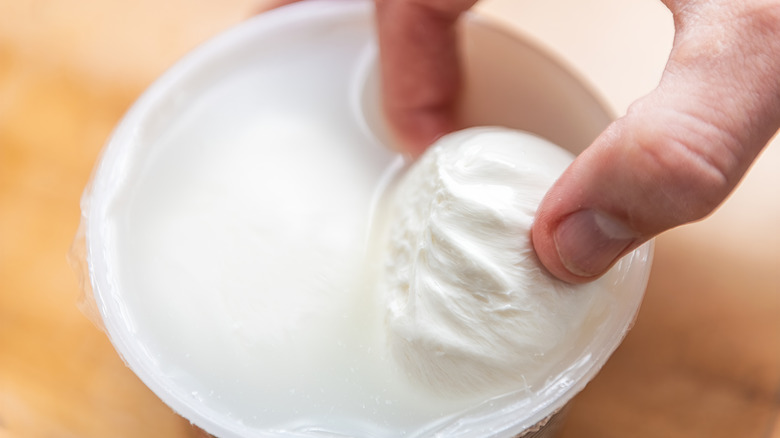
When you buy mozzarella, it will usually come in a container with liquid, like feta, instead of in a dry plastic wrapper. This isn't an accident; the liquid helps to keep the cheese from drying out, keeping the soft, moist texture that's so intrinsic to its allure. You might be used to dumping the liquid down the drain the way you would with the water in a can of tuna or black beans, but it's worth setting it aside for later because that cloudy liquid has many uses beyond keeping the cheese moist.
To use mozzarella water in your cooking, you first need to figure out what the liquid actually is. Sometimes, it's just straight water. More often than not, though, it's either a mixture of water and salt or just plain whey. This information should be labeled somewhere on the package so you can know for sure.
According to Gaetano Mina di Sospiro, you can use the acidic whey in soups or freeze it and grate it over food as an extra seasoning. You can even turn it into sauces and ice cream, though that may take more time and expertise than prepared to tackle.
Traditional mozzarella shouldn't be refrigerated
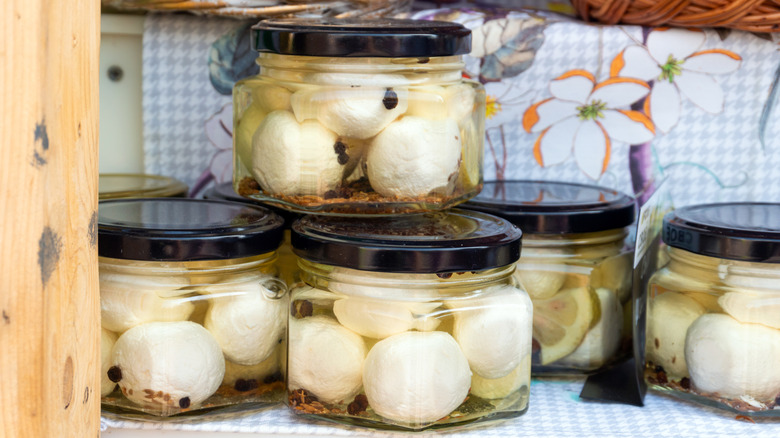
Perhaps you've heard that mozzarella isn't supposed to be refrigerated but dismissed the idea as the stuff of food safety nightmares. However, if you look to the past and to current artisanal mozzarellas, it's true. Kristine Jannuzzi explained that mozzarella should ideally be eaten within the same day that it's made, and never see the inside of a refrigerator. The reason for this is that the cold temperature changes the structure of the protein and traps the moisture inside, which counterintuitively makes the texture more rubbery and less tender when you bite into it.
Interestingly, some producers want this to happen and intentionally refrigerate their mozz for about 10 days to make it dense and rubbery. When melted, fresh, unrefrigerated mozzarella will release significantly more moisture, which can make pizzas a bit soggy. Refrigerated mozzarella will melt without releasing much moisture, which might be the goal for some cooks.
Ultimately, if you want to ensure you're eating freshly made mozzarella that has an impossibly creamy and moist texture, make sure you buy it unrefrigerated — and do not let it chill. Hopefully you can buy it the same day it's made and eat it a few hours later.
Mozzarella is similar, yet different, from burrata
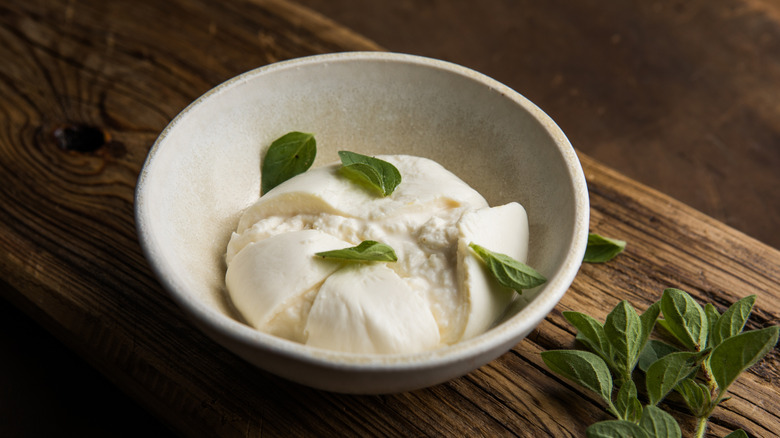
A ball of burrata looks very similar to a ball of mozzarella. Both look like large poached eggs — glossy and smooth — they're both members of the pasta filata family, and they both have a creamy, mild flavor. But where mozzarella is just a ball of cheese, burrata encases cream. Plus, their histories are also very different. Where mozzarella has been around for millennia in one variation or another, burrata was only invented in the 1950s.
The story goes that in 1956, a snowstorm made it impossible for people in Puglia to transport dairy. Lorenzo Bianchino is credited with coming up with the idea to simply store the cream inside the stretched curd of mozzarella, giving rise to one of the most delicious cheese products of the century.
These days, that mozzarella casing encloses a mixture of cream and stracciatella, which is frayed pasta filata. Because of its moisture content, burrata can cause sogginess when melted on top of pizzas, but it is not uncommon to see pizzas topped with fresh burrata for the eater to cut into. There is plenty more to know about this particular type of creamy pasta filata, of course. Look no further than our roundup of facts about burrata to learn all you need to know.
Certain conditions can turn it blue

Fresh cheese requires certain conditions during the production process to attain its texture and flavor. In the case of mozzarella, you need a precise water temperature and stretching technique, but you also need to make sure the conditions are sanitary. As Gaetano Mina di Sospiro told us, if there is open air contact during the production of the cheese, a bacterium called Pseudomonas luminescens can attach to the skin of the mozzarella and turn it bright blue.
Surprisingly, this is not, in itself, a health hazard like salmonella or botulism. But it does point to unsanitary conditions, which are concerning in their own right. More than that, in 2010, a batch of 70,000 balls of mozzarella were confiscated by the food authorities in Italy after a consumer called the police about the bluish tinge. You might wonder how the product could have made it store shelves, but it can actually be hard for the manufacturer to know whether the cheese is contaminated. In fact, it's only after the consumer opens the packaging that it changes color.
You can use it instead of bread for a sandwich
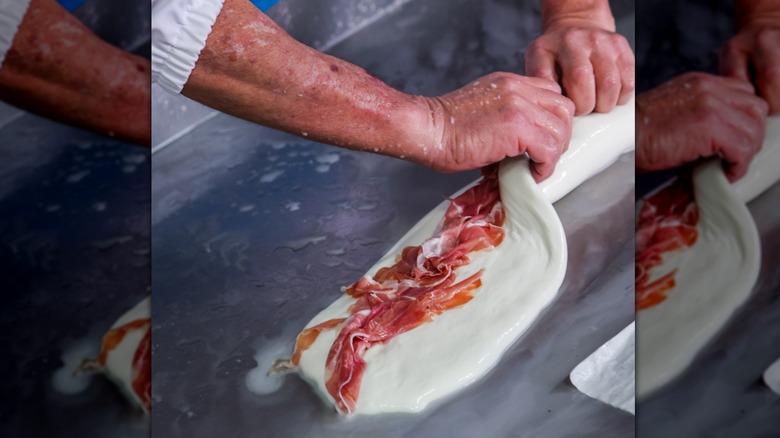
There are many different ways to use mozzarella beyond simply melting it on pizza, but one of the most original that we've heard comes to us via Gaetano Mina di Sospiro. According to him, there are now shops in Italy that stretch the cheese thin and flat, then hollow it out to use as a casing for a breadless sandwich. If you're gluten intolerant but can handle lactose, this seems almost too good to be true. After all, why stop with adding cheese as a filling when you can make it the whole package, too?
Now, while the possibilities here are nearly endless, you may find yourself struggling to come up with ideas given how novel this concept appears. You can look to our roundup of our 25 best sandwich recipes to see if anything floats your boat, or you can take a more specific route. For example, you could look at sandwich recipes that already contain mozzarella and simply remove it as a filling. This picnic-worthy prosciutto sandwich might just be the perfect place to start.