

The Easiest (And Most Difficult) Steak Cuts To Cook At Home, According To Chefs
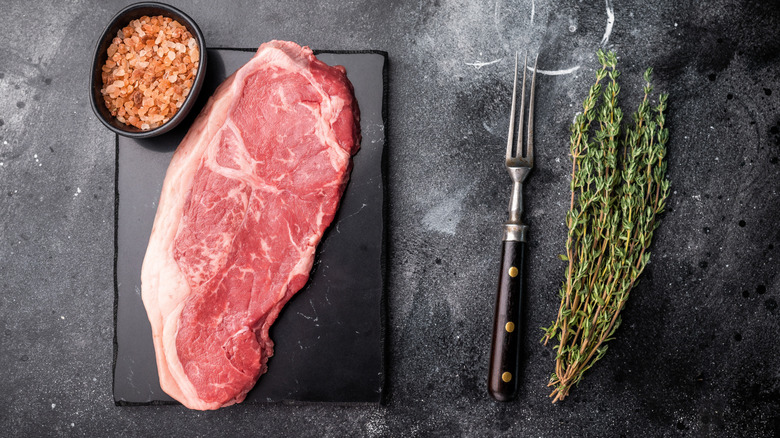
Few things in life are as satisfying as a perfectly cooked steak. For the confident home cook, steak can be the ultimate comfort dish to impress loved ones. Conversely, nothing is more disappointing than a ruined steak. Whether it's undercooked and cold in the center or overdone and chewy, wasting a steak is truly heartbreaking. Truth is, the key to a successful steak comes down to cut, rather than skill, and chefs know this better than anyone.
Some cuts are naturally forgiving, while others require time and know-how. Thickness, muscle structure, size, fat content, and boning are only some of the components that impact a cut of steak and how it should be cooked. For instance, certain cuts stay tender even if overcooked, or require minimal seasoning thanks to a high fat content. Other cuts might require extreme precision and temperature control, or require an understanding of thickness to achieve an even cook. We spoke to four expert chefs to delineate the difference.
From reliable favorites like sirloin and fillet, to the deceptively challenging, like tomahawks, the expert insights were revealing. While each chef had unique tips, thoughts, and styles, they all agreed on one crucial tip—let your steak rest! Irrespective of cut, a rested steak is a delicious one. Here's a list of the easiest (and most difficult) cuts of steak to cook at home, according to chefs.
Fillet - Easy
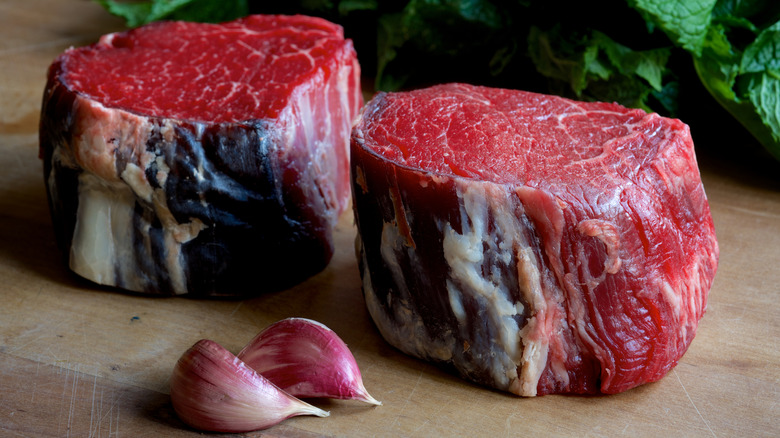
According to Chef Wayne Baker, from the Patina Steakhouse in Cape Town, South Africa, fillet is the "easiest to work with, easiest to cut, and [involves] the least risk." It is extremely tender and, as a result, quite pricey. Connected to the tenderloin muscle, fillet is a lengthy and lean cut found close to the spine and below the ribs of the cow. Tenderloin is a minimally working muscle on an animal, meaning it has very little muscle fiber. Chef Baker explains that this is why it's nearly impossible to have a tough fillet: "there are no fibers to pull tight [while cooking]."
The cut is cylindrical, and Chef Baker suggests that this is why fillet is so easy to work with. In other words, because the height and width of the cut are relatively even, cooking the steak evenly throughout is simple. Further, fillet has very little fat, and while fat contributes to flavor, it can complicate the cooking process. Chef Giuliano Magnoni of Monticello recommends pairing fillet with a sauce because its lack of fat can leave it a little flavorless. To cook, he suggests finishing your fillet in the oven after searing it for around 6-8 minutes.
Sirloin - Easy
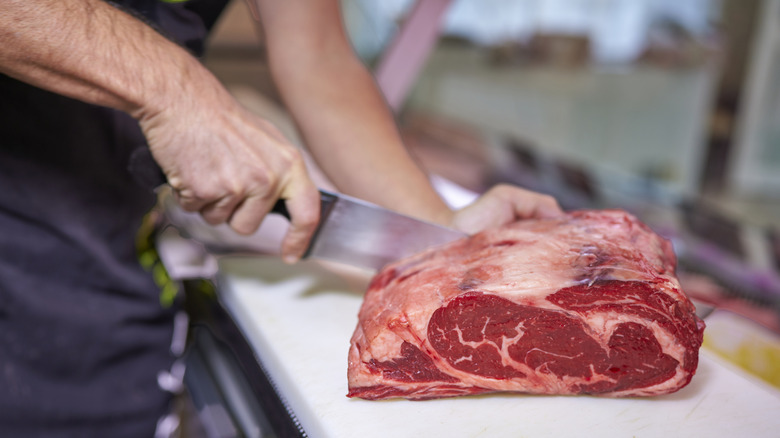
Sirloin is situated between the rump and the flank on the lower back of the cow. As far as cuts go, it is a popular go-to choice, and Chef Alan Watson of Kraal Kombuis calls it the "no-brainer" of steak cuts. He remarks that sirloin is easy for both restaurants and butchers to cut, especially because there is very little sinew. He adds that its ease of preparation drives up the demand for sirloin, making it slightly more expensive than cuts like rump. While the steak is considered a relatively lean cut, it does have a modest fat cap that runs alongside it, enhancing its flavor. Still, Chef Watson suggests purchasing a matured sirloin, if possible, for even more flavor.
When it comes to cooking a sirloin, Chef Giuliano Magnoni of Monticello notes the importance of a room-temperature fat cap. As such, he recommends what he calls a "reverse sear." He places the steak in the oven at a low temperature until the fat softens. Then, he suggests, place the steak fat side down in a hot pan, frying until crisp and golden. Finally, he sears the steak on high, basting it in butter, garlic, and herbs.
Ribeye - Easy
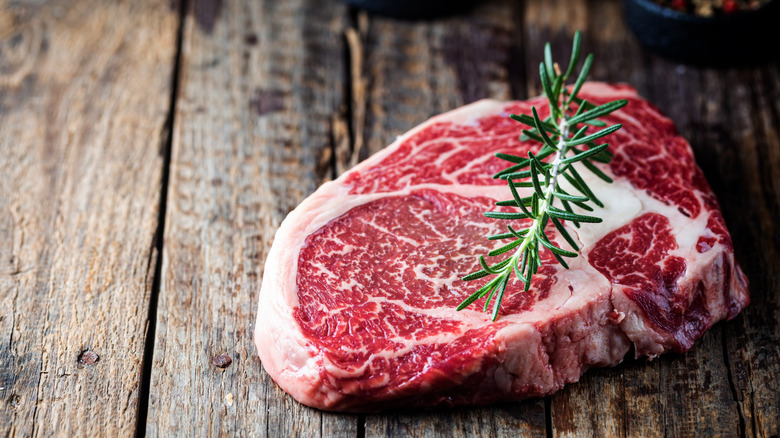
"Ribeye — my favorite steak — is the most flavorful steak off the bone", says Chef Dani Pick of The Butcher Shop and Grill. Cut from the rib of the cow, ribeye is known for being both flavorsome and tender. This is especially true due to its marbling and namesake "eye" in the center of the cut. As the steak cooks, the marbled fat slowly melts, leaving you with a succulent, buttery, and delicious piece of meat. Chef Wayne Baker of the Patina Steakhouse states that because the fat is evenly distributed (aka the marbling), achieving an even cook is super simple.
According to Chef Pick, the easiest way to cook a ribeye at home is in a hot pan, allowing for control over the temperature. However, he highly recommends cooking it over an open flame. While the technique is slightly more challenging, it's worth it for the flavor. Chef Giuliano Magnoni of Monticello agrees, stating, "[the] perfect way to cook it would be on a grill outdoors." Either way, the key to ribeye is very high heat. For preparation, Chef Baker swears by nothing more than salt and pepper, adding that the high-fat content gives it all the flavor you need.
Tomahawk - Hard
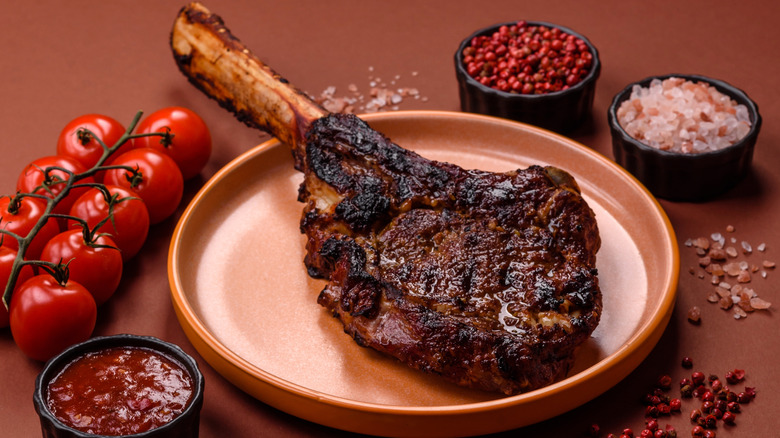
A tomahawk steak is technically a bone-in ribeye, cut into the shape of a tomahawk. Like a ribeye, it includes the "eye" of the ribeye, a fat cap, and is beautifully marbled. However, tomahawks are known for being large, thick pieces of meat. While this adds to the sheer impressiveness of the cut, it also makes the steak a more challenging cook. Basically, the core components of a tomahawk, the thickness, size, and the bone, act as deterrents against easy home cooking. Chef Dani Pick of the Butcher Shop and Grill reiterates, "It's harder to get an even cook on such a large bone-in cut."
According to Chef Wayne Baker of the Patina Steakhouse, a simple trick goes a long way when cooking tomahawks. The bone stops heat from reaching your meat, which results in an uneven cook. He notes that, often, bone-in cuts will be pinker the closer you get to the bone. As such, he suggests making a small incision along the bone so the meat can absorb heat evenly from both sides. Chef Alan Watson of Kraal Kombuis uses skewers to heat the bone first. That way, the bone is already hot when you cook the meat, and it aids the cooking process rather than obscuring it.
Rump - Hard
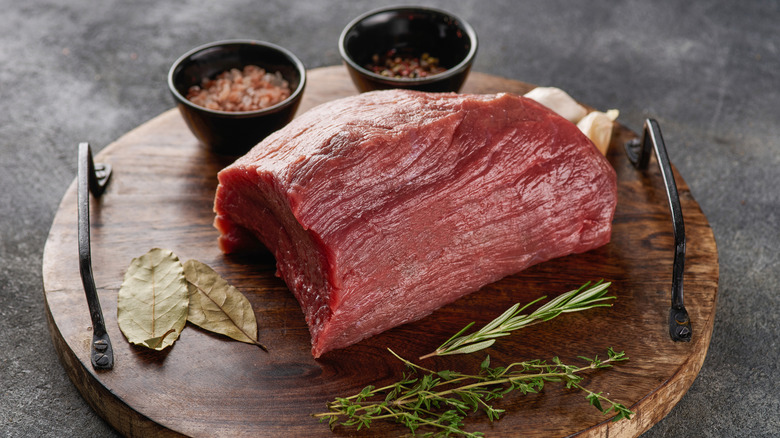
Rump, much like the name suggests, comes from the backend of a cow. The cut is lean and comes from a highly-active muscle on the cow. In other words, the chances of ending up with a tough, chewy rump steak are high. In fact, Chef Wayne Baker of Patina Steakhouse says "[your] most challenging cut will always be rump." He notes that the steak has a long sinew that runs throughout, often left in by butchers and retailers. Meaning, it's on you to cut it away before cooking. Further, Chef Baker emphasizes the long muscle fibers found in the rump. When these fibers come into contact with heat, they pull tight, resulting in tough meat.
Chef Alan Watson of Kraal Kombuis calls rump his favorite cut of steak, despite its difficulty. He states that rump has great flavor so long as you take your time and know what you're doing. Like Chef Baker, Chef Watson also suggests trimming the sinew. In addition, Chef Watson recommends using a mature rump to work against the toughness. From there, he says to marinate your rump in olive oil, a few spices, and balsamic vinegar, leaving it uncovered in the fridge for a few days before cooking.
Skirt - Hard
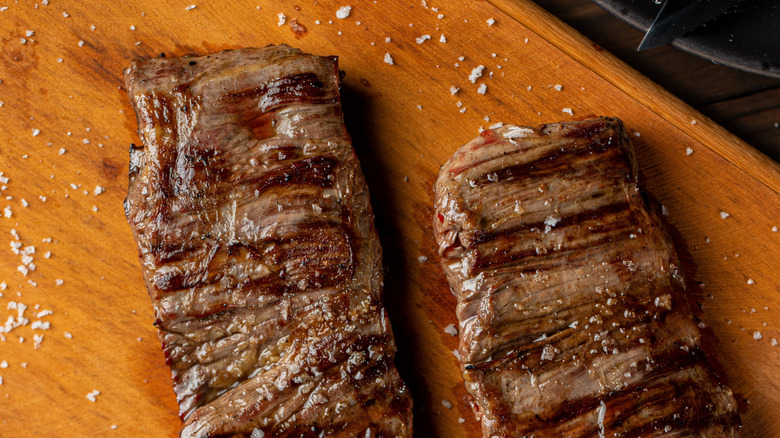
Skirt steak is from the beef plate primal cut, which is situated below the ribs, and is connected to two different muscles, resulting in the outside skirt and inside skirt. The steak has a thick grain that runs throughout, and is flat, long, lean, and known for being tough. For a home cook, Chef Alan Watson of Kraal Kombuis suggests avoiding the cut entirely, unless you're convinced you can handle it. On the other hand, Chef Giuliano Magnoni of Monticello has a few tips for cooking the cut, although he did flag it as "tricky".
Chef Magnoni suggests grilling a skirt steak or using a "screaming hot pan". He recommends marinating the steak in olive oil, garlic, and herbs for a few hours before cooking to soften. Because a skirt steak is a very thin cut, he insists you don't leave it on the heat for too long. Most importantly, however, is how you slice it. The chef says to ensure that you slice the steak along the grain, as a skirt steak cut against the grain is chewy. Chef Dani Pick of the Butcher Shop and Grill also recommends a very high heat for these steaks, but calls the steak "unforgiving" in the wrong hands.
Chuck - Easy
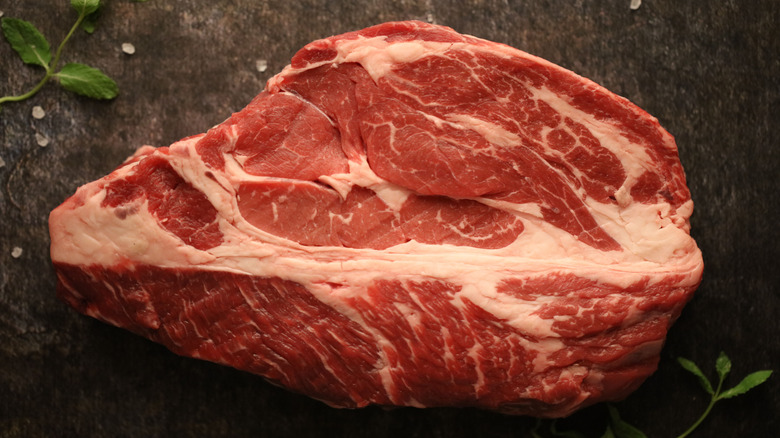
"When it comes to chuck, it's a very underrated meat," says Chef Alan Watson of Kraal Kombuis. He states that all it needs is some salt and an open flame, and the flavor is there. Chuck is an inexpensive cut of beef; however, it does not compromise on flavor. The cut comes from various muscles in the shoulder of the cow, with each muscle having different levels of use. In other words, chuck has various levels of tenderness. Some cuts are used to make ground beef, while others, if prepared well, can serve as a succulent cut on a grill or in a stew.
Chef Giuliano Magnoni of Monticello calls chuck "perfect for a Sunday roast". However, chuck can be quite sinewy, so Magnoni recommends letting the meat rest at room temperature before cooking. Then, he suggests lightly searing it before placing it in a Dutch oven with all the trimmings. Chef Dani Pick of the Butcher Shop and Grill says that chuck is his favorite cut of steak to cook at home. So long as the meat is aged, to ensure tenderness, you can cook it as you would a ribeye. However, if your chuck has not aged, he suggests slow cooking to avoid toughness.