

The Timing Rule You Need To Keep In Mind Before Cooking A Dry Aged Steak
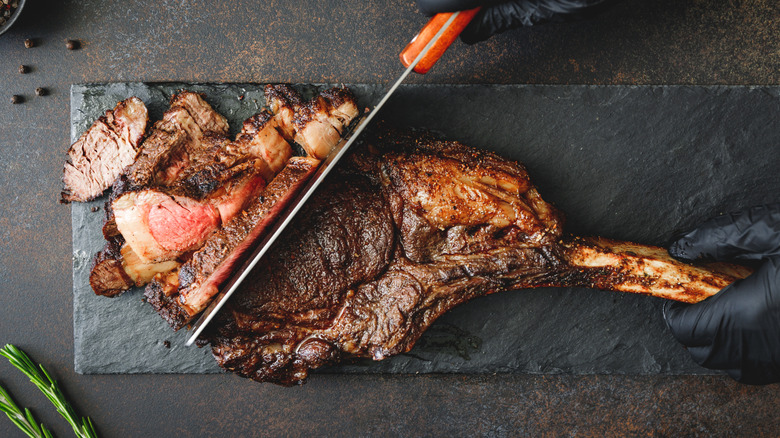
A good steak is an experience worth savoring, but it is doubly so when the cut of beef has been carefully selected and aged to perfection. Dry aging is a technique that has been growing in mainstream popularity, thanks to how the process brings out layers of deep, funky, beefy flavor. Beautiful, aged steaks do come with a hefty price tag, however, so it is important you know exactly how to prepare them. For a little expert advice on how dry-aging changes the cooking process, we reached out to Clare Andrews, also known as "the queen of gadget cookery" and author of "The Ultimate Air Fryer Cookbook."
"Dry-aged steaks have less moisture due to evaporation during aging," Andrews explains, "which means they can cook a bit faster and brown more readily." What dry aging does to beef, beyond evaporating moisture, is promote enzymes to begin gently breaking down the meat. This results in a deep, rich flavor, but the change in composition also means it needs to be treated slightly differently in the pan. "There's less internal moisture to act as a heat buffer," Andrews says, "so timing becomes more critical."
Typically, a steak has a lot of moisture in it, which evaporates as it cooks. This process happens at the boiling point of water — much lower than common pan and grill temperatures — and slows the cooking process since evaporation requires a significant amount of heat. For dry-aged steaks with less available moisture to turn to steam, everything cooks a bit faster. "The biggest adjustment is attention," Andrews says. "Dry-aged steak benefits from slightly lower heat or shorter cooking times to prevent overcooking."
Other considerations when cooking dry-aged steak
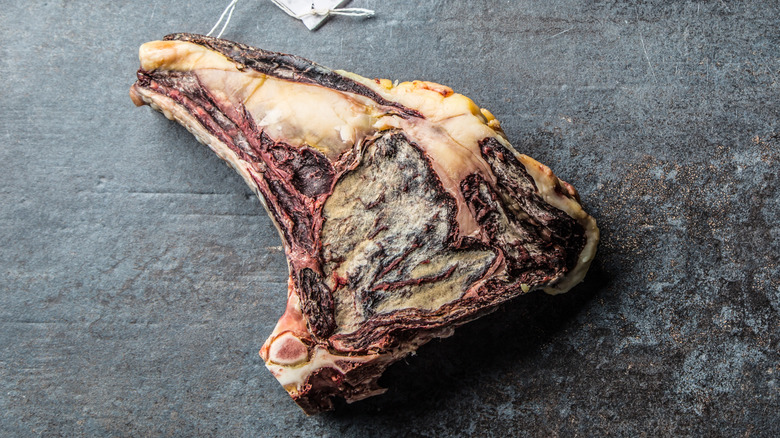
Getting your temperature and timing right is the most important part of cooking a good steak, but the rest of the process is also important — and that is no different for dry-aged steak. There are a few more factors you might want to adjust to get the best out of a beautiful cut of dry-aged meat. For one thing, you might want to cut down on seasoning. "The flavor is already intensified," Andrews says, meaning you don't need to add a whole lot to it. You pay a premium for a good dry-aged steak from the butcher, mostly for that lovely funky flavor the aging process adds to the meat. Stick to just salt and maybe a bit of pepper — seasonings that enhance rather than overshadow the rich umami taste.
Another area where dry-aging changes your go-to steak methods is resting the meat after it's done cooking. When it comes to dry-aged steaks, "Resting is especially important," Andrews explains, "as the reduced moisture means juices need more time to redistribute after cooking." Letting steak rest after cooking is always important, but because dry-aged meat is drier to begin with, it is a pivotal step to help retain the juiciness of every bite. If you take all of these factors into consideration with your steak, you are just about guaranteed one of the best meals of your life. Then the only thing left to do is decide on the best wine to pair with your dry-aged steak.