

The Overlooked Vegetable With Way More Fiber Than Broccoli
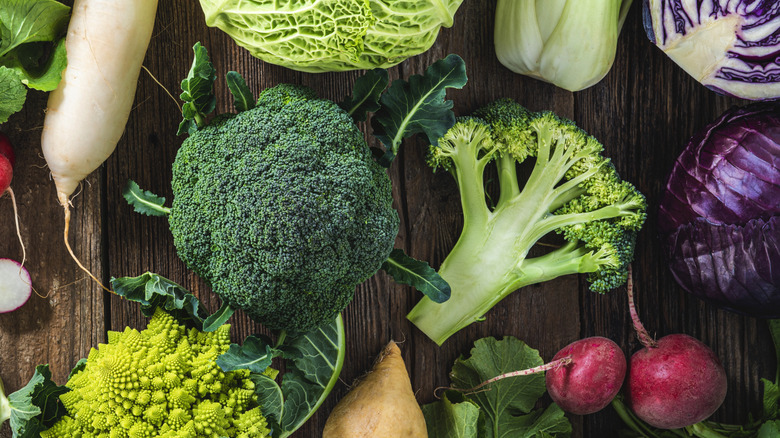
Eating vegetables is always an excellent way to help you get your daily intake of fiber, but people who need an extra dose in their diet need to choose the most fiber-rich veggies possible. Broccoli is often named as a great source of this essential nutrient, yet you can find some superior options in the produce kingdom. Green peas are a nutritious legume that outclasses broccoli in terms of fiber content.
According to the USDA, one cup of chopped, raw broccoli contains 2 grams of dietary fiber, while one cup of fresh green peas contains 8 grams. Granted, peas are smaller than broccoli, so a volume measurement of one cup comes out to 145 grams, while a cup of broccoli equates to 91 grams. Still, there's a big difference in their fiber concentration.
To make things even more impressive, peas are not only one of the foods with more fiber than chia seeds, but they also contain more than Brussels sprouts, cabbage, turnips, and other veggies considered to be high in fiber. How much fiber you should be eating every day depends on several factors, but standard amounts for adults under 50 range from 25 grams for women to 31 grams for men, according to the USDA. The recommended amount for those over 50 is 22 grams for women and 28 grams for men. Just a cup or two of peas can give you a major boost to help you reach your goals. And like all veggies, they don't contain animal products, gluten, or other ingredients that present challenges for some people, making them a high-fiber food that complements any diet.
Recipe ideas to fit more fiber-rich peas into your diet
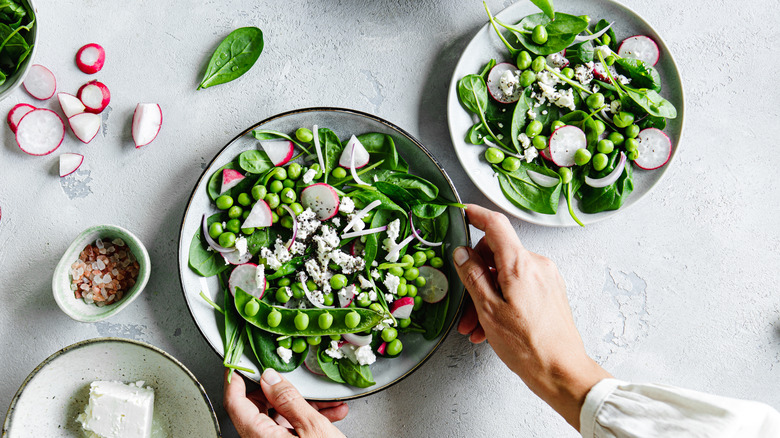
While the nutrition of some vegetables changes significantly when they are cooked, boiled green peas have only 2 milligrams less fiber than raw peas, according to the USDA. However, peas lose roughly 1 gram of fiber when they are frozen. They're still no slouch, but you may need to eat a little more in order to reach your goals. No matter how you serve them, peas are a particularly great source of insoluble fiber, which plays a big part in regulating your digestion.
There's nothing wrong with serving buttered peas next to a nice piece of meat, but if you have bad childhood memories of green mush, a fresh, crunchy, springy pea salad with zesty Dijon mustard dressing will erase any and all negative preconceptions. Herby spring pea dip is another creative recipe that turns the veggie into a creamy accompaniment to chips, crackers, or rounds of bread. You can also fit a ton of veggies — and therefore tons of fiber — into this dip, since the ingredients are finely pureed.
If you can only get bagged peas from the freezer aisle, the best way to cook frozen peas isn't boiling, but sauteing. This method offers a better chance of keeping them fresh and snappy. Toss them into rice dishes, pasta salads, or stir-fries. For a fiber-rich breakfast, you can even smash up some cooked peas, put them on whole grain toast, and add all your favorite garnishes, avocado toast-style.