

Pepper Steak Alfredo Pasta Recipe
We may receive a commission on purchases made from links.
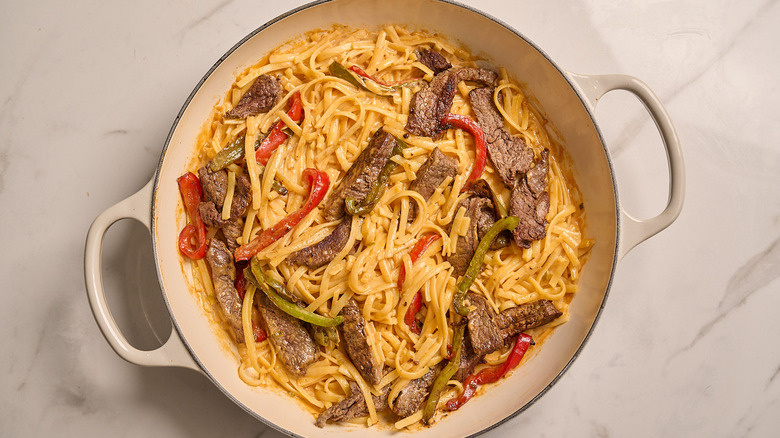
Stir-fried pepper steak and creamy fettuccine Alfredo are two dishes that you'd never think to combine. Beyond being completely, wholly different dishes with competing flavor profiles, the two are from entirely different cuisines whose ingredients barely overlap. Pepper steak, a Chinese stir fry made in the US with steak, soy sauce, Shaoxing wine, beef broth, and bell peppers, is a robust, umami-filled dish with a salty, savory flavor. Alfredo, on the other hand, is made with butter, cream, and cheese, a rich combination that clashes with the bold flavors of Chinese stir fry. Combining them, then, is a near-impossible task — but we made it happen with the help of another cuisine's star ingredient, gochujang.
Recipe developer Michelle McGlinn shows us the power of gochujang in this pepper steak Alfredo recipe, which marries the creamy Alfredo sauce with savory steak and peppers by adding a touch of heat. The rich and creamy sauce becomes spicy and lightly tangy, making it the perfect pairing for the seared steak and peppers. A fusion of cultures that results in a surprisingly balanced dish, this pepper steak Alfredo is a great way to switch things up in one delicious, spicy, creamy pasta dinner.
Gather the ingredients for pepper steak Alfredo pasta
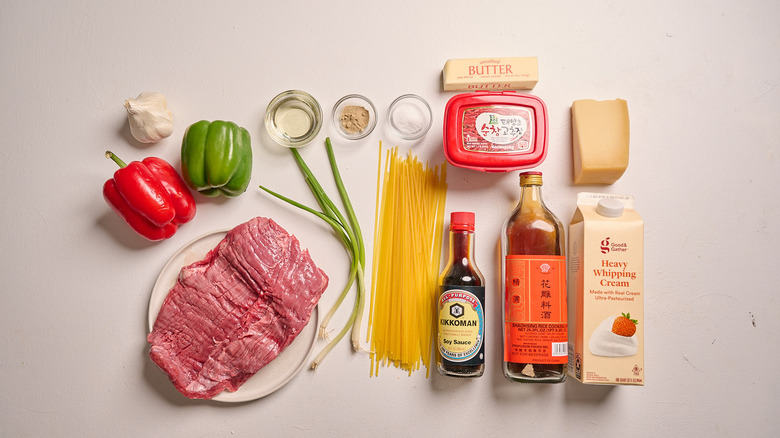
To make the pepper steak portion of this recipe, you'll need steak. The best cuts of steak to use for pepper steak include sirloin, flank, or round, which can be cut into strips and seared quickly (for this recipe, you'll sear the steak in vegetable oil). You'll also need bell peppers, salt, and white pepper. From there, you'll make the fusion Alfredo sauce, which begins with butter, garlic, and scallions. To finish the sauce, you'll need soy sauce, Shaoxing wine, gochujang, butter, heavy cream, and Parmesan. Finally, don't forget the fettuccine to make this a pasta dish.
Step 1: Cook the pasta
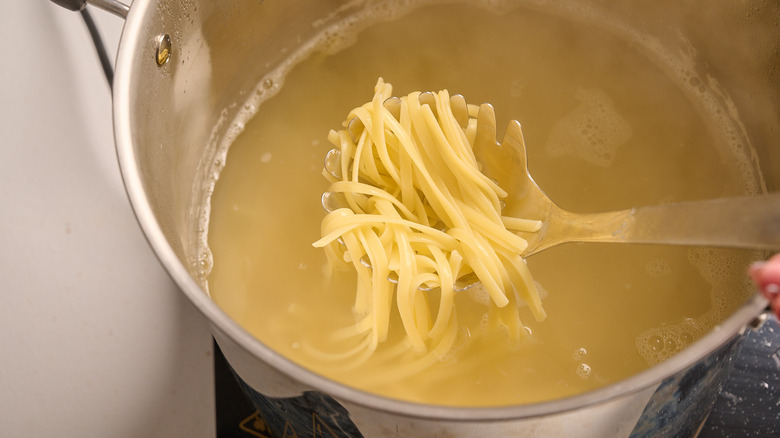
Cook fettuccine in a pot of salted boiling water until al dente.
Step 2: Drain pasta and reserve some pasta water
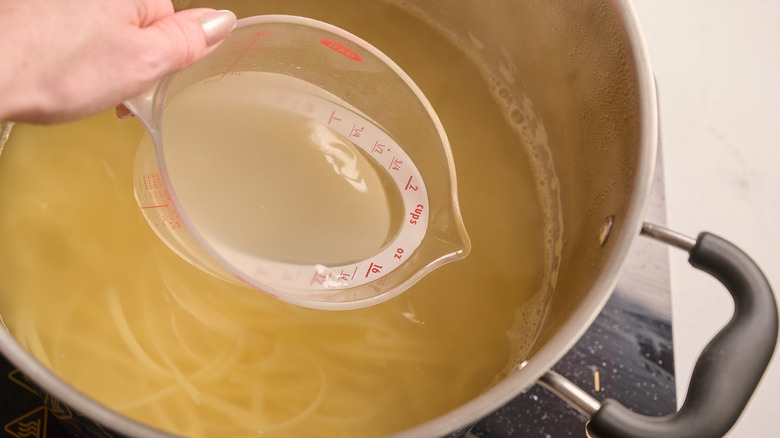
Reserve ½ cup pasta water, drain the pasta, and set aside.
Step 3: Heat oil in a skillet
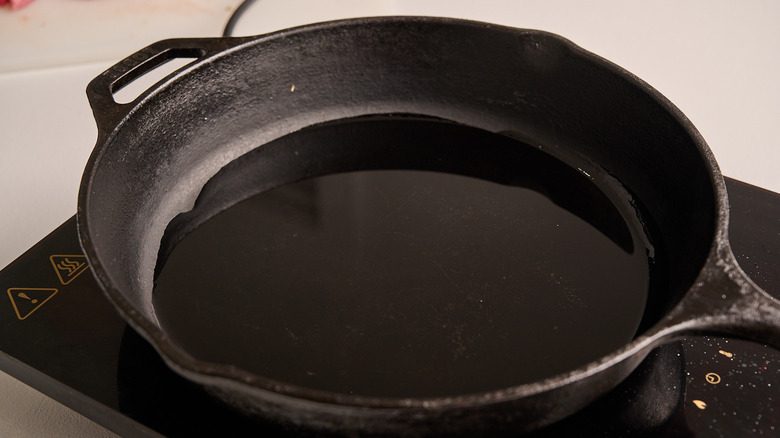
In the meantime, heat oil in a cast iron skillet over medium heat.
Step 4: Season the steak
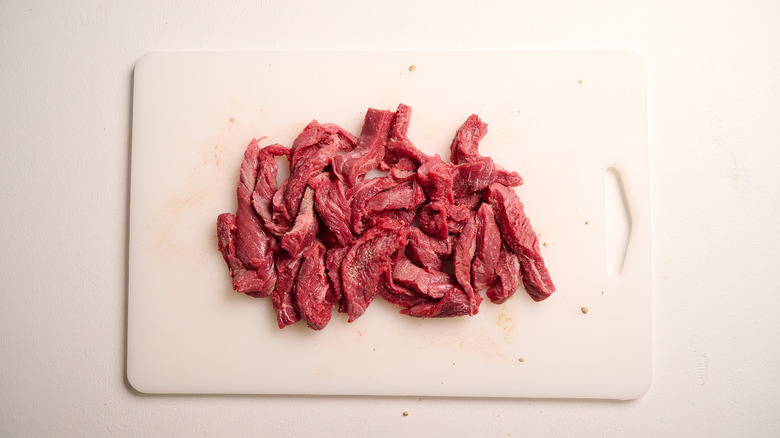
Season steak with salt and white pepper, tossing to coat.
Step 5: Cook the steak and peppers
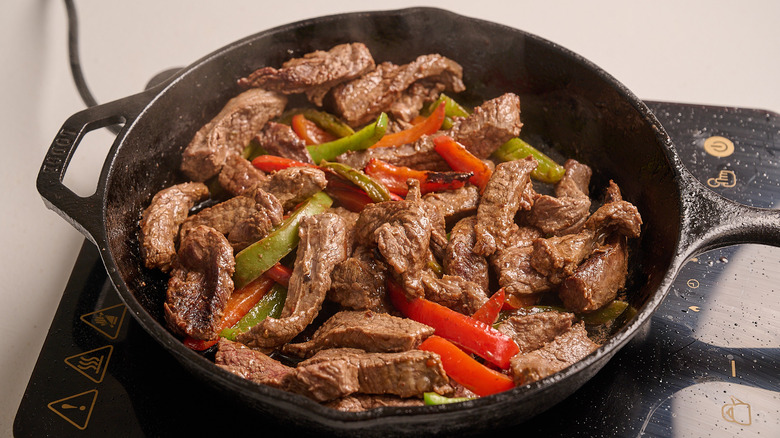
Add the steak and peppers to the skillet and cook until deeply browned, about 8-10 minutes. Remove the skillet from the heat.
Step 6: Melt butter
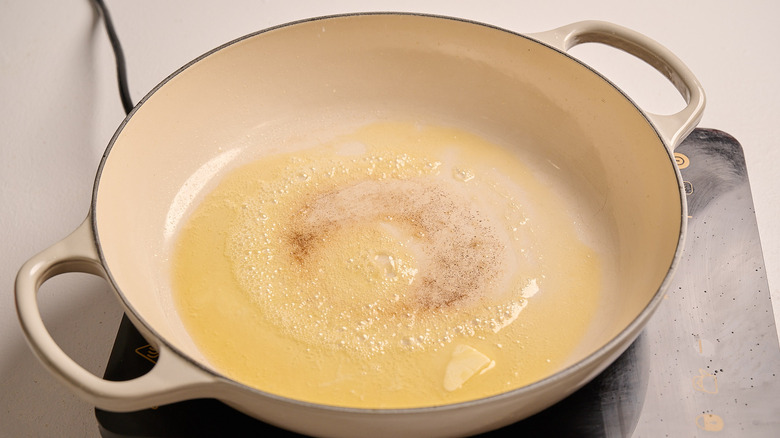
In a nonstick skillet, melt butter over medium heat.
Step 7: Cook the aromatics
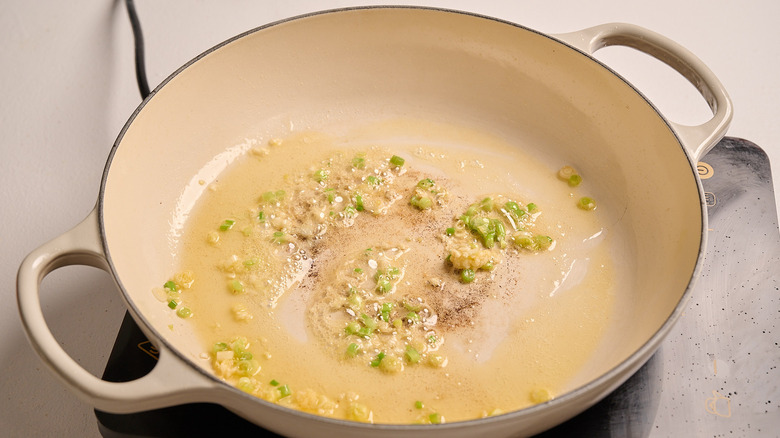
Add the garlic and scallions and cook until fragrant, about 1 minute.
Step 8: Stir in the gochujang
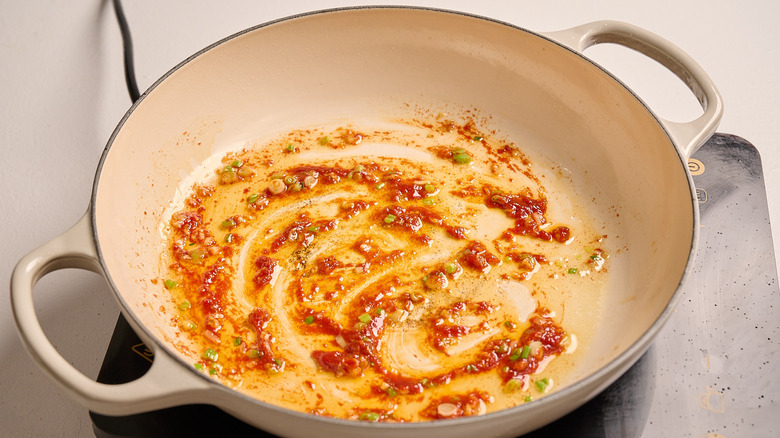
Add the gochujang and cook until beginning to stick to the bottom of the pot. Do not let the gochujang burn.
Step 9: Deglaze the pot and add cream
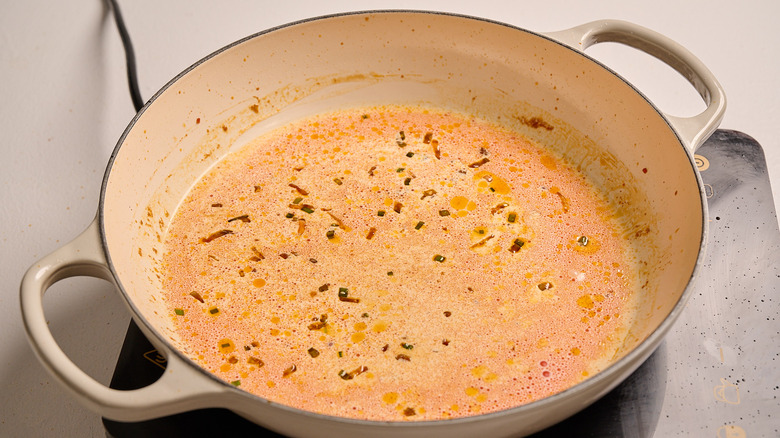
Deglaze with Shaoxing wine and soy sauce. Stir in the heavy cream and bring to a simmer. Cook until thickened, about 3-4 minutes.
Step 10: Add Parmesan
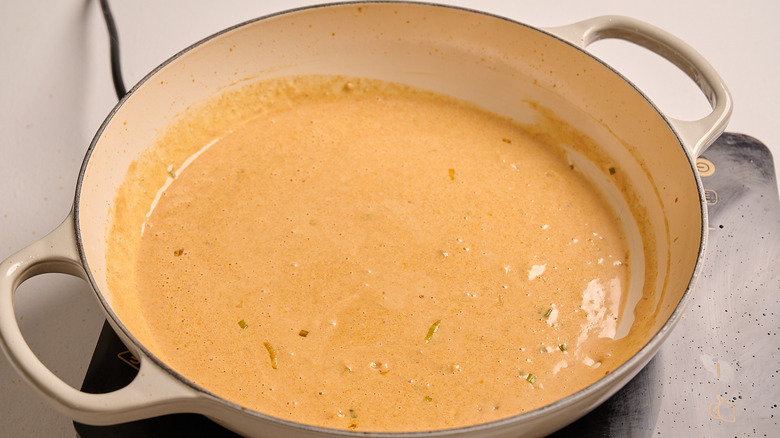
Remove from the heat and add the Parmesan, stirring until smooth.
Step 11: Add pasta
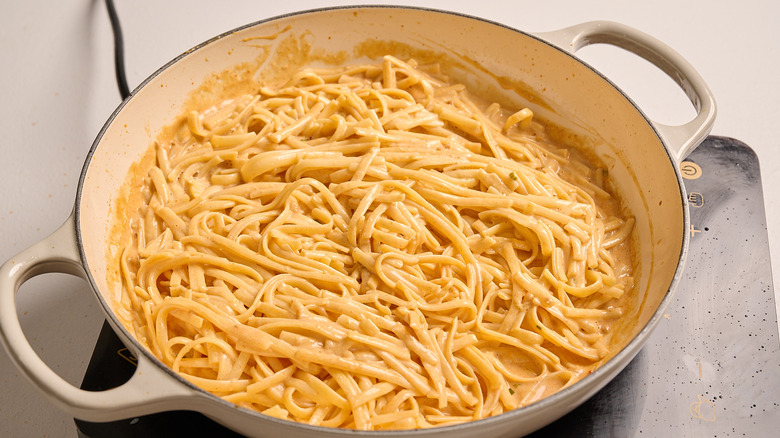
Add the pasta, thinning the sauce with the pasta water to desired consistency.
Step 12: Toss with steak and peppers
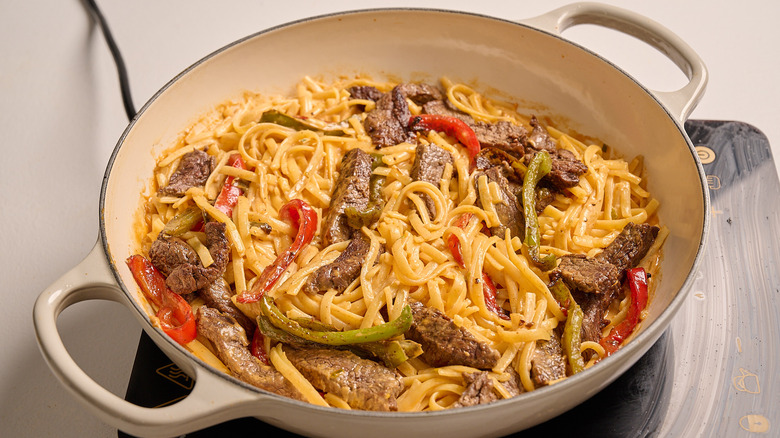
Add the steak and peppers and toss to serve.
What to serve with pepper steak Alfredo pasta
Pepper Steak Alfredo Pasta Recipe
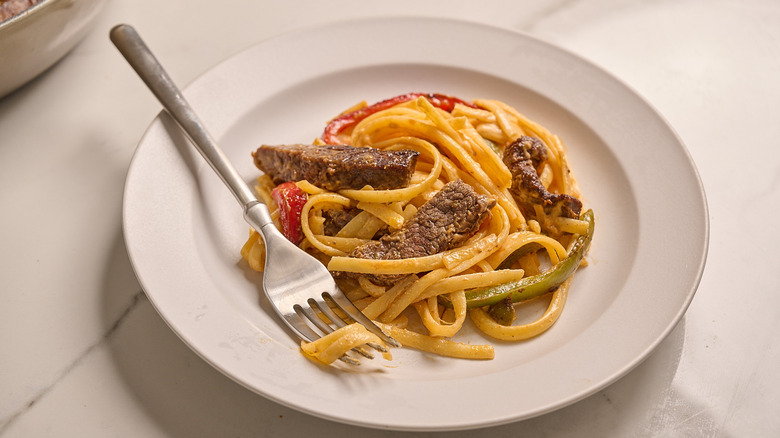
This pepper steak Alfredo pasta recipe combines Chinese and Korean-inspired flavors with classic, creamy fettuccine Alfredo.
Ingredients
- 1 pound fettuccine
- 2 tablespoons vegetable oil
- 1 pound flank steak, sliced into ¼-inch pieces
- 1 teaspoon salt
- 1 teaspoon white pepper
- ½ green bell pepper, sliced
- ½ red bell pepper, sliced
- 2 tablespoons butter
- 2 cloves garlic, minced
- 2 scallions, whites finely chopped, greens removed
- 1 tablespoon gochujang
- 1 tablespoon Shaoxing wine
- 1 tablespoon soy sauce
- 1 cup heavy whipping cream
- 1 cup grated Parmesan
Directions
- Cook fettuccine in a pot of salted boiling water until al dente.
- Reserve ½ cup pasta water, drain the pasta, and set aside.
- In the meantime, heat oil in a cast iron skillet over medium heat.
- Season steak with salt and white pepper, tossing to coat.
- Add the steak and peppers to the skillet and cook until deeply browned, about 8-10 minutes. Remove the skillet from the heat.
- In a nonstick skillet, melt butter over medium heat.
- Add the garlic and scallions and cook until fragrant, about 1 minute.
- Add the gochujang and cook until beginning to stick to the bottom of the pot. Do not let the gochujang burn.
- Deglaze with Shaoxing wine and soy sauce. Stir in the heavy cream and bring to a simmer. Cook until thickened, about 3-4 minutes.
- Remove from the heat and add the Parmesan, stirring until smooth.
- Add the pasta, thinning the sauce with the pasta water to desired consistency.
- Add the steak and peppers and toss to serve.
Nutrition
| Calories per Serving | 1,095 |
| Total Fat | 55.0 g |
| Saturated Fat | 27.5 g |
| Trans Fat | 0.8 g |
| Cholesterol | 184.9 mg |
| Total Carbohydrates | 92.0 g |
| Dietary Fiber | 4.8 g |
| Total Sugars | 6.3 g |
| Sodium | 906.1 mg |
| Protein | 55.3 g |

What can I use if I don't have gochujang?
Gochujang is a spicy condiment with a long history in Korean cuisine. Made with fermented soybeans and chilis, the thick, red paste is best used for adding a unique umami spice to stir fries, barbecues, and slow roasts. It is also commonly used in pastas and noodles to add a hint of spice, often becoming the link between two opposing flavor profiles like it is in this pepper steak Alfredo recipe. While there is nothing that exactly replicates the flavor of gochujang, there are ways to achieve a similar flavor profile in this recipe without it.
The first thing you can try if you don't have gochujang is adding tomato paste to the skillet, then, after deglazing with soy sauce and Shaoxing wine, adding a swirl of chili oil or a sprinkling of red pepper flakes. The tomato helps add an acidic flavor and a fiery color to the sauce, adding richness and enhancing the umami of the soy sauce. The second option you can try is miso, which is a fermented soybean paste similar to the base of gochujang. Mixed with chili oil, it will be a very similar flavor to gochujang, but should be used more sparingly. One tip: Though it is a similar, spicy condiment, we don't recommend adding Sriracha, which is a little more tangy than gochujang and will have a much more acidic flavor.
How much pasta water should I use to thin the sauce?
Like many recipes, the amount of pasta water you add to the sauce will depend on how thin you want it to be. In general, you want pasta sauce to cling to the noodles, rather than pool at the bottom of the plate or bowl. A small splash is enough to accomplish this, and a little more will thin a particularly thick sauce. This is helpful when you've accidentally reduced the sauce too much, or if you need to extend the sauce to coat a little more pasta than you thought you had.
We always recommend reserving ½ cup of pasta water before draining — you can't get that water back, so it's safer to reserve a little more than you think you'll need. It's entirely likely that you'll only need about 1 tablespoon, in which case, the remaining pasta water can be discarded. If you accidentally drain all of the water without saving any, don't worry, just toss the pasta with chicken broth or a splash of warm water to thin.