

How Much Protein You Actually Get From Chia Seeds
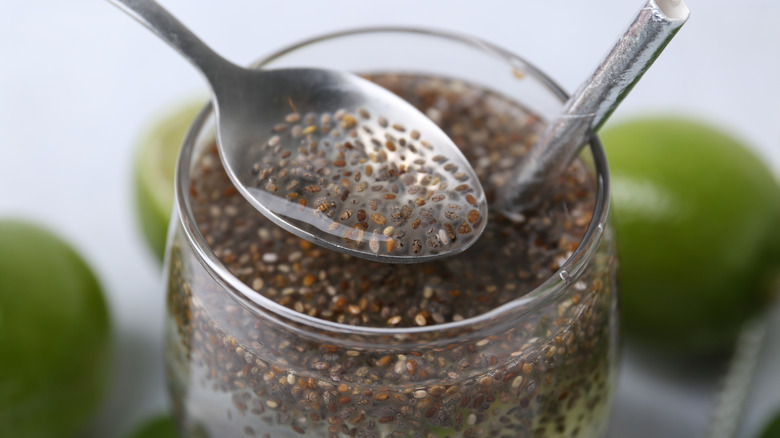
Protein is one of the latest must-have nutrients, so naturally, people are looking for all kinds of ways to increase their intake. If you're not keen on piling your plate with meat, you're likely seeking other methods to get enough protein. Chia seeds have been touted as a simple ingredient to help meet nutritional requirements, and while one tablespoon of the tiny seeds contains only around 2.35 grams of protein, in many cases, recipes featuring chia seeds call for several times that.
If it's protein you're after, a classic chia pudding uses four tablespoons of the seeds, which comes out to 9.4 grams of protein. Considering that the average adult should be getting between 46-56 grams of the molecule, knocking out nearly 10 of that in the morning isn't too bad.
But for a member of the mint family, chia seeds have a pretty plain taste. An absence of flavor isn't always seen as a good thing in food, but chia's mildness makes it easier to consume frequently, and the trick is to add the seeds to foods with flavor. Simply adding chia seeds to smoothies, sprinkling them atop cinnamon oatmeal and full-flavored salads, or baking some into bread can go a long way to boosting your protein. What they lack in flavor, however, they make up for with health benefits. Found in the Salvia hispanica plant of Central America, the miniscule black seeds have been a rich part of diets for thousands of years.
What else are chia seeds good for?
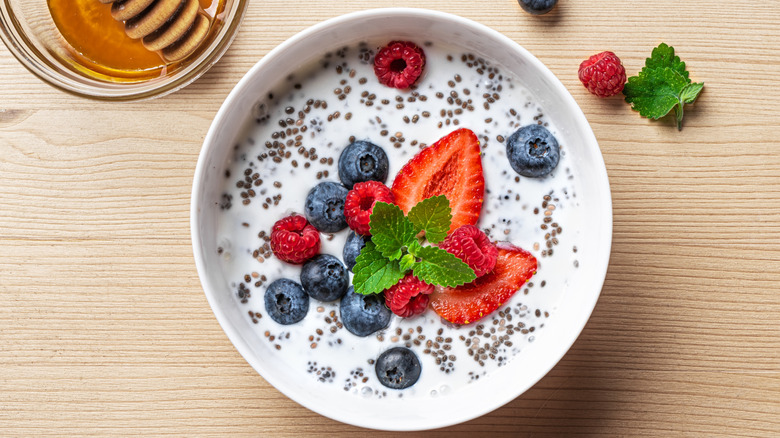
While plenty are hung up on protein, fiber is the nutritional trend that people should also get on board with. Studies show that most Americans don't consume enough fiber; luckily, chia seeds can help tackle that issue, too. There are about 4.9 grams of fiber in a tablespoon of chia seeds, so a few helpings of the seeds can help you meet the suggested 25-30 grams a day. Add them to dishes that are rich in carbohydrates, such as a breakfast quinoa bowl or strawberry overnight oats.
Chia seeds are also a good source of omega-3 fatty acids, which boost heart health and act as an anti-inflammatory agent. Other seeds and nuts — such as flaxseed, walnuts, almonds, and pecans — are also rich in the fat; they can all elevate the nutritional factor of things like pumpkin bread or a muffin recipe while adding a delicious crunch. The seeds are also great in savory applications. Encrust salmon, another omega-3 rich food, with chia seeds for a delectable, heart-healthy dish.
On top of being packed with fiber, protein, and healthy fats, chia seeds also contain a slew of vitamins, minerals, and antioxidants. Though tiny in size, the superfood deserves every ounce of praise it receives.