

Using Aluminum Foil As A Lid Isn't The Trick You Think It Is — It Could Be A Mistake
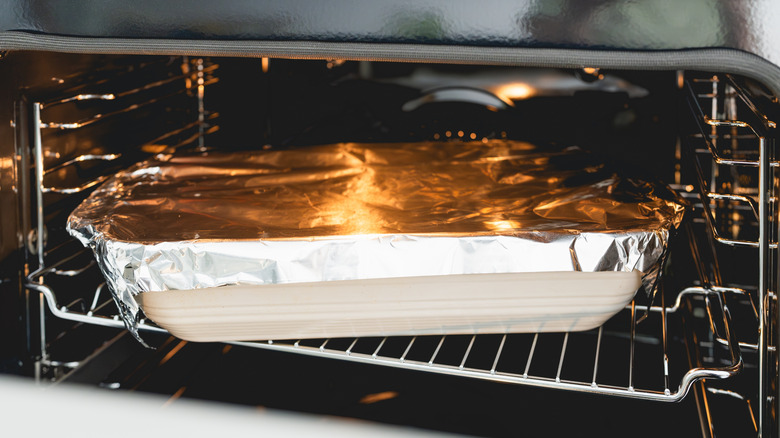
For thousands of years, humans have used heat to transform raw ingredients into edible, digestible meals, all without the use of aluminum foil. But in modern kitchens, reaching for a shiny sheet to cover your baking dish is almost reflective ... er, reflexive. Aluminum foil is right there, seems multi-purpose, and hey, it's one less dish to have to wash, so why not? Foil has many uses, but it doesn't do the important job of a lid very well, especially once cooking stretches past a few minutes.
A proper lid has more weight than foil, which means more mass. That mass absorbs heat, radiates it back into the pot, and helps maintain a steady internal temperature. Foil, by contrast, is extremely thin, and it's easy to make a couple of common mistakes when using it. Heat passes through it almost instantly, creating unstable cooking conditions. Steam escapes unevenly through tiny gaps around the edges and the inevitable rips and tears, so liquid reduces faster. Instead of the gentle, consistent simmering you get with a real lid, a foil cover causes hot spots and fluctuating moisture levels, both of which lead to uneven results. Aluminum foil works well for certain tasks, like tenting a roast briefly, but it's not a lid. Covering something with foil in a pinch won't necessarily ruin a dish, but using it as a long-term lid creates problems, especially when better options are available.
The right tools for the right job
Another thing to consider is that aluminum itself is reactive. Prolonged contact with acidic or salty foods, especially at high heat, increases the chance of aluminum leaching into food, which raises a reasonable question: Why rely on it when safer, more effective tools exist? Similarly, there are times when a disposable cover like aluminum foil or parchment paper may make sense, like if you're traveling with your food, but generally, the more sustainable choice is to use non-disposable options whenever possible. If all you need is to keep your casserole from browning too quickly, you can actually use a cookie sheet and just rest it on top for the necessary duration; it might not seal tight, but neither does aluminum foil. If you want a tighter fit, rest another heavier baking dish on top to hold it down.
A proper lid is the best choice for most covered baking tasks, but even an inverted heat-safe plate or baking dish works better than foil. Dutch ovens excel because their heavy lids are specifically designed to retain moisture and regulate heat during long cooks. In the oven, parchment paper can offer short-term coverage without the same reactivity issues, though it still won't replace a true lid for extended cooking. Many cooking mishaps blamed on finicky recipes come down to using the wrong equipment. When you use tools as they're designed to be used, your cooking projects turn out better.