

How Much Fat To Trim From A Pot Roast For Tender, Juicy Results
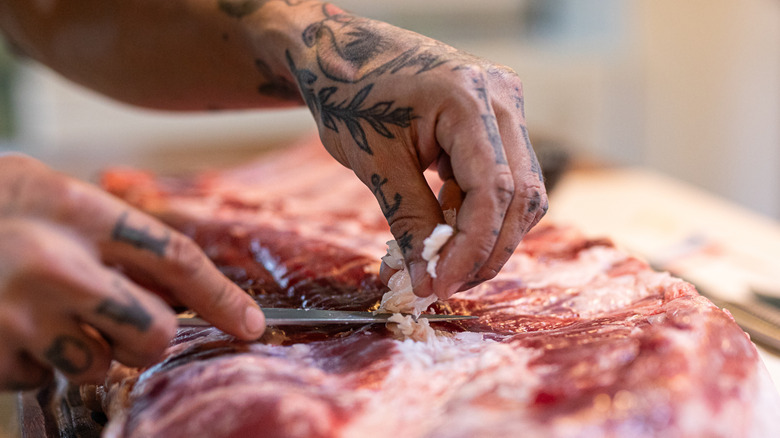
Braising is all about low prep work that yields a high reward, and few dishes so artfully embody this cooking technique as a classic pot roast. The word "braise" itself comes from the French "braiser" meaning "live coals," and in the kitchen, braising uses both wet and dry heat, cooking at a high temperature to brown while simultaneously locking in moisture. Low and slow is the name of the game here — and as far as that wet element goes, pot roast relies not just on braising liquid like stock, wine, or water, but on the meat's natural fat marbling. The trick is knowing how much fat to trim for the best results.
Braising breaks down the tough connective tissue in affordable beef cuts, and as the fat renders, it disperses with the collagen throughout the meat, creating major flavorfulness, moisture, and tenderness. It's a cost-effective way to get the most out of high-yield budget-friendly cuts (and, if cooking for one, leftovers hold up fabulously). Some fat is beneficial and necessary for delivering pot roast's velvety richness. However, locked inside a slow cooker, excess rendered fat is liable to pool, leaving an unpleasantly oily mess. To nail the ultimate slow cooker pot roast, we're aiming for the sweet spot between the two extremes. So, how much fat is the right amount? As a general rule, leave roughly a ¼ inch of fat coverage on the beef. The best cuts of meat for a pot roast are chuck roast, brisket, and bottom round roast — and which cut you use will also determine how much fat you'll need to trim.
Leave a 1/4 inch of fat on your chuck roast, brisket, or bottom round
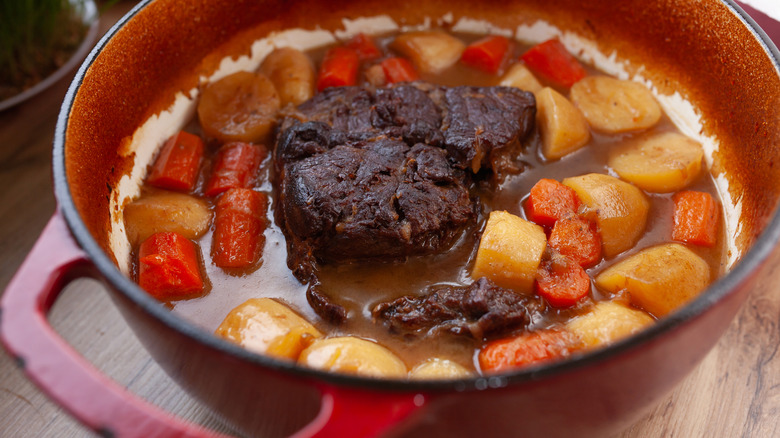
Chuck roast (neck, shoulder blade, upper arm) is fattier than brisket and bottom round. Compared to chuck, brisket (breast and lower chest) is leaner, tougher, and larger, usually clocking in at around 13 pounds and divided into two portions called the "flat" and "point" cuts. The point cut comprises the brisket's fattier section, although either section will need to cook for longer than chuck in order to break down all that tough tissue. Bottom round (hind legs and rump) is the most affordable and leanest cut of the trio, requiring the least amount of trimming. While it may need the longest cooking time to fully tenderize, bottom round's naturally-even thickness helps facilitate an even cook.
Another distinction to note is that the fat in chuck roast is mostly intramuscular (located between the muscles), while brisket's fat is primarily exterior (easily accessible for thorough trimming). So, brisket might be a better choice for pot roast fans who prefer a leaner bite. A Reddit thread in r/Cooking dedicated to braising pot roast using any cut similarly recommends, "Do not trim the roast unless it's egregiously thick. You want a good ¼-inch layer of fat on the top of the roast, as it bakes it will melt." Other commenters advise cooking the meat "fat side up." For more specific cooking instructions (whichever cut of beef you select), take a cue from our German-style pot roast recipe, or our super tender herb and fig pot roast.