

15 Tips For Making Better Homemade Salad Dressing

We may receive a commission on purchases made from links.
If you're trying to increase the presence of veggie-packed salads in your life but feel held back, it could be your dressing that's making you feel iffy. Bottled salad dressings are usually loaded with preservatives, saturated fat, sugar, and salt, turning a healthy midday meal into a processed food nightmare. That's why the secret to fresh, healthy, and downright-delicious salad comes down to one thing: a great homemade dressing.
Making homemade salad dressings sounds like a tall order, but more often than not, they have the highest difficulty-to-deliciousness ratio of anything you can make from scratch. During my years as a professional cook, I was responsible for making the restaurant's from-scratch vinaigrettes from everyday ingredients. Now, salads are one of my favorite meals to make at home as an excuse to experiment with more dressing recipes, of course. In this list, I'll break down some of my best tips for crafting homemade dressings to add flavor and flair to salads. With these helpful hints in mind, you can stop reaching for that salty, sugary bottle in the grocery store and turn salad into the star of your weekday routine.
Add fruit
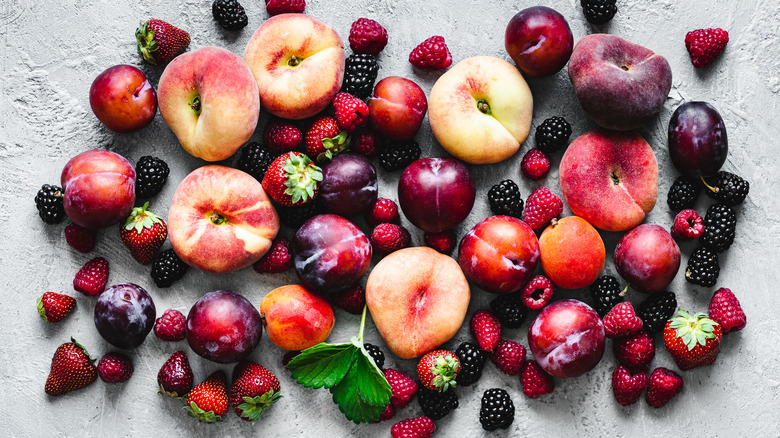
Sometimes, all you need is a fresh, sweet component to turn a decent dressing into a recipe worthy of the family cookbook. When you use fruit for the sweetness in your recipe, you're also infusing the dressing with that fruit's unique flavor and — if using whole fruit — beefing it up with some added fiber to boot. These natural sugars help to balance any bitterness and brighten all the flavors in a salad.
Fruit juices are a common ingredient in homemade salad dressing recipes, but I prefer to use whole fruit when possible. Whole fruits give it a heavier body, making its consistency more satisfying and its presentation much prettier. If you want to get to know which are your favorites in dressing, start by blending fruit into a simple vinaigrette made with just good-quality vinegar and your favorite olive oil. Some of my favorite fruit and vinegar pairings are blackberry or apple with traditional balsamic, fig or orange with sherry vinegar, strawberry with red wine vinegar, and peach or apricot with apple cider vinegar. If you want to add whole dried fruits, soak them in some of your vinegar of choice before blending them into the dressing.
Experiment with different oils

If you make a dressing and it's almost perfect, but something doesn't feel quite right, it might just need a different oil. Even though it's the most natural choice for dressings, don't be tempted to stick with just olive oil. Oil is like the backdrop, and each one provides a different texture and flavor for the other ingredients to play against.
Avocado, walnut, grapeseed, sesame, flaxseed, and sunflower are all excellent oils for dressing, depending on what ingredients they're paired with. For example, walnut is a great choice for an autumn recipe with classic fall spices. Sesame is delicious with Asian-inspired aromatics, like plenty of ginger and garlic (just be sure to cut it with a neutral oil, because toasted sesame oil has an intense flavor). Meanwhile, avocado oil works well in an herb-heavy dressing, where a neutral oil is required to prevent the delicate herb flavors from being drowned out. No matter which you choose, unrefined oil is one of the best types for salad dressing to achieve rich, deep, natural flavors.
A blender is a must
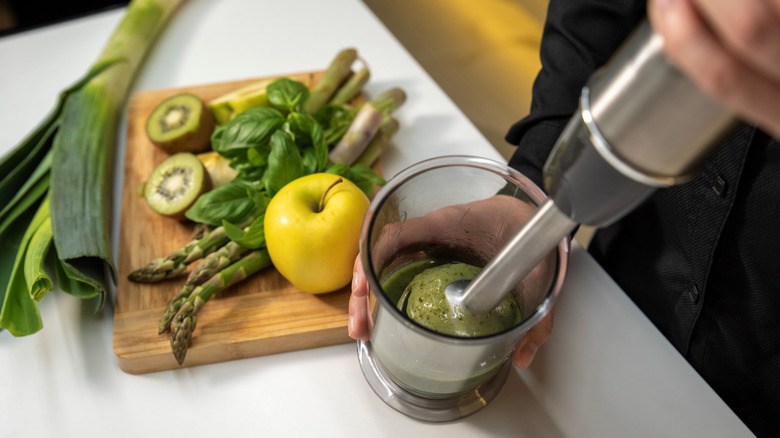
You'll probably notice that a lot of salad dressing recipes instruct you to whisk or shake the ingredients together rather than blend, or list blending as an option. In my experience, blending shouldn't really be optional. It incorporates the ingredients together much more effectively, while finely chopping any chunky ingredients that may have been left over. Blending gives vinaigrettes a creamy texture and velvety-smooth mouthfeel that whisking or shaking alone just can't achieve. It's also crucial that you blend a dressing if you haven't added an emulsifier, or if you only have a little bit of an ingredient in the recipe, to help the oil and vinegar incorporate.
While a regular standing blender certainly gets the job done of incorporating salad dressings for a smooth texture, an immersion blender is much handier. If you find you're often in a rush in the kitchen, an immersion blender takes some of the stress away by making clean-up a cinch. Many immersion blenders, like this one from KitchenAid, include small food processor attachments, which are particularly useful for puréeing dressing ingredients like roasted shallots or garlic.
Get creative with oil-free dressings
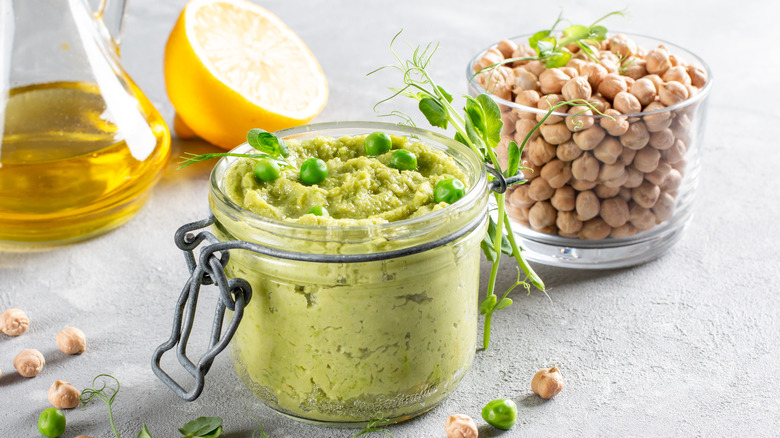
I used to follow a strict whole food diet, and during that time, salads were the cornerstone of my home cooking habits — but following a whole food diet meant no oil. Although it's more challenging, it is possible to make delicious dressings sans oil. It's a great opportunity to expand your culinary creativity and even get in the habit of creating staple recipes with foods you always have in the fridge or pantry. First, identify an ingredient that's high in fat and easy to blend. From there, you can start building your dressing.
Avocado is one of my favorite high-fat ingredients to blend into dressing. Try avocado chunks, a little raw garlic, apple cider vinegar, and mustard blended with some salt and pepper. Hummus also acts as a great base for dressings, or blended nuts if you want something a little creamier. If you want to stick with a low-fat recipe, try Dijon mustard, apple cider, or white wine vinegar, and maple syrup in a 3-2-1 ratio.
Fresh herbs level up dressing
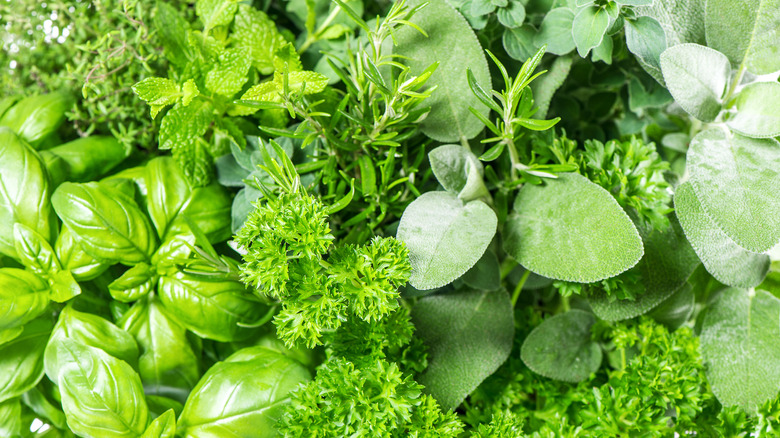
It's true that a great salad dressing can come together with just oil, vinegar, and aromatics, but fresh herbs are the key to taking it from basic to bougie. You can either make herbs the focus of the dressing or use them to enhance other ingredients. Using basil in a blackberry balsamic, where the basil brings out the intricate flavors in the berries and makes the balsamic taste richer. Try fresh thyme or parsley and a robust olive oil in a garlicky dressing to add a fresh, herbal element to tame potent garlic.
If you want herbs to be the main focus of your vinaigrette, opt for a mix of Italian herbs like oregano, basil, and rosemary with a mild olive or avocado oil and white or red wine vinegar. You don't even need to use the leafy herbs; toss the scraps from your cutting board into a homemade dressing, like herb stems or garlic scapes, to achieve an herbaceous flavor and reduce waste in your kitchen.
Play around with oil and vinegar pairings
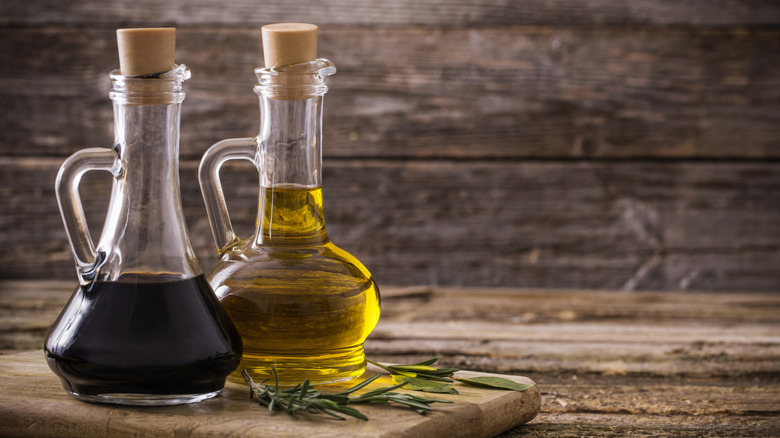
One of my favorite ways to scratch a creativity itch in the kitchen is to experiment with different vinegars and oils in a homemade salad dressing. It pays to keep a selection of both stocked and play around with pairings until you find your holy grail dressing combo. Once you identify some excellent pairings, you can start building onto the recipe with herbs, aromatics, and sweeteners.
Extra-virgin olive oil goes well with most vinegars, particularly balsamic, white balsamic, white and red wine vinegar, and champagne vinegar. To move past the standard pairings, try rice vinegar with a neutral oil like avocado to let the bright tang of the vinegar shine. Walnut oil and apple cider vinegar are an excellent pair for fall and winter flavors, while toasted sesame oil and black rice vinegar make a dressing that's incredibly rich and flavorful, especially with spicy ingredients. Pairing flavored balsamics is when you can really let your creativity shine. Try cherry balsamic with walnut oil and thank me later.
My favorite pair to build off is light sesame oil (which is less robust than toasted sesame) and apple cider vinegar. This pair has a unique enough taste to make an interesting dressing, but it isn't so intense and particular that it can't be an all-purpose vinaigrette base.
Don't be afraid to get funky
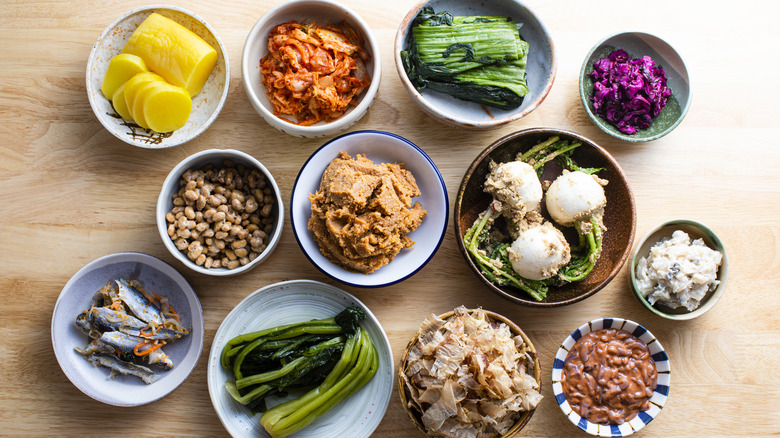
Once you have your standard dressing base down pat, it's time to get funky. Don't be shy about tossing in some of your favorite pungent, umami-forward ingredients. Anchovies are integral to homemade Caesar, but they're also delicious as the star of a dressing in an anchovy-lemon vinaigrette. Or try one of my go-to earthy, tangy recipes: fresh Parmesan and capers with heavy-handed black pepper, Dijon, white wine vinegar, and olive oil.
Fermented ingredients are excellent at upping the umami in a recipe, and naturally fermented foods that contain probiotics are great for gut health. Experiment with one of the three different types of miso as a base for a vinaigrette, or blend some chopped kimchi with rice vinegar, sesame oil, ginger, and honey. For a vinegar-free, spicy dressing that brings the funk fermented-style, try fish sauce or bonito flakes and lime juice with plenty of spicy chili sauce or fresh chilis. This dressing also works well drizzled over cucumber salad or a kale and spinach salad with nuts and fresh pineapple.
Opt for infused oils and flavored vinegars
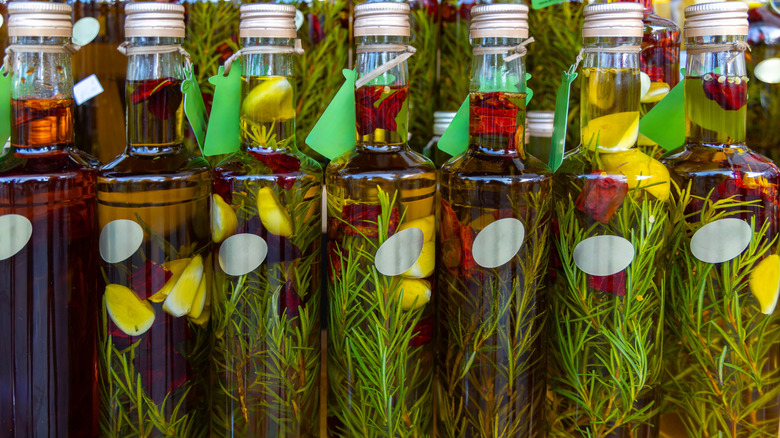
If your goal is to make flavorful homemade dressings without having to whip out the blender and a ton of ingredients, infused oils and vinegars are your answer. Herb or spice-infused oils, like those in this collection from Basso 1904, add depth, aroma, and the subtle punch that makes a vinaigrette taste restaurant-quality. Meanwhile, fruit-infused vinegars give it the sweet character it needs to feel complete.
Some infused oils and vinegars are more versatile than others. Try a garlic, lemon, or rosemary-flavored olive oil if you want to build a variety of dressings around it. If you want something more specific, visit a store that specializes in oils to try things like blood orange or chipotle-infused versions. When it comes to flavored vinegars, on the other hand, you'll come across a lot of fruity options. One I always keep stocked in my kitchen is a honey-ginger white balsamic that I like to pair with roasted garlic, tamari, and a mild olive oil. I also love dressing made with a rich chocolate balsamic for salads with fruit, particularly with dark leafy greens, blackberries, raspberries, and nuts.
Use emulsifiers
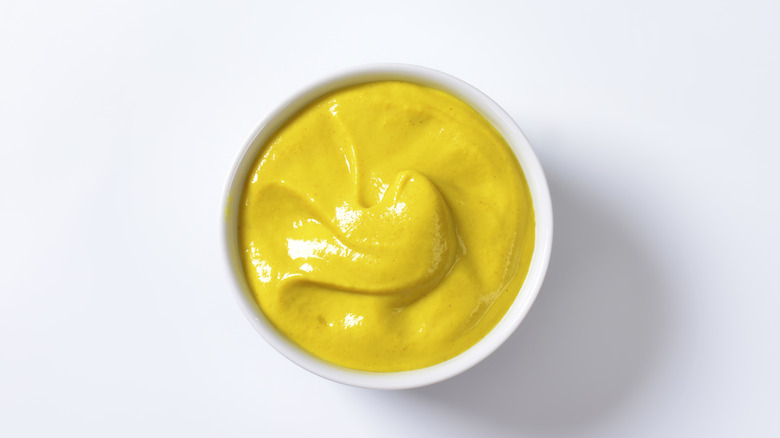
If your dressing comes out a little too thin, and the oil sits on top of the other ingredients even after a vigorous shake, it's in need of an emulsifier. Emulsifiers act like a binding agent, helping oil and water become the friends they were destined to be. They aren't always necessarily in a dressing, but I find that they're particularly helpful in one with many moving parts — that is to say, a lot of different ingredients, especially chunky ingredients.
In commercial food products, emulsifiers are usually heavily processed additives, but you don't need these additives to blend ingredients in a dressing. Foods that you probably already have in your fridge, like egg yolk, mayonnaise, mustard, and even honey or maple syrup, act as emulsifiers. These ingredients may not prevent it from separating at all, the way a commercial emulsifier would, but they'll keep oil and vinegar sufficiently blended for a while after a good shake, while enhancing the flavor and texture of your salad dressing.
Try out different sweeteners
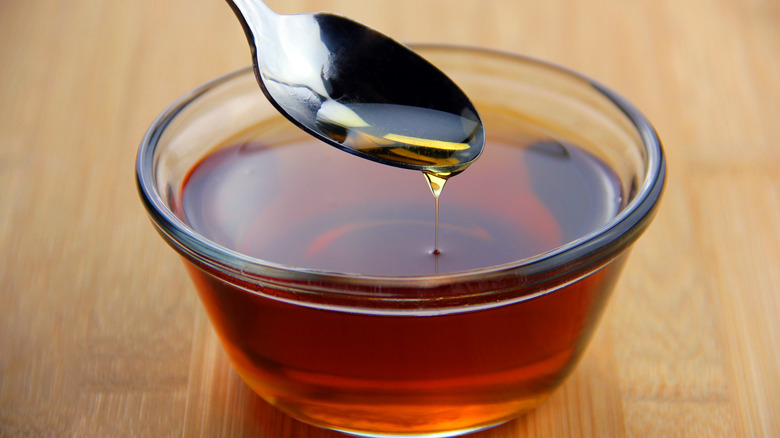
Sweeteners are an integral part of just about any dressing, even those that aren't particularly sweet. Sugars help balance the salt, fat, and acid in a recipe to make it feel cohesive and hit all those flavor high notes. Technically, you could use straight-up sugar for the sweetness in a vinaigrette, but it's a lot more fun to incorporate sugary, flavor-enhancing additions.
Maple syrup is my favorite salad dressing secret ingredient; the subtle, earthy, tangy flavor that it adds, and the fact that it acts as an emulsifier, is a major bonus. I always add maple syrup to dressings with apple cider vinegar and Dijon or stone-ground mustard, and it works well with sharp, spicy ingredients like horseradish, too. Honey, also an emulsifier, is a better choice for an all-purpose sweetener, but it tastes particularly delicious with balsamic and robust olive oil. It's not as thick as maple syrup or honey, but agave syrup adds a sugary flavor to dressings and works well in just about any recipe. Go for light agave if you want a neutral flavor and raw agave for rich, caramel-like notes.
Leftover sauces and dips make great dressing bases
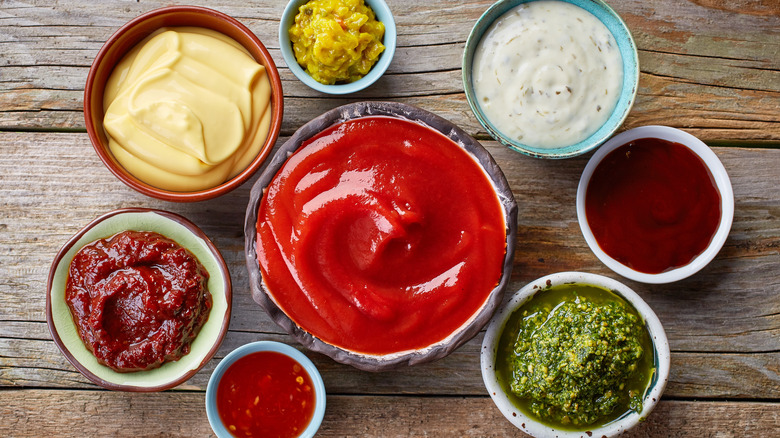
There comes a time in everyone's life when they have to finally throw away that old sauce or dip that they were sure they'd use up before it expired. Let's be honest, this is probably a weekly occurrence in most households. Unbeknownst to many home cooks, that unassuming pesto or week-old salsa in the back of the fridge can be transformed into your new favorite salad dressing.
If you're looking for some creative ways to use up leftover hummus, look no further than salad dressing. Simply blend it with a little apple cider, champagne, or red wine vinegar, add some oil to loosen it up a bit, and enhance it with your favorite herbs and aromatics. One of my other favorite dips to turn into salad dressing is salsa: All it needs is some mayo or sour cream, spices, and enough lime juice to thin it out. Even sauces can double as salad dressing, like tzatziki, chimichurri, and pesto; they may just need a little doctoring up with oil, vinegar, or both to get the consistency right.
Give creamy ingredients a try
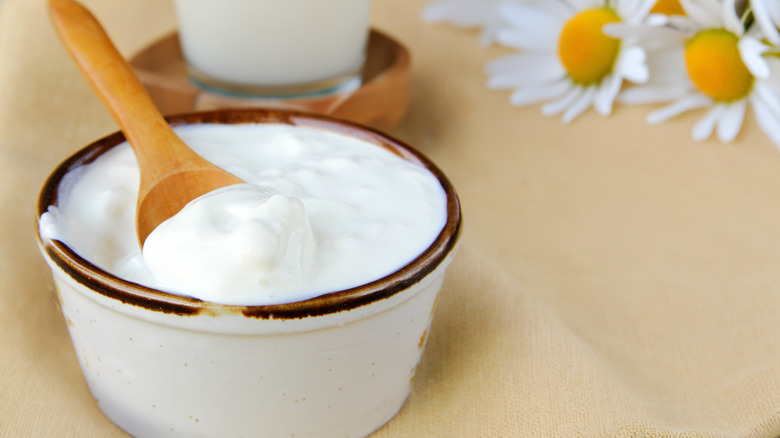
Try playing around with dairy ingredients in your next salad dressing to achieve a creamier consistency than oil and vinegar alone can produce. Greek yogurt, sour cream, and kefir (fermented milk) are my favorite dairy products to blend into salad dressing. Start with a classic ranch made with kefir, sour cream, fresh herbs, spices, and plenty of garlic. If you don't have access to kefir, thinned Greek yogurt works well, too. Greek yogurt, kefir, and sour cream make dressings rich and creamy while adding a subtle tanginess that pairs well with earthy spices, alliums, and herbs or herb stems.
If you're not a dairy fan, you can still make dressings that are just as decadent as yogurty ones. You can use cashew cream, especially if sticking to strictly whole food recipes. Soak cashews in hot water for an hour or so and then blend them with a little water until they reach a smooth, yogurt-like consistency. Cashew cream can be used in place of dairy ingredients in nearly any recipe, but it's just as good with lemon juice, garlic, shallots, and nutritional yeast over a salad with bitter greens.
Roasted alliums make salad dressing taste bougie
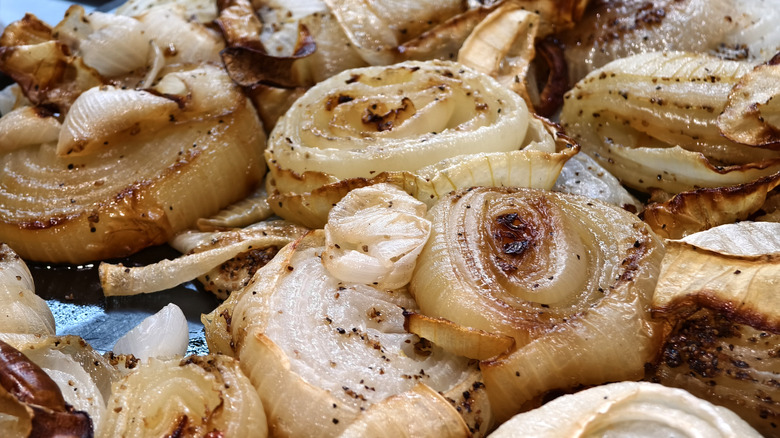
Adding fresh, whole ingredients is the best way to make a homemade salad dressing taste less like an experiment and more like a perfect work of art. However, they should be prepared properly before tossing them into the blender. Tossing raw onion or garlic into a recipe will have a drastically different effect than roasting them beforehand. There's a time and place for raw veggies in salad dressing, but usually, roasting before blending is ideal.
Roasting your garlic, shallots, chives, leeks, or ramps unleashes a robust, smoky flavor, making them taste deeper and more complex than if they were left raw. Their potency is also tamed after roasting, so you can include more for added body and heft. The next time you're roasting alliums for dressing, try roasting the scapes along with the bulbs for a hint of sharp herbaceousness.
Keep your dressings on-brand for the season

Salads will always feel interesting and a little extra comforting when they're tied to the flavors of the current season. Spring and summer recipes are a natural fit for salad dressing, especially if you like to work with fruit. You can't go wrong with a citrusy recipe with plenty of orange juice and zest, white wine vinegar, and shallots. Cilantro-mango with lots of lime juice and garlic is another surprisingly versatile dressing that I usually only break out for summer. For springtime, berries are always on-brand. Try blackberries and blueberries with a peach balsamic and mellow olive oil for a complex, fruity vinaigrette.
When the weather gets cold, that doesn't have to mean salads are off the menu. Try apple cider vinegar, almond or walnut oil, fresh apple, and ginger with warm fall spices like allspice, cinnamon, and clove. I love fennel in a winter-themed dressing, with champagne vinegar, olive oil, and orange juice over hearty winter greens like kale and radicchio. Or dig into something rich and creamy with walnut oil, cashew cream, maple syrup, Dijon, and a touch of molasses.
Balance is key
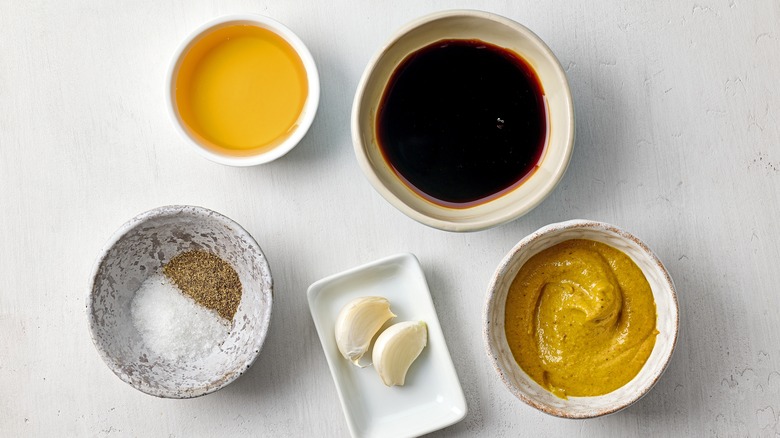
The golden rule of homemade dressings is all about following the proper ratio and, therefore, achieving balance. Too much vinegar yields a bitter dressing, while too much oil drowns out the other flavors in the recipe and makes it taste heavy. At the same time, you want to add an appropriate amount of roasted alliums, spices, fruits, or sweeteners so all the flavors are apparent, but never overpowering.
Balancing a recipe requires trial and error, but a good rule of thumb is to follow a simple 3:1 ratio for oil and vinegar. This can be adjusted slightly based on preference, but it is normally considered the standard to prevent a recipe from becoming either overly greasy or bitter. From there, you can consider what you need to make the dressing's fat, acid, salt, and sugar cohesive. For example, you might not need as much sweetener to tame garlic if using apple cider vinegar, since it's already on the sweet side. If adding horseradish or spicy peppers, you'll want a little extra sugar, and yogurt or kefir calls for something fresh and herby, so the dressing doesn't taste too tangy.