

Why A Dutch Oven Is Key For The Ultimate Beef Stew
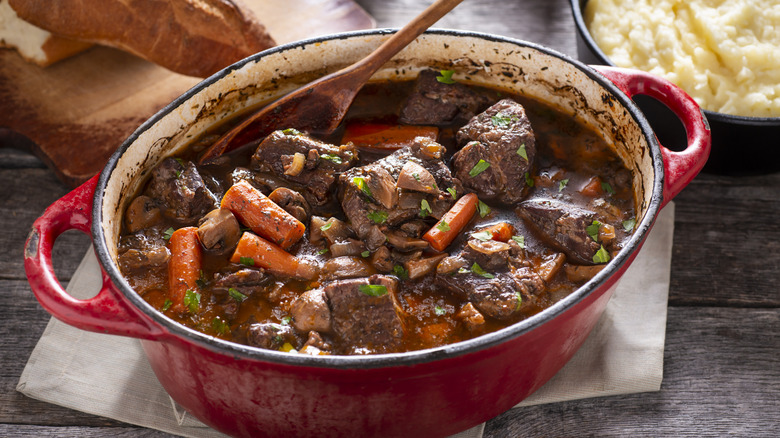
Beef stew is one of the oldest dishes still regularly made around the world today –- in fact, the history of beef stew can be traced back to 14th century France. Yet despite its enduring popularity and the prevalence of countless variations on this timeless, old-school recipe, it can be tricky to make it perfectly every time. Some of the most common problems home chefs encounter when making beef stew are burnt or tough meat, vegetables that are mushy and overcooked, and dried out sauce or gravy. For a fool-proof, slow simmer old-fashioned beef stew, a Dutch oven is key.
Dutch ovens are traditionally made from cast iron or seasoned cast iron, and they are incredibly heat-efficient. They maintain consistent temperatures and can hold in moisture for long periods of time. One of the best ways to use your Dutch oven when making beef stew is to brown and sear your stew meat before adding in your other ingredients. When you do, a flavorful fond will develop along the bottom and sides, which you can deglaze with red wine or broth and use to create an even more rich and flavorful gravy.
Dutch ovens are designed to be transferrable between the stovetop and oven, so after you've deglazed the pan and added the meat and the rest of the water or broth back to it, you can either finish slow-cooking your stew on the burner or move it to the oven. As the stew cooks, the lid of the Dutch oven will trap and release moisture back into the pot, ensuring your ingredients cook slowly from all directions while remaining perfectly moist and tender.
Tips for making beef stew in a Dutch oven
Before you begin cooking, you should research the mistakes everyone makes when using a Dutch oven. First, choose the right size of Dutch oven for your cooking needs — one that will fit the required amount of ingredients for the amount of people your stew is going to serve. You should also never forget to turn the heat on the burner down low after you sear your meat in the Dutch oven, as cooking on high heat will result in a dry, tough, or burnt stew.
If you're slow-cooking the stew in the oven, first verify that the lid of the Dutch oven is heat-safe and set the oven temp to 300 degrees Fahrenheit for a two hour and 15 minute cook time, or 275 degrees Fahrenheit for a longer, two hours and 30 minutes to three hour cook time. To prevent the sauce from drying out, a good hack is to leave the lid slightly ajar from the pot to allow it to reduce at the optimal rate.
Another important tip for making beef stew in a Dutch oven is to wait to add your veggies and potatoes to the pot. Leaving them in for the entire cooking time will make them turn mushy. As they break down into the broth, they could affect the finished texture. Instead, let the stew simmer for about one hour to one hour and 30 minutes before adding hardy vegetables and wait until the last 15 minutes of cook time to add more delicate ingredients like peas, corn, or frozen veggies.