

How Long You Can Safely Soak Dirty Dishes Before Germs Take Over
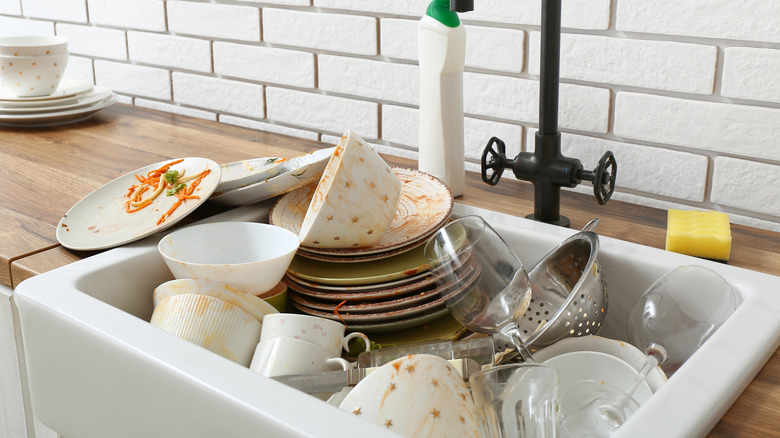
Maybe this sounds familiar: You clear the dishes after dinner and put them into the sink to soak. Some warm, soapy water has to soften the food build-up and you want to relax and clean up later. But before you know it, you're headed to bed. The next morning, washing dishes is the last thing on your mind as you rush to get ready for work and maybe get the kids to school, too. Suddenly, 24 hours has gone by before those dishes get some attention. It's relatable — but is it safe?
Actually, no. It's best not to let dishes soak for more than an hour or two; and if the dishes have dairy, eggs, or meat, that should be more like 30 to 60 minutes. Edmund "Ed" McCormick, food science and formulation consultant and CEO of Cape Crystal Brands told our sister site, Chowhound, ""It only takes minutes for the dissolved nutrients of the submerged food to break down, releasing carbs, proteins, and lipids, which comprise a bacteria diet."
The bad news is, your sink often harbors more bacteria than anywhere else in your kitchen. Every day, it sees hand-washing, produce-washing, dish-washing, raw meat or seafood prep, and all of the associated bacteria often just hang out. The sink is one of those places you may not think to clean in the kitchen because you're always running soap and water through it, but without a dedicated scrub, it's a germ haven. Add your dirty dishes and leave them in that warm environment for too long and those germs multiply.
How to soak dishes safely (or skip it altogether)
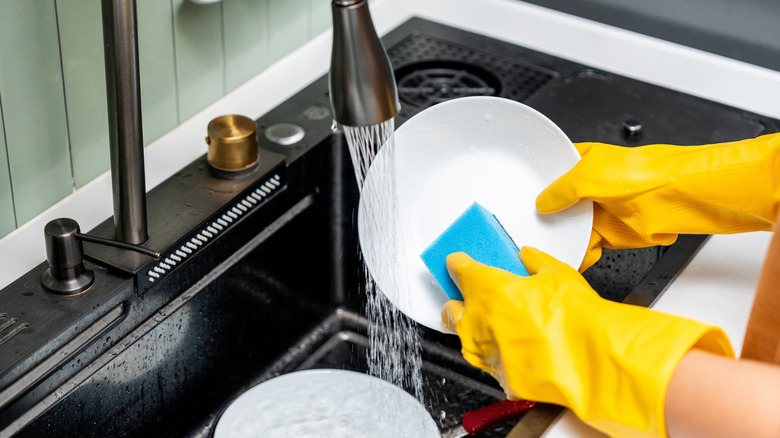
Letting dishes soak too long creates an array of germs and can also further contribute to the bacteria growing-and-infecting cycle within your sink. It's actually best to skip the soak altogether. But if you're finding your dishes need an extra step to become residue-free, just create a more effective, quicker soak.
First and foremost, though, keep up with cleaning your sink so you're never doing even a quick soak among already-there bacteria. There are clever hacks to clean your kitchen sink effectively and easily, like using baking soda and vinegar. Clean the area often, and especially after preparing food like raw meat. Then, you'll have a safer space for short soaks.
Start a soapy marinade in the sink during dinner to then let dishes soak while you eat, just to loosen the build-up — this is extra helpful if you don't have a dishwasher. If you do have a dishwasher, remember most dishes don't need to be rinsed or soaked before you load them; simply get items right into the appliance and let it do its job. If things are still coming out with gunk attached, add citrus peels to your dishwater; their acid cuts through residue. By staying on top of sink cleanliness and just attacking dish-washing or dishwasher-loading right away, you can cross a chore off your list and stay safe. Then you'll never have to face a pile of greasy germ-laden dishes in the morning again.