

What Is Sumac? A Guide To The Vibrant Middle Eastern Spice
We may receive a commission on purchases made from links.
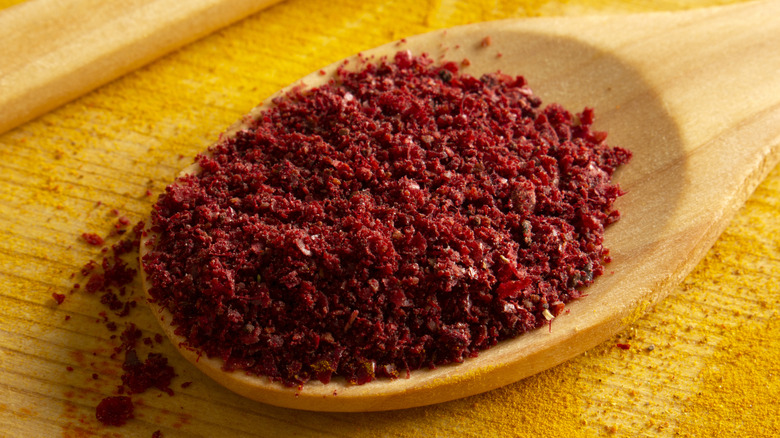
If you've ever ordered a kebab and found that it came sprinkled with a red powder that tasted bright and tangy — almost like lemon — then chances are you've had sumac (Rhus copallina, R. glabra, R. typhina) before. This spice is made from the dried berries of a tree that's commonly found in parts of Western Asia and the Mediterranean, and it can liven up a wide variety of dishes, from the aforementioned kebab to simple salads that need a pop of flavor.
But even if you use sumac in your own kitchen frequently, there's probably a lot you don't know about the spice. We're breaking down the intricacies of what sumac is all about so you can better utilize it in your own cooking. Once you learn more about sumac's origins and its culinary uses, you may just find yourself using it in more ways than you previously could have imagined. Let's take a closer look at this spice and the bold intensity that only it can provide.
What is sumac?
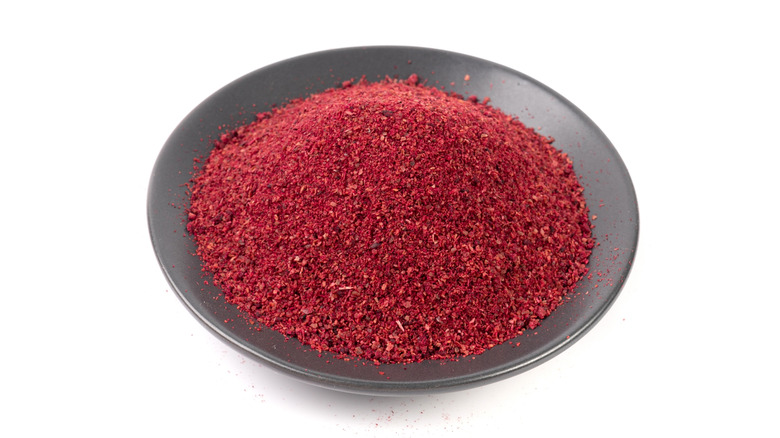
So, what exactly is sumac? It's a good question if you don't have much experience with it, as many in the United States don't. It's a spice that's derived from a tree that grows bright red berries — this is why you may be able to perceive some fruity notes in the spice. The tree that grows sumac originally hails from modern-day Iran. However, it's grown widely in the region, from Turkey to the Arabian Peninsula. It's commonly found in the cuisines of these cultures and can be used as a topping for meat and salads, where it gives the dish a zingy brightness.
However, sumac can be used in so many other clever ways — its approachable flavor means that it works well with a wide variety of dishes. For instance, you can sprinkle it onto fried foods for a pop of freshness, or you can use it to flavor otherwise neutral-flavored popcorn. It's often used in place of lemon when you want that acidic flavor without actually having to include lemon juice.
How is sumac made?
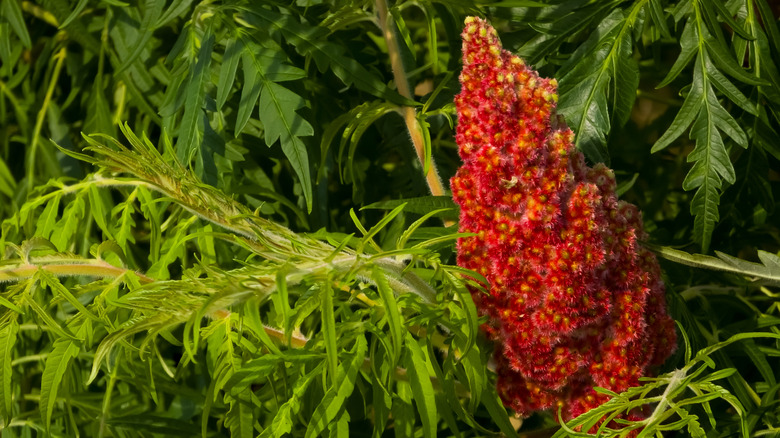
We've already covered the fact that sumac comes from berries that grow on a tree. But how are those berries transformed into the powder that you sprinkle over all of your favorite dishes that need some extra flavor? Well, sumac growers wait until the fall, which is when the berries have reached maturity. This is when the berries are harvested. They are then laid out in the sun to dry. After drying, they're chopped or ground into a very fine powder. Sometimes, the grinding method is done by machine. Other times, it's produced the more traditional way and is chopped by hand.
Additionally, some sumac is cured in salt, which gives it an additional salty layer of flavor and offers even more complexity. There are some sumac producers that also mix the ground spice with small amounts of wheat flour. This helps to cut back on its bold acidity to make it more approachable, flavor-wise.
Fresh sumac berries vs. dried ground sumac
If you see a recipe that calls for sumac, chances are good that it requires dried, not fresh, sumac. In the United States, you're not likely to find fresh sumac berries at the grocery store anyway. That being said, there is a type of sumac that grows in North America, and the berries can sometimes be used to make "sumac-ade," a tangy drink similar to lemonade. To get your hands on those berries, though, you'll likely have to locate an actual sumac tree.
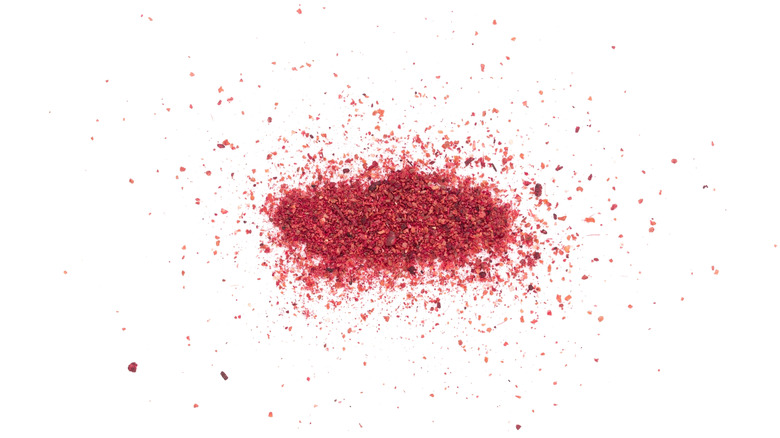
Dried, ground sumac is much more common and therefore easier to find. It's similarly tangy and fresh to its fresh counterpart, but it can take on different flavors depending on what it's mixed with. In Palestine, "ballady" sumac is dried, ground sumac that's pure, not combined with other ingredients. This variety tends to be pricier than its flour-enhanced counterparts, but the flavor is much stronger and more pronounced.
What does sumac taste like?
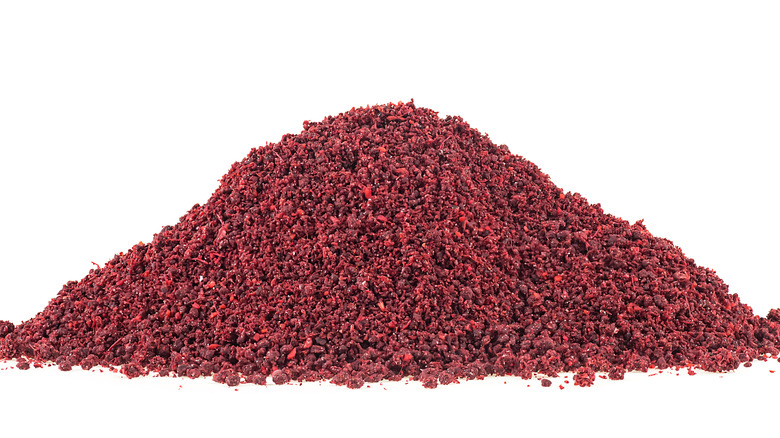
If you like bold flavors and you've never tried sumac before, you're definitely missing out. When you look at it, sumac looks like it could be fiery and spicy. Admittedly, it does have a hint of vegetal pepperiness to it, but the spice is mostly known for being tangy and bright, and it's not spicy. Some even describe it as "lemony," which is why it's often used to give dishes a citrusy punch, even when no citrus is involved. In addition to that signature tangy brightness, sumac also has a touch of earthiness to it. Of course, if salt is added to the sumac you're using, you'll also pick up on an increased flavor intensity and salty note.
When all of these flavors come together, you're left with a spice with a surprising amount of complexity. While sumac can absolutely be used in conjunction with other spices, that flavor complexity means that it can also be used all on its own to seriously elevate any dish it touches.
How to cook with sumac
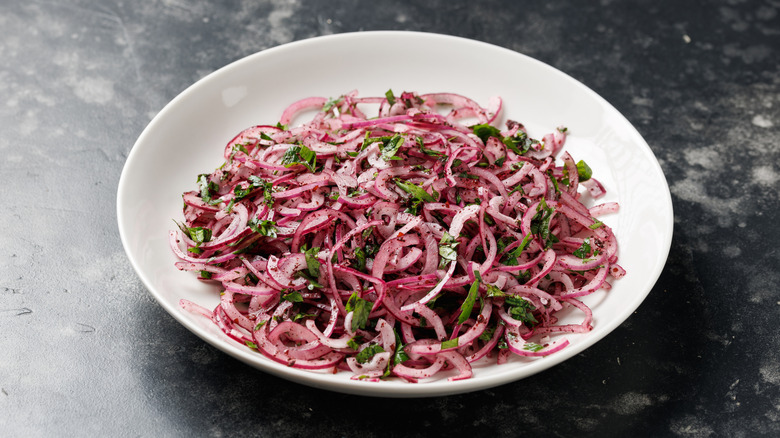
Sumac, with its bold, tangy, and lemony flavor, can be used in so many different ways in your cooking. Of course, it goes well with roasted and grilled meats, from various kebab recipes to a simple roasted chicken. It can also be used as a flavorful topping for a variety of salads. In Turkey, it's often paired with thinly sliced onions for a delicious topper for kebabs, liver, and other dishes. And why not use it to dress up otherwise forgettable roasted vegetables? Just this one spice can transform even vegetables that don't tend to pack a lot of flavor, like potatoes and zucchini.
You can also use it to give dips more depth of flavor. We especially like sprinkling some onto homemade hummus, where it gives the smooth neutrality of chickpeas a surprising complexity. It also works with tzatziki and various other dips as well. And since sumac is technically a berry, you might be shocked at just how well the spice works with fruity dishes — we especially like sprinkling our fruit salad with some sumac.
Where to buy sumac
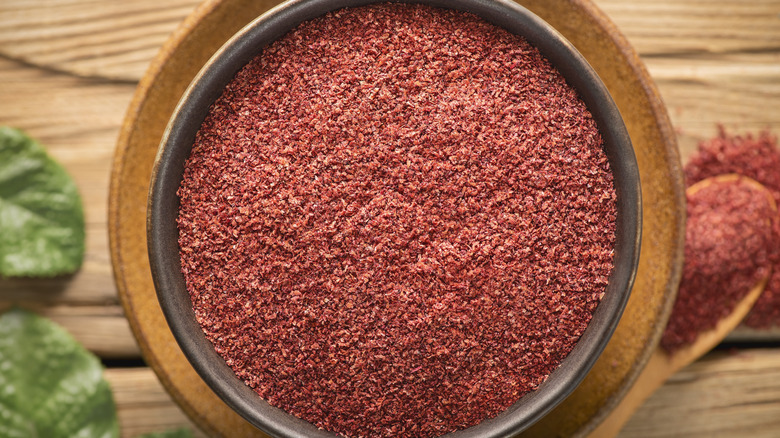
Generally speaking, sumac is relatively easy to find at many American grocery stores. You'll find it in the spice aisle among other spice rack favorites. Make sure not to confuse it with other, similar-looking spices, like cayenne or smoked paprika. But with that being said, there's a chance that you may not be able to find it at your local grocery store — it's not quite as common in the U.S. as it is in other parts of the world. In that case, you're going to want to go to a specialty grocer. Turkish or Mediterranean markets are a good place to start.
Otherwise, you can easily buy sumac online, either from major retailers or through smaller spice shops. Be sure to take a look at the ingredient list to ensure that you're getting pure sumac if you really want that strong flavor that sumac is known for, or sumac with salt if you do want an extra layer of saltiness.
Purchase sumac on World Spice for $8.99.
Purchase sumac at Amazon for $12.99.
Nutritional information about sumac
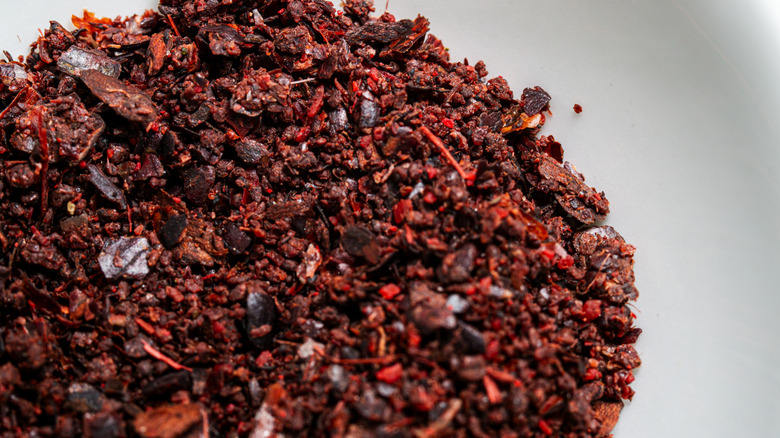
Although sumac is mostly known for its culinary properties, as a flavorful spice that can be used in extremely versatile ways, some cultures have also used it for medicinal purposes, particularly as a way to help promote digestion. However, studies on sumac are somewhat lacking, so its health benefits aren't always clear. That being said, as a berry, sumac does pack plenty of antioxidants, which stabilize components in the body known as free radicals. Antioxidants are believed to reduce cancer risk, which is more than enough reason to sprinkle a bit more sumac onto your food.
Additionally, sumac may help relieve muscle pain and even help you balance your blood sugar. And since it's a good source of various nutrients, like calcium and potassium, there's even more reason to incorporate it into your diet even more than you already do. It also contains some fiber, which most Americans should be getting a lot more of.
How to store sumac
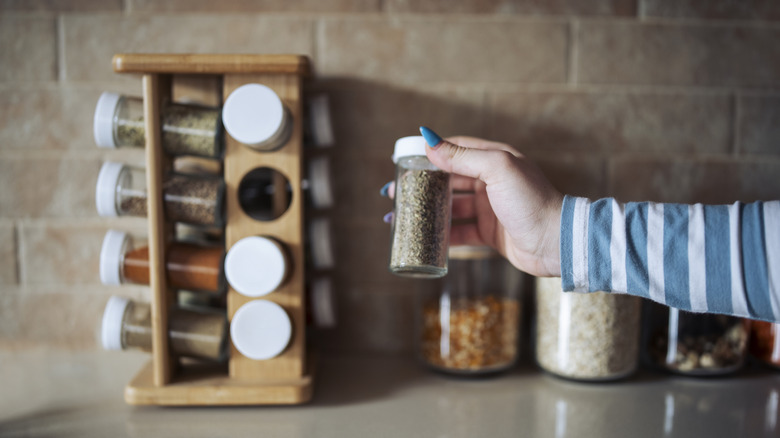
As with all spices, it's important to store sumac properly to prevent it from going stale and losing its zingy flavor. You'll want to store your sumac in an airtight container, away from sunlight and excessive heat or moisture. Therefore, it's probably not a great idea to store it right above your stovetop, as this area can get hot and steamy regularly. Keep it in the container you bought it in if it's in a glass or plastic bottle, or transfer it to a more airtight container if you purchased it in a bag.
How long your sumac will stay good depends on the variety you purchased and how you store it. Some sources claim that ground sumac will only stay at its freshest state for a few months, while others claim that proper storage can give it a shelf life of three to four years. Whole dried sumac berries, as opposed to ground sumac, tend to stay fresh for longer.