

The Orange Roughy Myth You Can Stop Believing
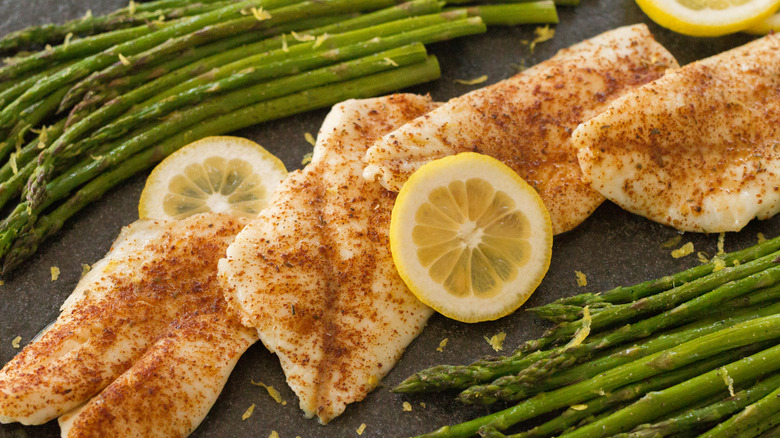
Orange roughy is a giant, deep water fish that can live to be 130 years and doesn't reach maturity till 30 years of age. Since they take so long to reach maturity, and thus be suitable for consumption, you might think that orange roughy is an expensive and rare commodity. However, we spoke to Wesley Rose, director of perishables for Whole Foods Market, to dispel such a myth.
Where premium fish like Chilean sea bass and bluefin tuna pose an especially high price tag, orange roughy can cost as little as $8 a pound on sale. "Orange roughy is actually one of our best value species," Rose explains. "The misconception comes from the fish being a slow growth fish, and that can limit the amount harvested in any given year." Some might cite ethical qualms about such a long-lived fish being so cheap, opting to avoid it altogether. But fisheries in New Zealand and other parts of the world have found sustainable fishing methods that don't deplete orange rough populations.
So, the key is to look for orange roughy that is certified sustainable. "All the orange roughy at Whole Foods Market is MSC certified," says Rose, "and this certification means it's sourced from fisheries that support long-term sustainability." Whether you're shopping at Whole Foods or not, be sure to look for a blue tick on your orange roughy packaging or label as it represents MSC-certified sustainable fish.
Cooking methods and substitutes for orange roughy
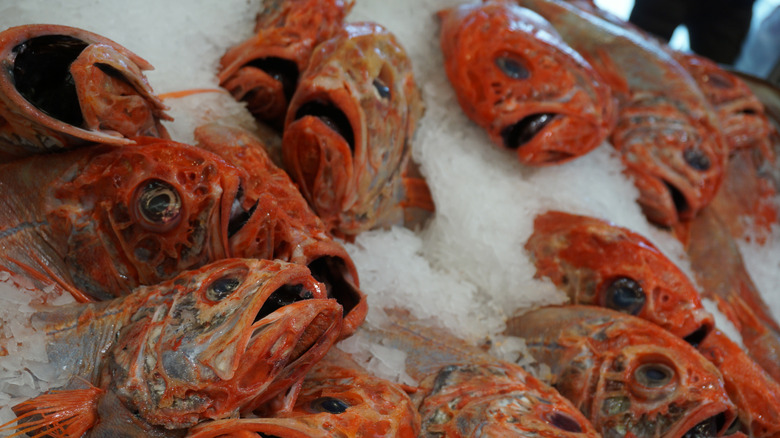
If you're new to orange roughy, Rose has a simple visual guide to pick the best filets at your local fish market. "Look for fish that is bright, moist, and firm, " he says. "Orange roughy will look dull and dry when it's past its prime." Orange roughy may be a great value for the money, but they aren't the cheapest. So, if you're looking for a cheaper alternative, Rose recommends tilapia or catfish. That said, while both possess a flakey yet meaty texture, Rose says that they "are milder in flavor to orange roughy." The flavor of orange roughy is described as mild and slightly sweet with no fishiness.
Still, because it's sweeter, says Rose, orange roughy "stands up well to bolder flavors than other white fish. You can marinate or blacken roughy without losing the flavor of the fish." The bold flavors of blackened fish come from a mix of spice blends and high heat cooking to create a beautiful black crust. You can swap salmon for orange roughy in this simple, classic blackened fish recipe. Serve blackened orange roughy filets over a citrus salad like we do with this blackened cod recipe. Of course, the delicately sweet flavor will also work well with more simple preparations. Try this recipe for simple orange roughy, with a lemony, aromatic cream sauce, or this recipe for easy baked orange roughy seasoned with fresh herbs and baked with olive oil and cherry tomatoes.