

Yes, You Can Grow Cucumbers Indoors — Here's How
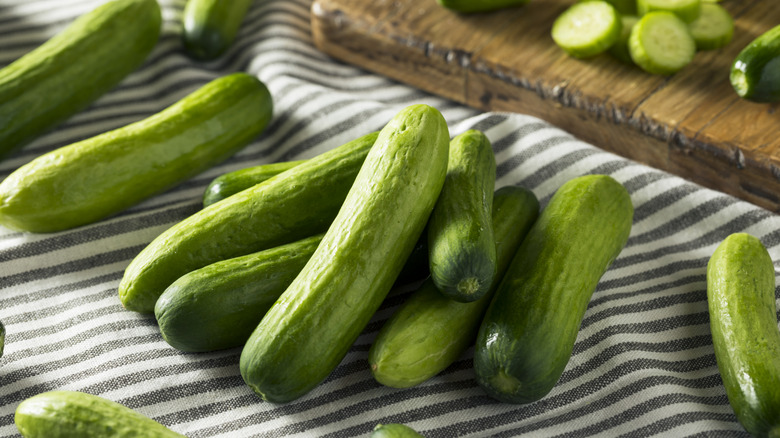
Cucumbers are so satisfyingly crisp and refreshing, with a flavor that lends itself to so many dishes and even beverages. A quick skim through any list of tasty cucumber recipes will get you inspired to whip up everything from salads, sandwiches, and grain bowls to sauces, seltzers, and cocktails. And that's before you even dive into the world of pickling. Cucumbers have become extra popular lately thanks to ideas for uses spreading on social media — a cuke shortage in Iceland was blamed on TikTok. But there's an easy solution that makes it easy to have delicious cucumbers within reach at all times: grow your own.
Cucumbers are one of the fastest growing vegetables you can add to your garden. "Garden" doesn't have to mean outdoors, either. It's especially helpful to know going into winter months that you can in fact grow cucumbers inside. You just need to create the right conditions. First, get to know different cucumber varieties. Certain types don't need pollination, making them significantly easier to grow indoors.
For example, English cucumbers are distinct with a mild, sweet profile; English varieties Tyria and Sweet Success are parthenogenetic and don't require pollination so would be great indoor-garden contenders. Other parthenogenetic types include Socrates and Katrina, "beit alpha" varieties that are sweeter than others; and pickling varieties Excelsior and H-19 Little Leaf. The latter is a "semi-bush" variety, too, meaning it won't need to climb as much as other vining varieties, so you may not have to add a trellis to your container.
How to care for cucumbers inside
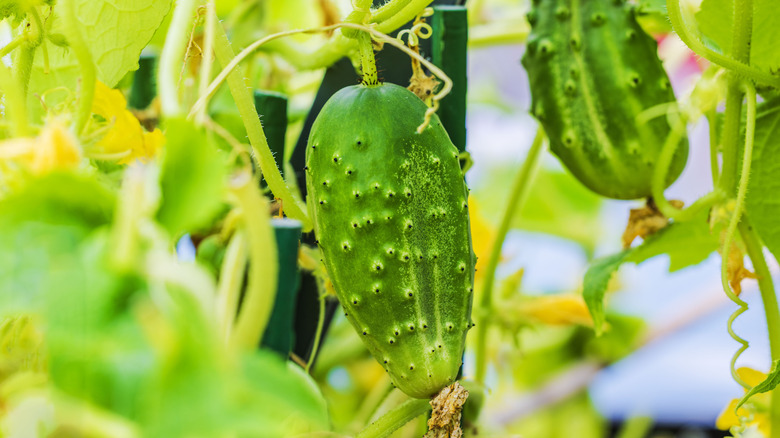
When choosing a cucumber variety, prioritize finding one you'll want to use often, depending on whether you love pickling or chopping them into salads. Select a parthenogenetic variety to save yourself extra work — hand-pollinating is possible, though, if you have your heart set on a different type. Look for the flowers the cucumbers begin to sprout. Male flowers appear first and are smaller and in clusters, female flowers show up around a week later, singular and on vines. Pick a male flower, remove the petals, and brush the flower's column against that of a female flower. You'll do this weekly until you see fruit growing.
Whatever variety you choose, some general tips for starting an indoor kitchen garden apply; namely, ensuring plenty of light. Choose a sunny window-adjacent space, and supplement with grow lights if needed. Make sure you have enough room, too. If you don't choose a bush variety, the cucumbers will climb, and you'll need to add a trellis. Trellises can be a good idea either way, if possible, as they encourage air circulation and mean the fruits aren't crowded and competing for sunlight and nutrients. Space plants one to two feet apart on a trellis depending on their varieties.
Your container should have plenty of drainage holes and should be about a foot deep. For soil, use something well-draining but nutrient-rich — it can help to mix compost in. Keep soil moist but be careful not to let it get waterlogged. Fertilizer also helps — once you see flowers, choose one that has more phosphorus and potassium rather than nitrogen, which can favor flowers over fruit. When cucumbers reach six to eight inches, snip them with scissors and enjoy.