

Next Time You Deglaze A Pan, Reach For Orange Juice
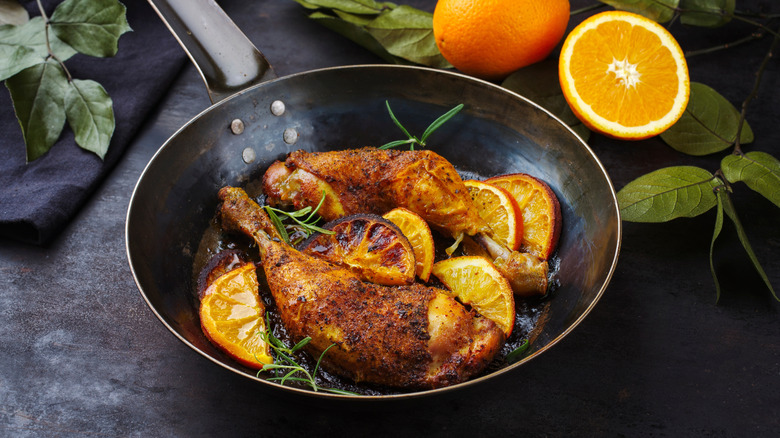
Deglazing is that magic moment when a crusty skillet goes from "browned" to "sauced." After everything sears up nicely, a layer of caramelized bits sticks to the pan, and if you add liquid while the surface is still hot, you can lift and dissolve those remnants, incorporating them into a nuanced, rich pan sauce. It also makes washing up much easier, which is reason enough. You've probably encountered this technique utilizing wine or broth, which are the traditional go-to deglazing liquids, but hear me out: try it with orange juice.
Like wine, orange juice has a natural acidity that loosens the crust, which is called the fond. Also like wine, the juice is high in natural sugars, which warm and tighten up, reducing into a lustrous glaze. Additionally, the flavor will round out as it matures; the initial sour-sweetness steps back and intermingles with the burned bits, the result of which is a cohesive, cooked-orange flavor integrated into the savory base that was already forming in the pan. Because of the zesty, fragrant citrus oils that will bloom when they heat, orange juice definitely doesn't belong in every skillet or every recipe. Because it pulls a dish in a clear direction, it isn't as neutral or universal of a flavor as broth or wine, so it works best when you want the citrus to say something.
Orange you glad you deglazed the pan

You'll want to introduce orange juice deglazing to dishes where the citrusy sweetness won't feel out of place. In the veggie realm, anything that already likes caramelization, like carrots, onions, or fennel, will work especially well. Mushrooms might be weirder, but then again, an OJ pan sauce with dry-sautéed chanterelles and the right amount of butter served over a delicate white fish like turbot could be incredible.
Proteins with a decent amount of fat work best with this method, because the acidity in the juice cuts through it, and the caramelized sugar helps the glaze cling. A good beginner's guideline is to try it out in recipes that already call for orangey additions, like duck a l'orange or a fig and citrus lamb chops recipe. Remember, the juice is naturally acidic, so it won't play well with cream, would get lost in a tomato-based sauce, and so on.
And do pay attention to proportion. A splash is enough to dissolve the fond and pull it back into the food, but much more than that will throw off the ratios. Because it reduces quickly, the sugars can burn if the pan is screaming hot, so don't take your eyes off of it. Let the fond loosen, then lower the heat so the juice thickens slightly, but not so much that it has the viscosity of syrup. Once you've mastered the art, you can play around with flavors, depending on the other components of the recipe.
Which kind of orange juice should you use?

It's worth noting the delineation between bottled, concentrated, and fresh-squeezed versions, since they all have slightly different qualities and culinary applications. Bottled juice cooks quickly and stays light, because its sugars are fairly diluted and the citrus oils are brighter and more volatile. Orange juice concentrate has more sugar and a deeper, more "cooked" orange flavor packed into a smaller amount of liquid, so it tightens faster and gives the glaze a dense, marmalade-y quality. If all you have is the super extra thick pulp variety, strain it first, because all that fruit fiber will create an undesirably mushy texture. You can also use a squeeze from a fresh fruit, which will give the purest, brightest flavor. Think of orange juice as a seasoning, and adjust your salt gently, since the sweetness affects the salinity-perception balance, and add any final aromatic herbs or butter off the heat.
Whichever style you use, the orange juice deglaze really shines in quick stovetop dinners where you want a pan sauce with some personality but don't want to use a bottle of cooking wine. A skillet of chicken thighs browned in their own fat, deglazed with a splash of OJ, loosened with a spoonful of mustard, tossed with a handful of mild, meaty Castelvetrano olives, and finished with a pat of butter or a drizzle of Calabrian chili oil, will look fancy and taste layered and incredible. Orange juice is a great way to wake up a pan sauce that was already headed in a good direction.