

The Extra Step You Should Be Adding To Your Instant Coffee Routine
We may receive a commission on purchases made from links.
When java lovers think of "brewing," chances are that hot water comes to mind. But, instant coffee (like cold brew) totally dissolves in cold water, also. In fact, cold water is the key ingredient for making a knockout cup of instant brew — and one of the 11 common mistakes folks make with instant coffee is not making a cold water paste first. It's a quick step that helps eliminate instant coffee's most infamous drawback: a chalky mouthfeel.
Instant coffee is made from real brewed coffee beans, which get steeped into a thick, concentrated liquid, then freeze-dried into powder or crystal form. Whipping up a cold water paste helps proactively break down the starchiness within each granule, which keeps them separated and clump-free during their storage tenure in the jar, but can prevent the granules from fully dissolving at brew time. More specifically, that chalky powder is called amylum, and it's a complex carbohydrate that's better water-soluble with a little extra help.
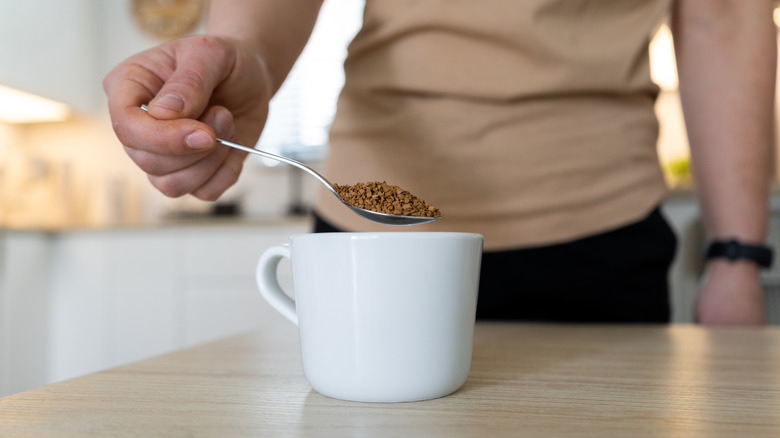
To make a cold water paste, simply dump your instant coffee powder or crystals into the bottom of your mug as normal, then add just enough cold water to wet the coffee, and let the combination set for a few moments. If you've ever made a flavorful cup of matcha tea, then the process will likely look somewhat familiar. As the coffee absorbs the water, that amylum dissolves, creating a paste-like consistency that mixes better when you add in the hot water to brew your java, leaving no gritty coffee textures behind.
Make a quick cold coffee paste, matcha-style
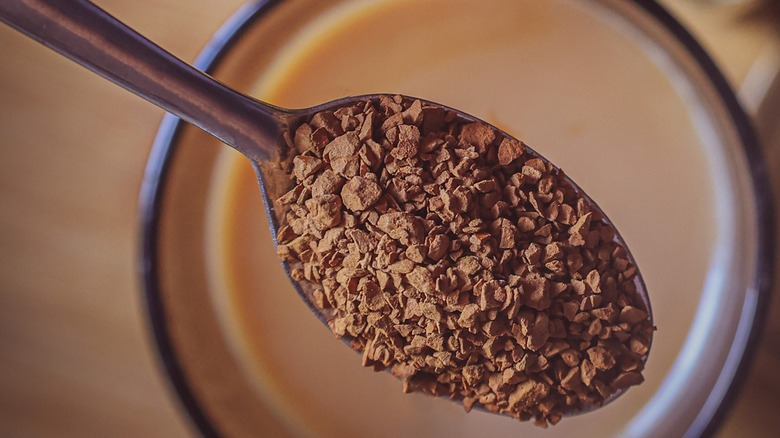
As for that hot water, there's ideal coffee-to-water ratio that'll keep you from making a major measuring mistake. Depending on your unique strength preference, 1 to 2 teaspoons of instant coffee per 6 to 8 ounces of water is generally a solid jumping-off point.
For the toastiest results, warm your mug first by filling it with boiling water (a step made even easier if you happen to own a quick-heating electric kettle, like Bodum's Bistro Gooseneck Water Kettle). Allow that hot water to sit for a minute or two to warm the ceramic, then dump it out. Plus, since the ideal water temperature for brewing instant coffee is 176 degrees Fahrenheit (just below boiling), the leftover water in your kettle will have cooled to the perfect brewing temperature after the mug has had a chance to warm.
Instant coffee is convenient and virtually indestructible — and, here at Tasting Table, Pilon Instant Espresso is our go-to, all-time favorite instant coffee brand, for the record. By enlisting the impactful help of a cold water paste, your instant brew can be just as flavorful as it is utilitarian.