

This One Baking Method Will Solve The Domed Cake Problem
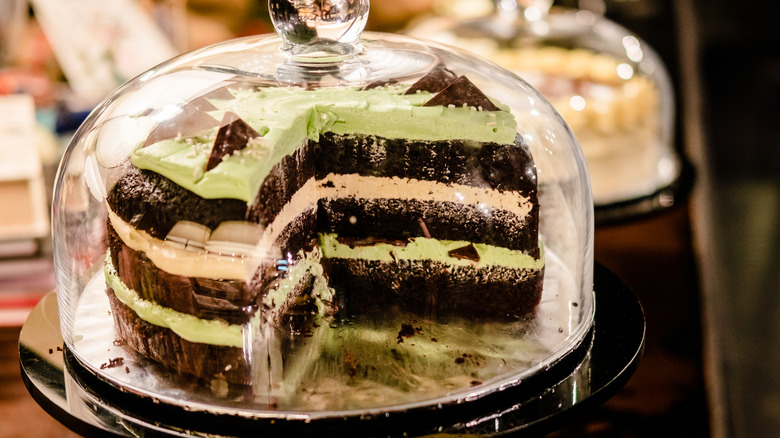
What's something that may not matter to casual bakers, but can be endlessly frustrating to those who want to go pro? The answer is cakes with giant domed tops, which are highly inconvenient when stacking a fancy layer cake. According to Eric Lanlard, baker, pastry chef, author, and TV host of "Baking Mad with Eric Lanlard" and "Glamour Puds," one way to banish this problem is to re-examine the creaming step found in many recipes.
Domed tops are the usual reason why layer cakes lean and become a disaster, and excessive doming is also a sign of uneven baking, so the texture of the cake may suffer. In an interview with Tasting Table, Lanlard revealed that the reverse creaming technique produces evenly-baked cakes with flatter tops. "Instead of creaming butter and sugar upfront, you create a sandy, breadcrumb-like base," he explained. Reverse creaming mixes the dry ingredients with the butter first, coating the flour in fat." He added that this step "reduces gluten formation, leading to a finer, more even crumb."
After incorporating wet ingredients like milk and eggs, those crumbs of butter and flour will turn into a regular-looking batter. However, the resulting cake will be far superior. "Because the batter is more stable and doesn't develop strong gluten strands, it bakes flatter," Lanlard said. You'll probably still have to slice a few centimeters off the tops, but the job (and your whole cake-making process) will be easier.
Reverse creaming has lots of benefits, but doesn't work for every cake
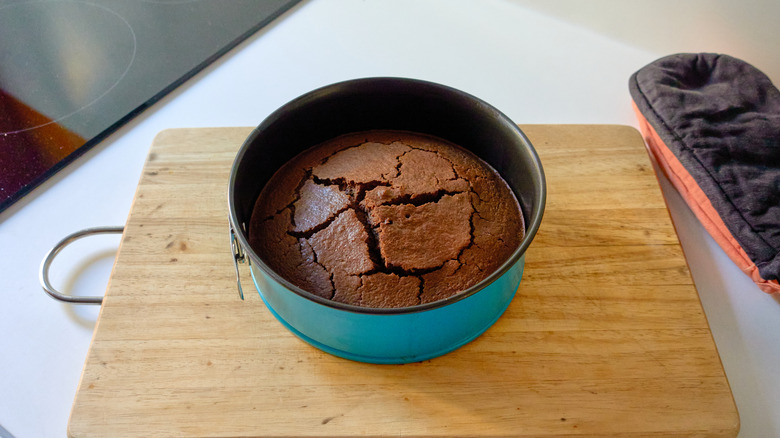
Lanlard told us that reverse creaming is best for "any cake where you want a tight, velvety crumb and smooth surface." Layered celebration cakes, pound cakes, and velvet cakes are top candidates, as are classic white cake and yellow cakes. Reverse creaming will do a lot to keep these baked treats nice and level, but if you still can't seem to bake a flat cake, try turning down the heat. Too-hot temperatures result in uneven baking and (you guessed it) excessive doming.
Besides controlling the dome effect, the best thing about reverse creaming is that it keeps cakes tender by reducing gluten formation, yet makes them sturdier so they can bear more weight. Compared to traditional creaming, reverse creaming incorporates a lot less air into the batter, resulting in a crumb that is dense, yet soft. However, this effect isn't beneficial for every cake out there — it can actually ruin ones that need a lot of air in the batter.
"Anything that depends on whipping air into eggs or butter first will lose its volume if reverse-creamed," Lanlard explained. He said to never reverse cream for "sponge cakes relying on high aeration," like a a genoise sponge cake, which uses whipped eggs for its rise. Adapting the recipe to use reverse creaming will throw the whole thing off. The same goes for light and fluffy angel food cake or its equally delicate cousin, chiffon cake.