

The One Rule To Follow For An Organized Fridge 100% Of The Time
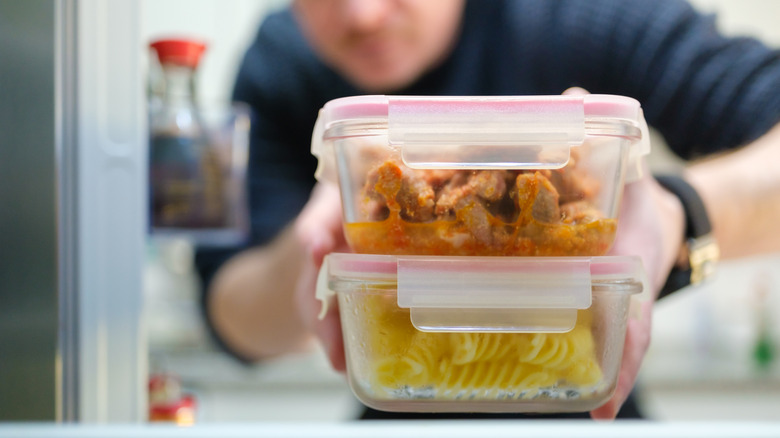
Something I learned from working in high-stress, high-volume kitchens for years is that a system only works if you pick it and stick with it. A fridge only stays organized if you decide, once and for all, what lives where — and you keep that geography and economy of space intact from that moment on. With this in mind, I follow this rule for an organized fridge: pick a system and stick with it.
This is the way of the warrior that keeps a professional kitchen running during a long service, and as teams turn over from shift to shift. Ingredients function like tools, and every tool needs a home. When everything has a fixed landing place you stop using mental math to negotiate where to stash things, and they're always where you need them when you look for them.
Eggs always go on the bottom left shelf. Leftovers and meal prep sit beside them, labeled in clear fridge organization containers with a name and date. Cheese stays in the cheese drawer. Short tubs of sauces or pastes — think things like curry, various types of miso, or Korean gochujang – all belong on the low middle shelf. That way jars can line the sides of the highest shelf — tallest in the back, shortest in front — so you can see the full population at a glance, with boxes of berries or other "use soon" items front and center. Cartons and bottles can then go on the door, organized by type and like with like; mustards and mayonnaises, jellies and jams, etc. The specifics might shift throughout seasons, but the general layout never changes.
Organizing your fridge like a professional chef changes the way cooking feels — there's a feng shui to it. The very first step of a cooking project starts in the fridge, and if you're greeted by a sour, overstuffed jumble of decomposing odds and ends, the whole thing is off to a bad start.
Feng Shui for your fridge
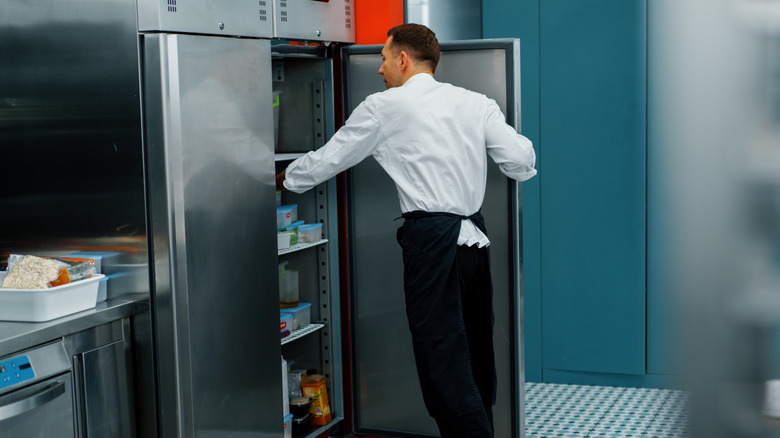
When a kitchen space is calm and legible, it's easier to think clearly about what you're making, allowing room for the more ephemeral creative impulses to unfurl. Just like in a well-oiled restaurant walk-in, the more structured and reliable my home fridge is, the more confidently I can cook. There's no scanning every shelf for the festering feta, no hectic rummaging in the fetid produce drawer beneath a pile of wilted lettuce and flaccid daikon for the half-cut citrus needed to finish a dish. Everything I reach for sits where it always sits, organized so the produce stays fresh. This steadiness gives the task at hand room to breathe, allowing for both thoughtful choices and spontaneous ideas.
The visibility in this system also cuts down on waste, since nothing is hiding in a cold corner growing fur. A regular review-and-reset ritual and a deep clean of refrigerator drawers — especially before a big shop — is a good habit to build. It brings a movement of new, active energy into the space, which is an actual feng shui principle. I try to touch and evaluate everything, toss neglected items and wipe stagnant, sticky surfaces, and just generally pull any errant ingredients back into the system. There may not always be a need for a deep clean — just a short circuit through each shelf to see what's drifting toward its expiration, what needs to be moved forward, and what can be repurposed.
This ritual keeps the space responsive to how I'm living and eating at that moment. When the system has a commonsense order to it — where like goes with like and everything has a home that it instinctively returns to — it's sustainable. The cooking projects that follow are more efficient and more intuitive, because the first step doesn't energetically derail you.