

10 Foods To Eat When You Have A Cold – And 6 To Avoid

As much joy as the holiday season brings — with its festive parties, family feasts, and (if we're lucky) gorgeous snowflakes — there's also a good chance that one of the merrymakers around you is suffering from a cold. Lower temperatures can slightly weaken the immune system, and gatherings are hotspots for the transmission of viruses like the common cold. When you start to feel ill, it's a good idea to keep tabs on your diet to make sure that you are nourishing yourself appropriately. Of course, this is also true even when you are in tip-top shape!
I am a nutrition coach with a background in food studies, so I've brought my critical eye to the table along with the insights of two experts: Christine Byrne, MPH, RD, and owner of Ruby Oak Nutrition in Raleigh, NC and Alyssa Smolen, MS, RDN, and CDN. Their observations make it clear that what one should eat when sick largely depends on symptoms and personal preferences. "It's better to get in nourishment rather than focus on trying to eat the 'right' foods," Smolen says. "Lacking nutrition can hurt the healing process and slow down recovery." As such, the following foods and beverages are suggestions rather than prescriptions. You are the expert of your own body, so take into account your unique symptoms, needs, and desires before filling up your grocery cart.
Eat: Spices and seasonings

Registered dietitian Christine Byrne noted that spices like turmeric and cinnamon shouldn't be considered miracle cures for a cold. Even though they can, alongside a well-balanced diet, support health and immunity, their effects might not be immediate and are inconsequential if you aren't taking care of your health holistically. Byrne, therefore, recommends adding spices to food not because they have magical powers but because they have vibrant flavors. If you're congested, you might need that extra burst of pungency to enjoy your meal — or even find the appetite to eat it in the first place.
Spices like turmeric and ajwain seeds offer lovely flavors and may have some medicinal benefits. Again, these spices are not surefire ways to unblock your sinuses, but it wouldn't hurt to include them in your everyday diet. Turmeric contains curcumin, which is packed with anti-inflammatory and antioxidant compounds. This golden spice should be consumed alongside black pepper to increase the curcumin's bioavailability, perhaps in a dal, curry, or golden milk. Meanwhile, ajwain seeds are believed to have antibacterial and anti-inflammatory benefits and can be boiled into a hot cup of chai or added to rice.
Drink: Smoothies

You may be tempted to reach for a milkshake to soothe a sore throat, but dietitian Alyssa Smolen recommends opting for smoothies instead. Not only can they alleviate some of that pain, but they are also nutrient-dense, hydrating, and, as Smolen notes, require very little effort to prepare. Smoothies are especially practical if you don't have the appetite to eat solid food; you can add rice and vegetables to your smoothie, and, depending on the other ingredients, you might not even notice that they are there.
Even though a little coolness can help soothe your throat, it's still worth monitoring the temperature of your smoothie. Depending on your symptoms, you may not want an ice-cold smoothie that makes you feel like your body temperature is plummeting. If you have the energy to follow a recipe, try this ginger cinnamon pear smoothie. Besides getting in a dose of fruit, ginger is commonly used to help boost the immune system.
Avoid: Excessively spicy foods
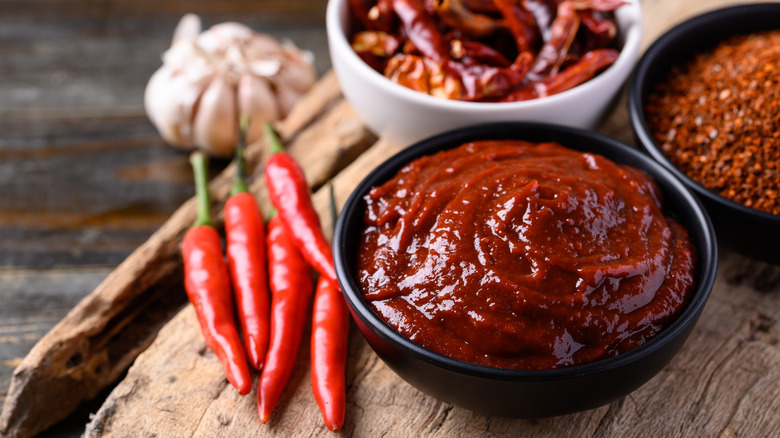
As much as you may want to believe that a spicy bowl of curry or a dab of Carolina Reaper hot sauce will "burn off" all the bad microorganisms wreaking havoc in your body, Christine Byrne recommends that those who are experiencing nausea, vomiting, and/or diarrhea think twice before consuming such foods. Not to mention, an irritated throat could only feel worse when confronted with a powerful pepper.
Instead of relying on hot spices to add flavor to food, tap into the potential of sweeter spices like cinnamon and nutmeg. And if you simply cannot omit the peppers, reach for milder varieties like poblanos or mild jalapeños when battling a cold. Anaheim peppers are likewise well-suited for milder meals. For extra protection, remove the seeds and pith of each pepper before chopping them. That's where capsaicin, the compound responsible for setting your mouth on fire, is stored in abundance.
Eat: Garlic
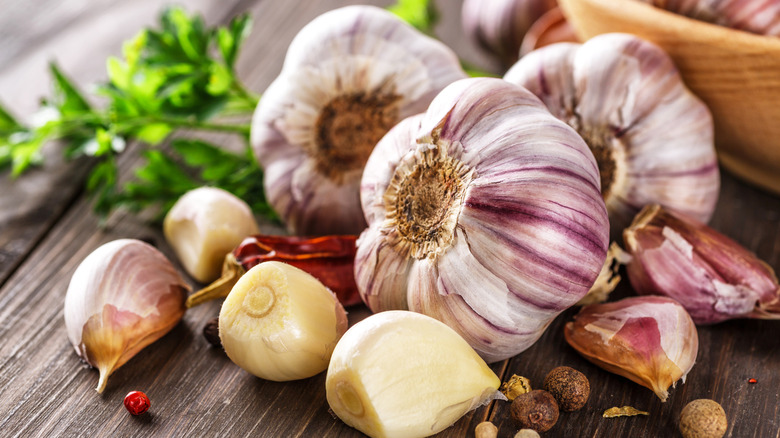
Vampires hate garlic, and so does the snot monster. One of the key compounds in garlic, alliin, is particularly celebrated for its role in supporting the immune system. Garlic's efficacy largely depends on how it is processed, but in general, once a bulb has been smashed or chopped, the alliin becomes allicin, and the benefits are unlocked. After that, allicin may transform into other organosulfur compounds, expanding garlic's potential as an anti-inflammatory, antimicrobial, and antioxidant powerhouse.
Raw garlic is especially recommended for its enzymatic potential — heat can affect the viability of alliinase, the enzyme responsible for coverting alliin into allicin. However, you can also wait 10 minutes between chopping and cooking garlic to mitigate this effect. While we're on the topic, you should think twice before scraping those garlic skins from your cutting board into the trash can; they offer antioxidants and nutrients that can help enhance immunity.
Avoid: Too many highly caffeinated beverages

Caffeine consumption isn't a dealbreaker when you have a cold, but it can certainly still be managed to support your recovery. Although holding and sipping a hot cup of coffee can be comforting when you feel under the weather, caffeine is considered a diuretic. This usually isn't a problem with one or even two cups of coffee because the effects are so mild. Nevertheless, I would caution against reaching for a caffeinated comfort beverage more than three or four times a day. If possible, check the caffeine content of beverages prior to ordering them at coffee shops; for reference, many of Starbucks' most popular 16-ounce drinks contain over 200 milligrams of caffeine each, and the FDA's recommended daily intake for adults caps off at 400 milligrams per day.
To be clear, I'm not telling you to eliminate your daily cups of joe while recovering from a cold. Far from it, actually, since caffeine is a drug — and I don't want anyone having to fight off withdrawal symptoms in addition to a bad cough or sore throat. However, if you feel up to it, you can try slightly reducing your caffeine intake, perhaps by opting for tea instead of coffee. Remember that black and oolong teas still contain caffeine, and, of course, energy drinks can contain a few hundred milligrams apiece. No matter what, sip some extra water for each caffeinated cup you enjoy.
Eat: Ginger
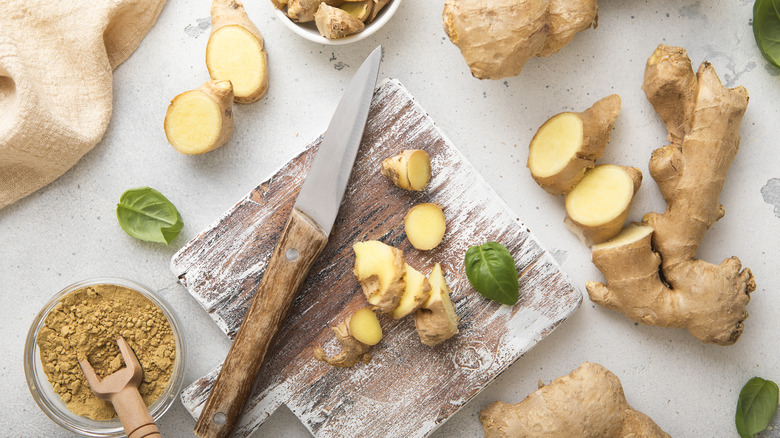
Odds are high that at your local juice shop, tiny bottles of ginger shots are being sold for $5 a pop, if not more. These cute little bottles serve a purpose, even if they are not as effective as our sore throats and congested noses wish they were. Gingerol is a compound in ginger that is believed to help fight inflammation, microbes, and free radicals in the body. The shots contain concentrated ginger and its myriad active components, and while they still might not be as powerful as high-dose supplements, it wouldn't hurt to incorporate them into your diet.
Rather than shelling out major money at the juice shop, have some foresight and make these ginger wellness shots at home. Because you might not be able to muster up the energy to be in the kitchen while sick, we suggest freezing a few for when you need them most. You could even add these frozen cubes to soups and smoothies.
Eat: Onions

Did your grandma ever stuff onions into your socks while you were ill? This home remedy is steeped in lore and probably holds no merit — at least, no scientific studies have confirmed its usefulness. Eating onions, on the other hand, might be beneficial to your immune system. They're packed with vitamin C and antioxidant and anti-inflammatory benefits, and eating onions may even help relax your airways.
Not everyone enjoys raw onions, so don't feel pressured to eat them that way. Cooking methods can affect the bioavailability of onions' active components in different ways, so you might want to plan multiple recipes where onions are sauteed, boiled, baked, and fermented. For instance, you might make an easy French onion soup on the stovetop or a hearty Tennessee onions medley in the oven. To take it a step further, use multiple varieties, including red, white, and yellow.
Avoid: Alcoholic beverages

Your grandma might have snuck you shots of a moonshine-based cough syrup when you were sick as a kid. It's a common home remedy in Appalachia, believed by many to help fend off sore throats and coughs. As is the case with hot toddies, though, it might not be the alcohol working its magic, but the other ingredients (like ginger and lemon) instead. After all, there's a noticeable lack of scientific literature documenting the efficacy of moonshine in isolation when it comes to treating a cold.
Indeed, Christine Byrne recommends not consuming alcoholic beverages while under the weather because they are dehydrating and counterproductive to your immunity. If you're really craving a nightcap or want to drink socially, try non-alcoholic brands like Sentia Spirits, Fre, and Athletic Brewing. Crafting tasty mocktails at home is a breeze if you have the right ingredients, equipment, and recipes, and you might just find a new favorite drink to savor year-round.
Eat: Fermented foods with probiotics
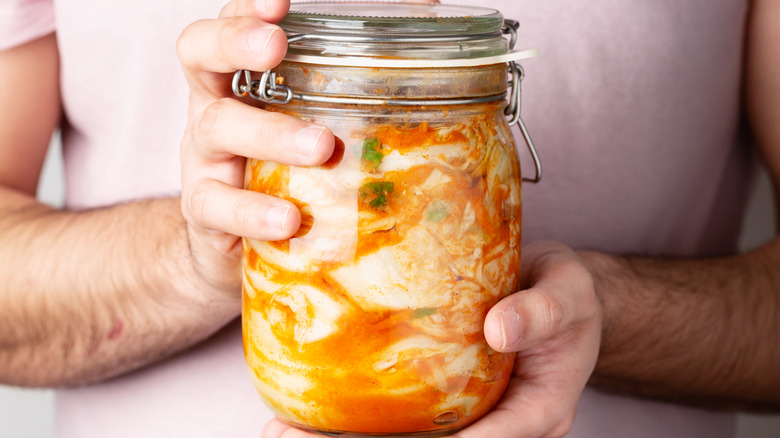
Probiotics took the world by storm several years ago, and the scientific literature that supports their consumption only keeps growing. Probiotics can boost your immunity by nourishing a well-balanced gut microbiome.
It's important to note that fermented foods are not always sources of live probiotics. For instance, coffee beans are fermented, but you won't find probiotics in a cup of joe. Similarly, sourdough bread and tempeh are devoid of live probiotics. Even foods that do contain live microorganisms — such as kimchi, sauerkraut, kombucha, and other fermented foods from around the world worth trying — may not have as many probiotics as you would expect. Besides, these probiotics aren't handpicked by nature to support immunity. Some of them might even perish in your gut before having the chance to do any real work.
So when you have a cold, look for products that feature added probiotics. Keep your eyes peeled for the strain and the quantity. I recommend a brand like The Coconut Cult, which offers 25 billion probiotics per serving of plant-based yogurt.
Eat: Broccoli
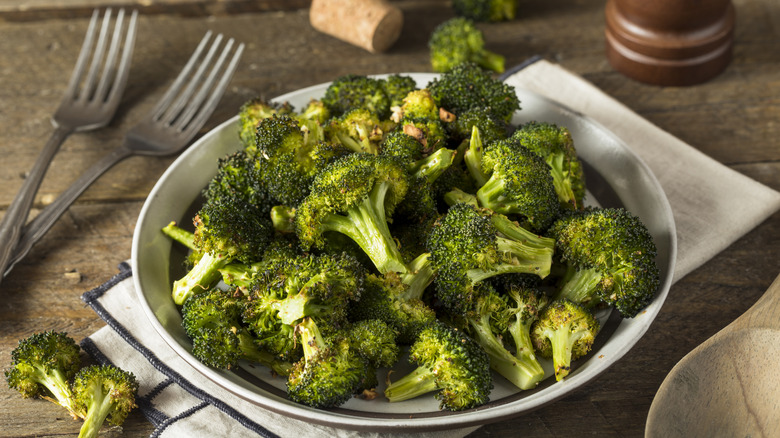
Oranges may be the first produce item that comes to mind when you think of vitamin C, but broccoli is worthy of your attention, too. The cruciferous vegetable is chock full of vitamin C. In fact, just 1 cup of raw broccoli offers 90% of the recommended daily intake of it. If you can't stomach raw broccoli while sick with a cold, try steaming it instead. This simple steamed broccoli recipe only requires broccoli and water, but you could dress it with a bit of lemon juice, olive oil, and/or salt and pepper.
Aside from vitamin C, broccoli is packed with antioxidants and glucoraphanin, a compound that transforms into sulforaphane in the body. Sulforaphane is an antioxidant thought to have many benefits, including protection against free radicals and, potentially, the ability to mitigate lung inflammation. More research is needed to uncover the full picture, but the initial findings regarding broccoli and immunity have been promising.
Avoid: Fried, fatty foods

If you're sitting in front of the TV for hours on end while sick with a cold, that bag of chips might just be calling your name. After all, it's easy to get bored when you lack the energy to move about, and a good munch might seem like a comforting activity. However, doing so can hinder your recovery, Alyssa Smolen shares. Generally speaking, such foods are low in fiber, and if you are on a fair amount of medication to treat your symptoms, you might already be battling constipation.
You should instead favor foods that support digestive health and bowel regularity, Smolen explains. This could include oats, apples, broccoli, and lentils. Other fried, fatty foods to avoid include french fries, onion rings, and fried chicken. Additionally, you might want to avoid filling up on low-fiber foods, such as refined grains and juices, if you are trying to overcome constipation in addition to your cold.
Drink: Herbal tea

Is it chamomile you're reaching for to relax yourself to sleep, or is it peppermint you're needing to pacify an upset tummy? The selection of herbal teas at your fingertips is incredibly diverse, and each variety is thought to have its own set of benefits. Herbal teas — unlike black, green, and white teas — are typically uncaffeinated and composed of herbs, flowers, spices, dried fruits, and/or botanical roots. Drawing upon the wisdom of nature, traditional medical systems often prescribe herbal teas to remedy everything from a broken bone to a prolonged pregnancy. Naturally, colds are included in the list of afflictions that herbal teas can treat. Varieties with ginger, lemon, honey, and elderberry might be your best bet.
Scientific research is often lacking regarding herbal teas' specific benefits, but that shouldn't stop you from sipping a hot cup. If nothing else, the warm, soothing nature of herbal tea can give you a dose of emotional relief as you recover from a cold.
Avoid: Crunchy foods
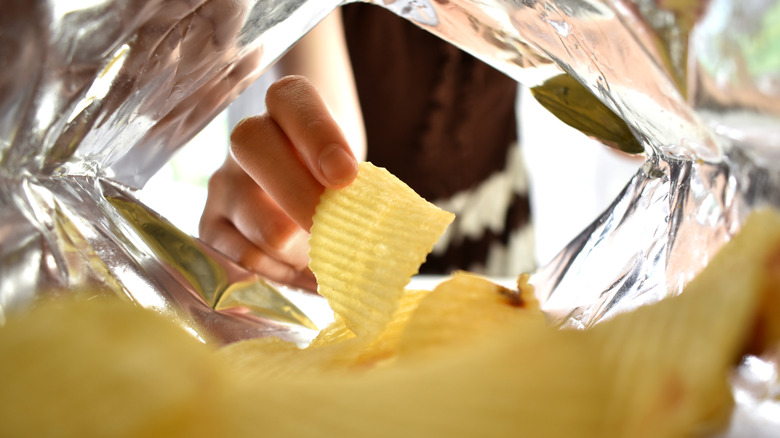
When you have a cough or post-nasal drip, chomping on produce items like apples and celery sticks may not be advisable. Doing so could irritate an already sore throat. So save the Waldorf salad until after you recover, and opt for soft snacks like this sweet and spiced applesauce in the meantime. Other crunchy foods to avoid include chips, nuts, popcorn, rice cakes, crackers, granola, and dry cereals. It's not a matter of whether these foods are healthy; it's a matter of how they might exacerbate pre-existing symptoms.
There are plenty of reasons why one might need to go on a soft food diet, and as a result, there are more than enough recipes to keep folks nourished and satisfied. Bananas, watermelon, peaches, avocados, and cantaloupe are among the soft fruits that you might include in your diet, even in their raw forms. Otherwise, stick to steaming, sauteing, or boiling produce.
Eat: Honey

While it might not have the medicinal potential of cough syrup, honey possesses the same smooth, luxurious texture that lubricates and soothes the throat. Plus, it does have well-known antimicrobial properties, which is why it is frequently prescribed in traditional medical systems around the globe. However, you shouldn't heat honey; its enzymes can deteriorate and become ineffective. For that same reason, it's a good idea to choose raw, unfiltered, and unpasteurized honey. The antimicrobial potential of honey varies based on factors like region, season, and pollination grounds, but you can generally count on manuka honey to have high antimicrobial activity.
Of course, there are myriad ways to incorporate honey into your diet. When it comes to recuperating from an illness, though, try making this honey elderberry syrup. It features cinnamon, cloves, and ginger, in addition to elderberry, another ingredient believed to support immunity. On the more savory end of the spectrum, you could make fermented garlic honey.
Avoid: Acidic foods

Acidic foods and beverages — including orange juice, tomato sauce, and coffee — could be irritating to a sore throat or post-nasal drip, shares Christine Byrne. When your throat is raw, dousing it in something acidic could feel like rubbing alcohol onto an open wound. In other words, your throat might be just shy of catching fire.
Even though orange juice is packed with vitamin C and has almost become synonymous with our perception of a high-functioning immune system, it may not be advisable for your symptoms. Luckily, you can find vitamin C in other foods, such as yellow peppers, broccoli, cantaloupe, and papayas, as well as supplements. Next up, instead of reaching for tomato sauce, use a creamy Alfredo or a simple concoction of olive oil and garlic. Finally, rather than coffee, opt for a less acidic herbal tea, broth, or simply a warm glass of water.
Eat: Soup

Similar to smoothies, soups are hydrating and easy to pack with vegetables and aromatics that are beneficial to your health. Plus, they also have the power to mitigate sore throat symptoms, and they are the epitome of comfort food. Christine Byrne particularly recommends that old favorite, chicken soup, because you don't need to exert much energy to chew it. Additionally, chicken soup has a good balance of nutrients, Byrne says, with proteins, vegetables, and carbohydrates all accounted for. Finally, some scientists believe that this classic recovery dish can help manage upper respiratory tract inflammation. In case you can't rummage up the family recipe or want a simpler version, try this easy chicken noodle soup recipe.
Alternatively, vegetarians might opt to stir miso into clear soup after it has slightly cooled. Miso is lauded for its powerful probiotics and micronutrients, both of which can help support immunity. However, heating miso could kill those very same probiotics, so proceed accordingly.