

The 10 Essential Bakeware Items Every Home Cook Should Own
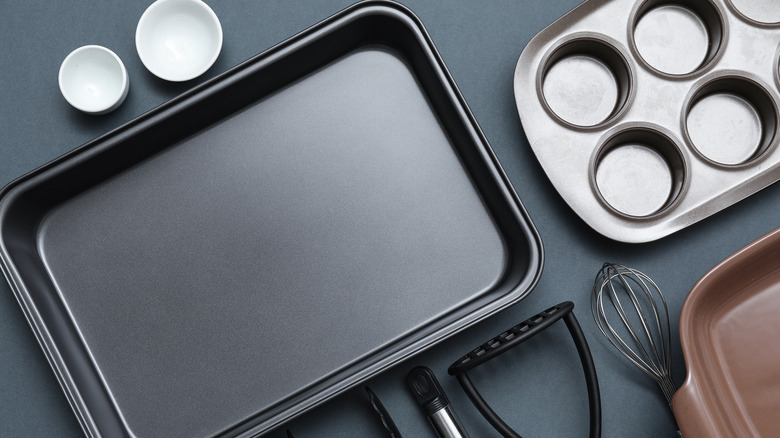
Some people bake to relax, while others need to relax after baking. Although personality factors certainly play a role in this dichotomy, having the right equipment can make all the difference. If you're trying to bake a cake but the dimensions or material of your pan aren't quite right, you'll probably have a trickier time than if you were working with the proper tools. However, that doesn't mean your kitchen cabinets need to be overflowing with bakeware. With a basic lineup of essential pans and a clear understanding of how and when to use them, you're on the right track.
Whether you're slowly building up your baking repertoire and looking for guidance or have no clue where to begin, we're here to lead you in the right direction. I've been selling baked goods my local farmers market for five years, and although I didn't attend culinary school, I've certainly baked far more than the average person. While I've received sage advice from more experienced bakers, I've also learned plenty through trial and error.
This comprehensive list features the essential bakeware items that every home cook should own. And once you understand why some pans are better for certain uses than others, you'll be able to prioritize your purchases based on your needs.
Baking sheet
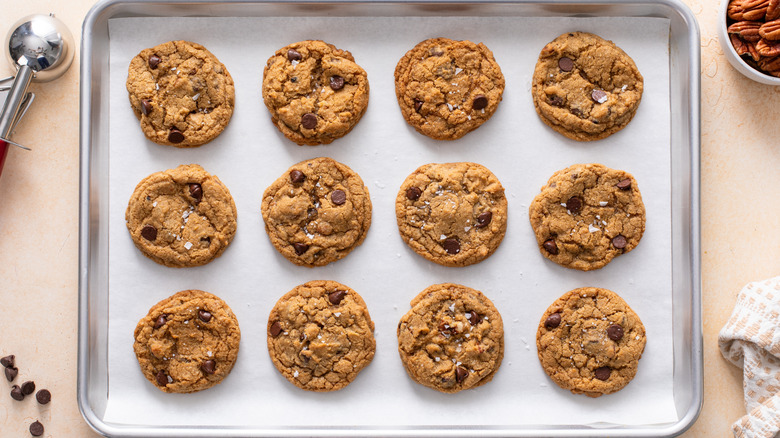
Having at least one baking sheet in your kitchen arsenal is essential for a number of reasons. These are typically made of aluminum, which provides consistent heat distribution and is less likely to warp at very high temperatures. Baking sheets also come in different sizes, so it's helpful to have a small variety to choose from; ultimately, two large baking sheets should cover most of your needs. The standard format is a half sheet pan, which measures 18x13 inches and has a rim. I also recommend getting a quarter sheet pan (18x9 inches), which will come in handy if you aren't baking a large volume of food.
Aside from size variations, the material can also differ and may have a nonstick coating. A nonstick coating is convenient for cleaning up, but it can be less heat-resistant. While you could add a cookie sheet to your bakeware collection, these only have a slight rim on one side, which makes them less versatile for other tasks. Additionally, they tend to be insulated on the bottom, which isn't ideal for roasting. Unless you want to expand your essentials to include "nice-to-haves," a baking sheet will work just fine for making cookies. You can also use it for making granola, scones, roasted vegetables, sheet-pan dinners, and pizza.
Glass pie dish
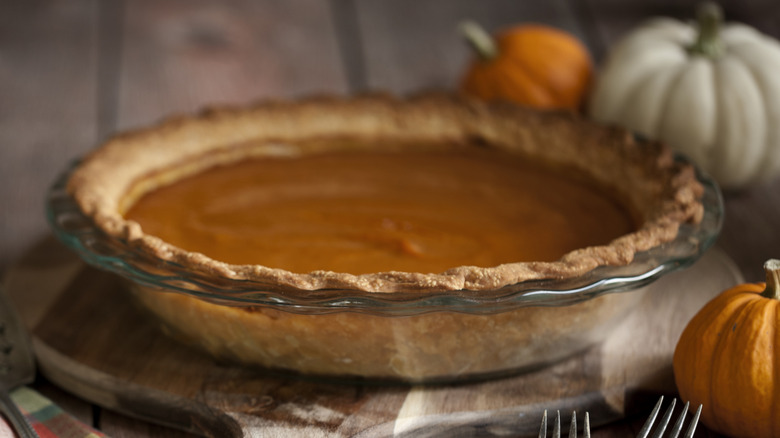
Different materials produce different results when baking, and in some cases, glass is the best choice. Tempered or borosilicate glass (like Pyrex) is ideal, as both materials are sturdy and can endure large temperature changes. Glass also has the benefit of heating slowly and evenly, which can often be the difference between success and failure in the world of baking. It's worth noting that if you're aiming for significant browning, it will be much easier to achieve with a metal pan that conducts heat more efficiently.
Beyond its thermal resistance and effective heat distribution, glass is also helpful for visually determining the doneness of your baked goods. You can see a pie crust start to become golden and avoid the risk of it burning out of sight. Glass pie dishes usually have a 9-inch diameter but the depth can vary, so consider how much filling you plan to use in your pies. This is a pretty affordable option among the bakeware essentials, making it an worthwhile investment whether you're making pies on a weekly or a yearly basis.
Tart tin
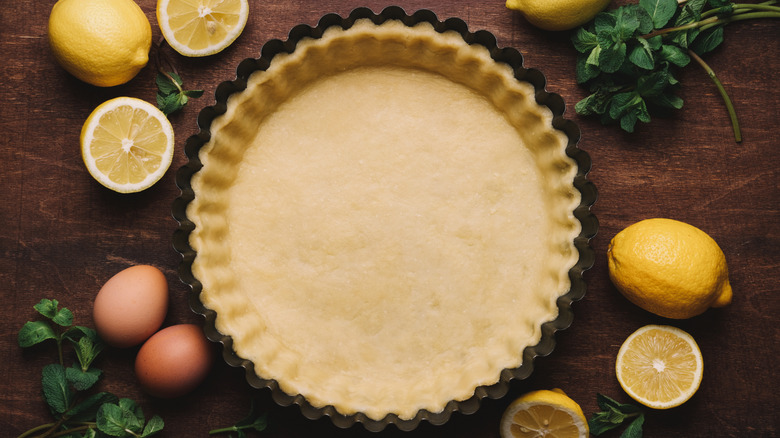
It's easy to dismiss pies and tarts as being pretty much the same thing, but they do have distinguishing features. Tarts typically only have a pastry base and sides and can stand alone for easy serving, whereas a pie's contents will usually spill out unless it's served from the tin. The type of dough also differs, with pies being flakier, and tarts being more crumbly. The filling can be distinct, too — pie fillings are commonly cooked, while tart fillings are often chilled. These are all valid reasons why it's best to use specific bakeware for each.
A tart tin is usually round with straight, shallow sides and a removable base. This makes it easy to remove the tart from the tin for serving without compromising the crust. You may come across tart pans in more angular shapes, or with fluted edges that add embellishment to the sides. Tart tins are typically made of stainless steel or aluminum, and may have a nonstick coating for easy cleanup. These materials offer even heat distribution, ensuring you end up with a golden crust. Besides using this style of pan for sweet and savory tarts, you can also use it to bake quiches.
Muffin pan
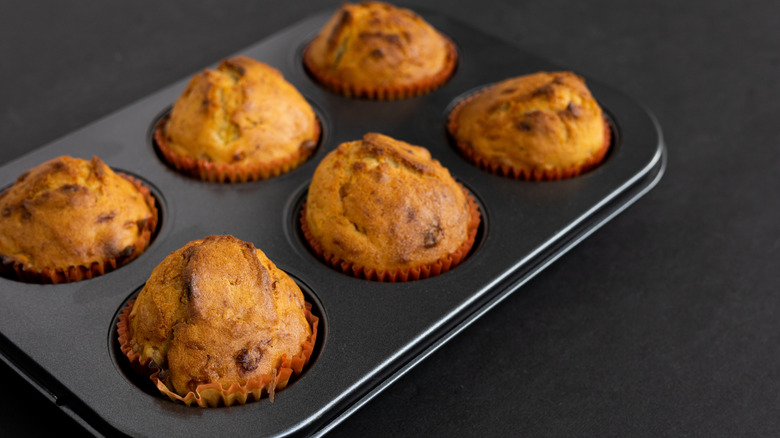
Portion-sized baked goods are a versatile treat that's easy to share — or not. While you typically drop cookie batter in mounds on a baking sheet, muffins each get their own space to grow. Muffin pans usually come with six or twelve cups to hold the batter, and while most recipes use a standard portion size, you can get pans for mini or jumbo muffins. Muffin tins can also be used for other recipes, such as mini frittatas, individual meatloaf servings, granola cups, and mac and cheese.
Most muffin pans are made from aluminum or steel, and some have a nonstick coating, too. The latter makes it much easier to remove muffins from the pan, but you can use muffin liners which achieve the same effect. You can also find silicone muffin pans and liners, which are especially beneficial when baking with ingredients that have a tendency to stick (though you should be cautious when maneuvering the floppy material). Because of silicone's insulating properties, these pans heat up more slowly and evenly. This can work in your favor when making mini cheesecakes or custards, but it makes browning more difficult.
Bundt cake pan
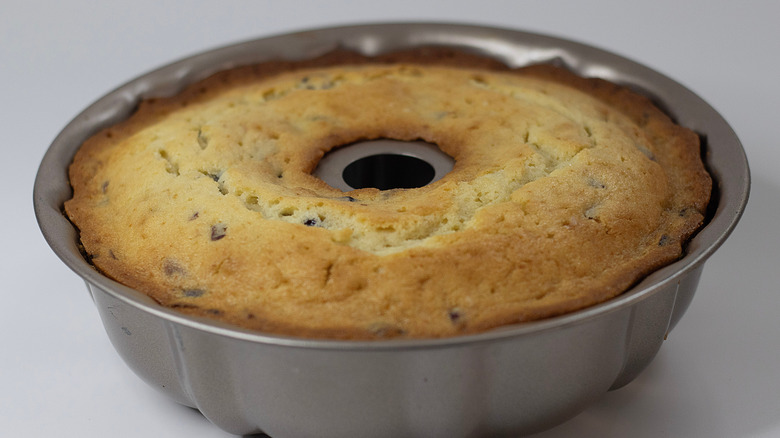
If you're looking to elevate a simple cake, a Bundt pan is a perfect choice. Its shape is still round, but the sides feature a decorative pattern — fluted, ridged, or ornate — and a hole in the middle. These pans were invented in 1950 by H. David Dalquist, the owner of Nordic Ware — a bakeware company in Minnesota — who drew inspiration from traditional Eastern European cakes. The pans eventually gained widespread popularity in the '60s, when a Bundt cake was awarded second place in Pillsbury's national baking competition.
They're usually made from cast aluminum, steel, or silicone, though the former provides more uniform heating. This is especially important since Bundt pans have a larger surface area in contact with the batter than regular cake tins. The hole in the center also allows heat and air to circulate more easily during baking. While you can use a standard cake mix in a Bundt pan, for the best results it's worth using a specific Bundt cake recipe, as these typically contain additional ingredients that promote a richer texture. Even if you aren't entering a cake contest anytime soon, Bundt pans are still a great piece of equipment to have in your bakeware set due to their versatility — you can use them to make bread or even as a jelly mold.
Loaf pan
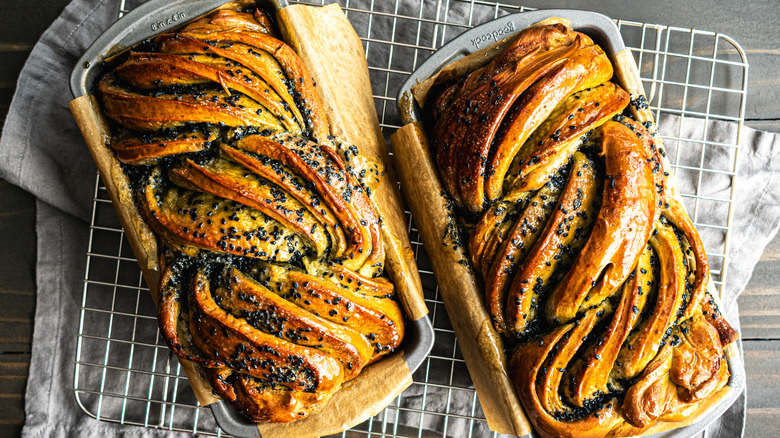
While loaf pans are named for their sandwich bread shape, they can be used for much more than the classic loaves. Quick breads and pound cakes are typically baked in loaf pans, and they can also be used for meatloaf and chilled or frozen desserts.
The rectangular pans usually measure 9x5 inches, but you can buy smaller and larger ones, too. It's always worth double-checking the pan size your recipe calls for to avoid issues with your bake, such as under-rising or overflowing batter. In fact, unless you've tried the recipe before, it's worth placing a baking sheet beneath the pan to catch any spillages. While loaf pans are commonly made from stainless steel or aluminum, there are glass, silicone, and ceramic versions. The pan shape is always rectangular, but some are deeper and narrower, while others are wider and shallower. You'll also see some loaf pans with straight corners and others with rounded corners.
Round cake pan
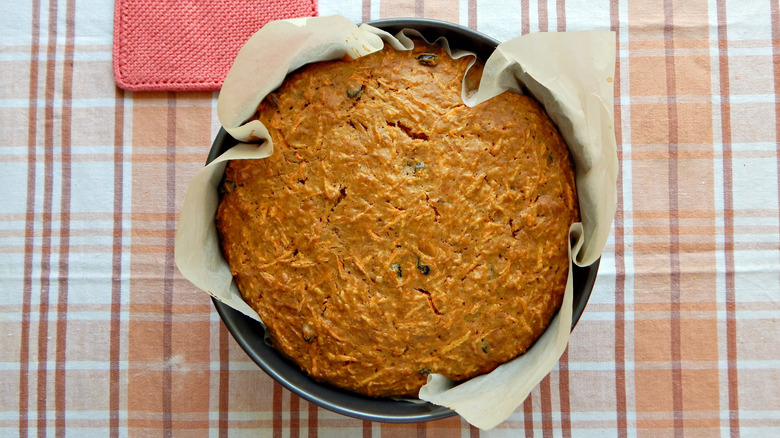
Cakes can take any shape you like, but having a round pan on hand is always convenient. If you have two identical pans, you can make layered cakes in half the time — just be sure to use the same amount of batter in each so each layer is the same size. Round cakes are often easier to slice evenly, and they tend to cook more uniformly, which helps prevent the edges from burning. You can bake all sorts of goodies in these pans, including cheesecakes, quiches, shortbread, and pizza.
A standard round cake pan usually has an 8- or 9-inch diameter, with sides that are roughly 2 inches high. If the sides are any taller, your cake might not rise properly; if they're lower, there's a risk of the batter overflowing. For optimal results, a light aluminum cake pan is again your best bet, as it will heat up more quickly and evenly, ensuring your cake rises properly. Just remember to grease or line the pan beforehand to make your cake easier to remove once it's ready, and flip it onto a wire rack to cool.
Square or rectangle pan
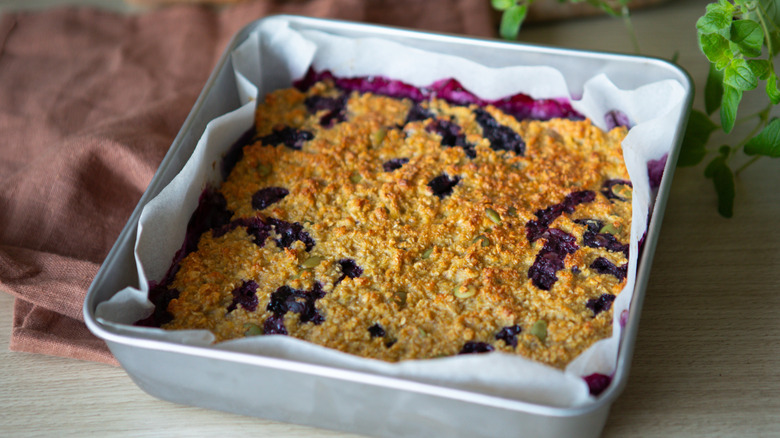
If you want to bake brownies, cornbread, or a cake with corners, a square or rectangular pan is the way to go. Like round pans, square pans typically measure 8x8 or 9x9 inches and are around 2 inches deep. The standard size for rectangular pans is 9x13 inches, and they hold roughly twice the amount of batter as an 8x8-inch square pan. Both shapes come in the usual range of materials — glass, ceramic, steel, or aluminum. Again, the latter is the most versatile for efficient and effective baking.
Square and rectangular pans have a larger cooking surface area than round pans so they promote better browning. This can be a plus for some recipes but is less ideal for things like cheesecakes. If you're using a different pan than what the recipe calls for, check that it can be adapted successfully. Pans with corners will also be a little trickier to grease and clean, so do your best to get into the nooks and crannies to ensure your baked goods can be removed smoothly.
Cast iron skillet

While you might not think of cast iron skillets as bakeware, they're more versatile than you might expect. One of the reasons people love cooking with them is that the heavy-duty material retains heat incredibly well. In turn, this allows food to cook uniformly throughout while developing a nice, browned crust.
Cast iron skillets are fantastic for plenty of baking recipes, including crumbles, crisps, giant cookies, cornbread, brownies, quiches, and sourdough bread. That said, some baked goods, such as cakes, need a slightly subtler golden tone, so an aluminum or steel cake pan might be more suitable. To get the best results, avoid common cast iron skillet mistakes by cleaning and storing it properly, and be sure to season your pan regularly. Seasoning a cast iron skillet is less complicated than it sounds — simply clean your pan and apply a very thin coat of neutral oil with a high smoke point, then heat it in the oven to let the oil bond with the iron, creating a smooth, nonstick surface.
Springform cake pan
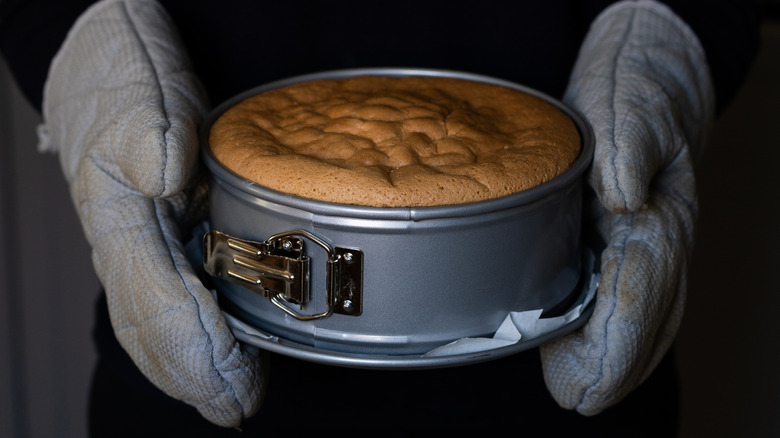
Springform pans are usually round, so they're handy if you want to reduce the amount of bakeware in your cabinets. We've already discussed the benefits of round pans, but springform pans are useful because they make it much easier to remove your cake smoothly. This is especially helpful if you're making something delicate, like a cheesecake or an ice cream cake.
You'll find springform cake pans in a wide range of sizes, but they all consist of two components: an outer ring and a removable base. There's a clasp on the side of the ring to fasten the two sections in place, so there's no need to flip the cake to release it from the pan; just gently slide a knife around the edges, unclip and lift the outer ring, and your cake will remain perfectly preserved. However, since the pan is made up of two parts, it can be helpful to line the bottom with tin foil or place it on a baking sheet, just in case there's a gap in the seal through which batter might leak out.