

Don't Forget These 10 Tips When Making A Cream Cheese-Based Dip
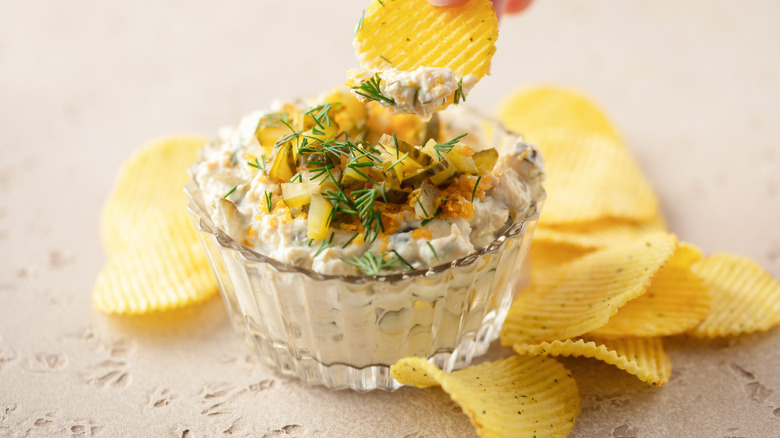
If we pictured Martha Stewart channeling Jane Austen, she might say, "It is a fact universally acknowledged, that anyone planning a party is in need of a dip." The whole concept of party food is a broad one, but c'mon ... is it even a party if you don't have a dip or two? Even when it's just yourself, a cat, and the remote control, a good dip can make it feel like a party.
One thing you'll notice about dip recipes is that a lot of them start with cream cheese. Really, a lot. And why not? It provides a smooth, creamy base that goes well with almost anything, and it has just enough of a cheesy tang to enliven the flavors you pair it with.
While cream cheese-based dips are a slam dunk in general, a little finesse can help yours stand out. They're something I've made a lot, both at home and in my past career as a trained chef and restaurateur. When you cater to hundreds of people at a time, you pick up a trick or two! With that in mind, here are my top tips to help you up your dip-making game before your next party.
Soften the cream cheese first
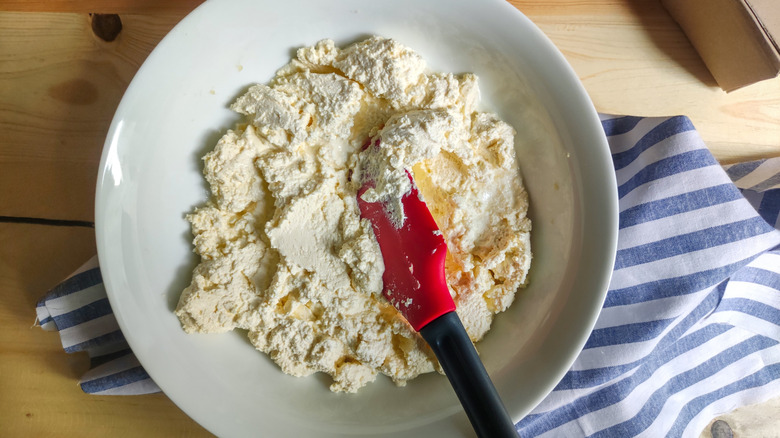
Let's start with the fundamentals. Just about every recipe I've ever seen for a cream cheese-based dip starts with letting the cream cheese soften first — but just about everyone I've ever taught in a cooking class sees it as a place where they can take a shortcut: letting the mixer take care of it.
Seriously, don't do that. Softening the cream cheese is a really important step because if it isn't softened properly, it just won't want to mix with the other ingredients. You'll either end up with lumps of unadulterated cream cheese in the dip, or spend so much extra time trying to beat it smooth that you'll lose any time you saved by cutting corners. So yeah, for a really smooth and creamy dip, make time to soften the cream cheese properly.
I know there will be times when people arrive unexpectedly, or you're absolutely certain you took the cream cheese out of your fridge but actually hadn't (I'm a repeat offender myself on that one). It's okay; you still have time. There are multiple ways to soften a block of cream cheese quickly, and it will make the rest of the job much, much easier.
Don't serve your dip immediately after it's mixed
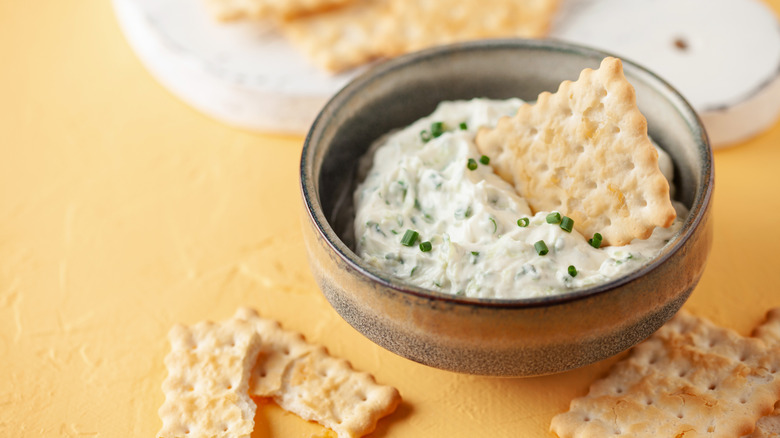
Unless you're in one of those "people showing up unannounced" situations, it's usually not ideal to serve a dip immediately after it's made. And in fact, even if you are, you can usually manage to give your dip a good 30 minutes in the fridge while you're welcoming your guests, getting their coats put away, and serving coffee or drinks.
It's important because a dip is not at its best the second you pull the whisk or spatula from your mixing bowl. For one, it takes time for the flavors in the dip to mature, mellow, and infuse themselves throughout the cream cheese, sour cream, yogurt, or other ingredients (depending on the recipe). Second, the dip will need to sit for a while so it can reach its proper texture. The stabilizers in the cream cheese help thicken it as it sits, so it holds together when you scoop your chip through it.
Finally, if your dip is at refrigerator temperature when you set it out, it will remain food-safe for longer. Moist, high-protein ingredients like cream cheese are a breeding ground for bacteria, so the longer a dip sits out (and the warmer it gets), the chancier it becomes.
Adjust your dip's texture until it's perfect
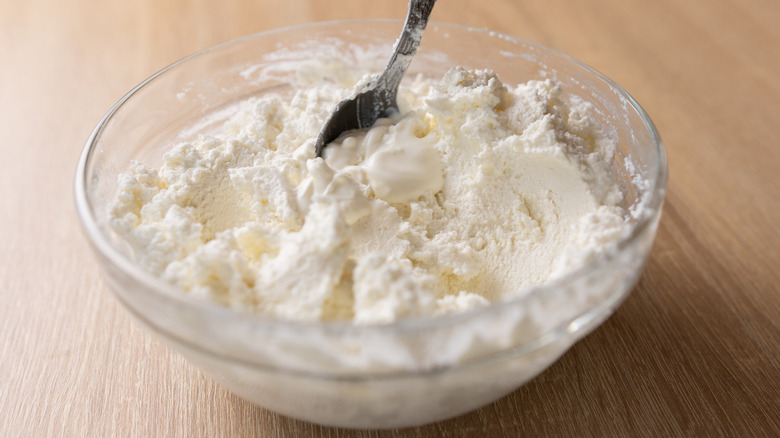
There's no single "perfect" texture for a dip. Some recipes make a stiffer, cheesier dip, while others are relatively soft and creamy. That said, you'll see variation in the texture of a dip depending on the brand of cream cheese, sour cream, and other ingredients you use. So, at times, you may need to tweak the dip after it's been refrigerated to get the consistency you're used to.
You may find, for example, that the dip is thicker and stiffer than you'd like. In those cases, you can loosen it by stirring in some extra sour cream, a splash of milk, or some plain yogurt until it reaches the texture you're looking for. Buttermilk is a really good option for this, too; it adds a funky, cheesy tang. In fact, it's so good in that role that I add it whenever I have it (it's also a great way to use up leftover buttermilk).
If the dip is too thin, on the other hand, you have different options. Softening some additional cream cheese and beating that into the dip is an obvious choice. Extra shredded cheese will also do the trick, or — if it fits with the flavors of the dip and the tone of the party — some mashed-up beans. You could also stir in some dry onion soup mix, which acts as both a thickener and a flavoring in dips.
Match your dippers to the dip's texture
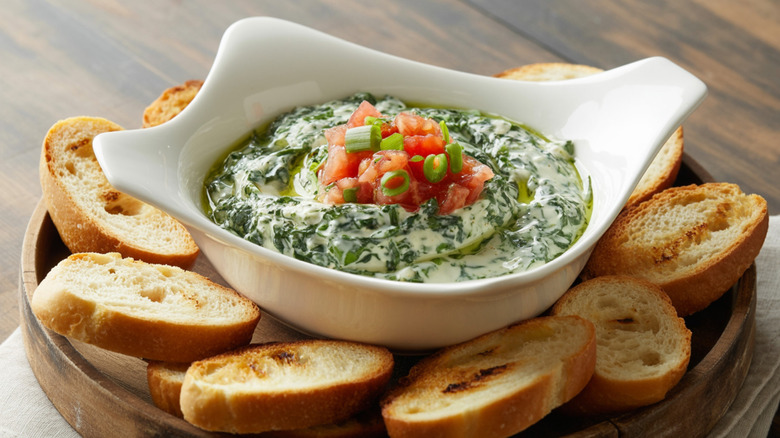
Okay, here's a pet peeve of mine. I mentioned earlier that dips vary pretty widely in texture; some have a soft, creamy consistency, and others are firmer and more "cheese-y." When you're planning out the dips for a party, it's really important to make sure that your dippers are well matched to the dip consistency itself.
We've all had the experience of trying to scoop up a stiff dip with a flimsy potato chip, right? Or crackers that just snap or crumble? It's frustrating and leads to fingers in the dip or dip on your clothing. If you're preparing a stiff dip, you'll want to steer away from easily broken potato chips and opt for sturdier options like vegetables, bagel chips, or pita chips instead. For thinner, runnier dips, set out dippers that are either absorbent (like baguette pieces) or ridged/shaped to hold dip, like scoop-shaped potato chips or tortilla chips, the knotted type of hard pretzels rather than sticks, and the like. Matching the dip and dippers is a bit of an art form in itself, though we have some interesting chip-and-dip combos to get you started.
I'll note in passing that if your dip isn't the consistency you had intended, swapping out the dippers is an alternative to correcting the dip itself. It all boils down to which option is easier for you in the moment.
Don't serve heated dips straight from the oven
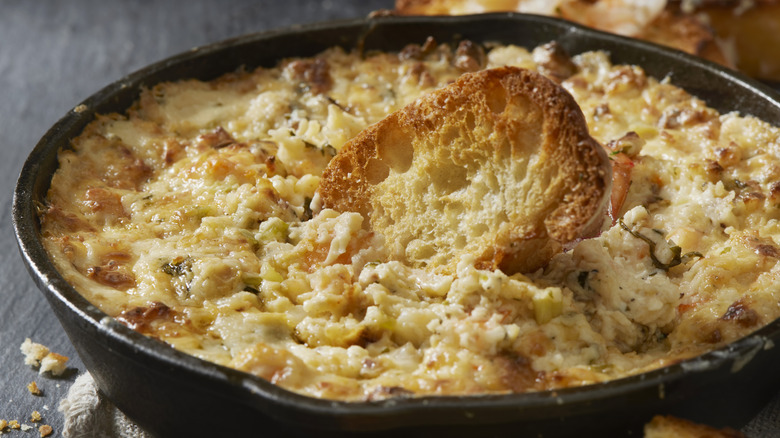
I've already made the case for not serving a dip right out of the mixing bowl. Obviously, refrigerator time is not a factor with hot dips, but there's also a reason why you shouldn't serve them immediately when they leave the oven or microwave.
First, there's always the risk of someone getting a nasty burn (especially after a few drinks), either from the baking dish itself or from hot dip dripping onto exposed skin. Leaving that aside, there are also pragmatic culinary considerations. Hot dips are really runny when they're fresh out of the oven, and it takes a few minutes at room temperature for them to set to a properly scoopable texture. That also leaves time for the temperature to equalize throughout the dip. That's especially important if you've microwaved it, since microwaves heat unevenly.
Finally, as the dip slowly eases its way from tongue-scaldingly hot to pleasantly warm, its flavors will come properly into focus. Heat affects our perception of flavors, so your dip won't taste quite as it should while it's still at the "molten lava" stage.
Check the flavors before you serve the dip

One of the main reasons for refrigerating your dip after it's made is that it will set up and thicken a little in the fridge, which improves its texture. A second is that it gives the flavors time to develop properly.
But a third point, which chefs know very well, is that chilling mutes some flavors, especially saltiness (it's the flip side of what I was just saying about hot dips), which affects how your guests will experience the dip's flavors. That's why, at culinary school, aspiring chefs are taught to constantly taste, taste, and taste as a dish comes together. So after your dip has had some time in the fridge to chill, but before you serve it, stick a spoon or a cracker into it and see if it tastes the way it should.
If not, you'll need to tweak it with added herbs and seasonings (if it's not bold enough), or correct an over-seasoned dip with a splash of acidity, which can help mask saltiness. Or you can dilute the dip with a bit of extra cream cheese or sour cream. It's all part of learning to adjust the taste of foods on the fly, the way professionals do.
Don't garnish the dip until after you've adjusted the flavors
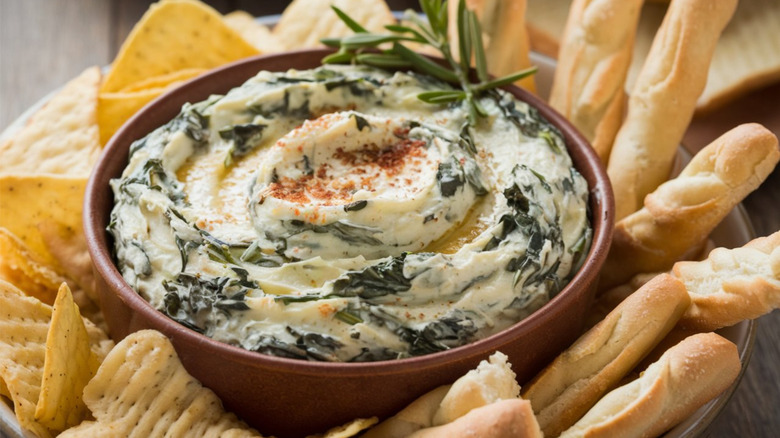
This tip is closely related to the one about tasting your dip before serving it. I usually won't put any final garnishes or toppings onto my dip until after I've tasted it and adjusted the flavors.
It turns out that if you do need to adjust the flavors or consistency of your dip, it means you've wasted the time and effort spent garnishing, and the garnishes themselves. Sometimes, admittedly, it's not that big a deal. You can simply pick or scoop them off and put them back after you've made some alterations. Stirring in the garnishes can also alter the dip's flavor and texture, and you could end up using all of the garnishes you allocated for that recipe. That's bad for your food budget, which is something we chefs keep a very close (you could even say "militant") eye on.
Lean into add-ins for your dip
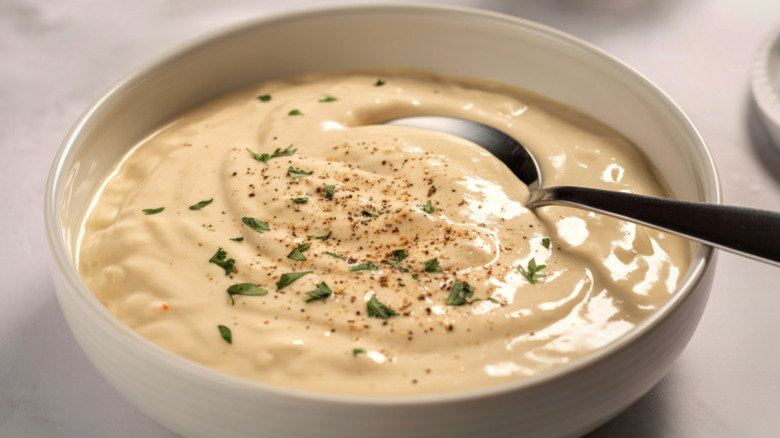
A good dip is complete and enjoyable all on its own, but there's absolutely no reason to be confined to that exact recipe.
That said, there's no reason you can't treat it as a base to build on (especially after you've reached that point of comfortable familiarity). There are lots of ingredients you can add to alter the flavor of a dip, from herbs and spices to cheeses and buttermilk — as I've mentioned previously — or even left-field options like Worcestershire sauce. These add-ins, especially finely diced vegetable, pickles, bacon bits, and nuts or seeds, offer flavor and a textural contrast.
If your party has a specific theme or the food has a consistent set of flavors and ingredients, it's straightforward to tweak your dip so that it fits the same profile. If you sift through our best dip recipes (or your own), it's not hard to pick out options that work with a Mediterranean, Tex-Mex, or any theme you want.
Don't sleep on the sweet options

Most cream cheese dips skew savory, and rightly so. Party food in general leans that way, and savory food goes with a really wide range of beverage options. Still, there's a case to be made for making sweet dips as well, especially when you're setting multiple food stations up around the room. It's nice to give your guests the option to choose something sweet over savory.
Those dips can be as simple or as complex as you want them to be. A really basic fruit dip, for example, just needs softened cream cheese and marshmallow creme. With that, and a platter of berries and sliced fruit, you're good to go with very minimal effort. On the other hand, if you're willing to invest a little more time in crafting something memorable, a more complex dip might combine the cream cheese with, say, a vanilla- or honey-flavored yogurt and a selection of warm spices. Or you could opt for a less-sweetened dip that actually contains berries, or diced or pureed fruit as its main flavor.
In terms of dippers, fruit is an easy option — as long as the dip itself isn't fruit-centric. Other options include shortbread cookies, ladyfingers, pieces of pound cake, or anything else that appeals to your creative imagination.
Keep an eye on food safety
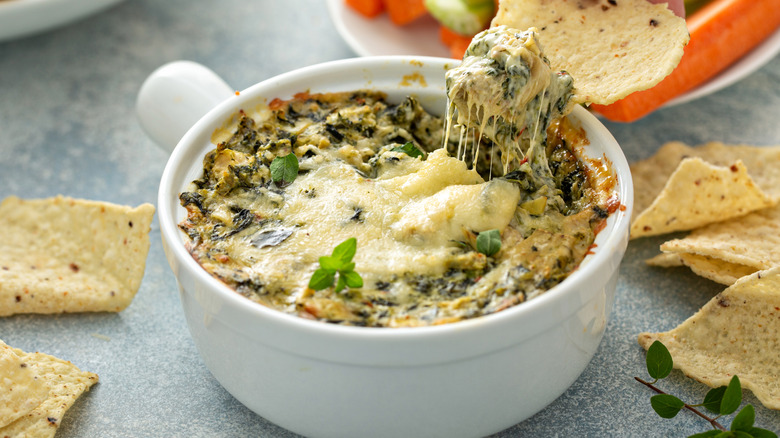
Finally, I'm going to switch from my chef's hat (metaphorical, in this case) to my food safety hat, because aside from being a former restaurateur, I was also a certified food safety trainer. I've touched on food safety a few times along the way, but I'm going to circle back to it because it's really important. After all, nobody wants to make their friends and family sick!
Cream cheese is perishable, just like eggs or chicken, meaning dips made with it are also perishable. Keeping them food-safe means monitoring how long they spend in the food safety Danger Zone – between 40 and 140 F. That's the temperature range where dangerous bacteria reproduce most rapidly, in some cases doubling in as little as 20 minutes. So it's important to keep your heated dips above 140 F until they're served (a small slow-cooker can hold them at that temperature all evening), and your cold dips below 40 F until they're served. Obviously, it's easy to monitor temps if you have a good instant-read thermometer.
A few other details: Leftovers should be discarded if they've been out at room temperature for more than two hours, or one hour if the ambient temperature is above 90 F. For all-evening parties, it's simplest to set out your dip in small bowls and whisk them away when they're empty or when they're getting close to their time limit. Finally, be sure to wash your hands and utensils diligently after handling other risky ingredients, like raw chicken wings, so you don't cross-contaminate your dip. Your friends (and your own gut) will thank you.