

10 Mistakes You Should Avoid Making With Mulled Wine
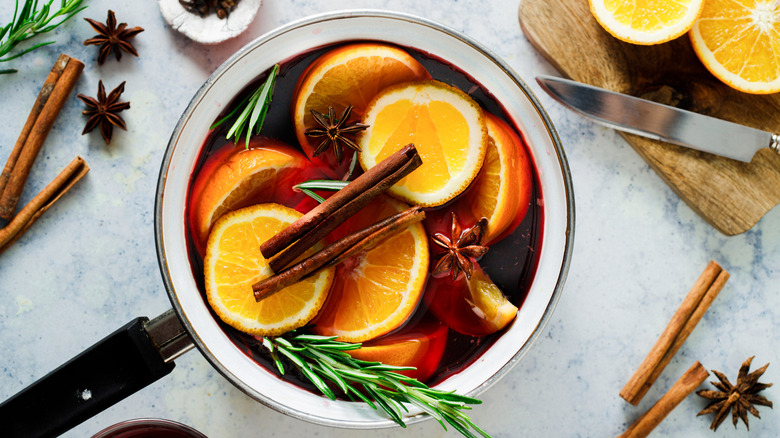
When it's cold outside, and you're looking for cozy ways to stay warm inside — and celebrate the holiday season — there are few beverages that are more warming and comforting than mulled wine. Red wine itself is a cozy beverage, but once you infuse it with warming spices and citrus and serve it hot, it becomes even more deliciously indulgent.
Although it seems pretty simple to make mulled wine (after all, you're just simmering some red wine with spices, right?), there are some mistakes you'll want to avoid to ensure that your batch turns out as good as it can possibly be. As a WSET Level 3-certified wine writer, I've listed some of the most common mistakes people make with mulled wine. By taking a closer look, you can better ensure that you don't make these mistakes yourself — and you'll guarantee that everyone will be asking for a second glass of your mulled wine. Then, check out some of the best tips for serving mulled wine this winter and the best unexpected ingredients to add to mulled wine.
Boiling, instead of simmering, the wine
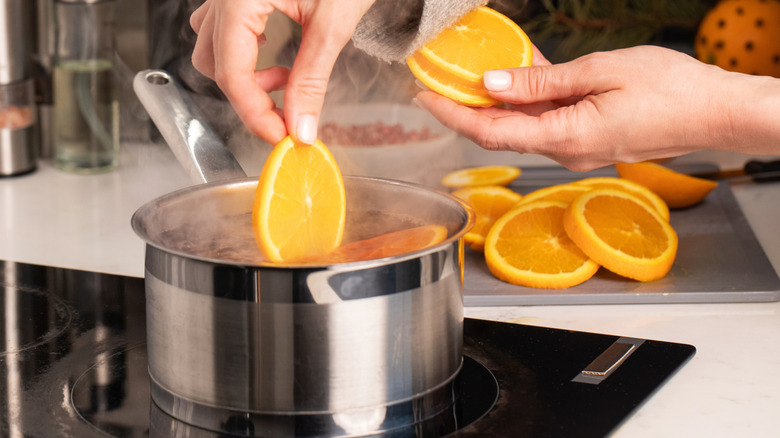
When you're making mulled wine, you can just put the wine in a pot with some spices and start boiling away, right? Not so fast. It's really important that you don't actually boil your mulled wine concoction. There are a few reasons for this. Most importantly, boiling the wine will cause the alcohol in the drink to evaporate, which isn't ideal if you're looking for a boozy beverage. But that's not the only issue you'll encounter if you boil your mulled wine. Cooking it at too high a temperature can also affect the flavor of the wine, so you may be left with a drink that doesn't feature any of the complex aromatics you associate with red wine.
You're really just looking to heat the wine, not cook it. Therefore, it shouldn't come to more than a simmer. Generally speaking, the more time the wine spends heated, the more the flavor will become muddled, so keep that in mind when you're deciding when to serve it.
Using overly expensive wine

A lot of times, when you make mulled wine, you're making it for a group. And since it's something you're sharing with others, you might want to go all out to ensure that it's something special that people will really enjoy. This may prompt some to opt for an expensive wine. That's definitely a nice gesture if you're going to drink it straight out of the bottle, but it's a mistake to use an overly expensive variety for mulled wine. That's because warming and combining the wine with spices and other ingredients really affect the final flavor of the beverage. Therefore, you won't be able to pick up on the subtle complexities of a nicer-quality bottle.
That doesn't necessarily mean that you should pick up the cheapest bottle of red wine you can find, but don't pick a bottle that's going to break the bank either. When I make mulled wine, I look for a fruity, lighter-bodied red wine in the $20 to $25 range.
Infusing the wine with too many strong spices

If you wanted to drink wine that just tasted like normal wine, then you'd just open up the bottle and pour yourself a glass. What sets mulled wine apart — besides the fact that it's served warm — is the added spices and flavors that make it taste more warming and festive. Therefore, you might assume that you really can't overdo it with spices. However, that's not true. Add too many spices to your mulled wine, and you might find that it becomes undrinkable.
If you've ever eaten a dessert with too much cinnamon, you know how overpowering some warming spices can be. Your best bet is to follow a recipe for mulled wine. That way, you'll know exactly how much of each spice to add. If you're not following a recipe, make sure to add your spices slowly, tasting as you go. Remember: You can always add more spices, but you can't take them out once they've been added to the wine.
Using powdered spices instead of whole
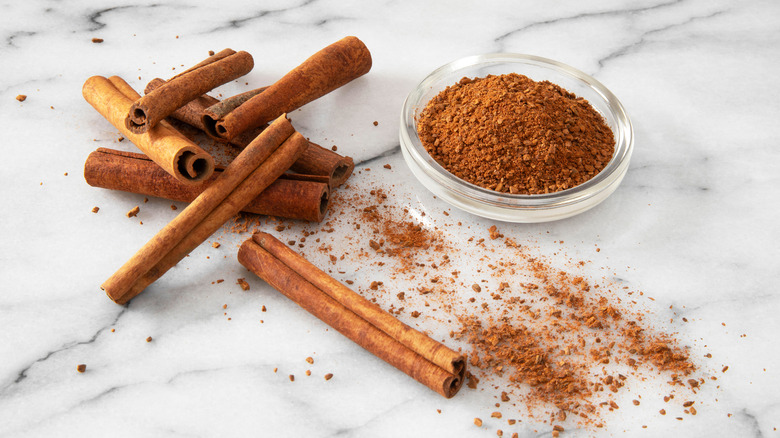
A lot of home cooks have a spice cabinet that's stocked with a variety of powdered spices. For example, you might have bottles of cinnamon or nutmeg hanging around that you take out whenever you're baking cookies or other seasonal desserts. And although it may seem like a good idea to incorporate these powdered spices into your mulled wine, it's generally not advisable. That's because powdered spices can make the wine murky and dark, and they can't be strained out easily, meaning that it's very easy to get way too much of those warming spice flavors in every sip of wine you take.
That's why it's a better idea to use whole spices. You should find actual whole nutmeg, vanilla beans, and cinnamon sticks to incorporate into your mulled wine. It's not quite as convenient as using the powdered varieties of the same spices, but it'll be worth it not to have a glass of mulled wine that tastes bitter and overpowering. Check out other instances in which you should use whole spices over ground.
Adding the pith of citrus fruits to the mulled wine
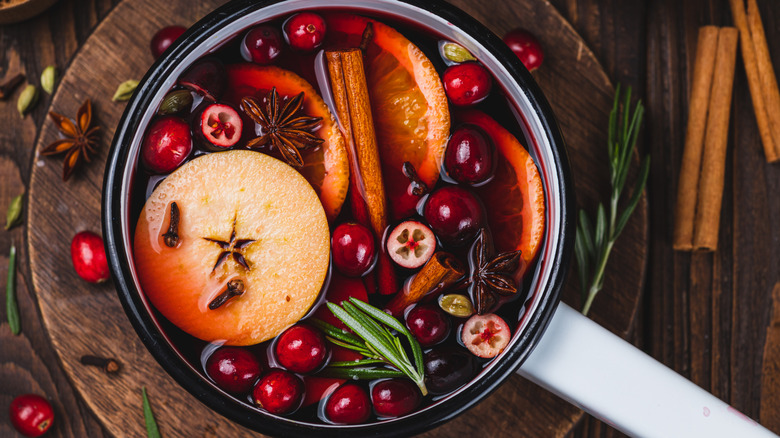
Spices are an important part of a mulled wine recipe, but so are the lighter, fresher flavors you'll get from citrus fruits. Orange, tangerine, and lemon can all add a lovely brightness and fruitiness to your mulled wine, so we definitely recommend that you add them. Many mulled wine recipes will call for citrus peels, which offer both that brightness and a hint of fruity complexity. But when you're adding those citrus peels to your mulled wine concoction, you'll want to make sure you avoid the pith, or the white part of the citrus peel, as much as possible.
It may not seem like a big deal to have a bit of pith in your mulled wine mixture, but the pith of citrus fruits is quite bitter. That bitterness can easily overpower the other ingredients in your mulled wine, turning the beverage from a bold, slightly sweet drink to one that tastes overwhelmingly bitter. Therefore, really try to avoid the pith when you're cutting the citrus peel for your wine.
Incorporating too much sugar into the recipe upfront

Take a look at most mulled wine recipes, and you'll see that they call for sugar. That sweetness is there to balance out the intensity of the spices you'll use in the recipe, so it's important not to skip it. That being said, you'll want to be careful with how much sugar you add to your mulled wine, since too much sweetness can render the wine undrinkable. This is why we recommend following a recipe: It makes it a lot easier not to overdo it with the delicate balance of ingredients you use for mulled wine.
If you're not following a recipe to a T, though, it's important not to add too much sugar upfront. That's because as the wine cooks down, that sweetness may become more apparent as some of the liquid evaporates and all the flavors in the wine concentrate. There are ways to counteract too much sweetness in mulled wine, but it's a good idea not to let it get too sugary in the first place for the tastiest results.
Forgetting to strain out the spices

Mulled wine doesn't just taste great — it can also be a good-looking beverage as well, thanks to the inclusion of whole spices, citrus, and other add-ins. And if you've ever seen a particularly pretty photo of a glass of mulled wine, you probably noticed that a lot of those add-ins were present. That may lead some to assume that you don't actually have to strain your mulled wine.
However, it's a mistake not to do so. That's because there are probably a lot of small, broken-off pieces of those added ingredients in the pot that came off during the simmering process, and you don't want to have to deal with them ruining the texture of what should be a smooth, easily drinkable beverage.
Luckily, it only takes a few seconds to strain your mulled wine. Then, you can add garnishes as you see fit to make the drink as pretty as you want it to be.
Serving your mulled wine too hot

You've just finished simmering your mulled wine, and it's finally time to take that first, delicious sip. But you shouldn't be in too much of a hurry to serve it, since you don't want to do so when it's piping hot. Since you're not going to be boiling your mulled wine anyway, it shouldn't be heated to an extreme degree when you're ready to take it off the heat, but you might want to give it a few minutes in the glass to cool down anyway. That way, nobody will burn their tongue on extremely hot wine, and you'll actually be able to pick up on those complex flavors more instead of just experiencing the shock of all that heat.
Ideally, you should serve your mulled wine at 130 degrees Fahrenheit (or around 55 degrees Celsius), if you really want to get specific with the temperature. However, as long as it's warm and easy to sip without burning your tongue, you should be good to go.
Neglecting to include plenty of garnishes

I've already mentioned the importance of straining your mulled wine before serving it, but that doesn't mean that you shouldn't include garnishes. The difference is that these garnishes should be added after straining — they won't be contributing very much to the actual flavor of the beverage. A few of my favorite garnishes include orange slices, cranberries, and cinnamon sticks, but feel free to get creative with whatever you have on hand. You can experiment with different types of citrus and other fruits, or use some of those extra dried, whole spices to make a more appealing drink.
If you ask me, I think it's best to add the garnishes to each individual drink, so you don't have to worry about them imparting too much flavor into your big batch of mulled wine. If you're throwing a party, you can even make a mulled wine station where each person can build their own glass of wine with the garnishes of their choosing.
Choosing a wine with strong tannins

So, what kind of wine should you choose to make your mulled wine? A lot of people think that because they're going to be adding a lot of flavor in the form of spices and other add-ins that they should use a full-bodied, tannic wine. However, that's not the best course of action if you want your mulled wine to taste as good as it can. Instead, you'll want to opt for a fruitier, lighter-bodied, lower-tannin red wine. That's because too much tannin can make the wine taste sour and unpleasant after it's been heated.
Beaujolais is a nice option for mulled wine, since it tends to be very light-bodied and easily drinkable. For an especially affordable bottle, look for Beaujolais Nouveau. Alternatively, Merlot and Malbec can be nice choices as well. When in doubt, ask for help at your local wine shop — someone there should be able to point you in the direction of a good-quality but not-too-expensive wine that will work well.