

10 Steps To Get Your Kitchen Ready For Hosting

It would be easy to assume that hosting is just about cooking, but it would also be erroneous. Beyond the actual task of cooking food, there is also the prep done ahead of time: ensure that your pantry is adequately stocked, your appliances are functioning at optimally, and that your countertops are cleared so that there's space to put things down.
Apart from just jotting down recipes, preparing for the hosting season means getting your kitchen up to speed. Deep-cleaning and decluttering may not be words you want to come across when you are in a festive mood, but investing some time to do it beforehand can ensure that all trains are running on time on the day of your event or gathering.
Mentally walking yourself through a typical hosting day can also reveal your biggest pain points. Last-minute grocery runs can contribute to day-of stress, but a preemptive pantry audit can help. You'll also need to be prepared for the possibility of guests popping by the kitchen. Everything will need to look tidy and intentional. Finally, once the night has ended, you'll be looking for ways to quickly package leftovers. By preparing your kitchen ahead of time for all these possibilities, you can transform your hosting experience this season. Here's how:
Declutter the countertops
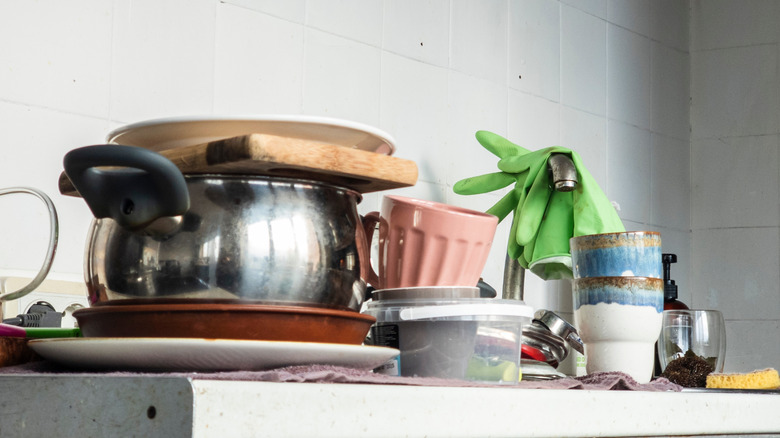
The last thing you'll want to struggle with while hosting a large gathering is finding a spare inch of countertop to rest a ladle. Decluttering your countertops beforehand will give you more room to work with. Plus, putting everything in its place and allocating space for everything can make you feel more mentally at ease, allowing you to focus on the task at hand.
Having pristine, uncluttered countertops is the dream, but how do you decide what needs to stay and what should go? Your work starts by addressing the second half of this dilemma. Small appliances that aren't used frequently take up valuable real estate on countertops; you can house them in cabinets instead. Oversized decorative items, like large vases and bowls, can also be relocated elsewhere to conserve countertop space.
Once you have gotten rid of the unnecessary party crashers, it is time to take a look at what you will actually need on your countertops. Appliances and cooking tools that you use daily are worth making room for here. It also helps to have a catch-all tray to corral together smaller essentials that you use often. Simple countertop organizational tools, such as stackable shelves and portable carts, will help you reclaim space and your peace of mind.
Deep-clean all your appliances
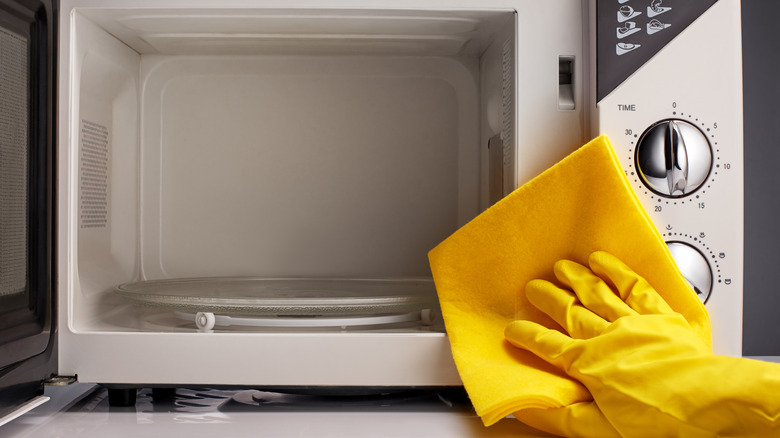
From the food splatters nesting cozily on the ceiling of your microwave to the overloaded crumb tray at the bottom of the toaster, frequent usage can cause grime and food residue to collect in ignored spots on everyday appliances. Cooking for a crowd means your appliances are likely running for longer periods than normal. And when something like an oven is caked with food residue, it may struggle to circulate heat evenly, leading to inconsistent results that derail your dishes.
Preemptively deep-cleaning all your appliances beforehand ensures that your hardworking appliances are functioning at optimal capacity — and not generating questionable odors that cloud your upcoming feast. If you like to get the largest tasks out of the way first, you'll want to turn your attention to the refrigerator. After emptying all the contents, get rid of any stubborn stains with a baking soda and water paste.
Next, you'll want to turn your attention to heavily used appliances. A steam cleaner is a must-have appliance for taking the grime off messy microwaves with only water, thereby negating the need for heavy chemicals. Next, the stove. Remove the grates, treat them to a soapy bath, and get to work on stubborn buildup with a scrub brush. Round out the kitchen deep-clean by showing some love to smaller appliances. Wash the crumb tray of the toaster, run a cycle of warm water and dish detergent in the blender, and use a baking soda paste to remove the grime from the basket of the air fryer.
Organize your spice rack

When it comes to hosting, your spice rack can be either your greatest ally or your biggest detractor. An organized collection allows you to choose the exact spice you need in the middle of a hectic recipe.
Apart from optimizing your cooking process, a well-organized spice rack helps you keep an eye on the spices you're running low on. There's no room for duplicate purchases here because you have all your spices organized in order of how frequently they are used. Start by purging expired spices from your shelves and consolidating any duplicates. Then, choose coordinated, transparent jars for easy visibility. Using the help of a label maker — or even some bright washi or masking tape — clearly name each spice bottle to avoid any mix-ups, and note each spice's expiry date.
Once done, organize your newly labeled collection based on how often you use them. Your everyday favorites get prime real estate here. Spice blends, such as za'atar or garam masala, can be grouped together. Adding an organizer, or two, is among the best ways to bring order to this space. From slide-out racks for easy access to over-the-door organizers for saving space, there's a spice rack organizer available for every type of kitchen.
Audit your pantry
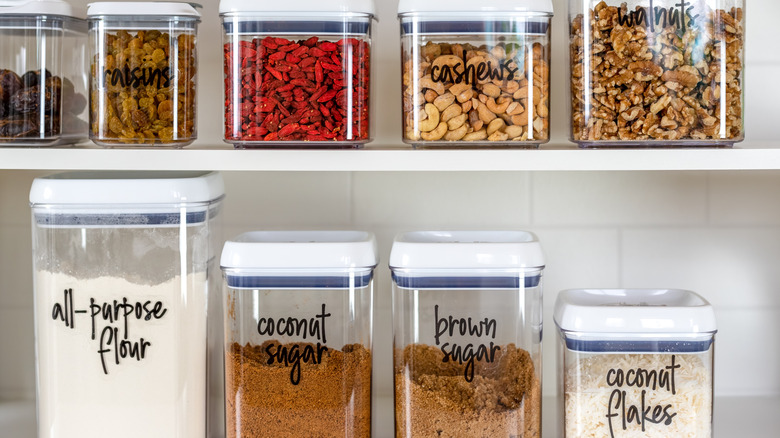
Your pantry should be prepped and ready to accommodate large volumes of staples and seasonal ingredients during the holiday hosting season. However, you should take special care not to overstock items you already have on-hand — if only all of that stuff wasn't buried underneath a mountain of clutter and unneeded items.
It's crucial to conduct a thorough pantry audit before setting foot into the supermarket. By taking and maintaining an inventory of what you already have, you can stay ahead of any last-minute shortages. You'll probably pick up some valuable insights on your own cooking process along the way: What do you buy often but rarely use? Which items are you constantly running out of? You might even stumble upon some long-forgotten, seasonal items that spark new recipe ideas, like making homemade dinner rolls with all that leftover yeast.
Your work starts with pulling out every last jar, tray, and basket. Once all the shelves have been wiped clean, you'll want to make note of what you currently have. It also helps to pay attention to any rapidly approaching expiry dates — you can group these items into a "use me now" shelf so that you can plan meals around them.
Stock up on staples

Nothing stymies your culinary creativity quite like starting a recipe just to discover that you've run out of the most crucial ingredients. Be sure to stock your pantry in advance if you want to avoid making a last-minute supermarket run before your guests arrive.
So what are the essentials that can save you those dreaded last-minute grocery runs? There are certain staples that lend themselves well to diverse cuisines and recipes. Having the right assortment of oils, for example, is essential. You'll want to choose options that don't smoke at high heat, meaning you can use them for frying. Think avocado oil, olive oil, and peanut oil. Canned fish and veggies can make for a great last-minute addition to a wide array of recipes, while noodles can be used for many cuisines, from Italian to Asian. Since you'll be laden down with other expenses while hosting a gathering, buying goods in bulk will help you save money on pantry staples.
When stocking up your pantry, you'll also want to add some showstopper ingredients that can elevate an ordinary dish to dinner party standards. Look to truffle oil for a gourmet finishing touch to salad dressings and pastas. Balsamic glaze, meanwhile, is a versatile pick. Use yours to spice up roasted veggies, drizzle it over flatbreads, or swirl it over freshly cut strawberries.
Sharpen your knives
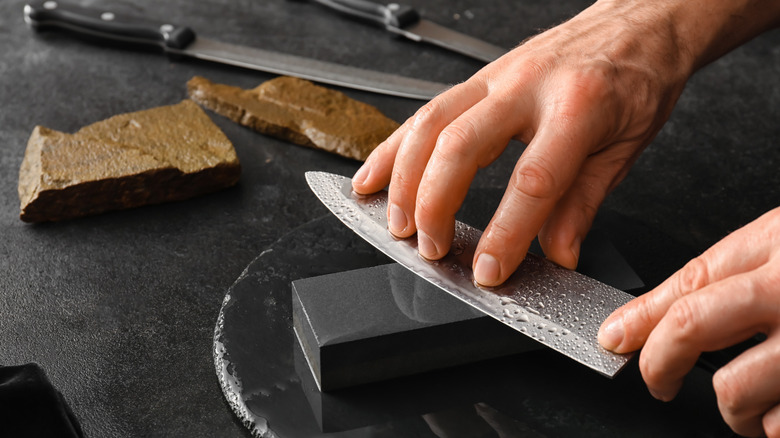
When you are faced with a mountain of veggies, fruits, and herbs to slice, the last thing you'll want by your side is a blunt knife. Instead of making your way through in one swift cut, you might find yourself sawing back and forth to get through — the frustration and additional force exerted on a blunt knife can lead to a greater risk of injury. Meanwhile, the messier cuts might impact the final presentation of your food.
When looking to sharpen your knives, it helps to first know what not to do. There are several blade sharpening devices available on the market, but not all of them are created equal. Magnetic roller sharpeners are a popular choice among beginners, but will not work on serrated or ceramic blades. Pull-through sharpeners offer ease of use, but can wear out your knives quickly by shaving away more metal than needed.
A whetstone is one of the best options for keeping your knives sharp. Start by soaking the stone in water for 45 minutes and then hold the knife at a 20-degree angle. Moving from the tip to the base of the knife, drag it away from you in a fluid, controlled sweep 12 to 15 times. Repeat the same process on the other side of the knife, and you'll be ready to carve through those roasted turkeys like a pro.
Prep the sink area
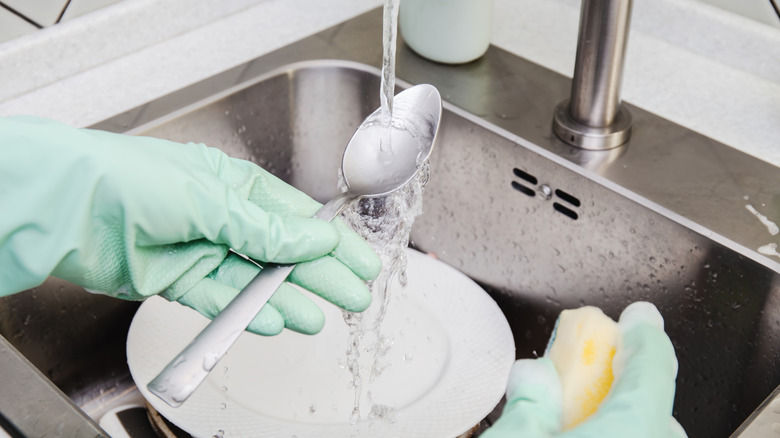
Picture this: You have put together the perfect formal dinner party after slaving away at the stove for hours. However, the illusion is shattered by sink-side clutter and the odors emanating from it.
There is no negating the mountain of dirty dishes that are produced after an extended cooking session. However, you can control the chaos by taking preemptive measures. Instead of tossing every last spoon and measuring cup into the sink and telling yourself that you'll deal with it later, it helps to adopt a "clean as you go" policy. Smaller items, such as spatulas and ladles, can be washed on the spot within a few seconds. While you are waiting for a sauce to simmer, you can use the time to get a head start on scraping away food residue and soaking larger pots and pans.
To ensure that your sink looks guest-ready at all times, it also helps to have the right organizational tools at hand. Nobody likes to see a rough tumble of cleaning brushes and scrub pads, so look for an all-purpose sponge caddy that can house multiple shapes and sizes easily. Cleaning supplies should ideally be relegated to the area under the sink, while the liquid detergents that you need at hand can be decanted into chic containers.
Set up designated zones
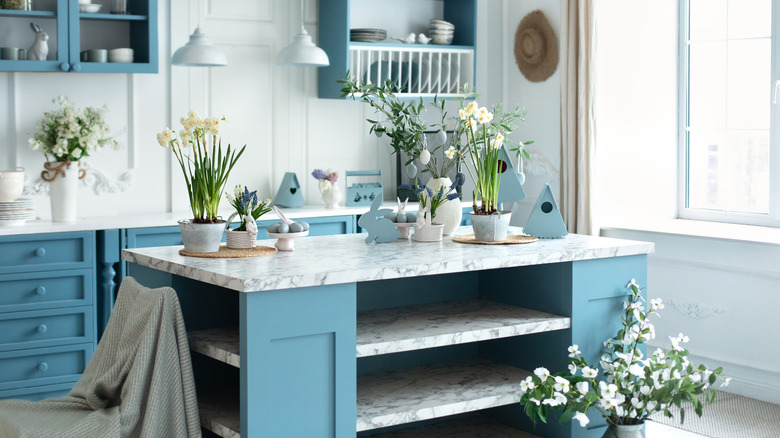
There was a time when having your sink, stove, and refrigerator in a triangular formation was the golden standard of kitchen design. However, we have since come to realize that the work triangle doesn't suit our ever-evolving needs. The time was ripe for another organizational method to rise to prominence, and the concept of kitchen zoning was happy to oblige.
This method posits that by organizing your kitchen into dedicated zones for prep, cooking, cleaning, consumables, and non-consumables, you can improve your efficiency in the kitchen. Beyond optimizing your everyday workflow, this approach can also come in handy when hosting. Your prep and cooking zones should be located away from the footfall of guests, so that you don't have to turn your attention away from the stove each time someone needs an extra mug. Setting up an additional zone for extra dinnerware allows you to plate easily once you are done cooking.
As kitchens increasingly become a social space, it also helps to plan ahead by setting up an entertainment zone in the kitchen. Since the island is often the focal point of the kitchen, adding some seating in this area can give guests a dedicated spot to linger — one that won't crowd your workspace.
Prep your serving pieces

The right dinnerware can make or break your dinner party. Picture an assortment of hors d'oeuvres served on a statement-making platter versus those clumped together unappetizingly on a generic plate. With the right gravy boats, tureens, and cake stands, even the humblest recipes can get a gourmet glow-up — as long as you remember to pull out your dishes ahead of time.
Before hauling all the bulky platters out of storage, select the right ones based on the menu and the occasion. Start by taking into account how many guests you are expecting, which menu items you plan to serve, and the nature of the occasion. A formal dinner party calls for your finest china. You can also try playing with seasonal hues — think autumnal colors and pumpkin motifs for the fall.
If you happen to notice any stains as you remove your precious porcelain, rest assured that a quick dab of fresh lemon juice can make the surface sparkle. More stubborn stains may call for a baking soda and water mixture applied with a soft-bristled brush.
Plan for leftovers beforehand
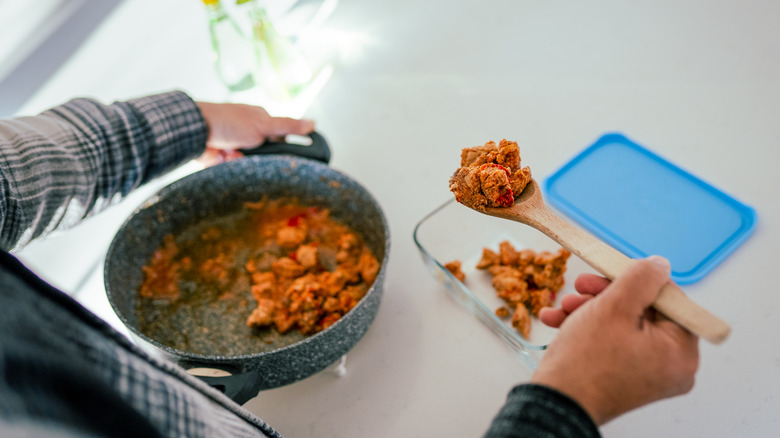
After an arduous day of cooking, serving, and entertaining, the last thing you want is to be confronted with a teetering stack of leftovers. However, an ad hoc approach to dealing with leftovers can generate unnecessary waste. Those dishes can easily be packed and sent home as a thoughtful takeaway treat with your guests instead.
Stay one step ahead of the post-dinner chaos by designating a leftovers station. This space should be away from your prep and cooking zones and outfitted with all the essentials you need to pack up food and send it home with your guests. Disposable containers with lids are a must — bonus points for opting for biodegradable options instead of single-use plastic. You can even set up a pack-your-own-leftovers station so that guests can easily grab what they want without any formality. Just stack together plenty of containers, bags, and printed labels to add expiry dates and storage instructions.
As a rule of thumb, it helps to follow the 2-2-2 principle to ensure that leftovers are consumed in a timely manner. The first two refers to the number of hours perishables can be kept out of the refrigerator. Leftovers should be relegated to the refrigerator and consumed within two days. If you don't have any immediate plans for making your way through the leftovers, they can be frozen for up to two months.