

10 Beers Everyone Drank In The '70s
We may receive a commission on purchases made from links.
If you head to a liquor store or a bar in the U.S. today, you'll likely come across many familiar beers like Modelo, Corona, Blue Moon, Heineken, and Guinness, for example. But things looked a little different 40 to 50 years ago.
Back in the 1970s, sure, there were many brands we'd all recognize today, like Michelob, Miller, and Budweiser, but there were also bottles of Olympia, Stroh's, and Billy Beer. These beers are long gone or far less common today, but back then, they were all the rage (although sometimes, that was more to do with image than taste — looking at you, Billy Beer).
If you're intrigued by what beers everyone was drinking in the 1970s, or you were there at the time and just want a trip down memory lane, you've come to the right place. Keep reading to find out more about some of the biggest beers of the era.
Michelob

In September 2025, Michelob Ultra was named as the best-selling beer in the U.S. It was launched in 2002, but its status in 2025 as the nation's best-seller has probably been helped along by the fact it's low-carb and marketed as a "healthier" beer option — health and wellness has been trending for a while now.
Michelob Ultra, produced by American brewing giant Anheuser-Busch, might dominate shelves today, but back in the 1970s, it was the brand's classic pale lager, sold in bottles with gold labels, that people loved. It was many people's favorite beer at the time, and some recall drinking nothing but Michelob Lager throughout the 1970s and 1980s, too. Many even remember it as being their first ever beer, handed to them on their 21st birthday.
Many who remember drinking Michelob back in the 1970s say that Michelob Ultra today doesn't match up to the brand's old classic lager. In fact, some are eager for Anheuser-Busch to bring it back. It seems that while some people miss the taste of Michelob's old lager, others miss the old teardrop bottles just as much. In fact, there is a whole X account dedicated solely to campaigning for Michelob to bring back its old bottle design.
Miller High Life
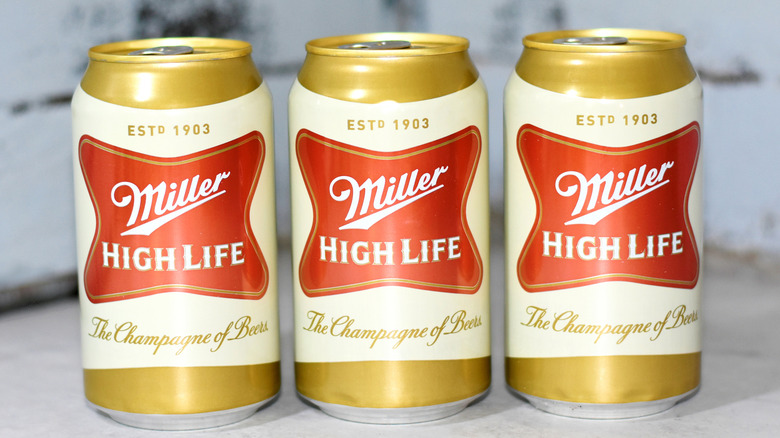
Back in 1903, the Miller Brewing Company in Milwaukee started producing Miller High Life beer for the first time. Like Michelob, it was produced in sleek bottles, deliberately designed to make it seem sophisticated and classier than other beers on the market at the time. The strategy worked, and Miller High Life was so popular that it stuck around through some of the 20th century's most challenging periods, like prohibition and the Second World War. By the 1970s, it was still loved by people across the U.S.
Then, it was sold in small bottles, which some people called "Miller shorties." In fact, they were small enough that you could experiment with drinking more than one at a time, which some claimed as their party trick. It was cheaper than Michelob, so many people chose it as their everyday beer, saving Michelob for special occasions.
Miller High Life is still around, but it's not as popular as it used to be. Sales started to fall in the 1980s, as people became more interested in health and fitness than drinking beer. It also had to compete with Budweiser, which held a quarter of all beer sales in the 1980s.
Olympia
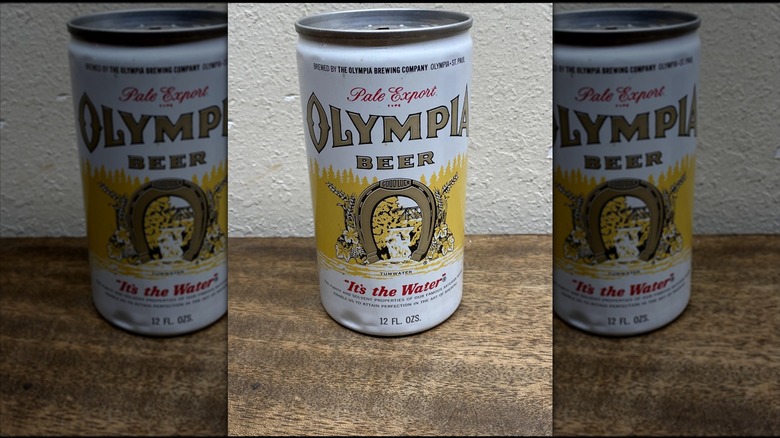
If you were of drinking age in the 1970s, or you had parents who liked a tipple, you were probably familiar with Olympia beer. Produced by Pabst Brewing Co, there were a few different versions, including a light version called Olympia Gold, but it was the original that most people remember. It was marketed with the catchy slogan "It's the water," which was designed to separate the beer from the rest of the market by highlighting the quality of the water it used to brew it.
It seems that Olympia, which was based in Tumwater, Washington, was quite popular with dads in the 1970s, and many people say it's one of the only beers they remember their fathers drinking. Sadly for many fans, Olympia Beer was widely discontinued in 2021. However, if you live in Canada, you may be able to still get your hands on a bottle, as the beer is now brewed by Great Western Brewing in Saskatchewan and authorized for distribution in Saskatchewan, Alberta, and Manitoba. The original Tumwater brewery, though, is long gone.
Stroh's beer
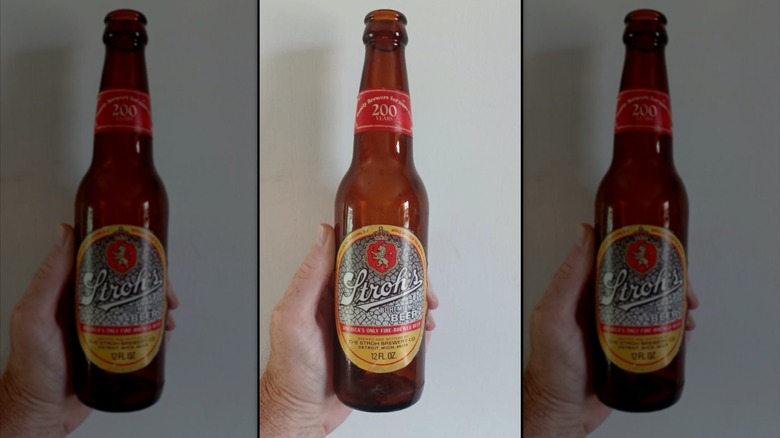
Stroh's beer started from humble beginnings. It was first brewed and distributed by German immigrant Bernard Stroh in Detroit in the 1850s, who would walk around the city selling bottles out of a wheelbarrow. His commitment to getting his beer across the city by any means necessary paid off, and by the 20th century, Stroh's was becoming a household name in the U.S. By the 1970s, it was in the top 10 beer companies in the entire country.
Many people remember drinking bottles of Stroh's in this decade. It had appeal across generations, and some would drink it alongside their fathers and grandfathers. One Facebook user remembers being handed a bottle of Stroh's at a wedding in the early 1970s, and after that, they decided no other beer would do.
Business declined in the 1980s, just as it had done for Miller High Life. The company was dissolved in 2000, but the actual Stroh's beer wasn't dead. In 2022, for example, Pabst Brewing Company started distributing the beloved beer once again for use on draft taps in Detroit.
Coors
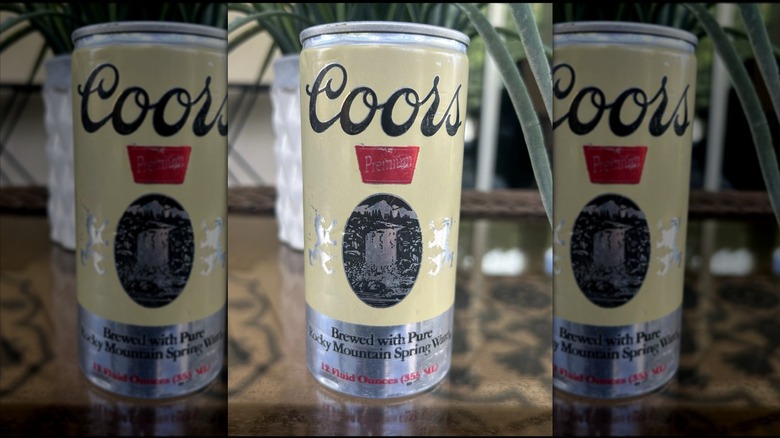
Coors is still a popular beer brand. It's one of those names that has managed to stick around over the decades, appealing to many different generations. Today's Gen-Zers love a drop of Coors Banquet, for example. In the 1970s, young adults also loved Coors beer, but if they were in the East of the U.S., it wasn't easy to get hold of.
Coors was founded in the 1870s in Colorado, but because it wasn't pasteurized, it wasn't allowed to be sold in many eastern states. That didn't stop people from trying to smuggle it across state lines. It was widely acknowledged as nothing special flavor-wise, but the fact that it wasn't allowed in certain places made it more popular and desirable.
The 1977 movie "Smokey and the Bandit" with Burt Reynolds only made it seem more appealing. Some people would watch the movie — about a bandit smuggling beer from state to state — and feel inspired to do the same. This all came to an end in the 1990s, when Coors was permitted to sell nationwide.
Billy Beer
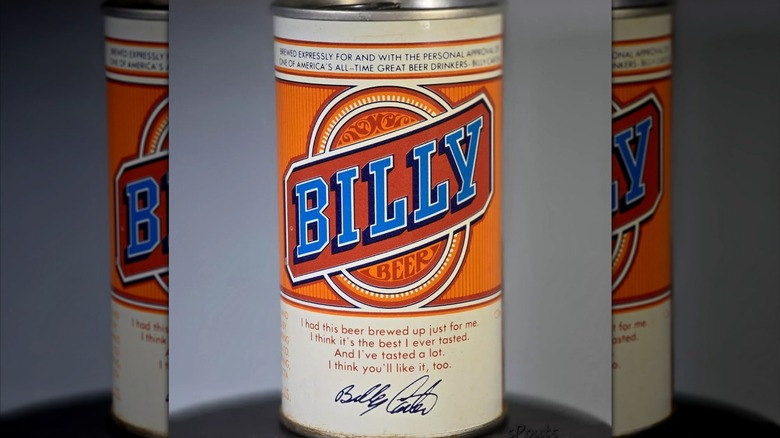
In the late 1970s, an unlikely partnership emerged. It was between a failing Louisville brewer, called the Falls City Brewing Company, and the president's brother, Billy Carter. Together, they created their own product, Billy Beer, which was inspired by Carter's love of drinking. Falls City Brewing Company hoped that the beverage would save it from going under.
It was actually quite popular for a time, especially with people who loved the president, Jimmy Carter. In fact, some people who were children in 1977 remember their parents buying it just because they loved the Carters. Even non-drinkers bought the beer to show support.
But in the end, Billy Beer had a serious problem: It just didn't really taste that good. Carter himself admitted that to reporters once, revealing he didn't even drink his own beer at home. Falls City Brewing Company closed its doors in 1978, and that was the end of Billy Beer. It wasn't over forever, though, as Falls City reopened in 2010, specializing in craft beer.
Pabst Blue Ribbon
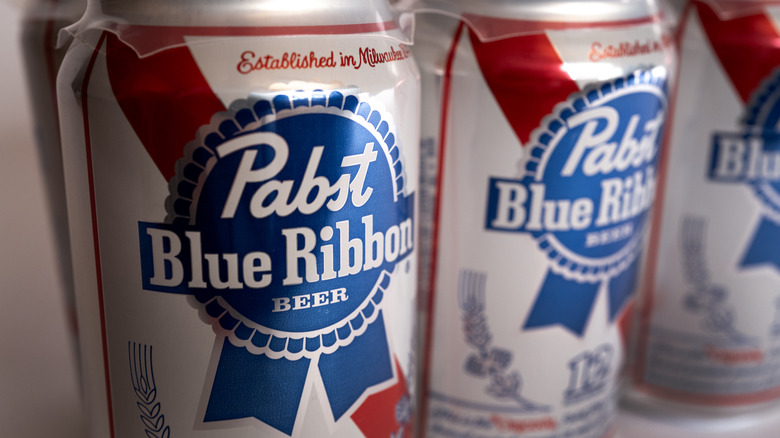
When Carter joked to reporters that he didn't really drink Billy Beer at home, he revealed that his actual drink of choice was Pabst Blue Ribbon. He was in good company: Pabst Brewery, based in Milwaukee, was the third biggest brewer in the country in the 1960s, and its beers were still hugely popular throughout the 1970s. In 1979, the company even released a commercial with Patrick Swayze, although he was still a few years away from movie star status at the time.
Many people remember their parents and aunts and uncles having cans of Pabst Blue Ribbon stashed away in the fridge. And as for those who actually drank it during the 1970s, the hangovers, in particular, stand out. "We used to call it headache beer," said one Facebook user. Pabst Brewing Co. shut down in 1996, but you can still buy some of its beers today. For a while, it was brewed by MillerCoors, but that contract ended in 2024. In 2025, it was revealed that Anheuser-Busch InBev would be taking over production.
Lucky Lager
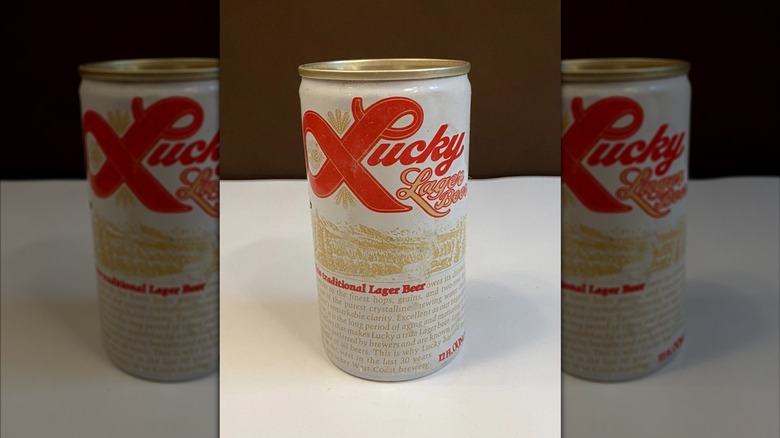
Lucky Lager was a San Franciscan beer, first produced by General Brewing. The company started constructing its brewery just before the end of prohibition, in August 1933, so it was perfectly placed to hit the market in 1934. The beer was loved across California, and it was also a hit in Canada, where it was produced in a brewery across the border in Victoria. By the 1960s and 1970s, Lucky Lager was a certifiable American favorite.
Many remember Lucky Lager being in their regular beer rotation in the 1970s, alongside other popular brands at the time like Olympia, Rainier, Schmidt, and Hamm's, for example. If you can relate, and are now feeling super nostalgic, you can snap up many collectibles on eBay, from vintage beer bottles to old posters and print ads. But you can also still drink Lucky Lager in some places. Pabst brought it back to California in 2019, and it's still available to buy in Canada today.
Lone Star
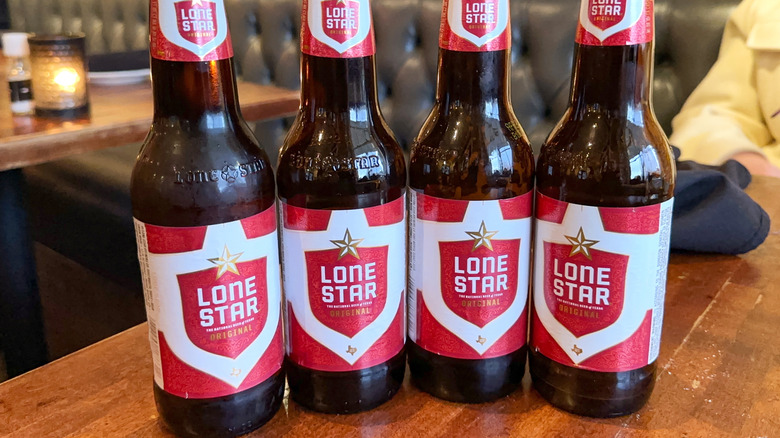
If you're from or have ever visited Texas, you'll know that Lone Star is very much still in business. It is widely acknowledged as the state's national beer, and promoted as such, too. Fun fact: The beer's biggest fan base is in Texas, but it actually has a presence in most other states in the U.S., too.
In the 1970s, Lone Star beer was just as loved. In fact, some remember going down to the Lone Star Brewery in San Antonio for a night out partying, drinking beer, and even swimming. Yep, this brewery even had a pool, plus its own lake that was filled with catfish. But Lone Star wasn't just loved for its fun brewery, it was also just a good regular everyday beer that people would drink alongside other brands like Olympia and Coors.
Country music fans were particularly big fans of Lone Star in the 1970s. This was mostly sparked by the friendship between Willie Nelson and Lone Star marketing manager Jerry Retzloff. Nelson would regularly drink beer on stage, and other musicians would copy him, helping to cement Lone Star's image as a country music beer.
Budweiser
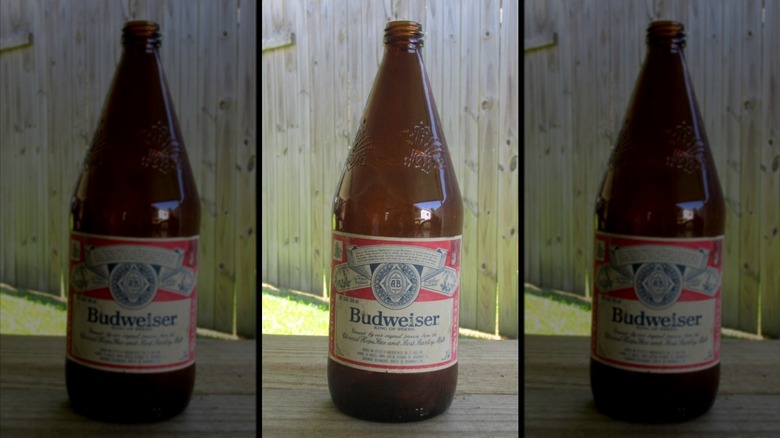
Before Michelob Ultra was given the title of best-selling beer in the U.S., that honor was held by Bud Light. But Budweiser beers have been popular in the U.S. for decades, even before Bud Light was invented in 1982.
The brand was founded in the 1850s, by German immigrant Adolphus Busch (yep, that's the Busch in Anheuser-Busch), and went on to find huge success in the 20th century. It survived prohibition, and by the 1970s, Budweiser beer was ubiquitous in the U.S. In fact, during this decade, Anheuser-Busch was in the top five breweries in the entire country.
When many people look back on the 1970s, they remember Budweiser being a huge part of their lives (in part, thanks to its catchy jingles and songs, like "When you say Bud"). And the best part? Many say it still tastes the same to them today as it did back then.